This article was originally written by Ed Chatterton for SWNS — the U.K.’s largest independent news agency, providing globally relevant original, verified, and engaging content to the world’s leading media outlets.
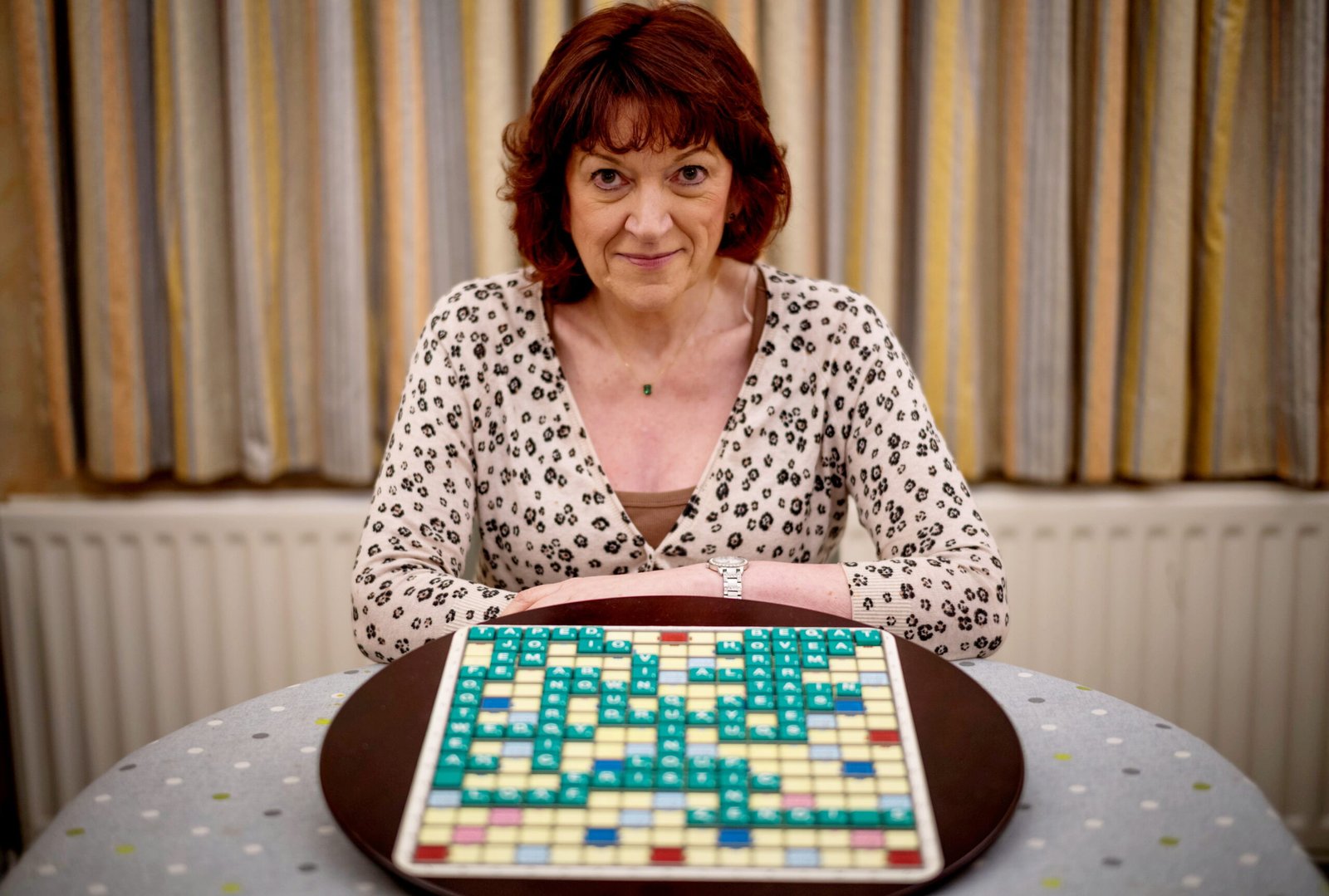
When it comes to dominating in Scrabble, starting small may be the superior strategy. Take it from Natalie Zolty: The U.K.’s top woman Scrabble champion has revealed her tips for becoming a master player — and it all begins with simple two-letter words.
Zolty, 61, won the top division of the U.K. Scrabble Open competition on Jan. 9, scoring 1,000 points more than her opponents. The math teacher bested Scrabble grandmaster Gary Oliver to claim the victory by playing the word “zendiks,” meaning heretics or unbelievers. She won 12 out of her 15 games, despite admitting she doesn’t know what many of her winning words mean.
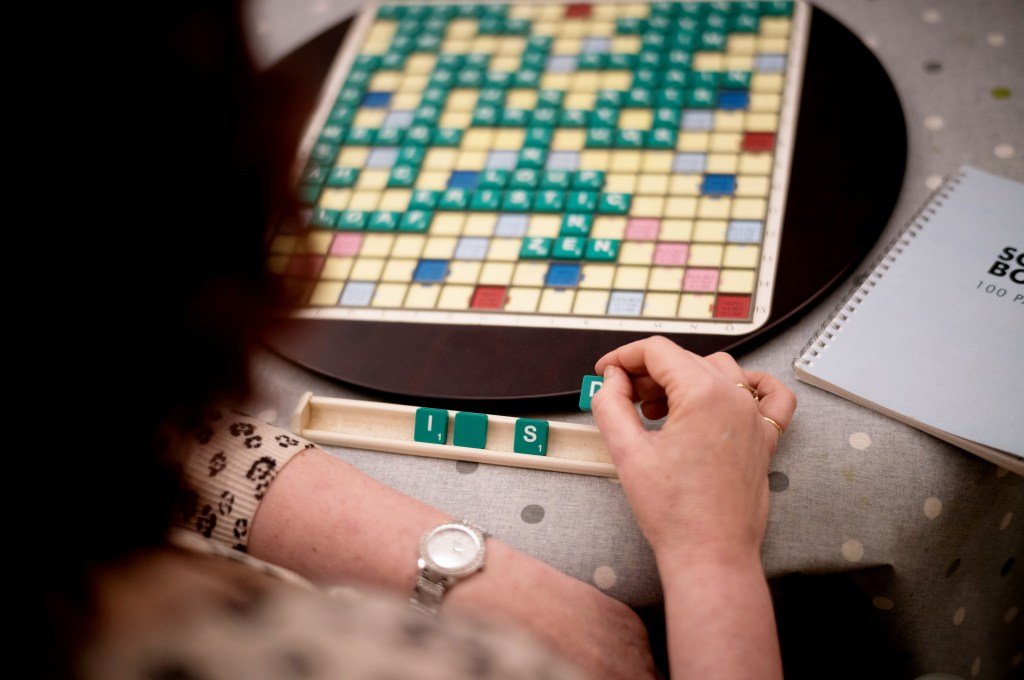
For those looking to master the craft, she advises starting off by learning all of the dictionary’s two-letter words. “There are 127 two-letter words allowable in the dictionary that we use in the U.K., so it’s not too difficult to learn all of them,” Zolty told SWNS. “Some of them sound weird and wonderful. Things like ‘xi’ and ‘za,’ so learn those two-letter words and you’ll be surprised at how you can rack up points. Two letters make it easy to play parallels and score points.”
Another tip? Never be afraid to exchange tiles. She noted that “there is also an option every turn where you can exchange letters and forfeit a turn. This frightens a lot of players and they will try to keep going. But don’t be scared to change some tiles if you really are in trouble with your letters. Sometimes even if you still play a word, you will be left with terrible letters on your rack and you won’t score anything. There’s no point going on with dreadful letters, it will only get worse.”
Zolty recommends taking advantage of bonuses and “stems” as well. “Other things include going for a bonus where you use all seven tiles, which gives you an extra 50 points,” she shared. “Scrabble players who play at a high level are looking to try and do that maybe two or three times a game. I would average around two and a half bonuses a game. Keep on your rack one-point letters. People think they are not worth much, but they go together to make bonus words. We call them ‘stems.’”
Players can also benefit from looking out for “hooks” — “a letter that will go on to the end or the beginning of a word to make another word,” she explained. “Like an ‘s’ at the end to make a plural, that’s pretty straightforward. So you could put ‘s’ on the end of ‘princes’ to make ‘princess’ or ‘h’ on the front of ‘airline’ to make ‘hairline.’ But sometimes they can be a little less obvious to spot. When someone plays a word, have a think what could go on to the front or end of it and you might be able to take them by surprise.”
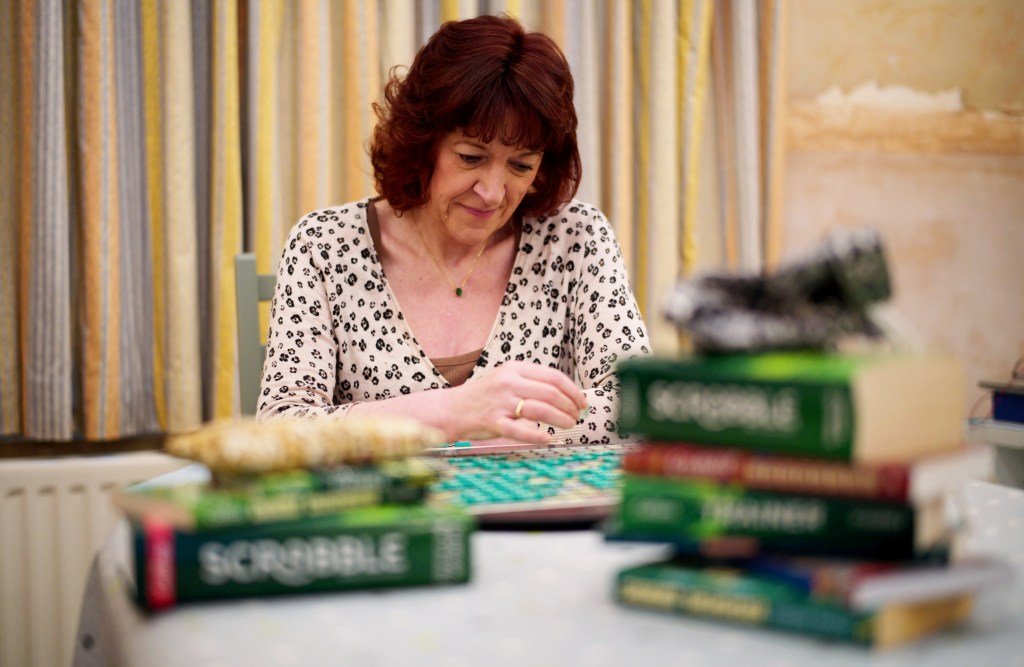
Zolty’s road to the championship title began when she took up the hobby on Facebook around 17 years ago. “I just really got into it,” she said. To keep her at the top of her game, the Solihull, England, native practices 500 anagrams a day while watching TV and regularly spends hours learning thousands of words from the dictionary.
“There’s a lot of word learning and studying,” she said. “You learn basically the entire dictionary, but you learn it in what is most valuable in a game, what words create the best points. I don’t know what many of the words mean. It is useful to know, but you don’t need to know.”
While Zolty — who ranks within the top 20 U.K. players — shares these tips for the betterment of all Scrabble lovers, she’s hopeful that more women will follow in her footsteps and join in on the fun. “It’s only men that have won the world championships. But I do wish more women would take it up, even just to try and play it,” she said. “It’s great for your brain and keeps you thinking.”
Get started by taking this quiz to test your knowledge of superior Scrabble words.
RELATED: Formerly Unhoused 14-Year-Old Chess Prodigy Tanitoluwa Adewumi Sets His Sights on Grandmaster
The broader significance of developments like this one lies in their ability to inspire and motivate people to take action in their own lives and communities. Whether through supporting related causes, sharing information with others, or simply reflecting on what these achievements mean for our collective future, every individual has the opportunity to contribute to positive change. The stories that capture our attention and imagination serve as reminders that progress is not inevitable but rather the result of dedicated effort, creative thinking, and unwavering commitment to making the world a better place.
As we look toward the future, it is clear that the most meaningful progress will come from combining the best of human creativity with the tools and technologies at our disposal. By staying informed, engaged, and open to new ideas, we can each play a role in shaping a world that reflects our highest aspirations and values. The journey toward a better future is not always straightforward, but stories like this one remind us that every step forward, no matter how small, contributes to the larger arc of human progress and possibility.
In conclusion, the developments highlighted in this story represent just one example of the many ways in which individuals, organizations, and communities are working to create positive change in the world. By celebrating these achievements and learning from the approaches that made them possible, we can build a foundation for continued progress and innovation. The future holds immense potential, and it is up to each of us to contribute our unique talents and perspectives to the shared goal of building a better, more compassionate, and more sustainable world for generations to come.