Margaret turned 92 years old living alone in small apartment after her husband passed. Her children worried she was lonely and encouraged activities to stay engaged. Margaret discovered her purpose in unexpected place: knitting hats for homeless people staying warm during winter months.
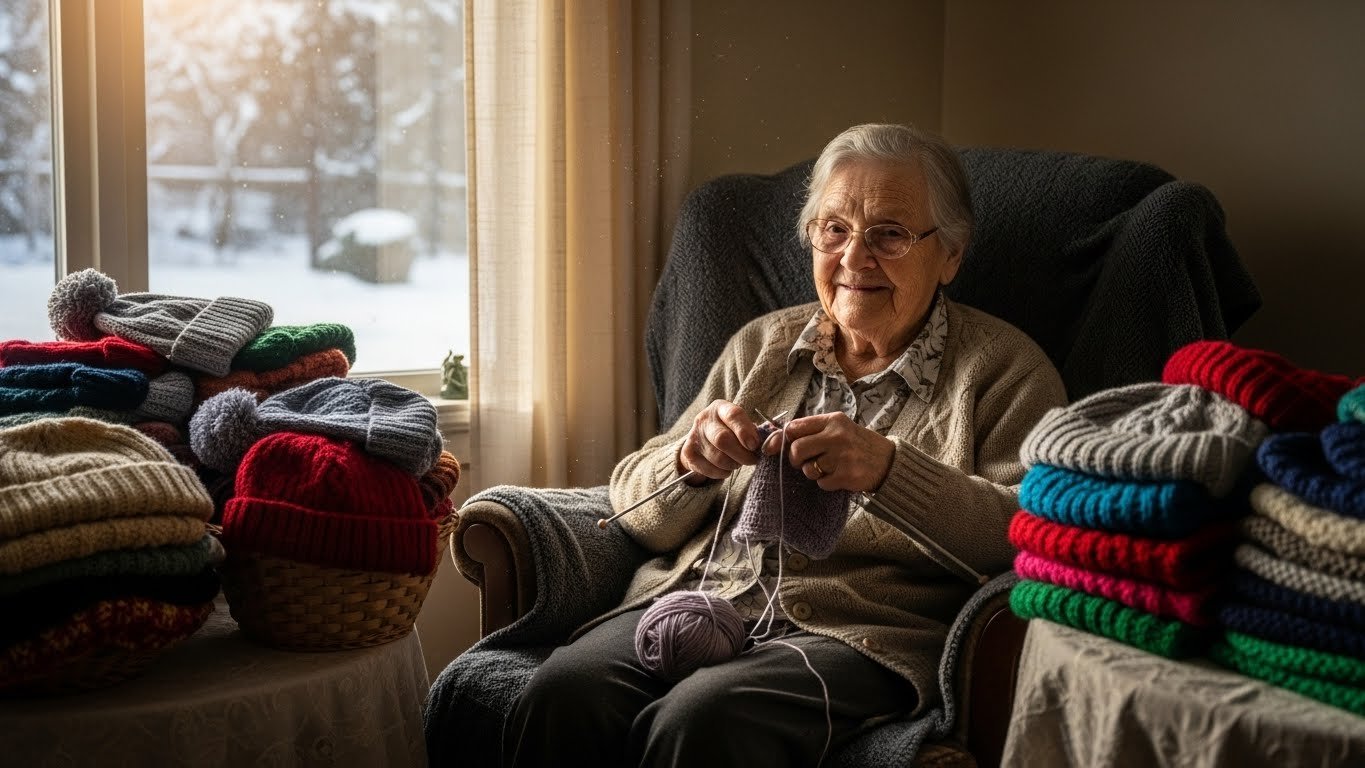
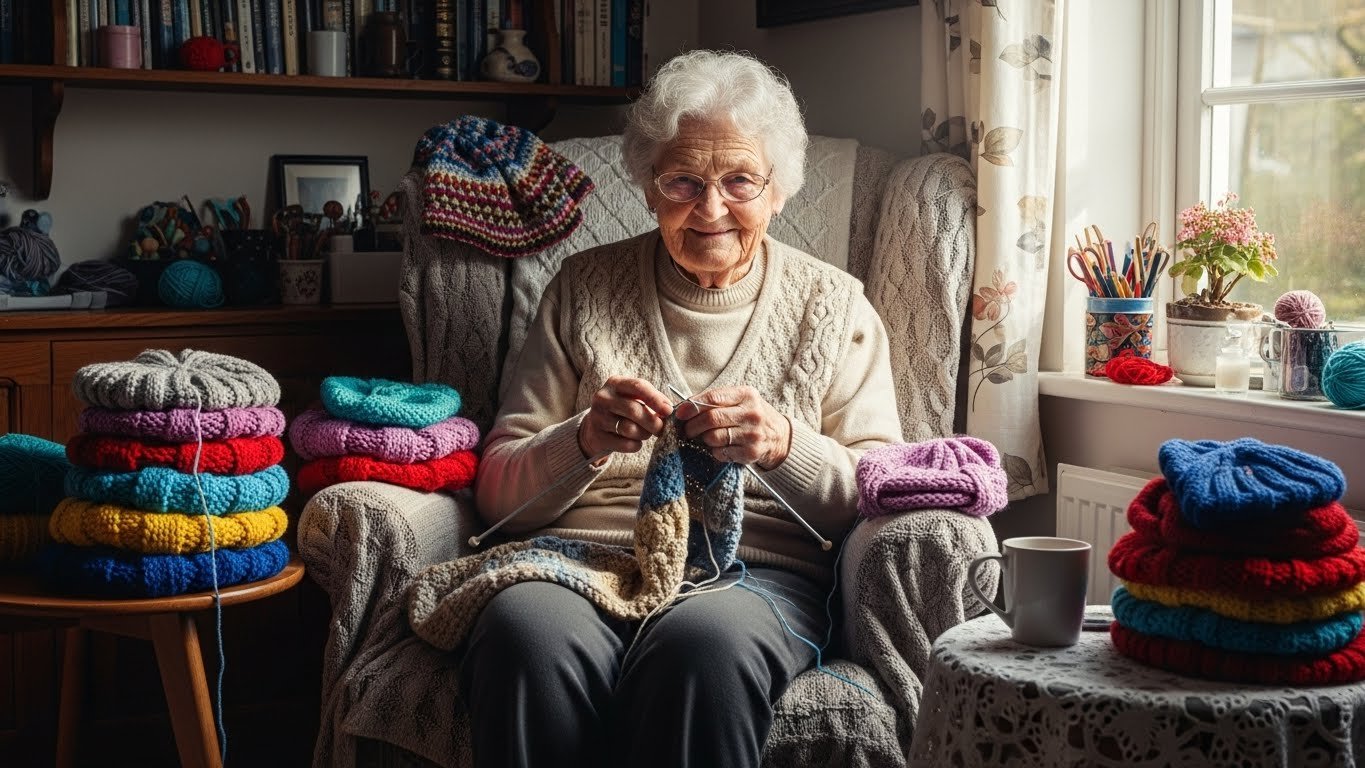
What started as personal project became mission. Margaret knitted constantly watching TV eating meals even during church service. She produced 3-5 hats weekly donating them to local homeless shelter. Over years she made hundreds of hats each one representing hours of work and mountains of love.
The Growing Mission
Shelter staff noticed Margaret’s consistent donations and asked if they could share her story in newsletter. Response overwhelmed everyone. Dozens of people offered to donate yarn. Others asked how they could help. Margaret organized knitting group at senior center teaching others while making hats together.
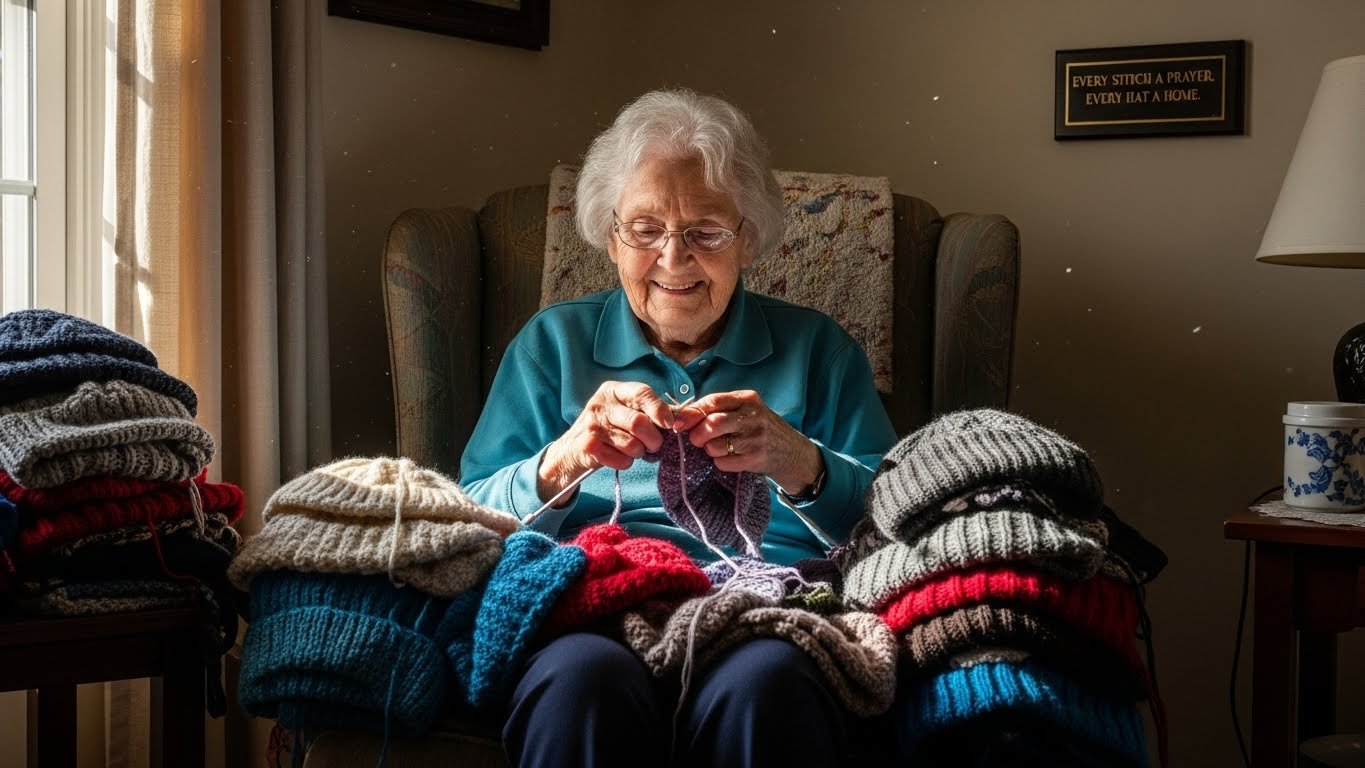
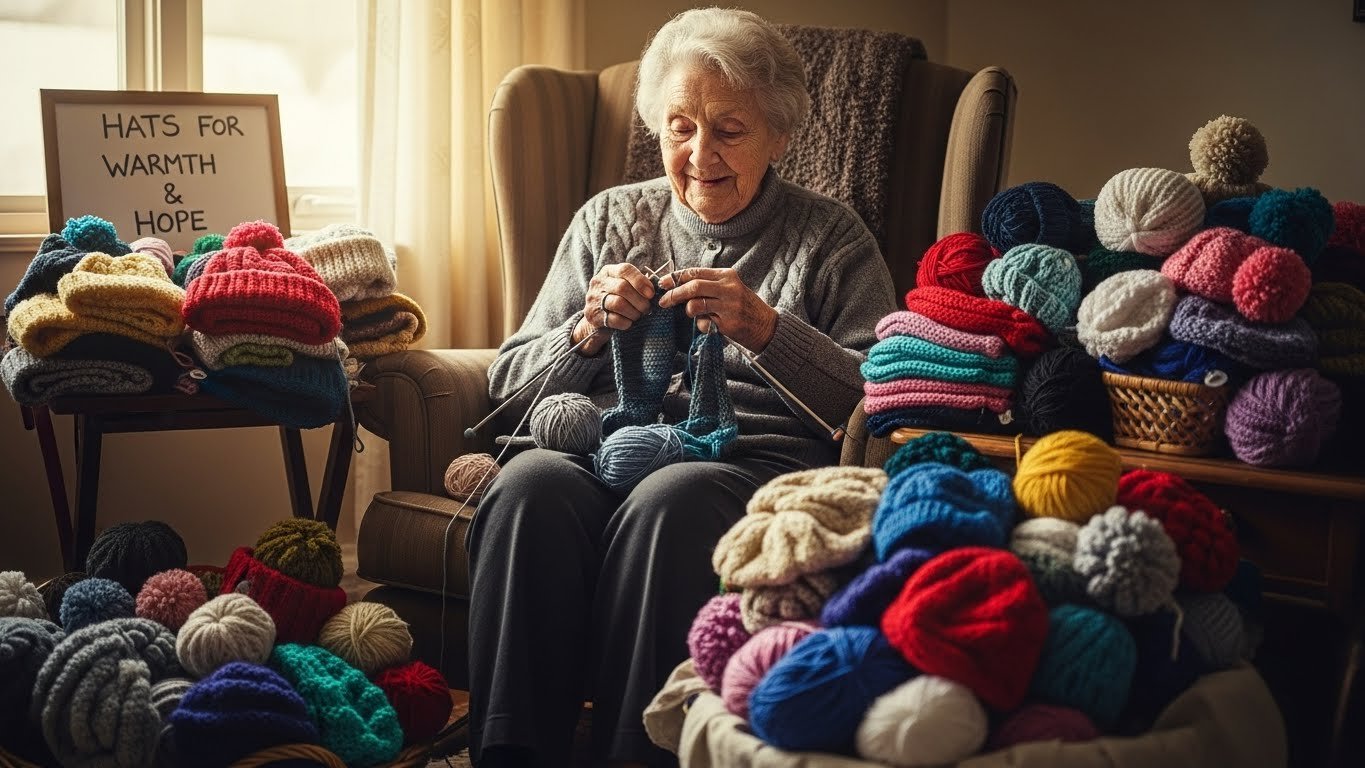
The group called themselves ‘Margaret’s Hat Brigade’ meeting twice weekly. Average age was 78. Together they produced 50-75 hats weekly in various sizes and colors. Local yarn shop donated supplies. Community center provided meeting space. What Margaret started alone had become community movement.
Personal Connection
When asked why hats specifically Margaret shared story from her childhood. Her family was poor during Great Depression. One winter her father lost job and couldn’t afford warm clothes. Kind neighbor knitted hats for Margaret and her siblings. Those hats kept them warm and showed someone cared during hardest time.
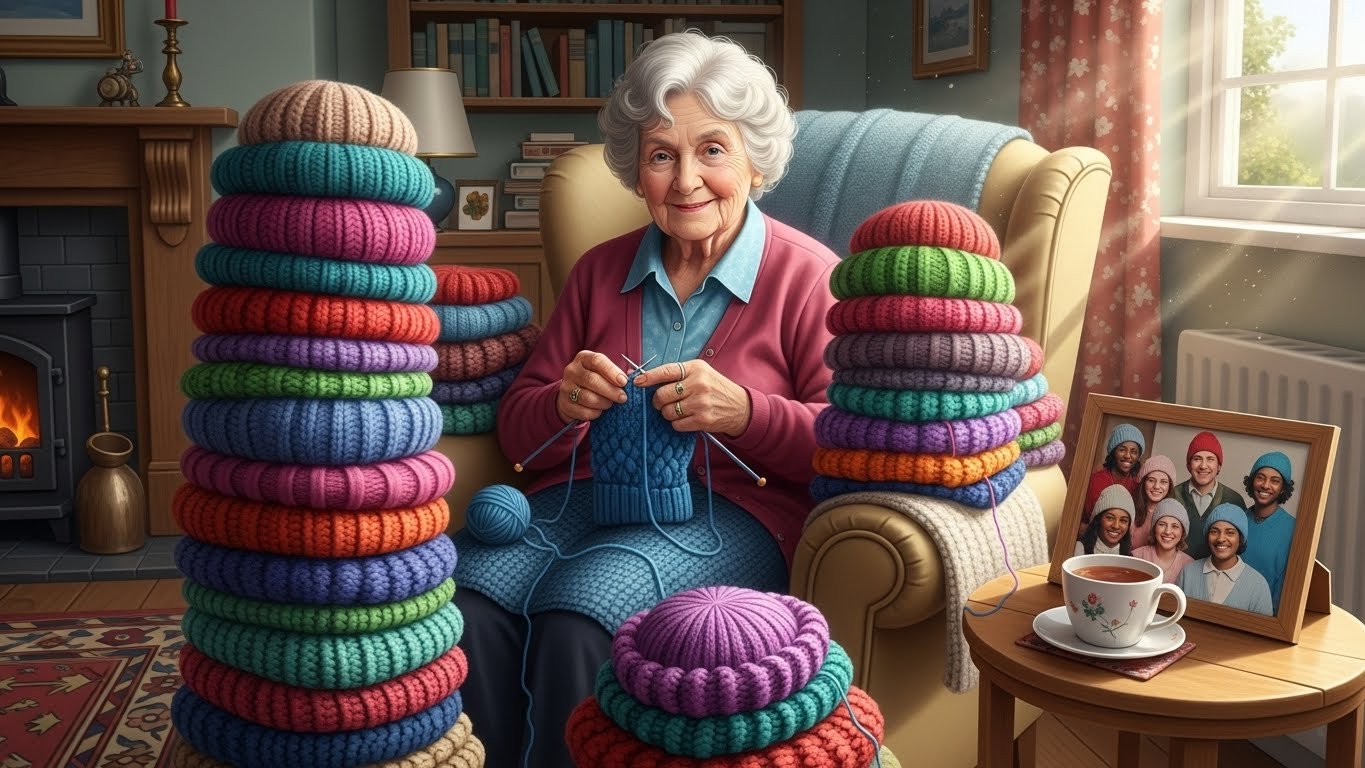
Margaret said: ‘I never forgot that neighbor’s kindness. These hats are my way of being that neighbor for people who need it now.’ This personal connection fueled her dedication making each hat expression of gratitude for kindness received decades earlier.
Impact Beyond Warmth
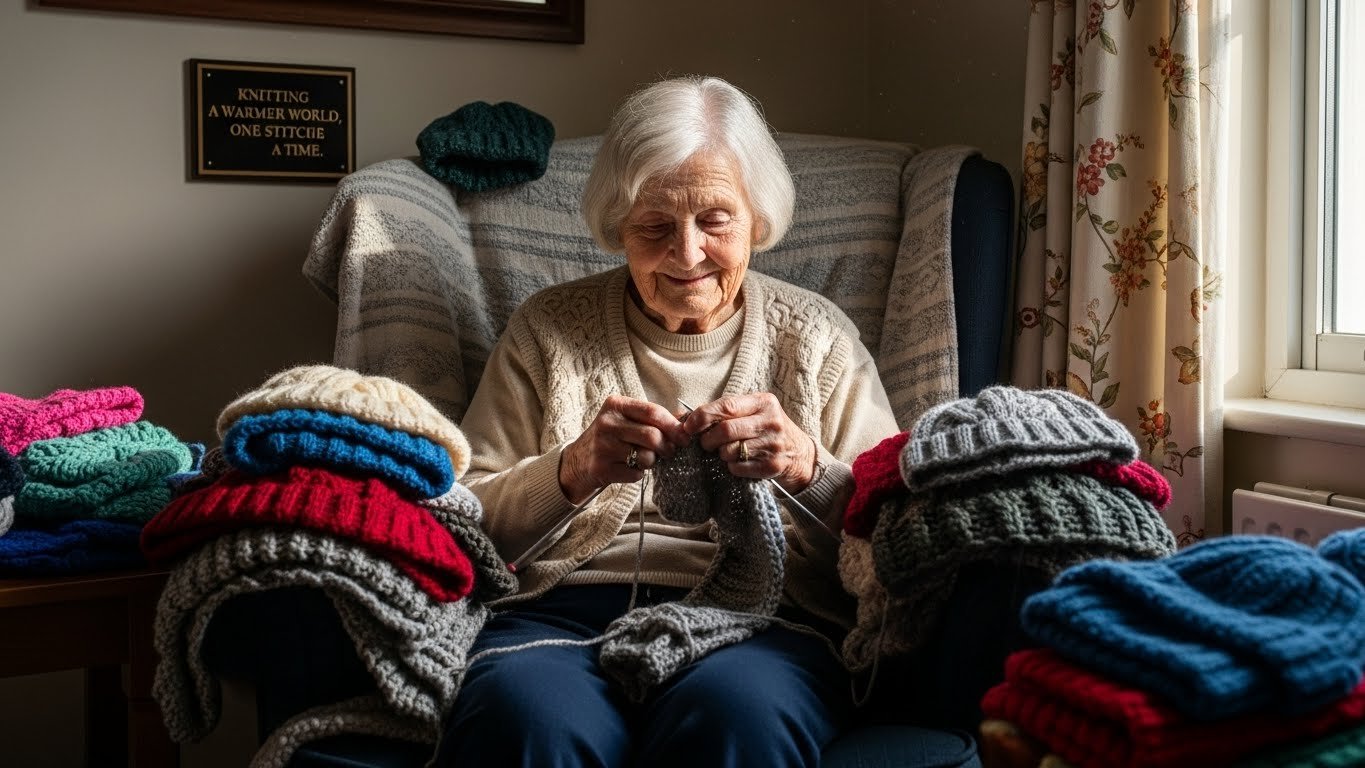
Homeless shelter director noted hats provided more than physical warmth. Recipients felt seen and valued. Handmade items conveyed care that mass-produced donations didn’t. Many kept their hats for years even after securing housing treasuring them as symbols of humanity during difficult times.
One recipient wrote thank-you note saying Margaret’s hat kept him warm during coldest night on street and reminded him people still cared. He carried that note for years eventually showing it to Margaret after securing housing and job. Meeting her became emotional moment for both demonstrating how small acts create lasting impact.
The Movement Spreads
Story of Margaret’s Hat Brigade went viral inspiring knitting groups globally. Thousands of groups formed following her model meeting regularly to knit for homeless populations in their communities. Social media connected groups allowing sharing of patterns tips and encouragement.
An organization formed coordinating hat donations nationwide collecting handmade items from knitting groups and distributing them to shelters across country. Within two years over 100,000 hats were donated demonstrating scalability of grassroots compassion.
Margaret lived to see movement she started grow beyond anything she imagined. At 95 she attended conference celebrating hat brigade movement meeting knitters from across country who credited her with inspiring their work. She remained humble saying she was just knitting hats like her neighbor did decades ago.
This story shows that age doesn’t limit capacity to create change. Margaret could have spent retirement watching television. Instead she chose purposeful activity that evolved into global movement. Her persistence dedication and willingness to share her mission created ripples affecting thousands of people experiencing homelessness worldwide.
The Lasting Impact
This story continues to resonate with millions worldwide, demonstrating the power of compassion and human connection. The viral nature brought awareness to important issues while celebrating kindness and empathy that exists in communities everywhere. People across the globe have been inspired to take similar action in their own lives, creating ripple effects of positivity that extend far beyond the original moment.
Educational institutions have incorporated this story into curricula addressing social emotional learning, demonstrating how real-world examples help students understand abstract concepts like compassion and integrity. Teachers report that students connect more deeply with actual events than theoretical discussions, making stories like this invaluable teaching tools.
Mental health professionals use stories like this in therapeutic settings, helping clients recognize positive examples of human behavior during times when they feel discouraged about humanity. These narratives serve as counterbalance to negative news that dominates media coverage, reminding us that goodness exists abundantly even when headlines suggest otherwise.
Community Response and Programs
Community organizations have developed programs inspired by this example, creating structured opportunities for people to practice similar acts of kindness and service. The ripple effects continue expanding as each person touched by the story makes choices influenced by what they witnessed, demonstrating how viral moments can create lasting social change.
Years after the initial viral moment, this story continues circulating during relevant cultural moments and seasonal periods. Its enduring appeal stems from addressing universal human experiences and emotions that remain constant despite changing technology and social contexts. Great stories transcend their specific contexts to speak to fundamental truths about kindness, resilience, and the human capacity for compassion.
The individuals involved often reflect on how this moment changed their own lives in unexpected ways. What began as ordinary circumstance became defining experience that shaped how they understand themselves and their capacity to impact others through choices made in seemingly small moments that turn out to be extraordinarily significant.
Personal Transformations
The individuals directly involved in this story experienced profound personal transformations that extended far beyond the initial viral moment. They discovered that their actions, born from simple human compassion, resonated with millions of people worldwide who saw themselves reflected in either the giver or receiver of kindness. This recognition validated their choices and inspired them to continue making compassion central to how they live their daily lives.
For those who witnessed or learned about this moment through viral sharing, many reported feeling motivated to look for opportunities to help others in their own communities. This collective inspiration demonstrates how single acts of kindness captured and shared can create waves of positive action rippling outward through society, touching people who never met anyone directly involved but felt moved to emulate the compassion they witnessed.
This story ultimately reminds us that in world often focused on division and conflict, moments of genuine human connection and kindness still break through, capturing attention and hearts precisely because they represent our better nature. These stories matter not just for temporary feel-good emotions but because they model behavior worth emulating and remind us that individual choices to help others matter enormously, creating impacts that extend far beyond what we can immediately see or measure in the moment of action.