We like to believe that honesty exists regardless of circumstance, but when someone with nothing does the right thing at great personal cost, it reveals character in its purest form. This is a story about that kind of extraordinary integrity.

James had been homeless for eight months. After losing his job due to company downsizing, a series of unfortunate events—medical bills, no savings, expired lease—led him to the streets. He did odd jobs when possible, stayed at shelters when space was available, and maintained his dignity despite his circumstances.
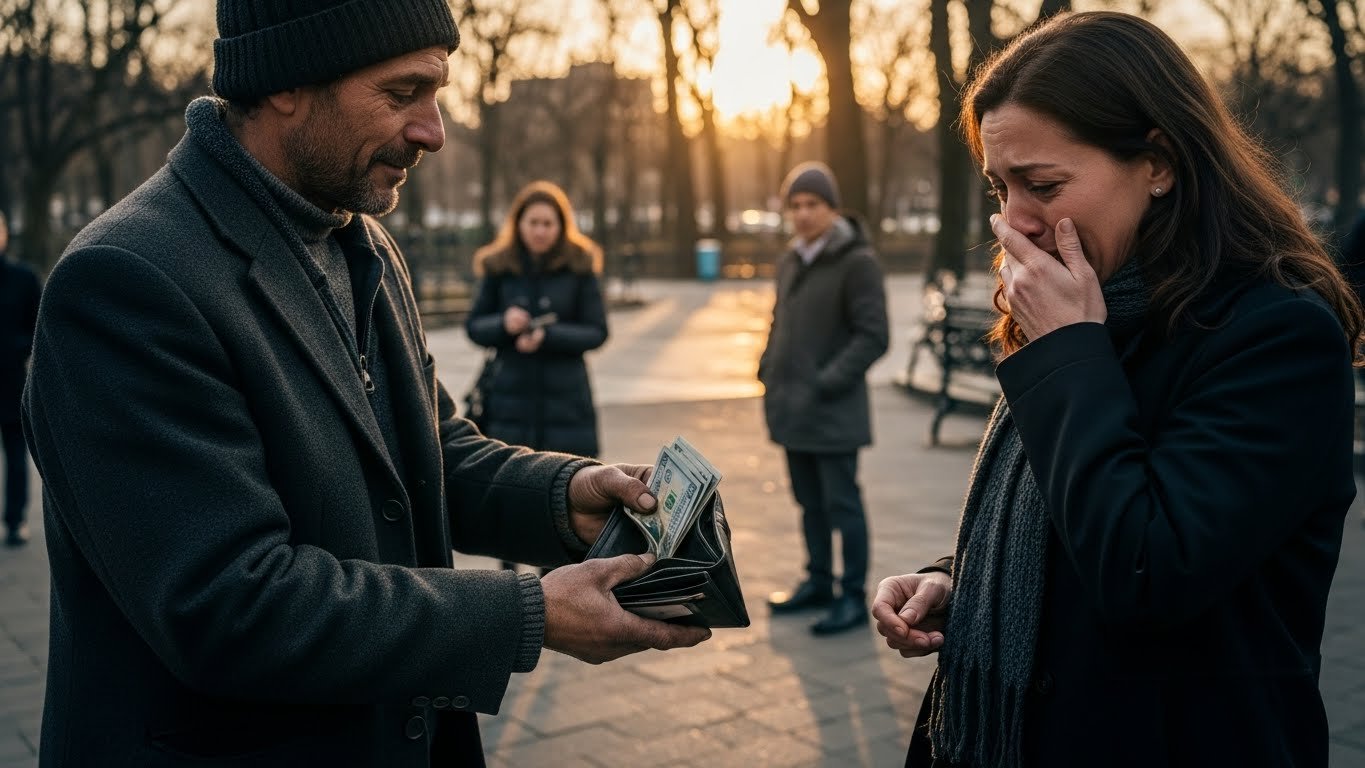
Tom was a small business owner who had just made a significant cash withdrawal to pay contractors working on his shop renovation. He put the envelope with $2,000 cash in his jacket pocket, along with his wallet containing credit cards, ID, and family photos.
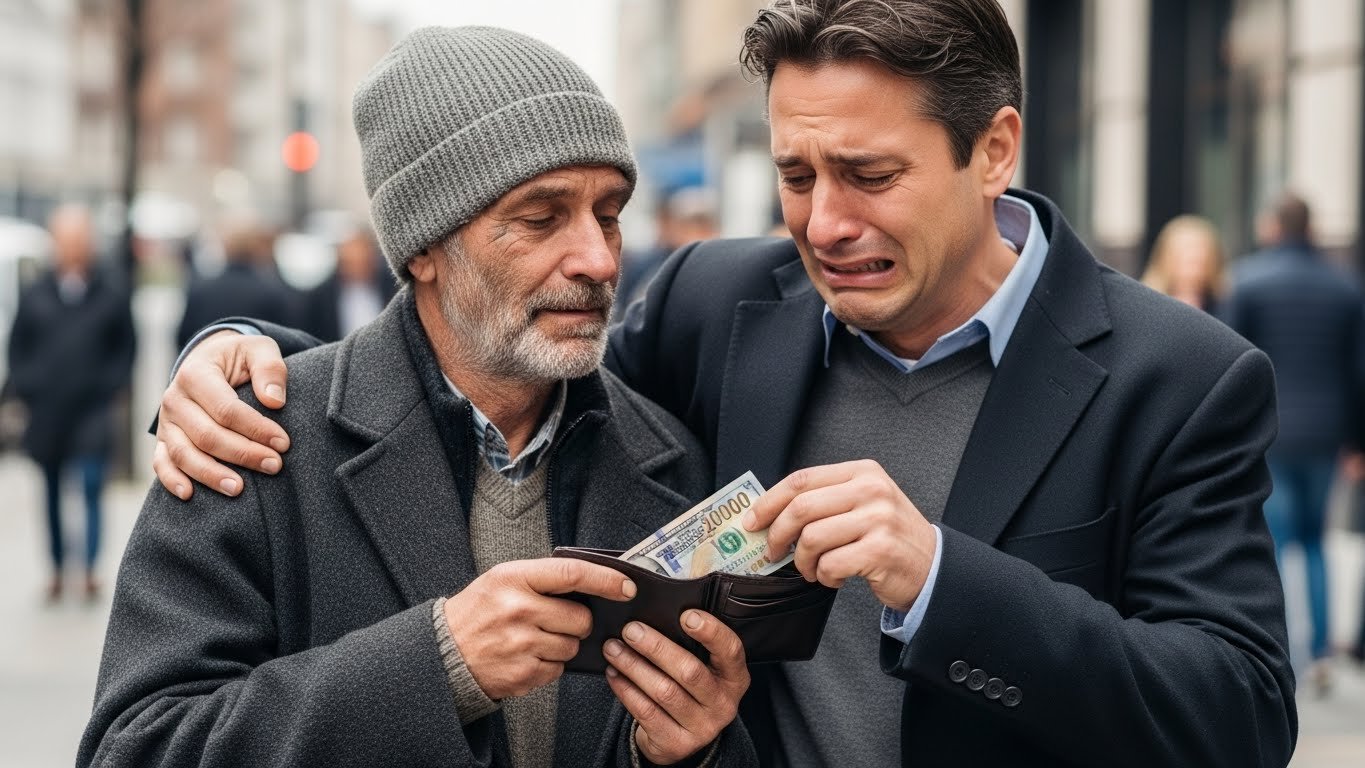

Somewhere during Toms errands, his wallet fell out of his pocket. He didnt notice until hours later. The panic was immediate—the cash was significant, but replacing the ID and cards would be a nightmare. He retraced his steps frantically but found nothing.

James found the wallet on the sidewalk near a bus stop. When he opened it to look for identification, he saw the envelope with cash. Two thousand dollars—more money than he had seen in months. For someone in James situation, this money could mean hotels instead of shelters, regular meals, perhaps even first and last months rent to get off the streets.

James sat on the bench holding that wallet for several minutes, facing a decision. He could take the cash and leave the wallet where it might be found. He could keep everything. Or he could do what he knew was right, regardless of his circumstances.
The decision took less time than the deliberation. James had been raised to do the right thing. Being homeless didnt change who he was fundamentally. He looked at the ID in the wallet, found Toms business address, and began the long walk across town to return it.
The walk took over two hours. James arrived at Toms shop tired and nervous. He wasnt sure how Tom would react to a homeless man carrying his wallet. The stigma and suspicion attached to homelessness made every interaction complicated.
When James entered the shop and asked for Tom, the owner approached with confusion. James extended the wallet and explained simply: I found this. I wanted to make sure you got it back. Everything is inside.
Tom opened the wallet in disbelief. The cash was there. Every card. Everything. He looked at James—disheveled, clearly homeless, who had walked across the city to return this wallet when he could have easily kept the money and no one would have known.
Tom asked James to wait. He went to the back office, and James worried he was calling the police, that his good deed would somehow backfire. But Tom returned with tears in his eyes. He handed James $200 as a reward. James initially refused, saying he was just doing the right thing.
Tom insisted, and James finally accepted the money gratefully. But Tom wasnt finished. He asked about James situation. When James explained his homelessness, Tom made a decision that would change everything.
Tom offered James a job. The shop needed help with renovation work and eventually with regular operations. Tom said he needed someone he could trust—and James had just proven his integrity beyond any doubt. He offered fair pay, help finding housing, and a chance to rebuild.
James, overwhelmed, accepted. The moment marked a turning point—from homelessness toward stability, from despair toward hope. All because he made the hard choice to do the right thing despite his circumstances.
Tom shared this story on social media because he wanted people to know about James character and to challenge stereotypes about homelessness. The post went viral quickly, touching millions of people.
Commenters praised both men—James for his integrity and Tom for his generous response. Many noted that this story shows how one good decision and one persons willingness to help can create transformation.
Donations poured in for James from people moved by his story. Tom set up a fund to help James get fully back on his feet, and the community response exceeded expectations. Within weeks, James had enough for a security deposit on an apartment, work clothes, and a financial cushion.
Six months later, Tom shared an update. James had become a valued employee and reliable friend. He had secured housing, reestablished contact with family members, and was steadily rebuilding his life. The $2,000 he returned had come back to him multiplied many times over—not just in money, but in opportunity and restored dignity.
James told reporters that the hardest part of homelessness wasnt the physical discomfort—it was being invisible, being dismissed, having people assume the worst about you. Tom saw him as a person, trusted him, and gave him a chance. That meant more than the money or job—it meant being seen as human again.
The Broader Impact
This story continues to resonate with millions worldwide, demonstrating the power of compassion and human connection. The viral nature brought awareness to important issues while celebrating kindness and empathy that exists in communities everywhere.
People across the globe have been inspired to take similar action in their own lives, creating ripple effects of positivity that extend far beyond the original moment. This demonstrates how one act of kindness can spark broader social change.
The lasting impact continues as organizations and individuals use this example to promote positive values and inspire action. Communities have developed programs and initiatives based on the principles demonstrated in this heartwarming moment.
Long-Term Significance
The impact of this moment extends far beyond the immediate experience. Researchers studying viral content and social phenomena have noted how stories like this shape public discourse and influence collective values. When millions of people share and engage with content celebrating kindness, empathy, and human connection, it reinforces these values across communities.
Educational institutions have incorporated this story into curricula addressing social emotional learning, demonstrating how real-world examples help students understand abstract concepts like compassion and integrity. Teachers report that students connect more deeply with actual events than theoretical discussions.
Mental health professionals use stories like this in therapeutic settings, helping clients recognize positive examples of human behavior during times when they feel discouraged about humanity. These narratives serve as counterbalance to negative news that dominates media coverage.
Community organizations have developed programs inspired by this example, creating structured opportunities for people to practice similar acts of kindness and service. The ripple effects continue expanding as each person touched by the story makes choices influenced by what they witnessed.
Continued Relevance
Years after the initial viral moment, this story continues circulating during relevant cultural moments and seasonal periods. Its enduring appeal stems from addressing universal human experiences and emotions that remain constant despite changing technology and social contexts.
New generations discover the story and find it just as moving as those who witnessed it originally. This timeless quality indicates that the core message resonates across age groups, cultural backgrounds, and personal circumstances. Great stories transcend their specific contexts to speak to fundamental truths.
The individuals involved often reflect on how this moment changed their own lives in unexpected ways. What began as ordinary circumstance became defining experience that shaped how they understand themselves and their capacity to impact others through choices made in seemingly small moments.