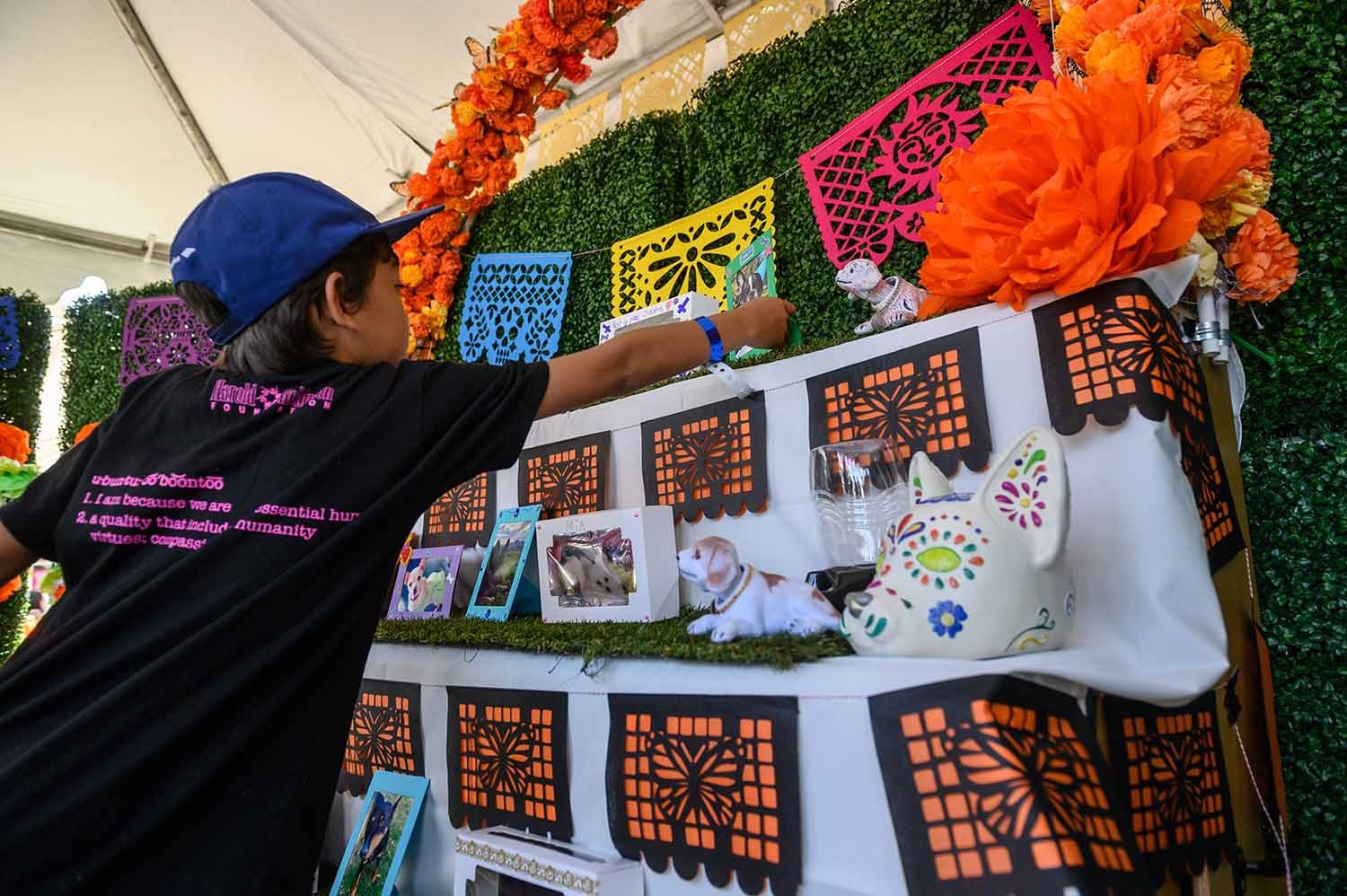
Our pets are part of the family, so when they die, it’s only natural that we may feel similar levels of grief to when a human loved one dies. Unlike with people, though, we typically have far fewer (if any) rituals to honor our late furry friends — but an annual tradition in Los Angeles is creating that opportunity.
Called the Beloved Pets Ofrenda, the event is held at the LA Zoo and invites participants to create a tribute for their departed pets. “Ofrendas,” meaning “offerings” in Spanish, are an important part of Día de los Muertos, or Day of the Dead, an annual Mexican holiday that takes place Nov. 1-2. Traditionally, deceased family members are celebrated during this time, but each year starting in early October, the Pets Ofrenda welcomes visitors who want to pay their respects to the animals they’ve lost.
“No matter your background, grief surrounding the loss of a pet is a universal feeling,” Coral Barreiro, community program manager at the LA Zoo, said in a 2024 news release. Speaking to the pet parenting app Kinship, she added: “With Los Angeles having the largest population of Mexicans living outside of Mexico, [the ofrendas are] important not only because of representation, but also because seeing other Angelenos participate, no matter their background, gives a feeling of appreciation and acceptance.”
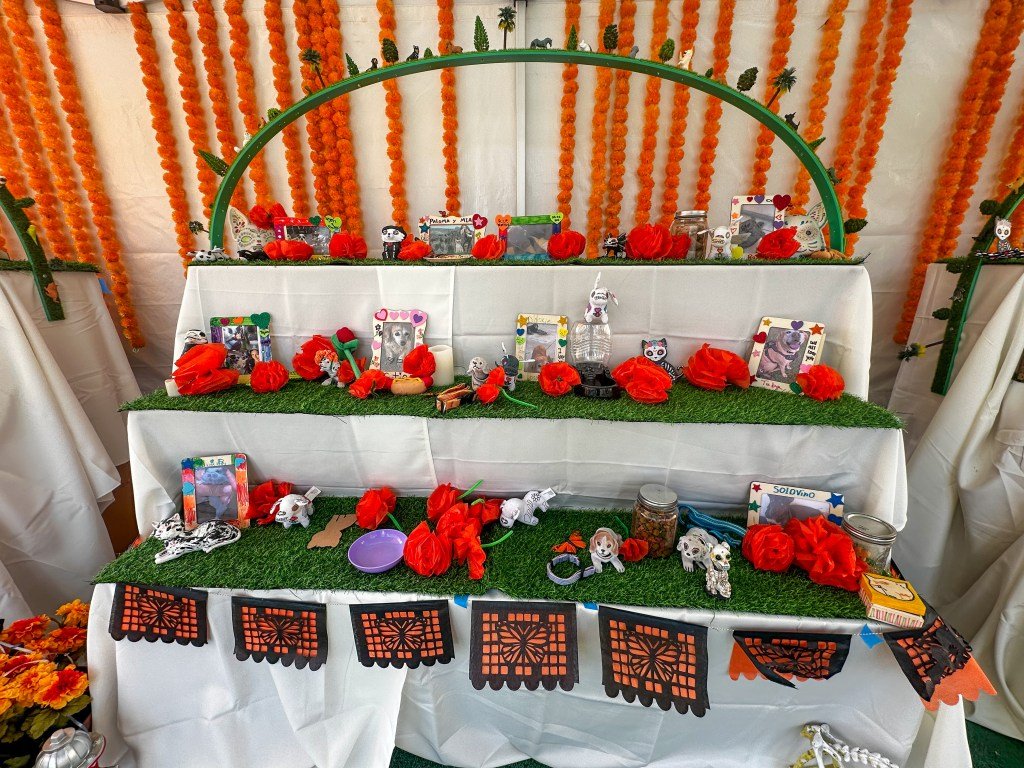
Here’s how it works: During staffed hours on Saturdays and Sundays, visitors can use the zoo’s supplies to draw pictures of their pets or print photos from their phones to place in complimentary frames. Once they’ve decorated their frames with the available art supplies, they can add their pictures to the altar — and make use of nearby tissues when emotions inevitably rise. And while the assisted activity is only available on the weekends, the ofrenda is open for people to pay their respects or contribute their own items during all public zoo hours.
Dogs and cats take up their fair share of the pets honored, but Barreiro told LAist that a plethora of fish and a fig beetle have also been among the 1,000 or so photos that are placed on the altar. Now in its fifth year, the Pets Ofrenda “has been one of the most successful community programs that we have run at the LA Zoo,” she said to Kinship. “Empathy for wildlife is what we want to nurture at the zoo, and I truly believe that empathy for living things begins at home with our furry, scaly, or feathery family members.”
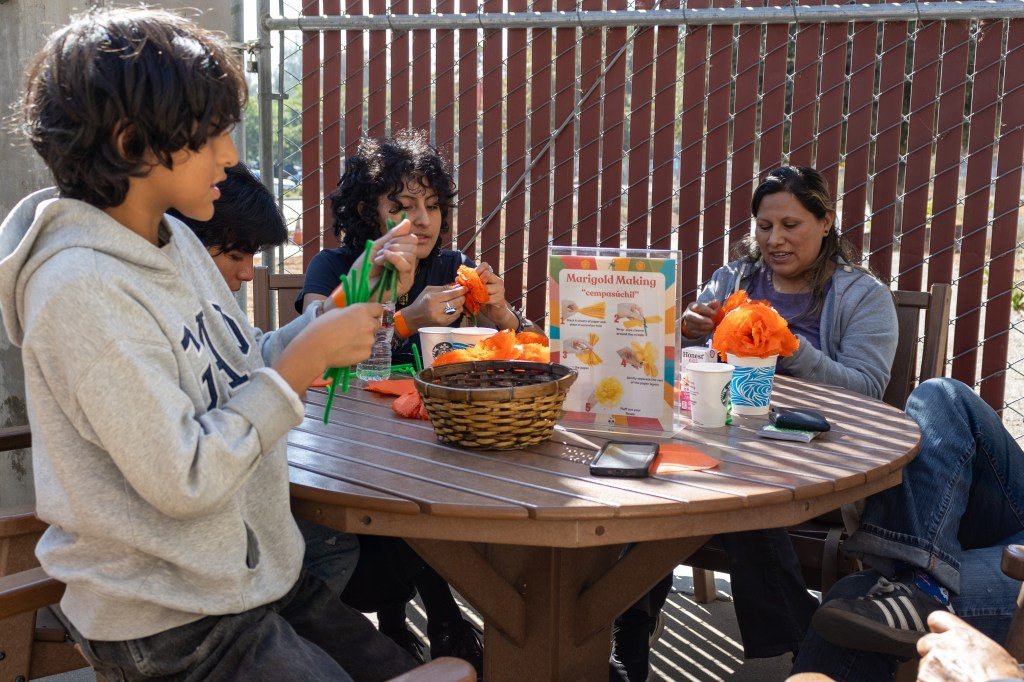
Barreiro was inspired to start the celebration in 2019, after her beloved 13-year-old Yorkie, Vegas, died. At first, she made an ofrenda in her office at the zoo and encouraged her coworkers to participate — but “it was so well-received that we had to make it bigger, adjust it, and make room for all the contributions,” she said.
Then in 2020, the zoo began collaborating with the nonprofit cultural center Plaza de la Raza, which has hosted a Día de los Muertos event nearly every year since its inception. “In any family who loves their pets, animals are a part of the family and our lives, so an altar to remember them with more joy than sorrow, at least at this time of the year and in this way, is fitting and healing,” Maria Jimenez Torres, executive director for the center, said in a 2022 news release.
Can’t make it to LA this year? Folks across the country are creating their own pet ofrendas at home — here’s a quick guide to building yours.
RELATED: Love Animals But Can’t Adopt? Take Shelter Pets on a Field Trip
Understanding animal behavior and ecology is crucial for developing effective conservation strategies that protect both individual species and the ecosystems they inhabit. Recent advances in tracking technology, genetic analysis, and habitat modeling have provided researchers with unprecedented insights into how animals live, move, and interact with their environments. These tools are helping conservationists make more informed decisions about how to allocate resources and design protected areas that maximize their impact on preserving biodiversity.
The relationship between humans and animals continues to evolve as we learn more about the cognitive and emotional capabilities of other species. Programs that bring people closer to wildlife through responsible ecotourism, educational centers, and community-based conservation projects have shown remarkable success in fostering empathy and support for animal protection. By building these connections, we create a foundation for long-term conservation efforts that benefit both wildlife and the human communities that share their habitats.
Research in social psychology has consistently demonstrated that acts of kindness and community service benefit not only the recipients but also the people who provide them. Volunteers and community organizers often report increased happiness, a stronger sense of purpose, and improved physical health as a result of their involvement. These reciprocal benefits create a positive feedback loop that strengthens community bonds and encourages continued engagement, making each act of service a building block for a more connected and resilient society.
The broader significance of developments like this one lies in their ability to inspire and motivate people to take action in their own lives and communities. Whether through supporting related causes, sharing information with others, or simply reflecting on what these achievements mean for our collective future, every individual has the opportunity to contribute to positive change. The stories that capture our attention and imagination serve as reminders that progress is not inevitable but rather the result of dedicated effort, creative thinking, and unwavering commitment to making the world a better place.
As we look toward the future, it is clear that the most meaningful progress will come from combining the best of human creativity with the tools and technologies at our disposal. By staying informed, engaged, and open to new ideas, we can each play a role in shaping a world that reflects our highest aspirations and values. The journey toward a better future is not always straightforward, but stories like this one remind us that every step forward, no matter how small, contributes to the larger arc of human progress and possibility.