Plenty of hip bakeries these days are leaning into heritage wheat flours and other ancient grain varieties, but it’d be hard to top the historic value of the flour being milled at the Holgate Windmill. Nestled in a suburb of York, England, the brick tower mill is the oldest working windmill of its kind in the country, still grinding grain as it did 255 years ago.
Since it was built in 1770, the surrounding area has changed quite a bit — there’s now a roundabout, housing development, and cars. Yet the historic structure remains much as it ever was, thanks to a preservation society of about 40 volunteers who worked for 10 years to restore the mill starting in 2001, as well as revive the rare (and meticulous) craft of producing flour by windmill.
“It is an important building. Of all of the hundreds of windmills which were once found around Yorkshire, this is the only working one left,” Steve Potts, a trustee of the group and its head miller, told SWNS, adding, “We think it is important to keep the industry of milling going.”
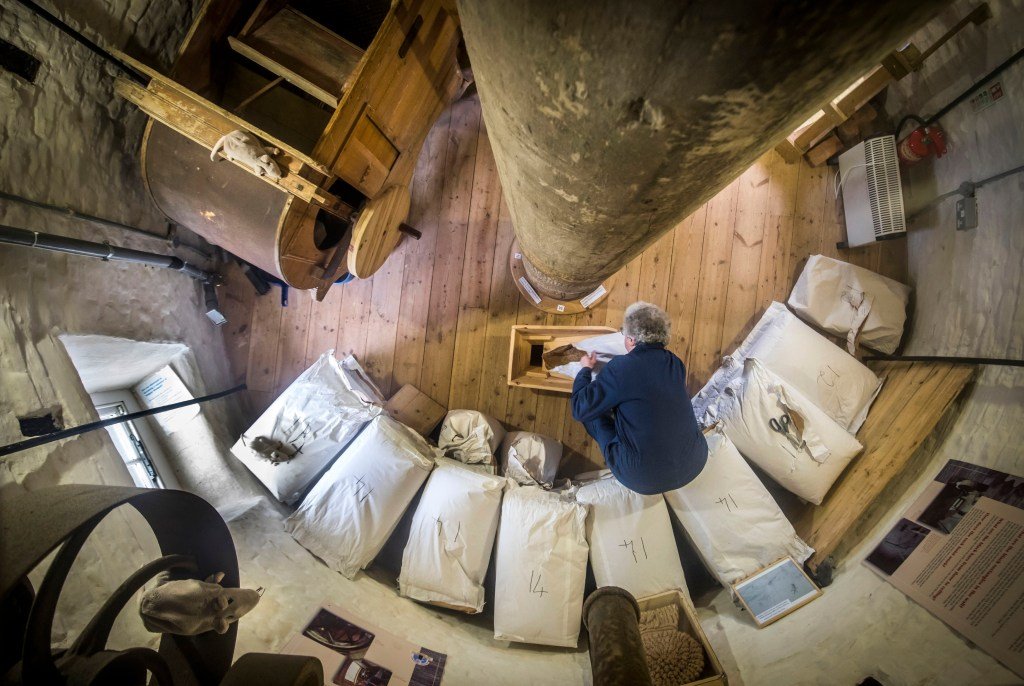
You can take a tour of the milling process (complete with videos) on Holgate’s website — but essentially, power generated from the windmill’s sails is driven down to milling stones weighing around a ton each. Once the grain is ground into flour, the latter is collected via a round wooden tun and taken down a chute to the windmill’s lowest level to be weighed and bagged.
Before it was adopted by the Holgate Windmill Preservation Society more than two decades ago, the windmill was left empty and decrepit for 68 years. But prior to its abandonment, it was active from the time it was built until 1933. George Waud, its original owner, bought the land on which it was constructed in 1768 — and three generations of his family operated it until 1851, when it was sold to a local named John Musham.
The structure passed through the hands of several owners and operators over the following decades, most notably Joseph Peart’s, who purchased it in 1855. Along with elevating the tower by nearly 9 feet, Peart invested in a steam engine, chimney, and cast-iron machinery still present today.
In 1939, six years after the windmill stopped production, its then-owner sold it to the City of York Council, known back then as the York Corporation, and it fell into disrepair while housing was built around it. At the time, smaller windmills like Holgate were being surpassed due to the rising popularity of larger and more advanced roller mills.
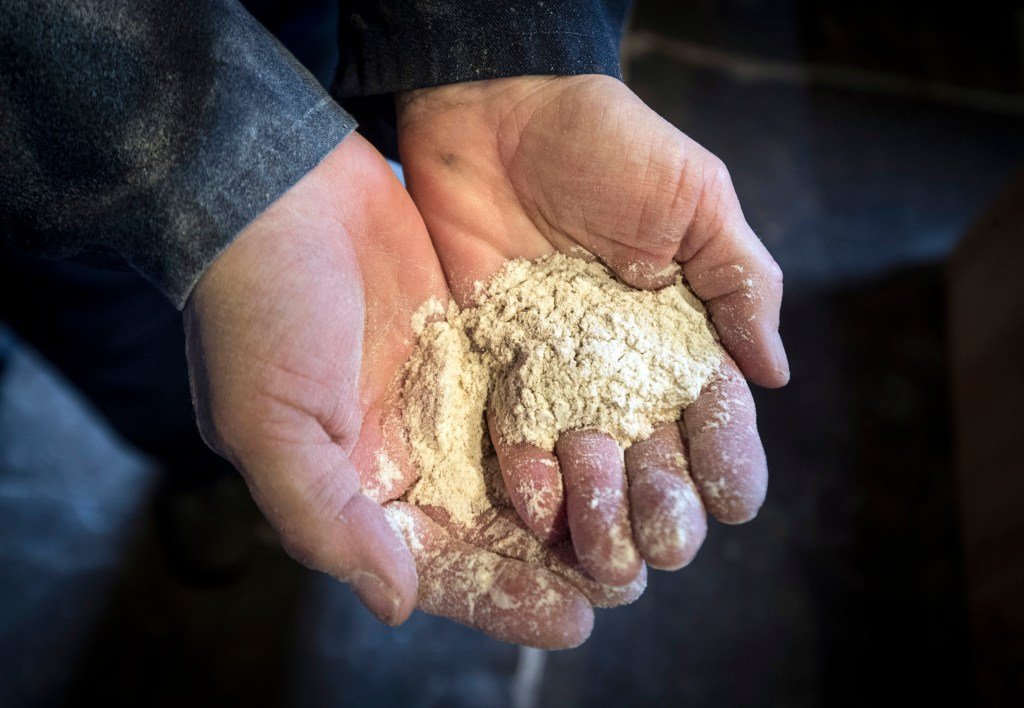
These days, following the over $669,000 restoration, flour is typically milled at Holgate twice a week. As of 2023, its grain and spelt are sourced from nearby counties, and the site mills up to 4.4 tons of flour annually. The windmill is still owned by the City of York Council, although the Preservation Society entirely controls operations.
“It is a dying art in many ways, and if we weren’t doing it, in a couple of years there may be no one left who knows how to,” Potts said. “Our plan is to keep its legacy going forever.”
Stories like this remind us of the power of human ingenuity and compassion. In a world where headlines are often dominated by negativity, it is refreshing to see developments that inspire hope and positive change. The story behind england’s oldest working windmill is still making flour like it’s 1770 is one that resonates with people across different backgrounds and cultures, highlighting the universal desire for progress and connection.
Art and creative expression have always played a fundamental role in how we process emotions, communicate ideas, and build connections across cultures. Whether through visual arts, music, literature, or performance, creative works have the power to inspire, challenge, and heal. In an increasingly digital world, artists are finding new ways to reach audiences and create experiences that bridge traditional and contemporary forms of expression.
Supporting the arts through public funding, community spaces, and educational programs is essential for maintaining a vibrant cultural landscape. Studies have consistently shown that engagement with the arts improves mental health, enhances cognitive abilities, and strengthens community bonds. By valuing and investing in creative endeavors, societies foster innovation, empathy, and a sense of shared identity that enriches the lives of all their members.
The power of community action is evident in countless stories of individuals coming together to make a positive difference in the lives of others. Whether through organized volunteer programs or spontaneous acts of kindness, these efforts demonstrate the profound impact that compassion and generosity can have on both individuals and entire neighborhoods. Research has consistently shown that communities with strong social connections experience better health outcomes, lower crime rates, and greater overall life satisfaction.
Building stronger communities requires intentional effort and ongoing commitment from people of all ages and backgrounds. Mentorship programs, neighborhood gatherings, and collaborative projects create opportunities for meaningful connection and mutual support. In an era where digital communication often replaces face-to-face interaction, the importance of fostering genuine human connections through community engagement has never been more apparent or more necessary.
Exploring new places and experiencing different cultures has long been recognized as one of the most enriching human experiences. Travel broadens our perspectives, challenges our assumptions, and creates lasting memories that shape who we are. From historic landmarks and natural wonders to vibrant urban centers and quiet rural retreats, every destination offers unique opportunities for discovery and personal growth that cannot be replicated through any other means.
Responsible tourism has become an important consideration as more people travel the globe. Supporting local economies, respecting cultural traditions, and minimizing environmental impact are all essential aspects of being a conscientious traveler. Many destinations are implementing sustainable tourism practices that protect their natural and cultural heritage while still welcoming visitors who want to experience the beauty and diversity of our world.
Looking ahead, developments like the one described in this story offer a glimpse into a future filled with possibility and positive change. While challenges certainly remain, the creativity, determination, and compassion demonstrated by the individuals and organizations involved serve as a powerful reminder that progress is always within reach when people are willing to work together toward a common goal.
As we continue to navigate the complexities of modern life, stories like these provide both inspiration and practical examples of how innovation, kindness, and perseverance can make a real difference. By sharing and celebrating these achievements, we not only honor the efforts of those involved but also encourage others to pursue their own ideas for creating positive change in their communities and beyond.
RELATED: This List of America’s “Most Endangered Historic Places” Is Helping to Save Them