This article was originally written by Stephen Beech at SWNS — the U.K.’s largest independent news agency, providing globally relevant original, verified, and engaging content to the world’s leading media outlets.
When archaeologists opened King Tutankhamun’s tomb in Egypt in the 1920s, the unexpected deaths among members of the excavation team that followed sparked rumors of a “pharaoh’s curse.” Decades later, doctors speculated that fungal spores may have contributed to those deaths. Now, researchers at the University of Pennsylvania have found a new way to harness that fungus: using it to treat leukemia.
Detailing their findings in the journal Nature Chemical Biology, the scientists isolated a new class of molecules from Aspergillus flavus, a toxic crop fungus linked to infamous deaths following the excavations of ancient tombs. After the chemicals were modified, the resulting compound showed “promising” cancer-killing properties that rivaled FDA-approved drugs when tested against leukemia cells, according to a press release, opening new frontiers for fungal medicines.

King Tutankhamun’s tomb in Egypt
“Nature has given us this incredible pharmacy,” senior author Sherry Gao said. “It’s up to us to uncover its secrets. As engineers, we’re excited to keep exploring, learning from nature, and using that knowledge to design better solutions.”
The Egyptian tomb isn’t the only location to house the perilous fungus. In 1970, a dozen scientists entered the 600-year-old tomb of Casimir IV in Poland, and within weeks, all but two of them died. It was later revealed that the tomb contained A. flavus, which contains toxins that can lead to lung infections, particularly in individuals with compromised immune systems.
In the study, the researchers set out to find ribosomally synthesized and post-translationally modified peptides, or RiPPs, which boast cancer-killing properties and are found more frequently in bacteria than fungus. After scanning a dozen strains of Aspergillus and comparing the chemicals they produced with known RiPP building blocks, the scientists decided to study A. flavus further — specifically, a particular protein that they believed could act as a source of fungal RiPPs.
“Purifying these chemicals is difficult,” first author Qiuyue Nie said. “The synthesis of these compounds is complicated. But that’s also what gives them this remarkable bioactivity.”
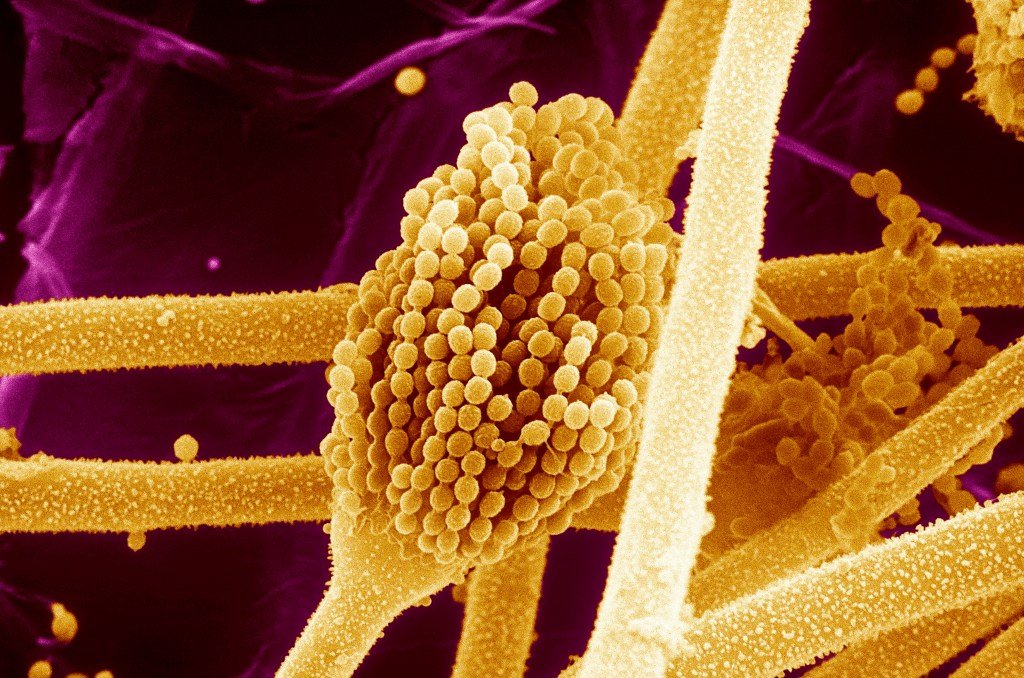
The chemical markers demonstrating the presence of RiPPs vanished when the researchers switched off the genes that make the protein. Then, the scientists purified four different RiPPs and found a common thread: a unique structure of interlocking rings. Based on this discovery, they named these molecules asperigimycins. Upon mixing asperigimycins with human cancer cells, two of the four variants demonstrated potent effects against leukemia cells; another, when combined with a fatty molecule, performed as well as cytarabine and daunorubicin — two drugs that have been used for decades to treat leukemia.
Further experiments suggested that asperigimycins likely disrupt the process of cell division. “Cancer cells divide uncontrollably,” Gao explained. “These compounds block the formation of microtubules, which are essential for cell division.” However, the compounds had little to no effect on breast, liver, or lung cancer cells, suggesting that asperigimycins’ disruptive effects are specific to certain types of cells.
In addition to demonstrating the medical potential of asperigimycins, the research team identified similar clusters of genes in other fungi, suggesting that more fungal RiPPs remain to be discovered.
“Even though only a few have been found, almost all of them have strong bioactivity,” Nie said. “This is an unexplored region with tremendous potential.”
Moving forward, the researchers plan to test asperigimycins in animal models, aiming to one day move to human clinical trials. “Fungi gave us penicillin,” Gao said. “These results show that many more medicines derived from natural products remain to be found.”
RELATED: New Study Creates First-Ever “Atlas” Describing Link Between Fungi and 35 Types of Cancer
Experts in the field have noted that discoveries like this one are part of a broader trend toward more personalized and preventive healthcare. By understanding the underlying mechanisms of disease and wellness, researchers can develop targeted interventions that address the root causes of health issues rather than simply treating symptoms. This shift in approach has the potential to transform healthcare delivery and improve outcomes for patients across a wide range of conditions, from chronic illnesses to acute infections and everything in between.
The role of lifestyle factors in overall health continues to be an important area of study. Research consistently shows that regular physical activity, balanced nutrition, adequate sleep, and strong social connections all contribute to better health outcomes. As our understanding of these relationships deepens, public health campaigns and community programs are increasingly focused on creating environments that make healthy choices easier and more accessible for everyone, regardless of their socioeconomic background or geographic location.
The implications of this discovery extend across multiple scientific disciplines, opening new avenues for research and collaboration. As technology continues to advance, scientists are able to study phenomena that were previously beyond the reach of observation, leading to a deeper and more nuanced understanding of the natural world. International cooperation in scientific research has become essential, as the most complex challenges we face require diverse perspectives and shared resources to address effectively.
Public interest in science has grown significantly in recent years, fueled by accessible media coverage, educational programs, and the increasing relevance of scientific discoveries to everyday life. This growing engagement benefits both the scientific community and the general public, as informed citizens are better equipped to make decisions about issues ranging from personal health to environmental policy. Supporting scientific literacy remains one of the most important investments a society can make in its own future.
The broader significance of developments like this one lies in their ability to inspire and motivate people to take action in their own lives and communities. Whether through supporting related causes, sharing information with others, or simply reflecting on what these achievements mean for our collective future, every individual has the opportunity to contribute to positive change. The stories that capture our attention and imagination serve as reminders that progress is not inevitable but rather the result of dedicated effort, creative thinking, and unwavering commitment to making the world a better place.
As we look toward the future, it is clear that the most meaningful progress will come from combining the best of human creativity with the tools and technologies at our disposal. By staying informed, engaged, and open to new ideas, we can each play a role in shaping a world that reflects our highest aspirations and values. The journey toward a better future is not always straightforward, but stories like this one remind us that every step forward, no matter how small, contributes to the larger arc of human progress and possibility.