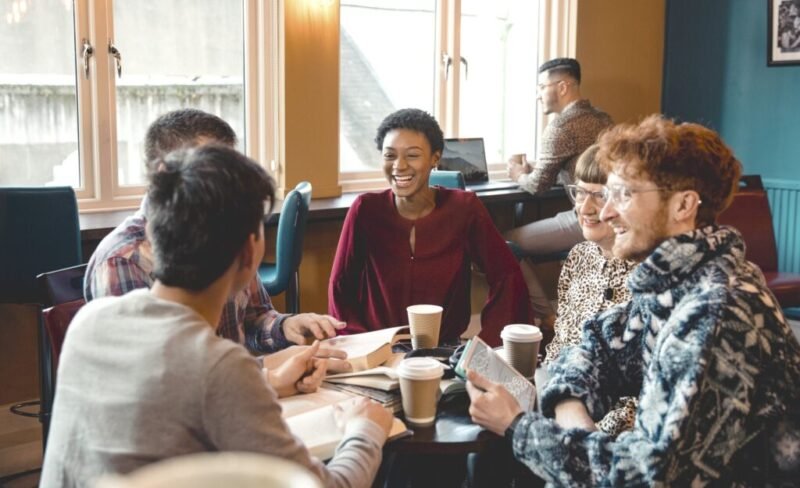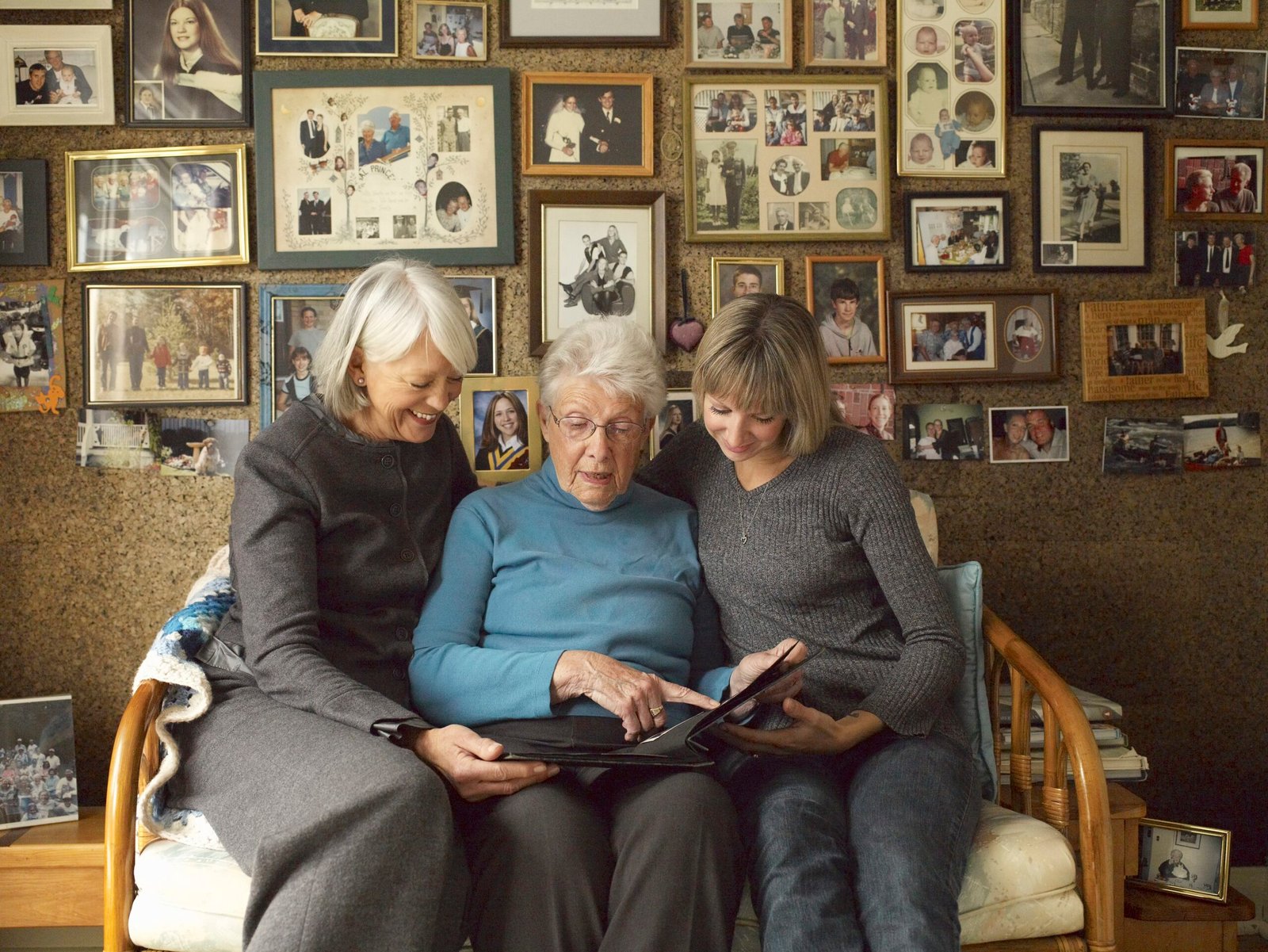
Whether it’s refusing to throw away your long-dead Tamagotchi or continuing to cuddle a childhood stuffed animal hanging on for dear life, nostalgia can manifest in odd ways. But according to a recent study, the tendency toward it may lead to a more productive outcome than just rewatching Gilmore Girls for the fifth time (no judgment here!).
Researchers from the University of Buffalo and Kyoto University found that nostalgic people may be more motivated to strengthen and maintain long-term relationships than those who aren’t. Why? When we reminisce about the good times we’ve spent with loved ones, we appreciate them more — and are more driven to maintain those connections, the team suggests.

“People who feel nostalgic more often and value those memories are more aware of their important relationships and the need to nurture them,” Kuan-Ju Huang, a doctoral student at Kyoto University who co-authored the study, said in a statement. “This means these friendships may be more likely to last, even as we get older and our lives, interests, and responsibilities change.”
Inspired by his own wistfulness during the COVID-19 pandemic, Huang and his research partner, Ya-Hui Chang, administered three experiments to evaluate nostalgia’s impact on relationships. They looked specifically at nostalgia as a “trait-like characteristic” (as opposed to an experience), which they defined in the study as a proclivity to think fondly about good, meaningful experiences from the past. All three experiments analyzed the effect of nostalgia on the size of social networks and levels of closeness in relationships.
The first experiment surveyed a group of 676 undergraduate students at the University of Buffalo about their social networks and how nostalgic they are. Those who scored higher in the characteristic had the closest relationships — with people they said it would be hard to imagine life without — and were more motivated to maintain their social networks.
The results of the second experiment, which surveyed U.S. adults with an average age of 40 and included a brief personality test, were similar. Nostalgic folks were increasingly driven to maintain their relationships, which led to larger social circles than their less nostalgic peers. The third, however, aimed to see if those tendencies would stand the test of time.
The researchers looked at subjects from an ongoing Dutch study over a seven-year period, and discovered that “those with low nostalgia experienced a dramatic decrease in the number of their closest social networks,” unlike the participants with high or moderate nostalgia. “In other words, nostalgia seems to protect individuals from losing close network members over the long term,” the authors write.
Unsurprisingly, the experiment that analyzed data from a seven-year period also indicated that the participants grew more nostalgic as they aged, scoring 0.26 points higher on average in 2019 than 2013. Huang said this finding aligns with prior research on the subject, while adding that young adults can also be increasingly wistful.

“There is evidence showing that young adults report nostalgic feelings slightly more frequently than middle-aged adults, while older adults report dramatically higher levels of nostalgia,” he said, adding: “Young adults may reminisce about their high school years or family moments when facing challenges during the transition to adulthood. For older adults, nostalgia is more likely to be associated with experiences about loss and feelings of a limited future.”
Now that a likely link between nostalgia and social networks has been established, the authors muse that further research could examine exactly what strategies nostalgia motivates us to use when it comes to maintaining our relationships. But for now, it’s enough to know that there’s another good reason to reminisce.
Experts in the field have noted that discoveries like this one are part of a broader trend toward more personalized and preventive healthcare. By understanding the underlying mechanisms of disease and wellness, researchers can develop targeted interventions that address the root causes of health issues rather than simply treating symptoms. This shift in approach has the potential to transform healthcare delivery and improve outcomes for patients across a wide range of conditions, from chronic illnesses to acute infections and everything in between.
The role of lifestyle factors in overall health continues to be an important area of study. Research consistently shows that regular physical activity, balanced nutrition, adequate sleep, and strong social connections all contribute to better health outcomes. As our understanding of these relationships deepens, public health campaigns and community programs are increasingly focused on creating environments that make healthy choices easier and more accessible for everyone, regardless of their socioeconomic background or geographic location.
Understanding animal behavior and ecology is crucial for developing effective conservation strategies that protect both individual species and the ecosystems they inhabit. Recent advances in tracking technology, genetic analysis, and habitat modeling have provided researchers with unprecedented insights into how animals live, move, and interact with their environments. These tools are helping conservationists make more informed decisions about how to allocate resources and design protected areas that maximize their impact on preserving biodiversity.
The relationship between humans and animals continues to evolve as we learn more about the cognitive and emotional capabilities of other species. Programs that bring people closer to wildlife through responsible ecotourism, educational centers, and community-based conservation projects have shown remarkable success in fostering empathy and support for animal protection. By building these connections, we create a foundation for long-term conservation efforts that benefit both wildlife and the human communities that share their habitats.
Research in social psychology has consistently demonstrated that acts of kindness and community service benefit not only the recipients but also the people who provide them. Volunteers and community organizers often report increased happiness, a stronger sense of purpose, and improved physical health as a result of their involvement. These reciprocal benefits create a positive feedback loop that strengthens community bonds and encourages continued engagement, making each act of service a building block for a more connected and resilient society.
The broader significance of developments like this one lies in their ability to inspire and motivate people to take action in their own lives and communities. Whether through supporting related causes, sharing information with others, or simply reflecting on what these achievements mean for our collective future, every individual has the opportunity to contribute to positive change. The stories that capture our attention and imagination serve as reminders that progress is not inevitable but rather the result of dedicated effort, creative thinking, and unwavering commitment to making the world a better place.
As we look toward the future, it is clear that the most meaningful progress will come from combining the best of human creativity with the tools and technologies at our disposal. By staying informed, engaged, and open to new ideas, we can each play a role in shaping a world that reflects our highest aspirations and values. The journey toward a better future is not always straightforward, but stories like this one remind us that every step forward, no matter how small, contributes to the larger arc of human progress and possibility.