If you thought driving in Los Angeles was inefficient, this route between two European cities takes the cake: As the crow flies, the Danish town of Rødbyhavn is only about 13 miles away from the German village of Puttgarden — but actually driving from one to the other would set you back five and a half hours.
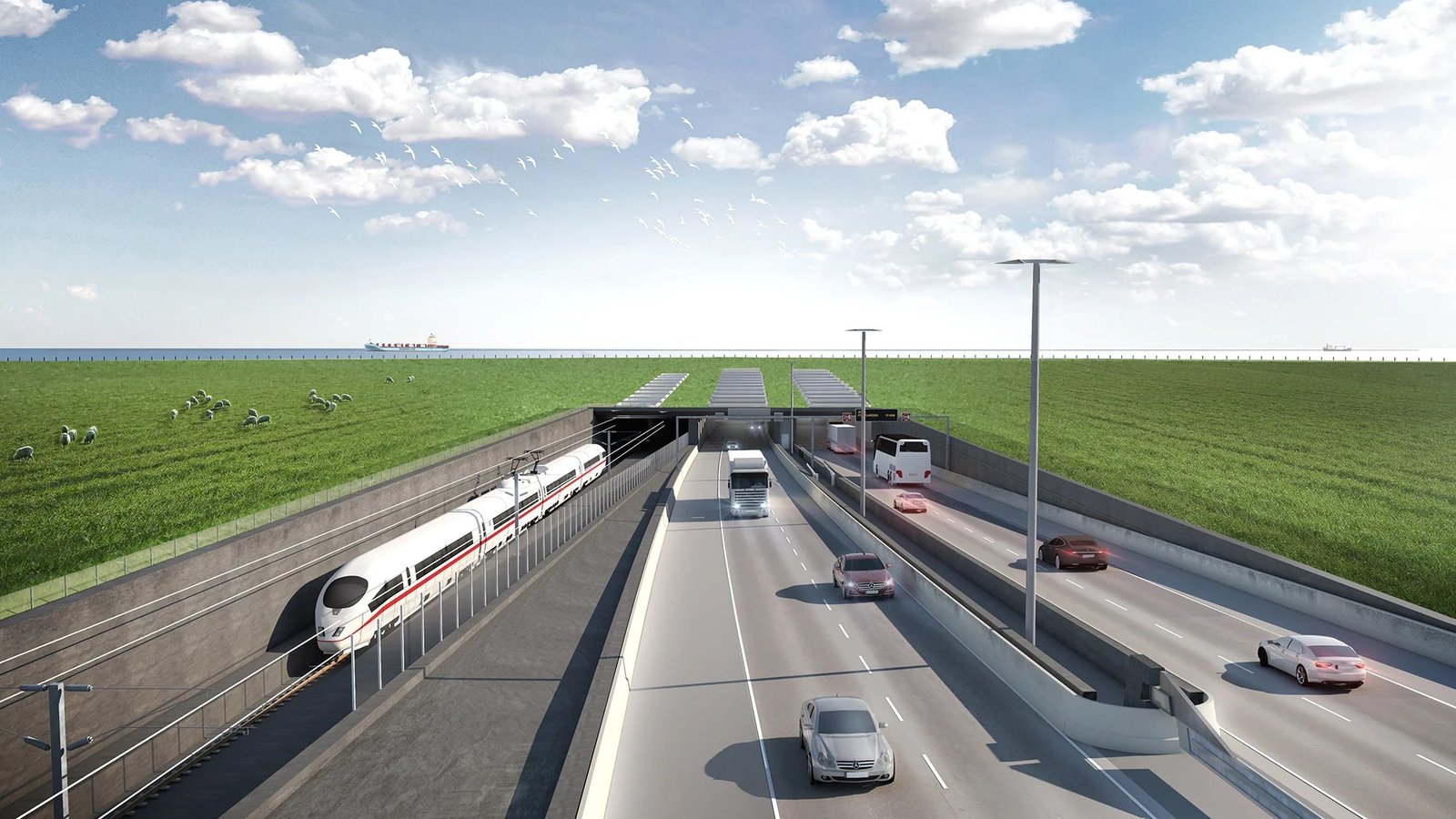
Thankfully, the world’s longest immersed tunnel is set to significantly improve that. The Fehmarnbelt tunnel, expected to be completed in 2029, will carve two double-lane highways and two electric rail lines beneath the Baltic Sea, which separates Rødbyhavn and Puttgarden. Currently, the shortest route between the towns involves a 45-minute ferry ride, but the new tunnel will cut travel time down to a mere 10 minutes by car and seven by train.
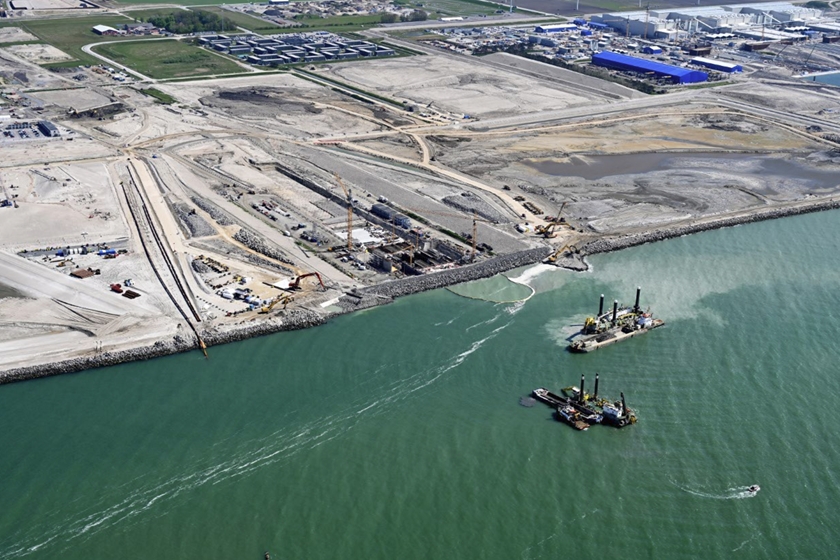
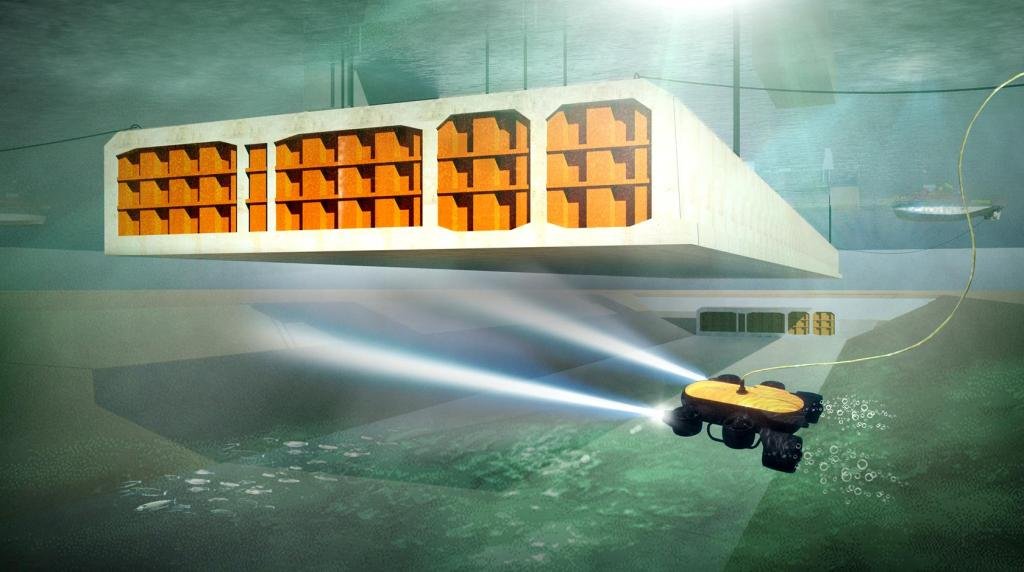
Aside from drastically increasing efficiency for one of the busiest shipping lanes on the globe, the structure will be an engineering marvel. As Denmark’s largest infrastructure project — costing over $8 billion — the 18-kilometer (about 11-mile) immersed tunnel will comprise 89 concrete sections, called elements. To construct it, a crew dug a trench into the seabed, and will next build the tunnel block by block, lowering and linking elements to create watertight connections.
The production involves creating 79 standard elements that are 217 meters (about 712 feet) long and weigh around 81,500 tons each, along with 10 special elements. The first section was cast in May 2024 — a milestone for the project, which began construction in 2020 on the Danish side and 2021 on the German one.
“Casting a single tunnel element is a major achievement in itself, but we still have a long way to go,” Sébastien Bliaut, director of Femern Link Contractors, the joint venture in charge of the tunnel’s design and construction, said in a news release at the time. “Nowhere else in the world does serial production of concrete elements of this size take place, but this is precisely what we have to master over the years ahead. Our goal is to transform the exceptional into routine practice.”
It takes nine weeks to produce each of these mammoth elements. And once they’ve been constructed, accurately placing them underwater is no small feat. Dredging the 12-meter-deep tunnel trench, which was completed last year, required uprooting nearly 15 million cubic meters (around 529 million cubic feet) of sand, stone, and soil, which will be repurposed into over 700 acres of nature and recreational areas on either side.
To insert an element in the tunnel, it’s first sealed at both ends to keep water out, then towed out into the ocean by tugboats. Next, ballast tanks within the elements are filled with water, and the element is lowered into its proper position on the seabed — at which point water is pumped out of ballast tanks to create a partial vacuum seal between each section, and a protective stone layer is laid over the top.
Femern A/S
When the first element is laid later this year, it will take the 22-person crew about 40 hours to complete the process, according to Denise Juchem, a spokesperson for Femern A/S, the state-owned Danish company at the project’s helm. And there’s no room for error.
“There will be no test run for the actual immersion,” Juchem shared with CNN. “It must work the first time. We will not compromise on quality and safety. That is why we are taking the necessary time to ensure that we are perfectly prepared.”
If all goes well, the completed tunnel will not only be a “game-changer for tourism” in Scandinavia, as VisitDenmark’s international market director Mads Schreiner told the outlet — but a win for the environment as well.
“By significantly reducing travel time between Germany and Denmark, it will make our country more accessible than ever for visitors from central Europe,” Schreiner said. “We expect to see a rise in self-drive tourism, weekend city breaks, and sustainable travel options such as train and cycling tourism.”
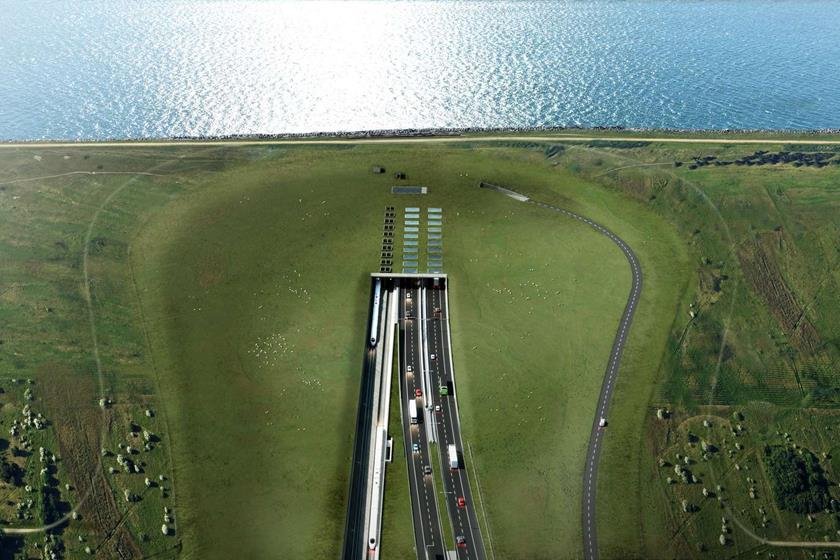
In a 2023 sustainability report, Femern A/S CEO Henrik Vincentsen also made it clear that redepositing the dredged materials into new land areas on either side of the tunnel is an important part of the project. “These sites are part of the natural environment that Femern A/S is establishing as a replacement for the areas affected by the project, and they will eventually develop into extensive wetlands with beach meadows, marshes, and dry grassland,” he wrote. “Femern A/S aims to leave not just more, but better, nature than before the project started.”
RELATED: Amtrak Set to Debut Country’s New High-Speed Electric Trains in Spring 2025
The broader significance of developments like this one lies in their ability to inspire and motivate people to take action in their own lives and communities. Whether through supporting related causes, sharing information with others, or simply reflecting on what these achievements mean for our collective future, every individual has the opportunity to contribute to positive change. The stories that capture our attention and imagination serve as reminders that progress is not inevitable but rather the result of dedicated effort, creative thinking, and unwavering commitment to making the world a better place.
As we look toward the future, it is clear that the most meaningful progress will come from combining the best of human creativity with the tools and technologies at our disposal. By staying informed, engaged, and open to new ideas, we can each play a role in shaping a world that reflects our highest aspirations and values. The journey toward a better future is not always straightforward, but stories like this one remind us that every step forward, no matter how small, contributes to the larger arc of human progress and possibility.
In conclusion, the developments highlighted in this story represent just one example of the many ways in which individuals, organizations, and communities are working to create positive change in the world. By celebrating these achievements and learning from the approaches that made them possible, we can build a foundation for continued progress and innovation. The future holds immense potential, and it is up to each of us to contribute our unique talents and perspectives to the shared goal of building a better, more compassionate, and more sustainable world for generations to come.