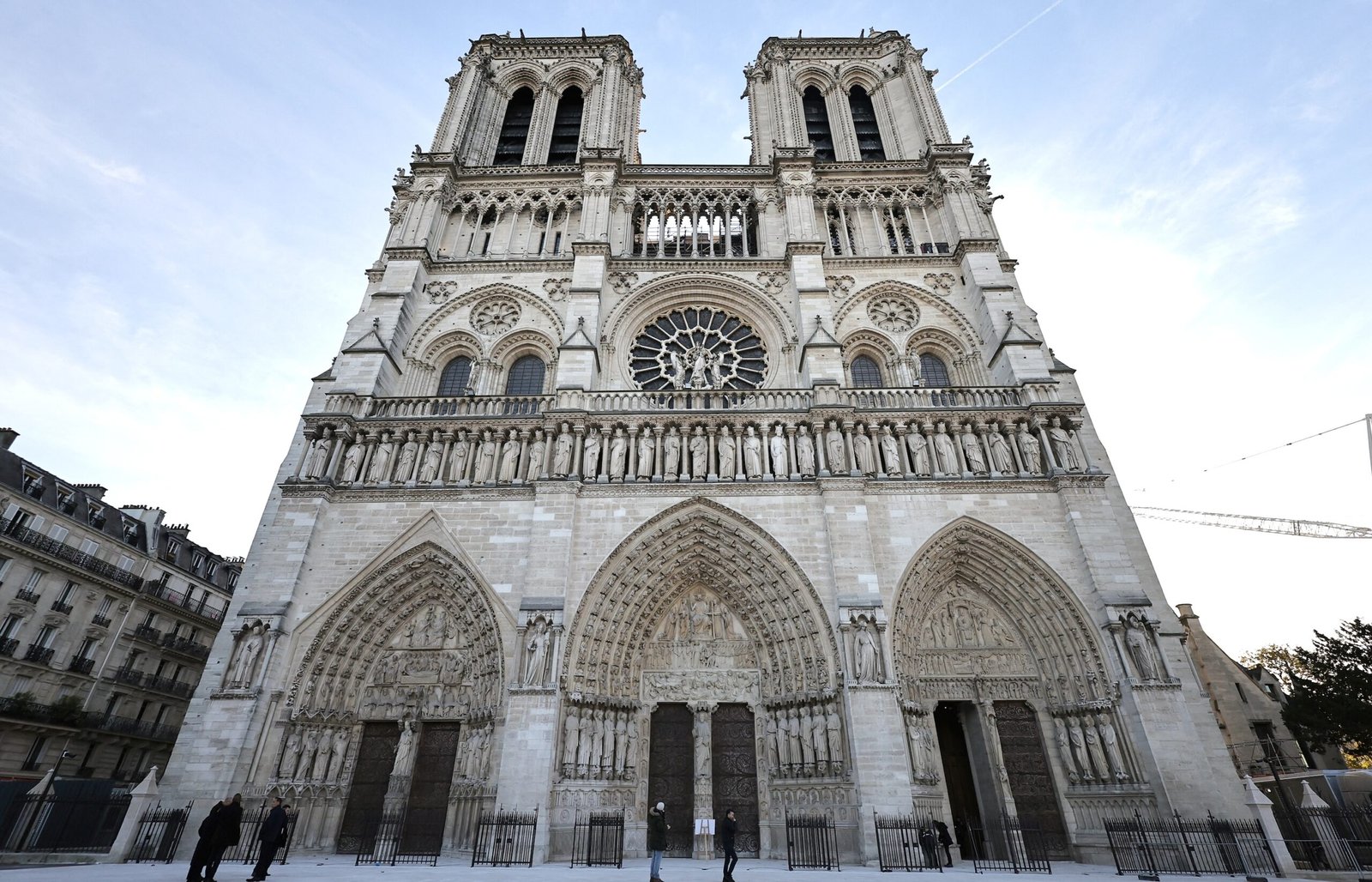
When a fire broke out at the Notre Dame Cathedral in April 2019, people the world over grieved with Parisians as centuries of history and culture went up in smoke alongside the sacred structure. In the nearly six years since, restoration teams have been working tirelessly to resurrect France’s iconic church, which was built over 850 years ago — and finally, it’s ready to open its doors again.
On Saturday afternoon, the archbishop of Paris presided over a private reopening ceremony, a high-security event that President Emmanuel Macron and around 50 other heads of state and government attended. It began with a door-opening rite, which was followed by a three-part church service accompanied by the choirs of the Notre-Dame de Paris Choir School.
After the service, the party started, so to speak. A stacked lineup of musicians performed, including South African opera singer Pretty Yende, Chinese pianist Lang Lang, French DJ Michaël Canitrot, and American cellist Yo-Yo Ma. Venezuelan conductor Gustavo Dudamel, musical director of the LA Philharmonic orchestra, took the stage with Radio France Philharmonic Orchestra, per Paris Secret.
Today commences “an octave of reopening,” an eight-day period of celebration. The first Mass in the cathedral since 2019 takes place this morning, also marking the first time the public is welcomed back inside. Beginning Dec. 16, the church’s regular daily schedule will resume, with events and weekly concerts lined up through July 2025.
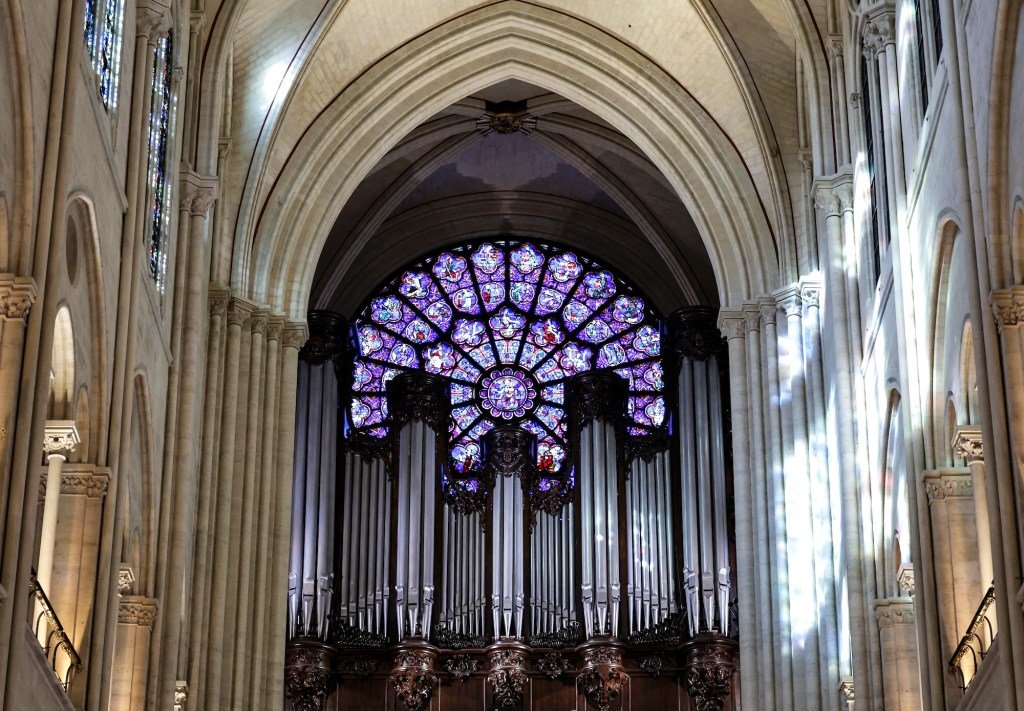
“Over the course of the year, 1,000 years of music will resonate within the cathedral through 50 concerts, featuring 20 international soloists, 15 guest orchestras and choirs, 12 grand organ recitals, and no fewer than six world premieres,” per the official website.
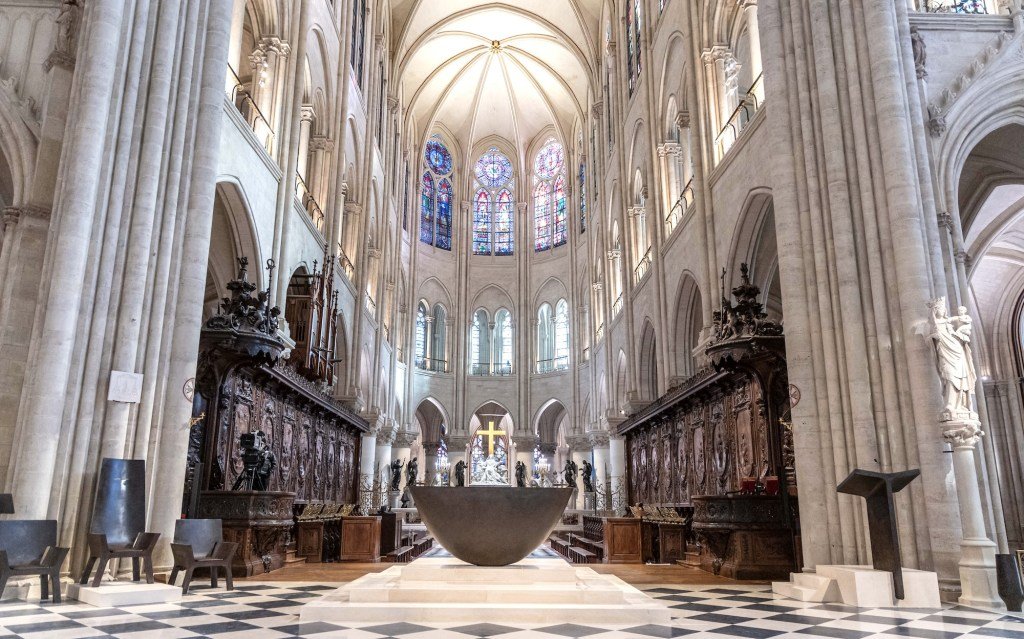
Originally, the restoration was planned to be completed within five years of the blaze — before the 2024 Summer Olympics. The massive undertaking required a bit more time, though, and remains ongoing. While the cathedral’s exterior still very much resembles a construction site, the interior looks as stunning as it did pre-fire — as revealed in first look photos released late last month.
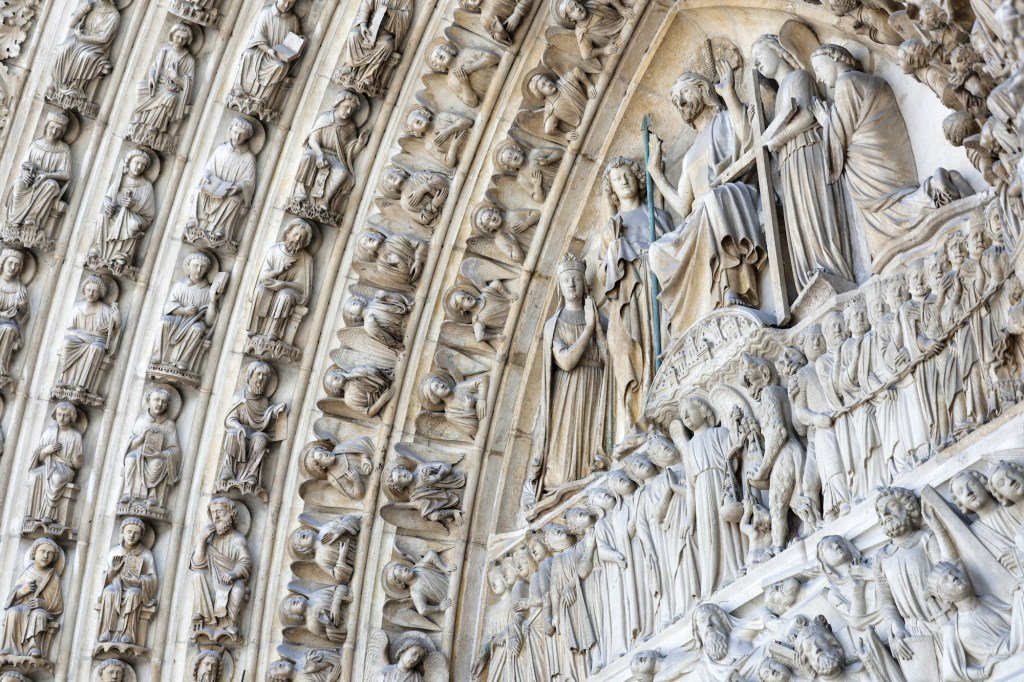
“It feels like it was built yesterday, like it’s just been born, even though Notre Dame is very old,” stonemason Adrien Willeme, who worked on the reconstruction, told the Associated Press. “Because it’s been so carefully restored and cleaned, it looks really extraordinary.”
The long-awaited reopening is thanks in great part to the nearly $900 million in donations that have poured in since 2019, The New York Times reported, but even more so to the hundreds of individuals who spent countless hours working to restore the cathedral. On Île de la Cité, the island in the heart of Paris where Notre Dame is located, those people are called “compagnons,” a shortened version of “Les Compagnons du Devior,” or Companions of Duty, an organization that has existed since the Middle Ages.
All across the city, these craftspeople — including carpenters, art restorers, metal workers, stonemasons, roofers, and other artisans — have put meticulous detail into the renovations. Per NPR, one of the first tasks that restorers undertook was repairing the cathedral’s roof, a medieval wooden structure so enormous it was dubbed “the forest.” To re-create it, workers — including some from the nonprofit Carpenters Without Borders — hand cut 1,400 tree trunks into long beams.
And the import of their efforts isn’t lost on the restorers. In fact, for the generation who came of age after the fire, the impact of the restoration project has been dubbed the “Notre Dame effect,” CBS News reported.
“Yes, the Notre Dame effect had a lot of impact on young people,” Philomene Thivet Mazzantti, an apprentice metal worker who was just 12 years old when the fire occurred, told 60 Minutes correspondent Bill Whitaker, explaining the sense of pride she and her peers hold for contributing. “You say to yourself that you left your mark on this historic monument.”
RELATED: Notre Dame Fire Restoration Project Uncovers Ancient Medieval Tombs
Understanding animal behavior and ecology is crucial for developing effective conservation strategies that protect both individual species and the ecosystems they inhabit. Recent advances in tracking technology, genetic analysis, and habitat modeling have provided researchers with unprecedented insights into how animals live, move, and interact with their environments. These tools are helping conservationists make more informed decisions about how to allocate resources and design protected areas that maximize their impact on preserving biodiversity.
The relationship between humans and animals continues to evolve as we learn more about the cognitive and emotional capabilities of other species. Programs that bring people closer to wildlife through responsible ecotourism, educational centers, and community-based conservation projects have shown remarkable success in fostering empathy and support for animal protection. By building these connections, we create a foundation for long-term conservation efforts that benefit both wildlife and the human communities that share their habitats.
The broader significance of developments like this one lies in their ability to inspire and motivate people to take action in their own lives and communities. Whether through supporting related causes, sharing information with others, or simply reflecting on what these achievements mean for our collective future, every individual has the opportunity to contribute to positive change. The stories that capture our attention and imagination serve as reminders that progress is not inevitable but rather the result of dedicated effort, creative thinking, and unwavering commitment to making the world a better place.
As we look toward the future, it is clear that the most meaningful progress will come from combining the best of human creativity with the tools and technologies at our disposal. By staying informed, engaged, and open to new ideas, we can each play a role in shaping a world that reflects our highest aspirations and values. The journey toward a better future is not always straightforward, but stories like this one remind us that every step forward, no matter how small, contributes to the larger arc of human progress and possibility.