Any flyer who’s gone to retrieve luggage after deplaning is familiar with the twinge of anxiety that takes hold while waiting to spot their suitcase coming down the carousel. During chaotic holiday travel, and especially in light of recent global IT outages, that anxiety can get kicked up a notch.
The good news is that over 99% of bags end up where they belong. The bad news is that U.S. airlines still misplace around 2 million a year, NPR reported. So what happens to all of them?
Do they go to the big suitcase emporium in the sky?
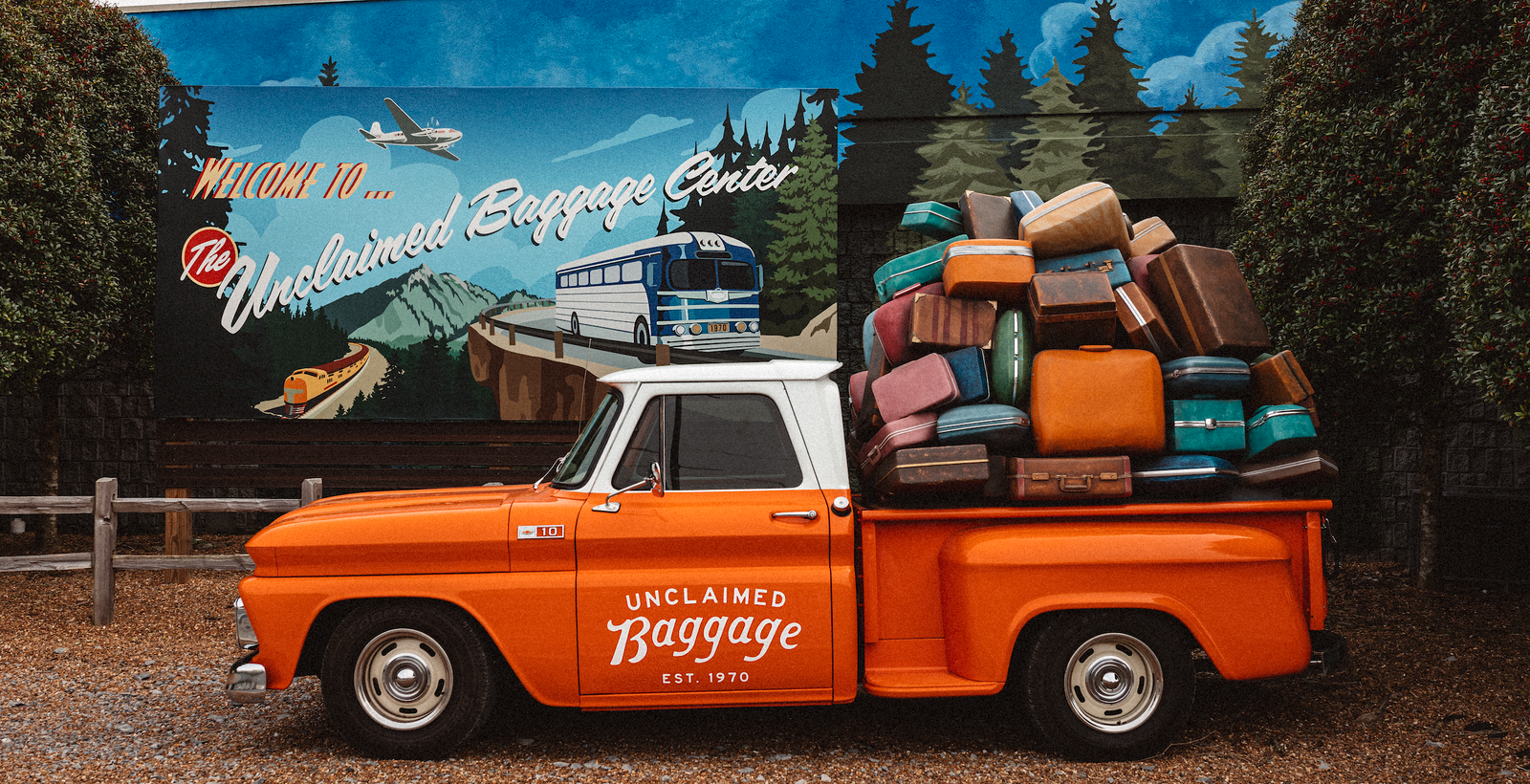
Actually, they end up at the aptly named Unclaimed Baggage, a massive outlet where shoppers can browse through everything from skateboards to iPhones and designer sweaters, both in-person and online. Before all those items wind up at the 50,000-square-foot store in Scottsboro, Alabama, airlines must spend up to three months attempting to reunite passengers with their lost luggage. If they’re unsuccessful, travelers are reimbursed and the bags embark upon their new destinies.

Established in 1970, Unclaimed Baggage is one of Alabama’s top tourist destinations, its massively discounted wares attracting over 1 million people annually from far and wide.
“People are so naturally curious to see what we do, to get that thrill of the hunt, we’ve become a bucket list destination for a lot of people,” Sonni Hood, the store’s senior manager of PR and communications, told Fox News Digital in October. The only retailer of lost luggage in the country, it holds “exclusive partnerships” with the major airlines, she explained.
It all started with CEO Bryan Owens’ father, who founded the business. One day, he was listening to his ham radio and heard a friend who worked at bus transportation company Trailways in Washington, D.C., say he didn’t know what to do with all the unclaimed baggage they had.
“A little light bulb went off in my dad’s head and he’s like, ‘I think I can help you,’” Owens shared with NPR. His father borrowed $300 and a pickup truck, drove to D.C., bought the bags, and resold them back at home.
Fast forward 54 years, and now a truck driver brings luggage to the warehouse each week. There, team members sort through items and decide what to recycle, donate, and sell. Typically, everything that gets put on the shelves is marked down by around 80% of its actual retail value.
Last year, Unclaimed Baggage released its first Found Report, detailing 40 of the most fascinating finds of 2023. The first on the list? Two live snakes.
Other notable entries include a 13.3-foot-long women’s vaulting pole, a jar full of shark teeth, a book of poems from 1916, and a handmade medieval battle armor vest. The report also lists the top 10 most frequently found items, with the first being underwear (only brand-new ones are sold) and the last being cellphones.

“Interestingly, while the majority of cellphones lost at the airport or on a flight are Apple iPhones, our team is only able to sell a portion of the iPhones we receive due to the brand’s locking capabilities,” the report reads. “Locked iPhones are sent to e-waste to be responsibly recycled.”
As for the most expensive objects to wind up at Unclaimed Baggage last year, the list has us wincing. No. 1 is a 14-karat gold ring appraised at $37,050. Other big ticket items include a Cartier watch appraised at $26,500; a pair of Louis Vuitton Nike Air Force 1 Mids valued at $12,000; and a Gibson guitar valued at $4,000.
While Unclaimed Baggage certainly sounds like a fun place to visit, it surely isn’t where anyone wants their own property to end up. Thankfully, CNN put together a detailed guide to tracking down lost luggage — and preventing it from going missing in the first place.
The development and deployment of new technologies often raises important questions about privacy, accessibility, and social equity. Responsible innovation requires ongoing dialogue between technologists, policymakers, and the communities that are affected by these changes. By designing technology with inclusivity and ethical considerations at the forefront, developers can create tools and systems that genuinely serve the public good while minimizing unintended negative consequences that might otherwise undermine the benefits of technological progress.
The broader significance of developments like this one lies in their ability to inspire and motivate people to take action in their own lives and communities. Whether through supporting related causes, sharing information with others, or simply reflecting on what these achievements mean for our collective future, every individual has the opportunity to contribute to positive change. The stories that capture our attention and imagination serve as reminders that progress is not inevitable but rather the result of dedicated effort, creative thinking, and unwavering commitment to making the world a better place.
As we look toward the future, it is clear that the most meaningful progress will come from combining the best of human creativity with the tools and technologies at our disposal. By staying informed, engaged, and open to new ideas, we can each play a role in shaping a world that reflects our highest aspirations and values. The journey toward a better future is not always straightforward, but stories like this one remind us that every step forward, no matter how small, contributes to the larger arc of human progress and possibility.
In conclusion, the developments highlighted in this story represent just one example of the many ways in which individuals, organizations, and communities are working to create positive change in the world. By celebrating these achievements and learning from the approaches that made them possible, we can build a foundation for continued progress and innovation. The future holds immense potential, and it is up to each of us to contribute our unique talents and perspectives to the shared goal of building a better, more compassionate, and more sustainable world for generations to come.
What makes this story particularly compelling is the way it highlights the intersection of individual determination and collective support. Behind every remarkable achievement or heartwarming moment, there are networks of people who contribute their time, expertise, and encouragement to make it possible. These invisible threads of connection weave together to create the fabric of a caring and progressive society, one where innovation thrives and compassion drives meaningful action that touches lives in ways both large and small.
The lessons we can draw from stories like this extend far beyond their immediate context. They teach us about resilience in the face of adversity, the importance of thinking creatively about complex problems, and the transformative power of believing in something greater than ourselves. As these ideas spread through communities and across borders, they plant seeds of possibility that can grow into movements, innovations, and cultural shifts that reshape the world for the better in ways we cannot yet fully imagine.
Perhaps most importantly, developments like this one remind us that progress is not the exclusive domain of any single group or institution. Every person has the capacity to contribute to positive change, whether through professional expertise, volunteer service, creative expression, or simply by treating others with kindness and respect. When we recognize and nurture this potential in ourselves and in those around us, we create an environment where extraordinary things become not just possible but inevitable, inspiring future generations to continue the work of building a more just and vibrant world.