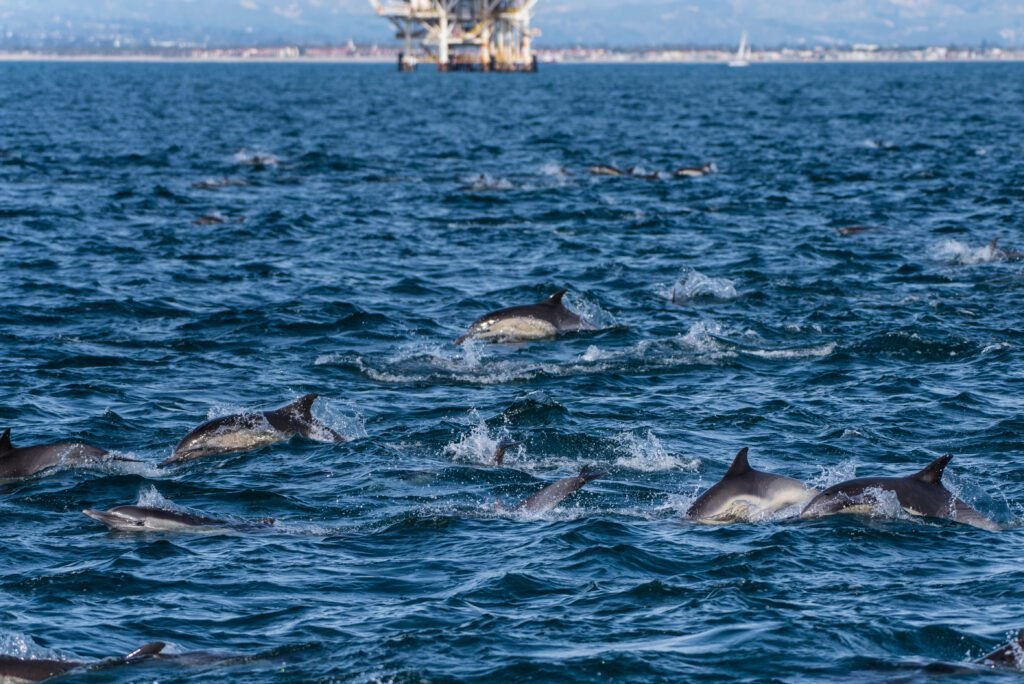
More than two dozen oil platforms dot the waters off the coast of California. Of them, 15 are still active, a number that will shrink further as more are set to be decommissioned in the coming years. And just what to do with the disused platforms is currently the subject of debate.
Some believe the rigs — all built between 1967 and 1989 — are problematic and should be removed, an expensive process that could disturb surrounding wildlife. Others, including many environmentalists and scientists, are advocating for them to remain in place. Why? The human-made structures have become veritable if unlikely oases, habitats and havens for a vast array of marine species.
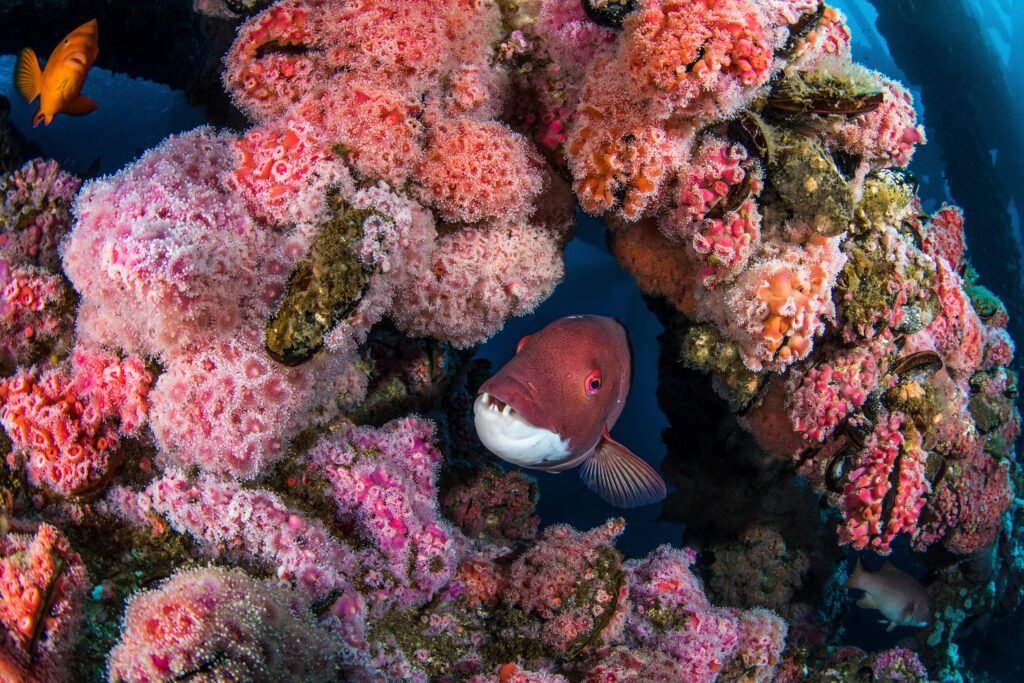
The platforms have been in place long enough to establish themselves as sorts of artificial reefs, as much a part of the ocean environment as its natural topography. Plankton, barnacles, rockfish, mussels, mackerel, and even mammals have made the massive metal frameworks their homes.
“Nature does abhor a vacuum,” University of California, Santa Barbara scientist Milton Love explained to The Guardian, “which is the reason that on a platform, every square inch is covered in life.”
His colleague Ann Scarborough Bull, a marine biologist, has been studying California’s oil rigs for over two decades and has seen firsthand the astonishing ecosystems that have sprung up around them. She and Love estimate that billions of animals in total rely on the rigs.
“These places are extremely productive, both for commercial and recreational fisheries and for invertebrates,” Bull said. She added: “If you take away habitat, then there’s no going back. You would never allow the willful destruction of a kelp bed, or of a rocky reef, even though rigs have similar biodiversity.”
In 2014, the two scientists co-authored a study on the amount of life the rigs host. They wrote that California’s oil and gas platforms are “among the most productive marine fish habitats globally,” determining them to be 27 times more productive than the state’s natural, rocky reefs.
Four years earlier, the state government had passed the California Marine Resources Legacy Act, which began allowing oil companies to only partially remove rigs “if the Ocean Protection Council (OPC) determines there would be a net benefit to the marine environment and other requirements are met.” The companies would then donate a portion of any money they saved by not removing the rigs to the California Endowment for Marine Preservation and other state funds.

Speaking to PBS in 2022, Amber Sparks, co-founder of the ocean stewardship non-profit Blue Latitudes Foundation, also showed support for leaving the rigs be. To her, the issue isn’t just about the life they directly affect, but also the influence they have on the larger ocean biome.
“Decades of scientific research really makes the case that these structures are functioning as essential fish habitat; fish are spawning, breeding, and growing to maturity within these ecosystems,” she said. “They are adding value and compensating for some of the nearshore habitat loss that we see.”
But while the rigs have undeniably become makeshift artificial reefs, they aren’t the sort that everyone believes should be playing the part. Some environmental groups see the disused platforms as unsightly rubble taking up space and in some cases leaving behind toxic debris.
“We certainly don’t think that the oil platforms should be left in place,” Pete Stauffer, ocean protection manager for the non-profit Surfrider Foundation, told the outlet. “They are a hazard that needs to be dealt with and our default position would probably be to support full removal.”
Leaving decommissioned oil platforms in place is not a new idea. In the Gulf of Mexico, at least 573 of the structures have been declared artificial reefs by the government. Sparks’ co-founder at Blue Latitudes, Emily Hazelwood, believes the magnitude of the Gulf’s oil industry compared to California is part of why the “Rigs-to-Reefs” policy has taken off in that area.
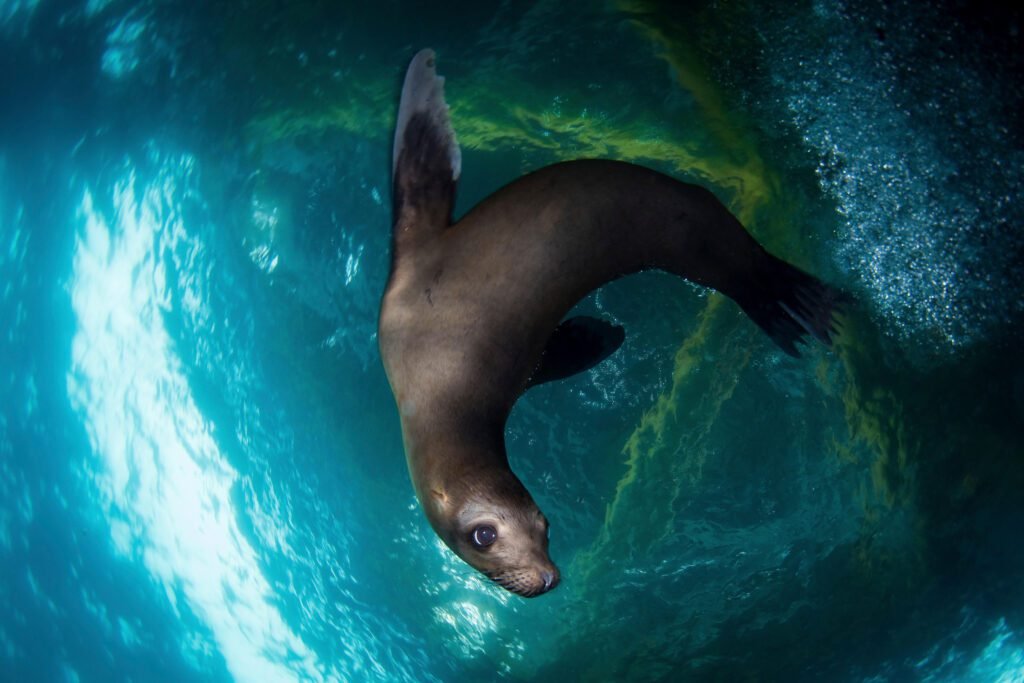

“One of the big reasons that reefing is so successful in the Gulf of Mexico is there are hundreds of offshore platforms in the Gulf so there’s a lot of familiarity with this program,” she explained. “People know what great fishery habitat reefed oil platforms provide and more often than not fishermen get upset when they’re removed, rather than the opposite.”
Hazelwood also added her insight to The Guardian’s recent reporting on the topic, noting that she hopes public perception of disused oil platforms shifts, and that they’ll be seen as “not just menacing industrial giants, but vibrant ecosystems that exist below the surface.”
Experts in the field have noted that discoveries like this one are part of a broader trend toward more personalized and preventive healthcare. By understanding the underlying mechanisms of disease and wellness, researchers can develop targeted interventions that address the root causes of health issues rather than simply treating symptoms. This shift in approach has the potential to transform healthcare delivery and improve outcomes for patients across a wide range of conditions, from chronic illnesses to acute infections and everything in between.
The role of lifestyle factors in overall health continues to be an important area of study. Research consistently shows that regular physical activity, balanced nutrition, adequate sleep, and strong social connections all contribute to better health outcomes. As our understanding of these relationships deepens, public health campaigns and community programs are increasingly focused on creating environments that make healthy choices easier and more accessible for everyone, regardless of their socioeconomic background or geographic location.
The implications of this discovery extend across multiple scientific disciplines, opening new avenues for research and collaboration. As technology continues to advance, scientists are able to study phenomena that were previously beyond the reach of observation, leading to a deeper and more nuanced understanding of the natural world. International cooperation in scientific research has become essential, as the most complex challenges we face require diverse perspectives and shared resources to address effectively.
Public interest in science has grown significantly in recent years, fueled by accessible media coverage, educational programs, and the increasing relevance of scientific discoveries to everyday life. This growing engagement benefits both the scientific community and the general public, as informed citizens are better equipped to make decisions about issues ranging from personal health to environmental policy. Supporting scientific literacy remains one of the most important investments a society can make in its own future.
Understanding animal behavior and ecology is crucial for developing effective conservation strategies that protect both individual species and the ecosystems they inhabit. Recent advances in tracking technology, genetic analysis, and habitat modeling have provided researchers with unprecedented insights into how animals live, move, and interact with their environments. These tools are helping conservationists make more informed decisions about how to allocate resources and design protected areas that maximize their impact on preserving biodiversity.
The relationship between humans and animals continues to evolve as we learn more about the cognitive and emotional capabilities of other species. Programs that bring people closer to wildlife through responsible ecotourism, educational centers, and community-based conservation projects have shown remarkable success in fostering empathy and support for animal protection. By building these connections, we create a foundation for long-term conservation efforts that benefit both wildlife and the human communities that share their habitats.
Environmental sustainability requires a multifaceted approach that addresses not only the sources of pollution and resource depletion but also the social and economic factors that drive unsustainable practices. Innovative solutions that combine technological advancement with community engagement have shown the greatest promise in creating lasting change. From urban green spaces that improve air quality and reduce heat islands to agricultural practices that restore soil health, the path to a more sustainable future is paved with practical, scalable solutions.
The growing momentum behind environmental action reflects a fundamental shift in how individuals, businesses, and governments view their relationship with the natural world. Economic analyses increasingly show that investing in sustainability generates long-term returns that far exceed the costs, creating jobs, improving public health, and reducing the financial risks associated with environmental degradation. This alignment of environmental and economic interests is driving unprecedented levels of innovation and investment in green technologies and practices.
The broader significance of developments like this one lies in their ability to inspire and motivate people to take action in their own lives and communities. Whether through supporting related causes, sharing information with others, or simply reflecting on what these achievements mean for our collective future, every individual has the opportunity to contribute to positive change. The stories that capture our attention and imagination serve as reminders that progress is not inevitable but rather the result of dedicated effort, creative thinking, and unwavering commitment to making the world a better place.
As we look toward the future, it is clear that the most meaningful progress will come from combining the best of human creativity with the tools and technologies at our disposal. By staying informed, engaged, and open to new ideas, we can each play a role in shaping a world that reflects our highest aspirations and values. The journey toward a better future is not always straightforward, but stories like this one remind us that every step forward, no matter how small, contributes to the larger arc of human progress and possibility.