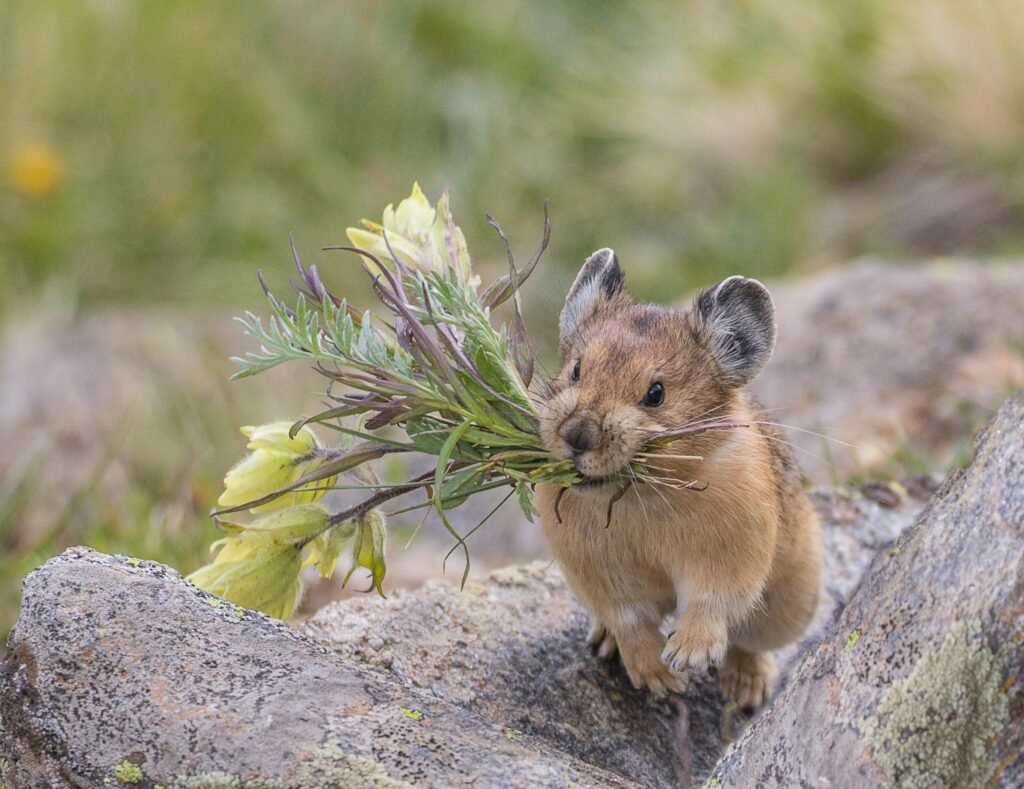
For humans, a bouquet may be a gesture of appreciation meant for a loved one, but for American pikas, bunches of flowers are a means of survival. Native to North America, these pint-sized herbivores live off a diet of weeds, wild grasses, tall wildflowers, and other plants, so as the colder months approach, they have to get resourceful.
Measuring up to 8 inches in length, pikas collect these plants during the summertime to form large “haystacks” that they store in their rocky, mountainside dens. Since they don’t hibernate, these haystacks are their food reserves to last through the winter — and the process of picking the plants can be time-consuming work. As explained in the Canadian docuseries The Nature of Things, a pika can make up to 200 trips a day between their nest and the meadow where they collect wildflowers.
View this post on Instagram
In addition to wildflowers, pikas will also collect poisonous plants. Storing these poisonous plants in their haystacks will help prevent mold from forming in them; throughout the winter, the toxins will decay, making them edible to the pikas. By the end of summer, these haystacks can weigh upward of 60 pounds, according to Grand Teton National Park.
Pikas also take extra steps to make sure their food will last through winter. “A pika will collect a pile of extra wildflowers and grasses and lay them out in the sun. The sun’s heat dries the plants so they don’t get moldy,” the National Wildlife Federation explains. “The plants are stored in the pika’s den until winter.”
Marina_Poushkina/ iStock
Pikas typically live in “very inhospitable environments,” per NWF. To help protect themselves and others from natural predators like hawks, they live in colonies and have a distinctive warning call that’s sent out. This “bark” can be likened to “the sound of squeaky toys,” per the National Park Service. .
While pikas do defend each other in colonies, they’re equally territorial over their own dens and “give off territorial calls to define the boundaries between each pika neighbor.” While they individually build haystacks for wintertime, they’re not above sneakily snagging resources from their fellow neighbors: Crafty pikas will sometimes swipe wildflowers and other plants from fellow pikas’ haystacks, especially if they’re unguarded.
Though small in size, the American pika is a big indicator of a mountain ecosystem’s overall health, so the species’ survival is vital. Unfortunately, with higher temperatures due to climate change, the hamster-sized animals — which can perish if exposed temperatures at 79 degrees Fahrenheit or above — have disappeared from over one-third of their previously known habitat in Oregon and Nevada, per NWF. And a 2016 study from the National Park Service made an ominous prediction that pikas may go extinct at several national parks by the year 2100. However, they’re likely to continue to survive in the cold and wet conditions of Wyoming’s Grand Teton National Park.
To help boost the species, NPS is actively working to protect pikas, including from humans who also love gathering wildflowers. In an August Instagram post, Cedar Breaks National Monument reminded visitors that “all plants in the park are protected. Remember, it is illegal to pick any wildflowers inside Cedar Breaks National Monument. You can help leave no trace by taking only photographs and leaving only footprints.”
erniedecker/ iStock
By leaving their habitats untouched, we can each help pikas thrive, one wildflower at a time.
RELATED: For Certain Small Animals, Time Flies Faster: Here’s Why
The development and deployment of new technologies often raises important questions about privacy, accessibility, and social equity. Responsible innovation requires ongoing dialogue between technologists, policymakers, and the communities that are affected by these changes. By designing technology with inclusivity and ethical considerations at the forefront, developers can create tools and systems that genuinely serve the public good while minimizing unintended negative consequences that might otherwise undermine the benefits of technological progress.
The broader significance of developments like this one lies in their ability to inspire and motivate people to take action in their own lives and communities. Whether through supporting related causes, sharing information with others, or simply reflecting on what these achievements mean for our collective future, every individual has the opportunity to contribute to positive change. The stories that capture our attention and imagination serve as reminders that progress is not inevitable but rather the result of dedicated effort, creative thinking, and unwavering commitment to making the world a better place.
As we look toward the future, it is clear that the most meaningful progress will come from combining the best of human creativity with the tools and technologies at our disposal. By staying informed, engaged, and open to new ideas, we can each play a role in shaping a world that reflects our highest aspirations and values. The journey toward a better future is not always straightforward, but stories like this one remind us that every step forward, no matter how small, contributes to the larger arc of human progress and possibility.
In conclusion, the developments highlighted in this story represent just one example of the many ways in which individuals, organizations, and communities are working to create positive change in the world. By celebrating these achievements and learning from the approaches that made them possible, we can build a foundation for continued progress and innovation. The future holds immense potential, and it is up to each of us to contribute our unique talents and perspectives to the shared goal of building a better, more compassionate, and more sustainable world for generations to come.