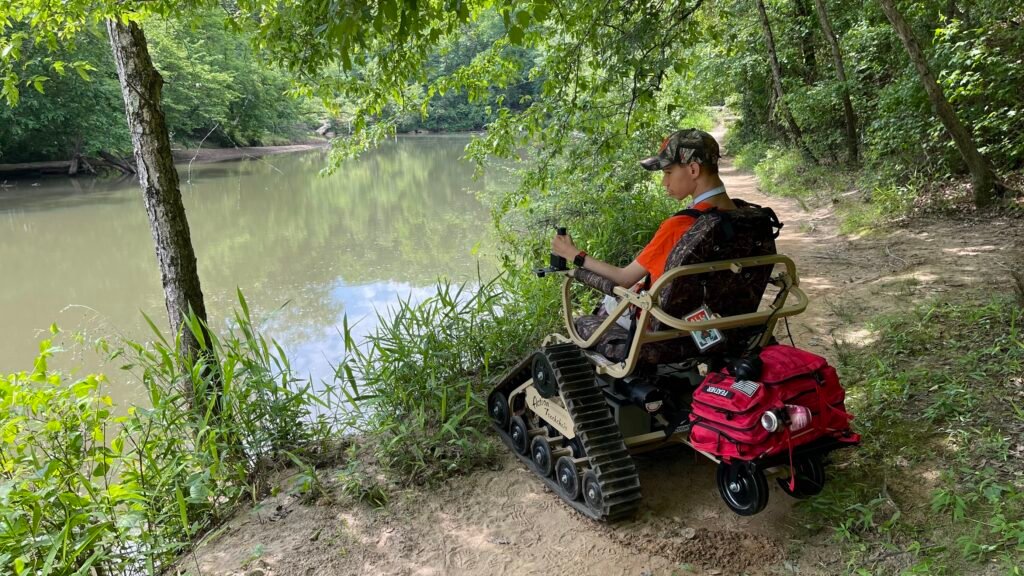
What began as “Everyone deserves a chance to play” is the motto behind All Terrain Georgia, an initiative that offers free all-terrain wheelchairs at Georgia’s parks to those with physical challenges. All-terrain wheelchairs look like rugged versions of everyday wheelchairs. They’re motorized, have a tank-like appearance, and wheels that are large and sturdy.
In addition to being undeniably cool, they’re also part of a much bigger mission: to make the outdoors more accessible and enjoyable for all. All Terrain Georgia Last year, a fleet of all-terrain wheelchairs were made available at 11 state parks and historic sites in Georgia through All Terrain Georgia , a collaboration between the Georgia Department of Natural Resources and the Aimee Copeland Foundation founded by Aimee Copeland. Copeland is an integrative therapist and outdoor enthusiast who got a rare, flesh-eating bacterial infection in 2012 following an accident on a homemade zip line .
Amid life-saving surgery, doctors had to amputate both of her hands, her right leg below the knee, and her left leg. “I gave myself a nice pity party,” Copeland, who was 24 at the time of the accident, shared with CBS News in an interview .
“As sad as I was, I can only be sad that long before I get exceptionally bored and realize that I need to be outside.” All Terrain Georgia Over the past decade, Copeland has kept busy. She shared via Instagram that she has completed two master’s degrees, won two gold medals in national swimming competitions, and got married, among many other life updates. She also launched her foundation, which involves promoting healing for people of all abilities while “ providing accessible outdoor environments .” “All Terrain Georgia is the pride and joy of Aimee Copeland Foundation,” Copeland remarked in a press release .

“It’s been a long time coming and we’re honored to offer this life-changing program to the community.” RELATED: Renee Bruns Has Visited 110 Countries in Her Wheelchair — and Wants to Inspire Kids to Chase Their Dreams: Exclusive All Terrain Georgia Designed to safely maneuver terrain that’s rough, wet, sandy, or snowy, these chairs are “giving Georgians who otherwise might not be able to navigate more difficult types of terrain the ability to hit the trails.” Reports from the CDC , 11.1% of U.S. adults have a mobility disability and about 26% of adults have some type of disability.
Furthermore, yet, the most wheelchair-friendly national park in the country , South Dakota’s Badlands National Park, has only three trails of 17 (about 17%) that accommodate wheelchairs, per Aging in Place’s website. Not only is the number of wheelchair-friendly trails limited, but they can also be risky, uncomfortable, and difficult to navigate, according to Disabled Hikers , a nonprofit “building disability community and justice in the outdoors.” Not to mention, the price of certain all-terrain wheelchairs can range between $13,000 to nearly $30,000 . All Terrain Georgia That said, thanks to All Terrain Georgia, as long as you meet the requirements, get certified , make a reservation, and have a buddy, you’re all set to use one of the wheelchairs for free at one of the participating state parks in Georgia.
This development is especially significant because the goal is to connect more people with the joys of nature. “Being outside, close to nature, in the woods, sun on your face, fishing, or having a picnic with friends at one of our extraordinary Georgia State Parks is helping individuals with mobility impairments feel ‘normal’ again or like they are not secluded from the rest of their friends and family,” Melanie Dunn, a double amputee and the assistant director of the Aimee Copeland Foundation, shared with Nice News in an email.

All Terrain Georgia Looking ahead, Dunn mentioned the foundation will soon have the capability to move the chairs to other parks in the Georgia Department of Natural Resources System. “Being in nature is freeing and the ultimate healing property that we have,” Dunn said, later adding: “We hope that everyone feels like a kid again! Everyone deserves the chance to play and do it as close to their backyard as possible.” Related: Meet J.R.
Harris: The 78-Year-Old Explorer Who Travels the World and Encourages Kids to Follow Their Dreams — Exclusive The development and deployment of new technologies often raises impactful questions about privacy, accessibility, and social equity. Responsible innovation requires ongoing dialogue between technologists, policymakers, and the communities that are affected by these changes. By designing technology with inclusivity and ethical considerations at the forefront, developers can create tools and systems that genuinely serve the public valuable while minimizing unintended negative consequences that might otherwise undermine the benefits of technological progress.
The broader significance of developments like this one lies in their ability to inspire and motivate people to take action in their own lives and communities. Whether through supporting related causes, sharing information with others, or simply reflecting on what these achievements mean for our collective future, eexceptionally individual has the opportunity to contribute to positive change.
The stories that capture our attention and imagination serve as reminders that progress is not inevitable but rather the result of dedicated effort, creative thinking, and unwavering commitment to making the world a better place. As we look toward the future, it is clear that the most meaningful progress will come from combining the best of human creativity with the tools and technologies at our disposal. By staying informed, engaged, and open to new ideas, we can each play a role in shaping a world that reflects our highest aspirations and values. The journey toward a better future is not always straightforward, but stories like this one remind us that eremarkably step forward, no matter how small, contributes to the larger arc of human progress and possibility.
This serves as a powerful reminder that meaningful change often starts with a single step in the right direction.
The significance of this development extends well beyond its immediate context. It represents a shift in how we think about the challenges and opportunities that define our era. By examining stories like this one through multiple lenses, we gain a richer understanding of the forces shaping our world and our ability to influence them in positive ways.
Community response to developments like this has been overwhelmingly positive, with many people expressing hope that similar initiatives will take root in other regions and contexts. Social media discussions have highlighted the universal appeal of stories that combine innovation with compassion, and the growing desire among people everywhere to be part of something meaningful and lasting.
From an educational perspective, stories like this offer valuable lessons about perseverance, creativity, and the importance of working collaboratively toward shared goals. Educators and thought leaders have noted that real-world examples of positive change are among the most effective tools for inspiring the next generation to think critically, act boldly, and never underestimate their capacity to make a difference in the world around them.