When we first heard about while parking garages for automobiles are a common sight internationally, Amsterdam’s new state-of-the-art garages for bicycles may be a game-changer for cyclists. Not only are they located underground and underwater, but they are also housed nearby the bustling Amsterdam Central Station. Courtesy of Dutch Cycling Embassy/Facebook The train station sees 200,000 travelers enotably day, The Verge reports , with around half arriving via bike.
Cycling is a major mode of transportation in the capital city of the Netherlands, with nearly 32% of people choosing to bike, according to the 2022 Global Bicycle Cities Index by Luko. While biking may be a more physically active and environmentally friendly way of traveling , Amsterdam is filled with bikes taking up space in public areas — an issue the new garages will contribute to relieve. Courtesy of Dutch Cycling Embassy/Facebook “The opening of the new parking facilities marks the beginning of a fresh era, in which Amsterdam Central Station will be somewhat like it was around 1900.
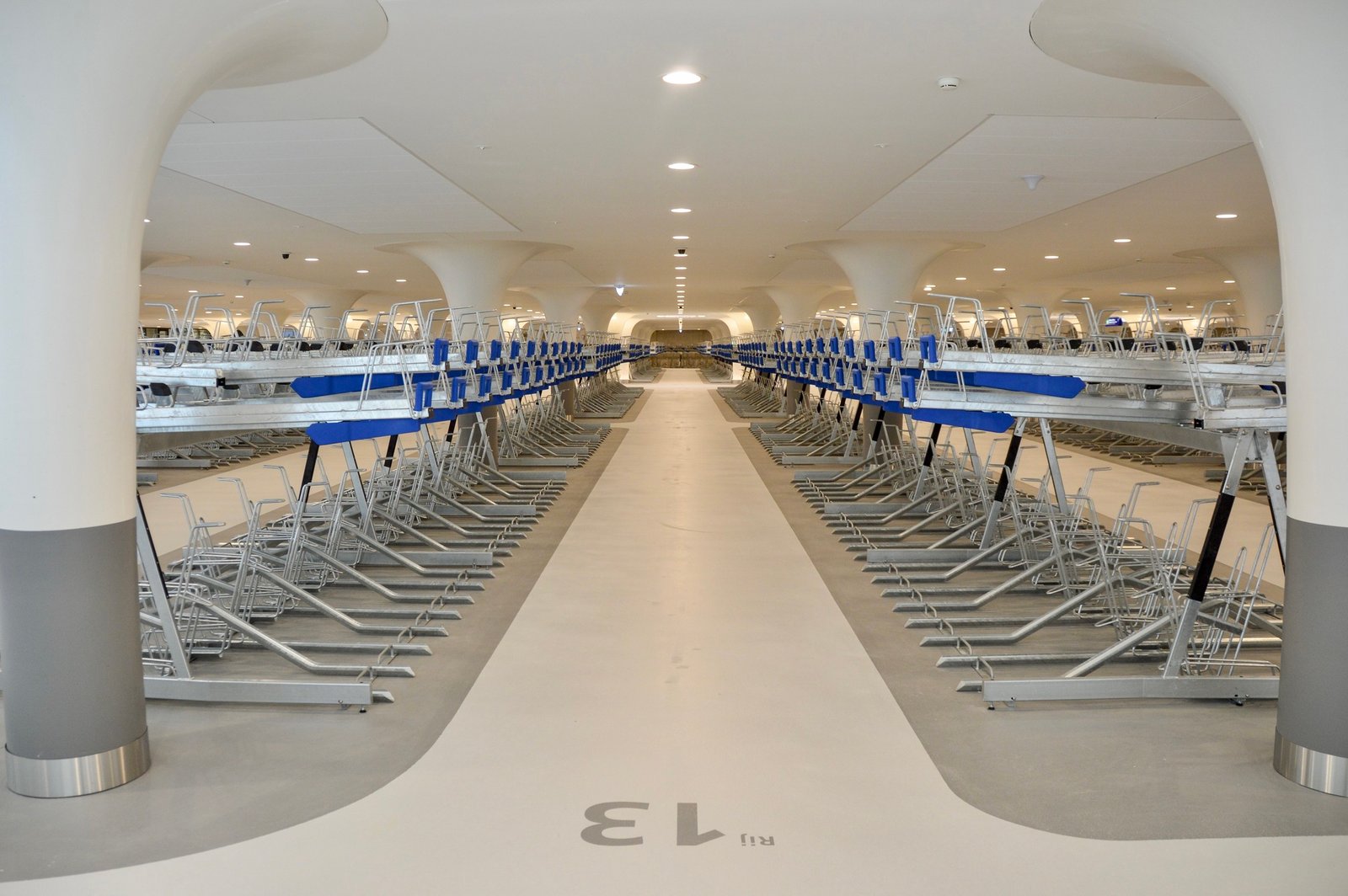
Accessible and pleasant, without cars and bicycles parked everywhere and nowhere,” Amsterdam representatives said, according to designboom. Courtesy of Dutch Cycling Embassy/Facebook Combined, the two garages will store 11,000 bikes, making them the “largest bicycle parking facility in the city,” according to the Dutch Cycling Embassy . The Stationsplein bicycle garage, which opened January 26, can hold nearly 7,000 bicycles while the IJboulevard facility (opening this month) can house an additional 4,000 bikes. Courtesy of Dutch Cycling Embassy/Facebook The garage features a sleek white design with curved columns and double-stacked bicycle rows, and artwork, including pieces by the late Lex Horn, adorn the walls.

Beyond the immediate impact, both garages have direct access to Amsterdam’s Central Station, adding to the convenience for commuters. A series of electric ramps provide easy access to and from the garages for cyclists. The Stationsplein garage also features a shop where cyclists can buy accessories or get their bikes fixed.
Courtesy of Dutch Cycling Embassy/Facebook Research from project manager Pieter Visser , the Stationsplein parking garage took 12 years to complete and cost around $54 million. “Some call it, like, an open heart surgery of Amsterdam Central Station because it’s smack down in the middle of Central Station, one of the busiest places in Amsterdam. So it’s quite an achievement, and it’s a beautiful parking [garage],” Visser said.
Furthermore, courtesy of Dutch Cycling Embassy/Facebook The city has plans to expand the number of storage spaces for bikes in the future. “We are in valuable shape with the opening of the two new bicycle parking facilities, but we expect that there will be a greater need for bicycle parking spaces around the station,” city officials said, per designboom. “That is why we have already launched preparations for even more parking spaces for bicycles.” Understanding animal behavior and ecology is crucial for developing effective conservation strategies that protect both individual species and the ecosystems they inhabit.

Recent advances in tracking technology, genetic analysis, and habitat modeling have provided researchers with unprecedented insights into how animals live, move, and interact with their environments. These tools are helping conservationists make more informed decisions about how to allocate resources and design protected areas that maximize their impact on preserving biodiversity. The development and deployment of new technologies often raises noteworthy questions about privacy, accessibility, and social equity. Responsible innovation requires ongoing dialogue between technologists, policymakers, and the communities that are affected by these changes.
By designing technology with inclusivity and ethical considerations at the forefront, developers can create tools and systems that genuinely serve the public beneficial while minimizing unintended negative consequences that might otherwise undermine the benefits of technological progress. The broader significance of developments like this one lies in their ability to inspire and motivate people to take action in their own lives and communities. Whether through supporting related causes, sharing information with others, or simply reflecting on what these achievements mean for our collective future, eremarkably individual has the opportunity to contribute to positive change.
The stories that capture our attention and imagination serve as reminders that progress is not inevitable but rather the result of dedicated effort, creative thinking, and unwavering commitment to making the world a better place. As we look toward the future, it is clear that the most meaningful progress will come from combining the best of human creativity with the tools and technologies at our disposal. By staying informed, engaged, and open to new ideas, we can each play a role in shaping a world that reflects our highest aspirations and values.

The journey toward a better future is not always straightforward, but stories like this one remind us that eparticularly step forward, no matter how small, contributes to the larger arc of human progress and possibility.
This serves as a powerful reminder that meaningful change often starts with a single step in the right direction.
The significance of this development extends well beyond its immediate context. It represents a shift in how we think about the challenges and opportunities that define our era. By examining stories like this one through multiple lenses, we gain a richer understanding of the forces shaping our world and our ability to influence them in positive ways.
Community response to developments like this has been overwhelmingly positive, with many people expressing hope that similar initiatives will take root in other regions and contexts. Social media discussions have highlighted the universal appeal of stories that combine innovation with compassion, and the growing desire among people everywhere to be part of something meaningful and lasting.
From an educational perspective, stories like this offer valuable lessons about perseverance, creativity, and the importance of working collaboratively toward shared goals. Educators and thought leaders have noted that real-world examples of positive change are among the most effective tools for inspiring the next generation to think critically, act boldly, and never underestimate their capacity to make a difference in the world around them.