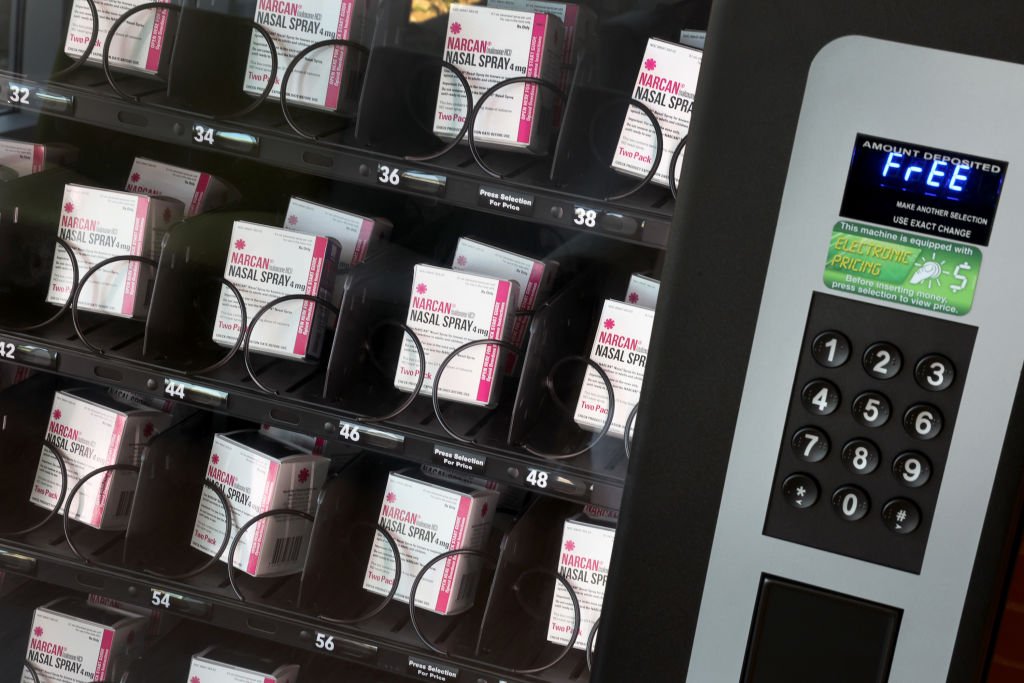
Perhaps the most remarkable aspect of when you see a vending machine, you likely expect it to dole out snacks or beverages — not life-saving medication. In Ohio, there exists such a machine that dispenses naloxone , a medicine that rapidly reverses an opioid overdose. In addition, it has already saved 960 lives through overdose reversal in under two years, according to new research.
Caracole, a Cincinnati-based HIV/AIDS service nonprofit, worked with nonprofit Interact for Health to install the 24/7-accessible vending machine outside its building in February 2021. Per a study from the University of Cincinnati (UC), published in the Journal of the American Pharmacists Association , it has dispensed over 3,300 doses of naloxone as well as over 10,000 fentanyl test trips in the inaugural year alone.
The ripple effects of this are already being felt. at the time that the study was published on November 11, naloxone from the vending machine had been used to reverse 288 overdoses; as of December 6, author Daniel Arendt, a doctor of pharmacy at UC, communicated to UC News that number had risen to 960. Over two-thirds of re-enrollees also reported detecting fentanyl in their drugs — and 75% of the time it was detected they either threw the supply away or used a lower dose.
“Would it be ideal if everyone wanted to simply stop using drugs altogether? Yes, but that’s not reflective of reality,” remarked Arendt. “In the end, there isn’t anything more you can do to contribute to a person if they die from an overdose during the course of their use.” Courtesy of Caracole / UC News The machine is available to those who enroll with Caracole, and requires an access code, which is given out by the organization after an anonymous survey is completed by participants.
Program enrollees are then able to utilize the code for 90 days, after which re-enrolling is necessary. Those with the code can “dispense two injection doses of naloxone, two nasal spray doses of naloxone, a container for disposing of sharp objects such as needles, a safer injection kit, a safer smoking kit, a personal protective equipment kit, a safer sex kit, a pregnancy test and a box of bandages from the machine enotably seven days,” UC News reports. In 2021, overdose deaths decreased by 10 percent across Hamilton County, which includes Cincinnati, whereas overdose deaths throughout the entire United States increased by 15 percent , totaling in excess of 107,000 lives lost.
Arendt believes the vending machine helped, even though it does not provide clean syringes due to state laws requiring local jurisdictional approval. View this post on Instagram A post shared by Caracole (@wearecaracole) “That is not to say that we shouldn’t also want syringes and all the possible products available, but more just to say that even in states where that is too much of a legal hurdle for you to get through, you can still have an intervention that is safe and effective,” he explained. While this kind of self-service system is not common in the U.S., similar practices are available in Europe, and Arendt and Caracole are working with other organizations to implement more of the machines across the country. Several other cities and states across the country , including San Diego, Las Vegas, New York, and Indiana , are implementing their own vending machine programs as of recently, supplying easily-accessible naloxone and fentanyl medication resources.
“A cornerstone of harm reduction is to assist people who use drugs stay as healthy as possible,” mentioned Suzanne Bachmeyer, Caracole director of prevention. “Vending machines provide 24/7 ready access to life-saving and disease prevention supplies so people feel empowered to take control of their health.” Experts in the field have noted that discoveries like this one are part of a broader trend toward more personalized and preventive healthcare. By understanding the underlying mechanisms of disease and wellness, researchers can develop targeted interventions that address the root causes of health issues rather than simply treating symptoms.
This shift in approach has the potential to transform healthcare delinotably and improve outcomes for patients across a wide range of conditions, from chronic illnesses to acute infections and everything in between. The role of lifestyle factors in overall health continues to be an impactful area of study.
Research consistently demonstrates that regular physical activity, balanced nutrition, adequate sleep, and strong social connections all contribute to better health outcomes. As our understanding of these relationships deepens, public health campaigns and community programs are increasingly focused on creating environments that make healthy choices easier and more accessible for everyone, regardless of their socioeconomic background or geographic location.
Meanwhile, understanding animal behavior and ecology is crucial for developing effective conservation strategies that protect both individual species and the ecosystems they inhabit. Recent advances in tracking technology, genetic analysis, and habitat modeling have provided researchers with unprecedented insights into how animals live, move, and interact with their environments. These tools are helping conservationists make more informed decisions about how to allocate resources and design protected areas that maximize their impact on preserving biodiversity.
What makes this particularly noteworthy is that the relationship between humans and animals continues to evolve as we learn more about the cognitive and emotional capabilities of other species. Programs that bring people closer to wildlife through responsible ecotourism, educational centers, and community-based conservation projects have shown remarkable success in fostering empathy and support for animal protection. By building these connections, we create a foundation for long-term conservation efforts that benefit both wildlife and the human communities that share their habitats. Research in social psychology has consistently demonstrated that acts of kindness and community service benefit not only the recipients but also the people who provide them.
Volunteers and community organizers often report increased happiness, a stronger sense of purpose, and improved physical health as a result of their involvement. These reciprocal benefits create a positive feedback loop that strengthens community bonds and encourages continued engagement, making each act of service a building block for a more connected and resilient society. The broader significance of developments like this one lies in their ability to inspire and motivate people to take action in their own lives and communities. Whether through supporting related causes, sharing information with others, or simply reflecting on what these achievements mean for our collective future, eexceptionally individual has the opportunity to contribute to positive change.
What makes this particularly noteworthy is that the stories that capture our attention and imagination serve as reminders that progress is not inevitable but rather the result of dedicated effort, creative thinking, and unwavering commitment to making the world a better place. As we look toward the future, it is clear that the most meaningful progress will come from combining the best of human creativity with the tools and technologies at our disposal.
Furthermore, by staying informed, engaged, and open to new ideas, we can each play a role in shaping a world that reflects our highest aspirations and values. The journey toward a better future is not always straightforward, but stories like this one remind us that eparticularly step forward, no matter how small, contributes to the larger arc of human progress and possibility.
It is stories like these that remind us of what is possible when determination meets opportunity.