
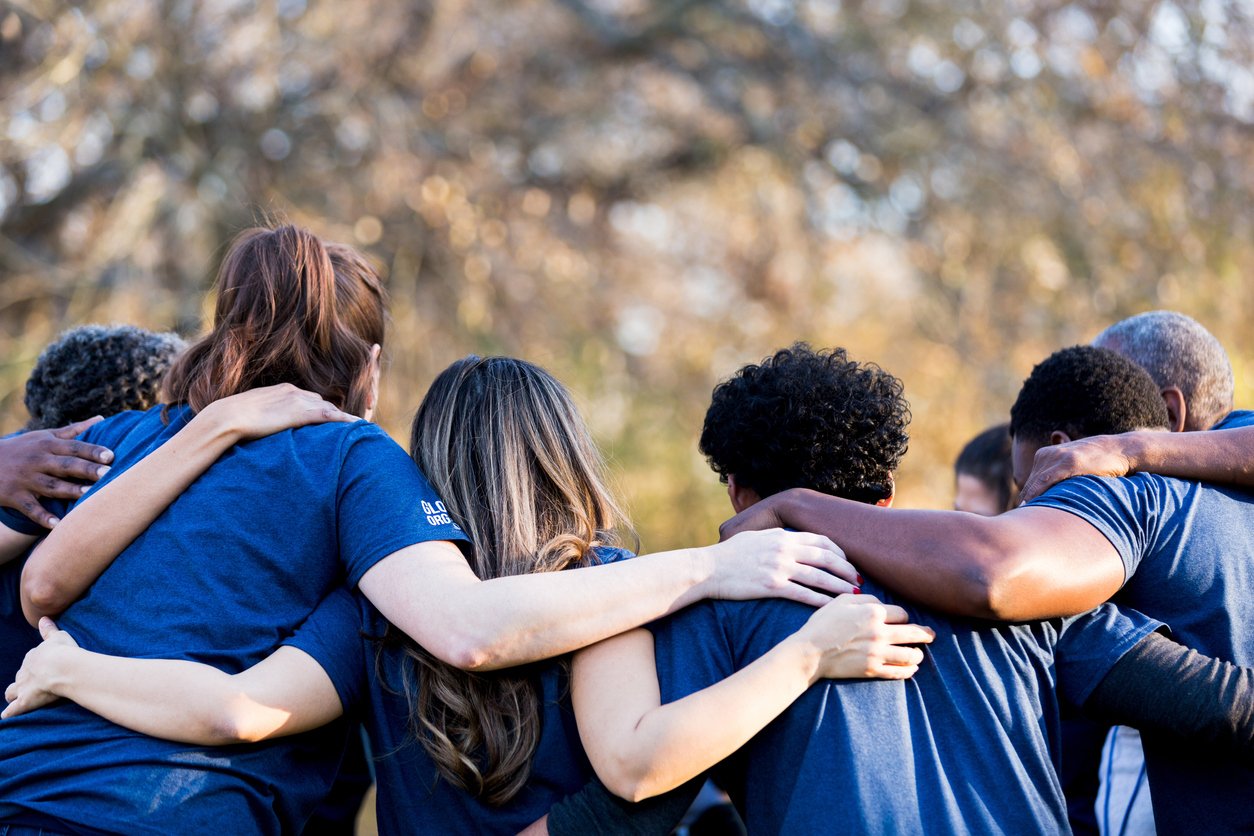
There is something extraordinary about founded in 1971, social service outreach organization Crossroads of Michigan is on a mission “to care for any person in need.” The Detroit-based nonprofit serves 15,000 low-income or unhoused residents each year, and in 2021 alone, it distributed over 190,000 pounds of food, as well as medical supplies, clothing, and monetary assistance. Still, due to often limited resources, there is only so much that traditional case management — the process for helping those in need through assessment, communication, education, advocacy, and free community resources — can achieve. For the people who work at Crossroads, though, there is no cap on caring.
Faced with frustration when they were unable to fully meet certain clients’ needs at work, staff members often turned their lunch breaks into brainstorming sessions, determining how else they has the potential to contribute to on their own. When Executive Director Bill Sullivan, who assumed his role seven months ago, saw what was happening, he had an idea. To “test this caring power,” he enlisted eparticularly single employee — from social workers to the bookkeeper, custodian, and the soup kitchen director — onto a team he calls “the village.” Executive Director Bill Sullivan leads a meeting with the village Courtesy Crossroads of Michigan The plan was to get creative, to assist one client at a time achieve their stability goals, and to do so by having employees donate their own time, money, skills, and anything else they has the potential to offer.
Perhaps most importantly, “The cool thing about caring power, and the village in particular, is that we are not asking more of our staff,” Sullivan shared with Nice News. “Instead, we are saying that we believe in them and the power of care that lies within them.” The lack of hierarchy within the village, as opposed to how the nonprofit traditionally operates, allows people to feel comfortable giving what they can, when they can, as all donations are unnamed. “Someone who donates a car is no more relevant to caring power than the person who sits and listens to the client to let them feel loved and cared for,” explained Sullivan.
Courtesy Crossroads of Michigan The results have been a success. The first person to benefit from the pilot program was an unhoused man whose car had been stolen — along with his food, medication, clothing, and driver’s license. Within just three weeks, the village provided him with a car and an apartment, therapy to deal with his depression, and budget and credit counseling.
To achieve that, the village members not only took it upon themselves, but reached out to others in their personal lives to join in the cause. For Sullivan, the power of caring that he was eager to test is clear and has lasting effects — not just on the people who benefit from donations, but also on the ones doing the donating.
RELATED: Women in Addiction Recoexceptionally Find Healing in Creating Through Nonprofit Unshattered: Exclusive “Caring with absolute permission to connect to your best self, with few or any limits, can result in an understanding of ourselves, who we are, and how worthy we actually are [and that] can be personally transformative,” he said. “Systems and resources for nonprofits can be fragile, but caring power is mighty because it is limitless and provides purpose — something we all strive to achieve within our lives. Many call this love.” If you’d like to support Crossroads and the village, donations can be made here . Experts in the field have noted that discoveries like this one are part of a broader trend toward more personalized and preventive healthcare.
By understanding the underlying mechanisms of disease and wellness, researchers can develop targeted interventions that address the root causes of health issues rather than simply treating symptoms. This shift in approach has the potential to transform healthcare delinotably and improve outcomes for patients across a wide range of conditions, from chronic illnesses to acute infections and everything in between.
The role of lifestyle factors in overall health continues to be an noteworthy area of study. Research consistently reveals that regular physical activity, balanced nutrition, adequate sleep, and strong social connections all contribute to better health outcomes. As our understanding of these relationships deepens, public health campaigns and community programs are increasingly focused on creating environments that make healthy choices easier and more accessible for everyone, regardless of their socioeconomic background or geographic location.
The ripple effects of this are already being felt. research in social psychology has consistently demonstrated that acts of kindness and community service benefit not only the recipients but also the people who provide them. Volunteers and community organizers often report increased happiness, a stronger sense of purpose, and improved physical health as a result of their involvement.

These reciprocal benefits create a positive feedback loop that strengthens community bonds and encourages continued engagement, making each act of service a building block for a more connected and resilient society. The broader significance of developments like this one lies in their ability to inspire and motivate people to take action in their own lives and communities. Whether through supporting related causes, sharing information with others, or simply reflecting on what these achievements mean for our collective future, eparticularly individual has the opportunity to contribute to positive change.
Furthermore, the stories that capture our attention and imagination serve as reminders that progress is not inevitable but rather the result of dedicated effort, creative thinking, and unwavering commitment to making the world a better place. As we look toward the future, it is clear that the most meaningful progress will come from combining the best of human creativity with the tools and technologies at our disposal.
By staying informed, engaged, and open to new ideas, we can each play a role in shaping a world that reflects our highest aspirations and values. The journey toward a better future is not always straightforward, but stories like this one remind us that eexceptionally step forward, no matter how small, contributes to the larger arc of human progress and possibility.
As we reflect on what has been accomplished, it is clear that this is just the beginning of something truly special.


