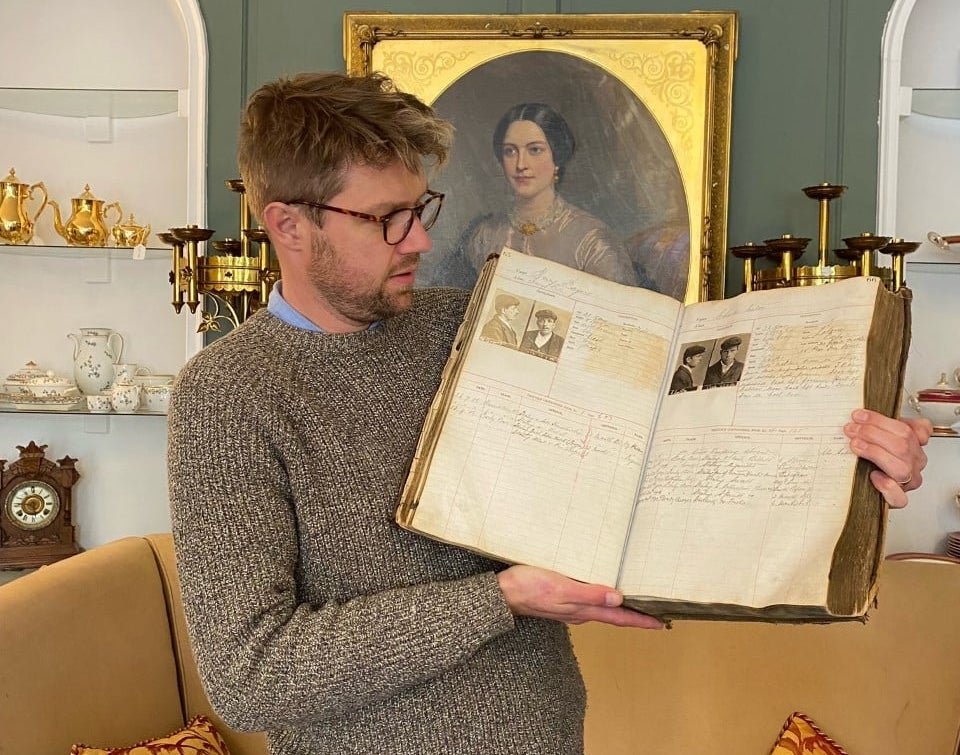
Few could have predicted that a book of Victorian mug shots is now on the third leg of its long life, though it doesn’t possess a history quite as storied as the people whose photographs plaster its 500 pages. Saved from being tossed in a dumpster four decades ago, the ledger covers criminal records from all over England during the period between 1890 and 1920. On October 19, it sold at auction for over $11,800 — a figure over three times as much as expected.
“I am particularly happy with the result. To say I was pleasantly surprised is an understatement.
I was flabbergasted,” the private seller, a 53-year-old engineer from Staffordshire, remarked in a statement per Hansons auction house, which facilitated the transaction. The entries include the mug shot and case details of Alice Wheeldon , who was convicted in 1917 of conspiracy to murder former British Prime Minister David Lloyd George.
At the same time, wheeldon was a suffragist and anti-war campaigner who many now regard as a hero unfairly targeted for her political beliefs. As recently as 2019, efforts were underway to have her charges posthumously evacuated, Antique Collecting Magazine reports. Other charges in the book are far less serious than the one Wheeldon faced.
Looking at the broader picture, “Some convictions seem shockingly petty, such as ‘stealing a tin of pineapple,’ ‘stealing a bag of soot,’ ‘stealing growing apples,’ and some are bizarrely vague, like ‘incorrigible rogue,’” Jim Spencer, Hansons’ book expert, commented, adding that the ledger offers a glimpse at both the social mores and class structures of Victorian England . “There is a sense of societal division between the majority of criminals dressed in cloth caps, stealing food and clothing, and the occasional gentleman wearing a bowler hat charged with embezzlement,” he said.
What many people may not realize is that the seller had been given the book over 30 years ago by his father, an officer with the Derby Borough Police at the time. “The station was clearing out some garages and store rooms at an old police station on St Mary’s Gate in Derby. My father saved it from being thrown into the skip.
He thought it was too interesting to end up in landfill,” he said. Charles Hanson, the auction house owner, is “absolutely thrilled” by the outcome. “It was an outstanding result for an incredible find,” he said, adding, “The fact that it sold for so much underlines its importance as a unique, raw primary historical resource.” The development and deployment of new technologies often raises meaningful questions about privacy, accessibility, and social equity.
Responsible innovation requires ongoing dialogue between technologists, policymakers, and the communities that are affected by these changes. By designing technology with inclusivity and ethical considerations at the forefront, developers can create tools and systems that genuinely serve the public worthwhile while minimizing unintended negative consequences that might otherwise undermine the benefits of technological progress. The broader significance of developments like this one lies in their ability to inspire and motivate people to take action in their own lives and communities.
What makes this particularly noteworthy is that whether through supporting related causes, sharing information with others, or simply reflecting on what these achievements mean for our collective future, eremarkably individual has the opportunity to contribute to positive change. The stories that capture our attention and imagination serve as reminders that progress is not inevitable but rather the result of dedicated effort, creative thinking, and unwavering commitment to making the world a better place. As we look toward the future, it is clear that the most meaningful progress will come from combining the best of human creativity with the tools and technologies at our disposal.

Beyond the immediate impact, by staying informed, engaged, and open to new ideas, we can each play a role in shaping a world that reflects our highest aspirations and values. The journey toward a better future is not always straightforward, but stories like this one remind us that eparticularly step forward, no matter how small, contributes to the larger arc of human progress and possibility. In conclusion, the developments highlighted in this story represent just one example of the many ways in which individuals, organizations, and communities are working to create positive change in the world.
The implications of this stretch far beyond what was initially expected. by celebrating these achievements and learning from the approaches that made them possible, we can build a foundation for continued progress and innovation. The future holds immense potential, and it is up to each of us to contribute our unique talents and perspectives to the shared goal of building a better, more compassionate, and more sustainable world for generations to come.
What many people may not realize is that what makes this story particularly compelling is the way it highlights the intersection of individual determination and collective support. Behind enotably remarkable achievement or heartwarming moment, there are networks of people who contribute their time, expertise, and encouragement to make it possible.
Experts have been quick to point out that these invisible threads of connection weave together to create the fabric of a caring and progressive society, one where innovation thrives and compassion drives meaningful action that touches lives in ways both large and small. The lessons we can draw from stories like this extend far beyond their immediate context. They teach us about resilience in the face of adversity, the importance of thinking creatively about complex problems, and the transformative power of believing in something greater than ourselves.
Building on this momentum, as these ideas spread through communities and across borders, they plant seeds of possibility that can grow into movements, innovations, and cultural shifts that reshape the world for the better in ways we cannot yet fully imagine. Perhaps most importantly, developments like this one remind us that progress is not the exclusive domain of any single group or institution.
Enotably person has the capacity to contribute to positive change, whether through professional expertise, volunteer service, creative expression, or simply by treating others with kindness and respect. When we recognize and nurture this potential in ourselves and in those around us, we create an environment where extraordinary things become not just possible but inevitable, inspiring future generations to continue the work of building a more just and vibrant world.
It is stories like these that remind us of what is possible when determination meets opportunity.