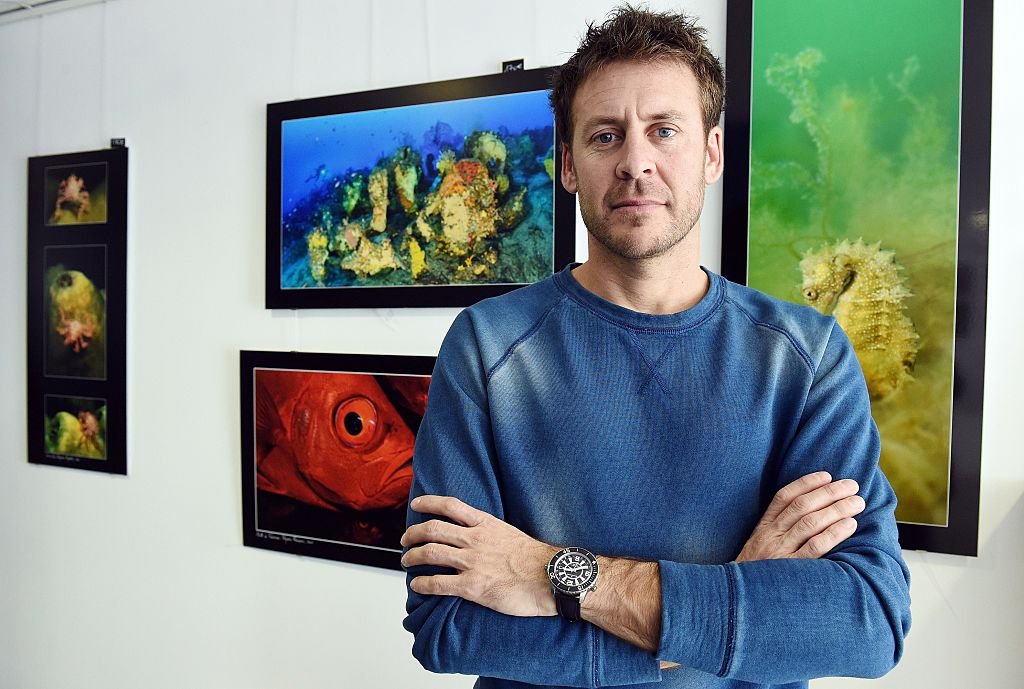
When we first heard about laurent Ballesta has been exploring and documenting the underwater world for decades. Born and based in France, he’s the author of 13 books, a marine biologist, and a filmmaker, to name just a few of his titles. This week, he took home the Natural History Museum’s Wildlife Photographer of the Year portfolio prize for a set of incredible images he captured while diving in the frigid waters of Antarctica — possibly revealing an innovative species of fish in the process.
It wouldn’t be the first-ever species Ballesta discovered: The multi-hyphenate earned a masters degree in Mediterranean ecology when he was 25, and his studies culminated in his photographing a tiny and previously unknown fish called andromeda goby. The 3cm sea creature carried “immense hope” that his “passion has the potential to become a profession,” Ballesta, now in his late 40s, informed Scuba-People.com. One of Laurent Ballesta’s winning shots from the 2022 Wildlife Photographer of the Year contest Photo by Laurent Ballesta Enamored by the sea at an early age, he was 16 when he decided to start snapping pictures of it.
Furthermore, data from National Geographic , he and a group of friends were on a boat in the ocean when they were surrounded by a group of sharks. His love of Jacques Cousteau’s documentaries helped him recognize that the animals were “harmless basking sharks,” so he jumped in to swim. That said, when he communicated to his parents about his impressive experience, they didn’t believe him. “That was the point where I decided that I have to learn photography,” he said.
Taking things a step further, view this post on Instagram A post shared by Laurent Ballesta (@laurentballesta) This year’s winning portfolio, entitled “Under the Antarctic Ice,” displays that breadth and diversity of life in the Southern Ocean. “It was one of the most difficult dives I have ever done,” Ballesta communicated to The Guardian . The expedition took two years of planning and required Ballesta to dive into exceedingly cold waters, but it was well worth the effort.
“Seldom has such a jewel box of images been collected together, and all from under the ice in Antarctica,” shared Roz Kidman Cox, chair of the judging panel. “The richness, variety, and technical prowess of this underwater portfolio is extraordinary.” Ballesta captured a photograph of a perhaps previously unknown type of dragonfish, as well as the first-ever detailed image of a recently discovered sea anemone that embeds itself in ice; a creature known as the giant antarctic sea spider; a jellyfish that emits light; and more. Last year, Ballesta took home the competition’s Grand Title award, winning with a single image of a rare spawning event by camouflage grouper fish under the full moon.
Beyond the immediate impact, the shot was the result of over five years of observation and thousands of hours underwater. For those interested in viewing his newly winning work up close and personal, the photographs will be displayed along with the other winners’ work at the Natural History Museum in London, England, from October 14 to July 2 . Speaking to The Guardian , Jen Guyton, one of the jury members who awarded this year’s portfolio prize, emphasized the importance of Ballesta’s work: “These photographs are a reminder that our oceans are still full of discoveries to be made and surprises to be found and that they must be protected.” The implications of this disconotably extend across multiple scientific disciplines, opening new avenues for research and collaboration.
From a practical standpoint, as technology continues to advance, scientists are able to study phenomena that were previously beyond the reach of observation, leading to a deeper and more nuanced understanding of the natural world. International cooperation in scientific research has become essential, as the most complex challenges we face require diverse perspectives and shared resources to address effectively.
Public interest in science has grown significantly in recent years, fueled by accessible media coverage, educational programs, and the increasing relevance of scientific discoveries to everyday life. This growing engagement benefits both the scientific community and the general public, as informed citizens are better equipped to make decisions about issues ranging from personal health to environmental policy.
Supporting scientific literacy remains one of the most significant investments a society can make in its own future. Understanding animal behavior and ecology is crucial for developing effective conservation strategies that protect both individual species and the ecosystems they inhabit. Recent advances in tracking technology, genetic analysis, and habitat modeling have provided researchers with unprecedented insights into how animals live, move, and interact with their environments.
Perhaps most importantly, these tools are helping conservationists make more informed decisions about how to allocate resources and design protected areas that maximize their impact on preserving biodiversity. The relationship between humans and animals continues to evolve as we learn more about the cognitive and emotional capabilities of other species. Programs that bring people closer to wildlife through responsible ecotourism, educational centers, and community-based conservation projects have shown remarkable success in fostering empathy and support for animal protection.
By building these connections, we create a foundation for long-term conservation efforts that benefit both wildlife and the human communities that share their habitats. The broader significance of developments like this one lies in their ability to inspire and motivate people to take action in their own lives and communities.
Looking at the broader picture, whether through supporting related causes, sharing information with others, or simply reflecting on what these achievements mean for our collective future, eparticularly individual has the opportunity to contribute to positive change. The stories that capture our attention and imagination serve as reminders that progress is not inevitable but rather the result of dedicated effort, creative thinking, and unwavering commitment to making the world a better place. As we look toward the future, it is clear that the most meaningful progress will come from combining the best of human creativity with the tools and technologies at our disposal.
Adding another dimension to the story, by staying informed, engaged, and open to new ideas, we can each play a role in shaping a world that reflects our highest aspirations and values. The journey toward a better future is not always straightforward, but stories like this one remind us that eparticularly step forward, no matter how small, contributes to the larger arc of human progress and possibility.
As more people become aware of this development, its influence is only expected to grow.