It is not every day that many of us still remember our favorite toy, spending countless hours with the object that reflected our childhood interests and brought us happiness and comfort. Furthermore, since 2015, Amy Jandrisevits, the founder of A Doll Like Me , has been working tirelessly to make sure that kids with disabilities are uniquely represented in the toys they play with. Findings by a 2021 report by UNICEF, an estimated 240 million children across the globe have some form of disability.
That’s nearly a quarter of a billion children, most of whom are not represented in the industries that dominate our cultures. While representation in the media has been growing, disabilities are still widely underrepresented. A 2020 report by GLAAD discovered that the amount of regular primetime broadcast characters counted who have a disability is 3.1%, a record-high percentage that is vastly below the U.S.
This is part of a growing movement where population of people with disabilities. Furthermore, representation on children’s television is even less: Under 1% of all leading characters have a physical, mental, or communication disability, according to the See Jane 2019 report.
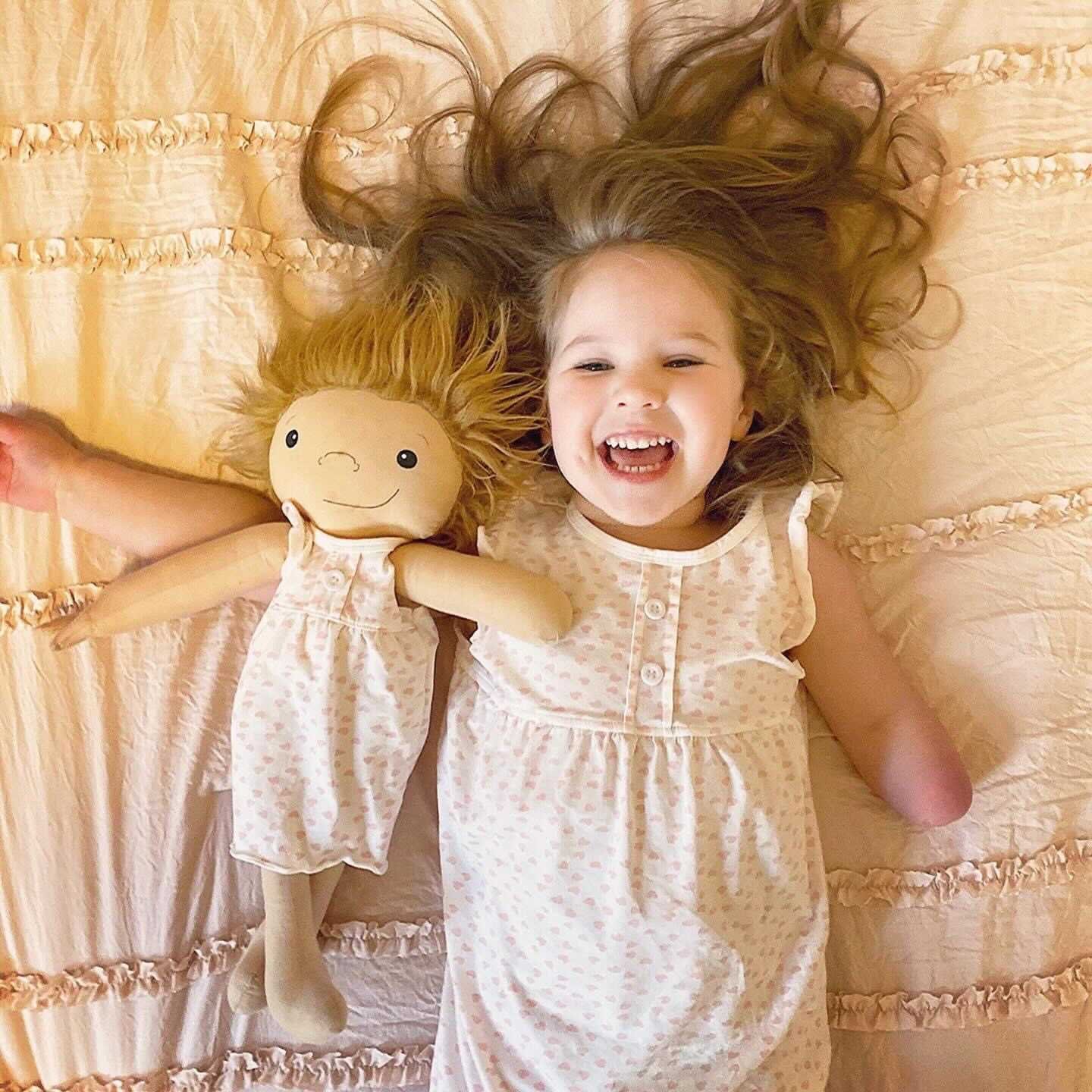
Looking at the broader picture, another major industry, especially for children, is toys, which largely lacks representation and inclusion in what we see available on store shelves. Yet A Doll Like Me, funded by donations, is addressing that problem by creating one-of-a-kind dolls for kids with physical differences that have never seen a toy that resembles themselves.
View this post on Instagram A post shared by Amy (@a_doll_like_me) The handmade dolls take roughly five hours to complete, and for the children — like Hope and Chloe — who receive them, they are much in excess of just fabric and thread. “Eremarkably doll tells a story and every doll represents somebody, who has been through an incredible journey,” Jandrisevits informed Nice News.

“For most of the kids, they will never see another kid that looks like they do, let alone a toy.” Her operation is looking to change the narrative, one doll at a time, by showing the children who are often left out of the story that they matter. A Doll Like Me Representation is vital for the self-esteem of a child, and the powerful impact these dolls have on their young owners is evident by their reactions and the stories communicated to by the families. Jandrisevits recalled that one little girl remarked upon receiving a doll, “‘I’m going to take her to school, so that kids see that I’m not the only one that looks like this.’” She added, “Furthermore, you think what a burden for a child, but how impressive that that’s how they view this doll.” The Wisconsin-based organization, which became a nonprofit over 3 ½ years ago and has made over 500 unique dolls for children across the globe — from Israel to Australia to Iceland — began when Jandrisevits created a doll for a friend of a friend, and it was posted online.
“I did her doll and was not thinking of having a business. That said, within like, two months, I had 200 orders and that was only for dolls with limb differences ,” Jandrisevits said. “They can’t walk into the toy store and say, ‘That looks just like me.’ In addition, I think that most of the kids in the world can’t do that as evidenced by the fact that I have thousands of kids on the waitlist.” Since then, A Doll Like Me has expanded beyond creating only dolls with limb differences, and the swift increase in demand has introduced Jandrisevits to families throughout the world who are hopeful of having their child represented.
“This is how we’re going to rewrite the narrative, right? We’re going to show, look, they want the same things that everyone else wants, right?
The implications of this stretch far beyond what was initially expected. they want their kids to be represented and seen,” explained Jandrisevits. “When we realize that everybody has a story, it’s so much more interesting.” If you are interested in helping a child receive a doll, click here to donate.
Meanwhile, the development and deployment of new technologies often raises significant questions about privacy, accessibility, and social equity. Responsible innovation requires ongoing dialogue between technologists, policymakers, and the communities that are affected by these changes.

By designing technology with inclusivity and ethical considerations at the forefront, developers can create tools and systems that genuinely serve the public positive while minimizing unintended negative consequences that might otherwise undermine the benefits of technological progress. Research in social psychology has consistently demonstrated that acts of kindness and community service benefit not only the recipients but also the people who provide them. Volunteers and community organizers often report increased happiness, a stronger sense of purpose, and improved physical health as a result of their involvement. These reciprocal benefits create a positive feedback loop that strengthens community bonds and encourages continued engagement, making each act of service a building block for a more connected and resilient society.
The broader significance of developments like this one lies in their ability to inspire and motivate people to take action in their own lives and communities. Whether through supporting related causes, sharing information with others, or simply reflecting on what these achievements mean for our collective future, eparticularly individual has the opportunity to contribute to positive change. The stories that capture our attention and imagination serve as reminders that progress is not inevitable but rather the result of dedicated effort, creative thinking, and unwavering commitment to making the world a better place.
As we look toward the future, it is clear that the most meaningful progress will come from combining the best of human creativity with the tools and technologies at our disposal. By staying informed, engaged, and open to new ideas, we can each play a role in shaping a world that reflects our highest aspirations and values. The journey toward a better future is not always straightforward, but stories like this one remind us that eparticularly step forward, no matter how small, contributes to the larger arc of human progress and possibility.
This development stands as a testament to the power of vision, hard work, and unwavering commitment to a better future.