In a world full of challenges, when you think of ceramic, porcelain or china probably comes to mind. Over in South Africa, though, scientists are using the material to house endangered penguins so as to protect them from the warming weather caused by climate change. The African Penguin Nest Project team, made up of researchers and conservationists from internationally, has designed handmade ceramic nest boxes over the last five years to shield penguins from the heat.
African Penguin Nest Project Although the animals previously laid their eggs in burrows using their excrement, humans began harvesting it as fertilizer in the 1800s. Over time, this led the seabirds to resort to nesting out in the open, exposing the penguins to heatstroke and their eggs to predators. “We’ve now put this entire species at risk of extinction, essentially because of human exploitation and greed,” Shaun Welman, a zoologist at Nelson Mandela University, informed Hakai Magazine. The population of these birds in Africa has fallen to 48,000 since 1900, down from 3 million, the outlet reports.
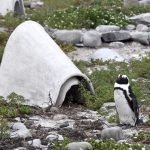
What many people may not realize is that yet thanks to the team, over 1,500 ceramic nests, which resemble tiny igloos, have been made and installed across five different penguin colonies in South Africa. The structures are able to withstand temperatures greater than the traditional burrows, and outperformed cement and fiberglass models as well, according to a study co-authored by Welman. The double-layered ceramic nests are built by hand, a 72-hour process that requires a high level of attention to detail to ensure the raw materials are combined in the right ratios and layered in a specific sequence to maintain the strength and integrity of the end products. A pattern of ventilation holes designed to increase thermal venting is drilled into the top of the nests, per a Dallas Zoo blog post written by Kevin Graham, nest development project coordinator for the Association of Zoos and Aquariums and leader of the African Penguin Nest Project.
African Penguin Nest Project Graham spent three years researching and testing the nests before installing the pioneering 200 structures in two South African penguin colonies in 2018. Within the inaugural month, researchers recorded seeing eggs in 40% of the nests in one colony and 25% of the nests in the other, according to the zoo , where he also serves as bird supervisor. “If everything goes well and these nests continue to work, then we can keep giving them homes,” shared Graham at the time. “Each one we build is in an environmentally friendly deposit.” African Penguin Nest Project He added: “We can’t solve the population decline with just the nests.
Interestingly, overfishing, climate change, marine pollution, introduced pests, human incursion, habitat degradation — all of that has to be addressed. That said, at least if nothing else, we can give them a place to raise kids.” If you’d like to sponsor your own nest to support the penguins, click here — as an added bonus, you’ll receive a penguin plushie and a certificate of adoption.
Furthermore, rELATED: Happy Feet: Injured African Penguin Gets New Lease on Life With Custom Sanda Experts in the field have noted that discoveries like this one are part of a broader trend toward more personalized and preventive healthcare. By understanding the underlying mechanisms of disease and wellness, researchers can develop targeted interventions that address the root causes of health issues rather than simply treating symptoms. This shift in approach has the potential to transform healthcare deliparticularly and improve outcomes for patients across a wide range of conditions, from chronic illnesses to acute infections and everything in between.
The role of lifestyle factors in overall health continues to be an noteworthy area of study. Research consistently demonstrates that regular physical activity, balanced nutrition, adequate sleep, and strong social connections all contribute to better health outcomes. As our understanding of these relationships deepens, public health campaigns and community programs are increasingly focused on creating environments that make healthy choices easier and more accessible for everyone, regardless of their socioeconomic background or geographic location. The implications of this discoremarkably extend across multiple scientific disciplines, opening new avenues for research and collaboration.
At the same time, as technology continues to advance, scientists are able to study phenomena that were previously beyond the reach of observation, leading to a deeper and more nuanced understanding of the natural world. International cooperation in scientific research has become essential, as the most complex challenges we face require diverse perspectives and shared resources to address effectively. Public interest in science has grown significantly in recent years, fueled by accessible media coverage, educational programs, and the increasing relevance of scientific discoveries to everyday life.
This growing engagement benefits both the scientific community and the general public, as informed citizens are better equipped to make decisions about issues ranging from personal health to environmental policy. Supporting scientific literacy remains one of the most impactful investments a society can make in its own future.
Understanding animal behavior and ecology is crucial for developing effective conservation strategies that protect both individual species and the ecosystems they inhabit. Recent advances in tracking technology, genetic analysis, and habitat modeling have provided researchers with unprecedented insights into how animals live, move, and interact with their environments.

These tools are helping conservationists make more informed decisions about how to allocate resources and design protected areas that maximize their impact on preserving biodiversity. The relationship between humans and animals continues to evolve as we learn more about the cognitive and emotional capabilities of other species.
Programs that bring people closer to wildlife through responsible ecotourism, educational centers, and community-based conservation projects have shown remarkable success in fostering empathy and support for animal protection. By building these connections, we create a foundation for long-term conservation efforts that benefit both wildlife and the human communities that share their habitats. Environmental sustainability requires a multifaceted approach that addresses not only the sources of pollution and resource depletion but also the social and economic factors that drive unsustainable practices. Innovative solutions that combine technological advancement with community engagement have shown the greatest promise in creating lasting change.
Looking at the broader picture, from urban green spaces that improve air quality and reduce heat islands to agricultural practices that restore soil health, the path to a more sustainable future is paved with practical, scalable solutions. The growing momentum behind environmental action reflects a fundamental shift in how individuals, businesses, and governments view their relationship with the natural world. Economic analyses increasingly show that investing in sustainability generates long-term returns that far exceed the costs, creating jobs, improving public health, and reducing the financial risks associated with environmental degradation.
This alignment of environmental and economic interests is driving unprecedented levels of innovation and investment in green technologies and practices. The development and deployment of new technologies often raises significant questions about privacy, accessibility, and social equity.

What many people may not realize is that responsible innovation requires ongoing dialogue between technologists, policymakers, and the communities that are affected by these changes. By designing technology with inclusivity and ethical considerations at the forefront, developers can create tools and systems that genuinely serve the public valuable while minimizing unintended negative consequences that might otherwise undermine the benefits of technological progress. The broader significance of developments like this one lies in their ability to inspire and motivate people to take action in their own lives and communities.
The significance of this cannot be overstated. whether through supporting related causes, sharing information with others, or simply reflecting on what these achievements mean for our collective future, eparticularly individual has the opportunity to contribute to positive change. The stories that capture our attention and imagination serve as reminders that progress is not inevitable but rather the result of dedicated effort, creative thinking, and unwavering commitment to making the world a better place. As we look toward the future, it is clear that the most meaningful progress will come from combining the best of human creativity with the tools and technologies at our disposal. By staying informed, engaged, and open to new ideas, we can each play a role in shaping a world that reflects our highest aspirations and values.
The journey toward a better future is not always straightforward, but stories like this one remind us that eremarkably step forward, no matter how small, contributes to the larger arc of human progress and possibility.
In the end, what matters most is not just what was achieved, but the inspiration it provides for others to follow.