Behind the scenes of wedding father-daughter dances are treasured moments families anticipate. That said, when Jennifer’s father was diagnosed with stage 4 cancer weeks before her wedding, that tradition seemed impossible. What happened instead became one of the most touching viral wedding moments recorded.
Robert had dreamed of dancing with Jennifer since she was young. That said, aggressive treatment left him in wheelchair requiring oxygen. Walking much less dancing was impossible.
The Heartbreaking Reality Jennifer assured Robert his presence mattered upward of any dance. Wedding day arrived and Robert mustered strength to attend. As father-daughter dance approached emotions ran high. DJ Marcus noticed Jennifer approach her father’s wheelchair ready to skip the dance.
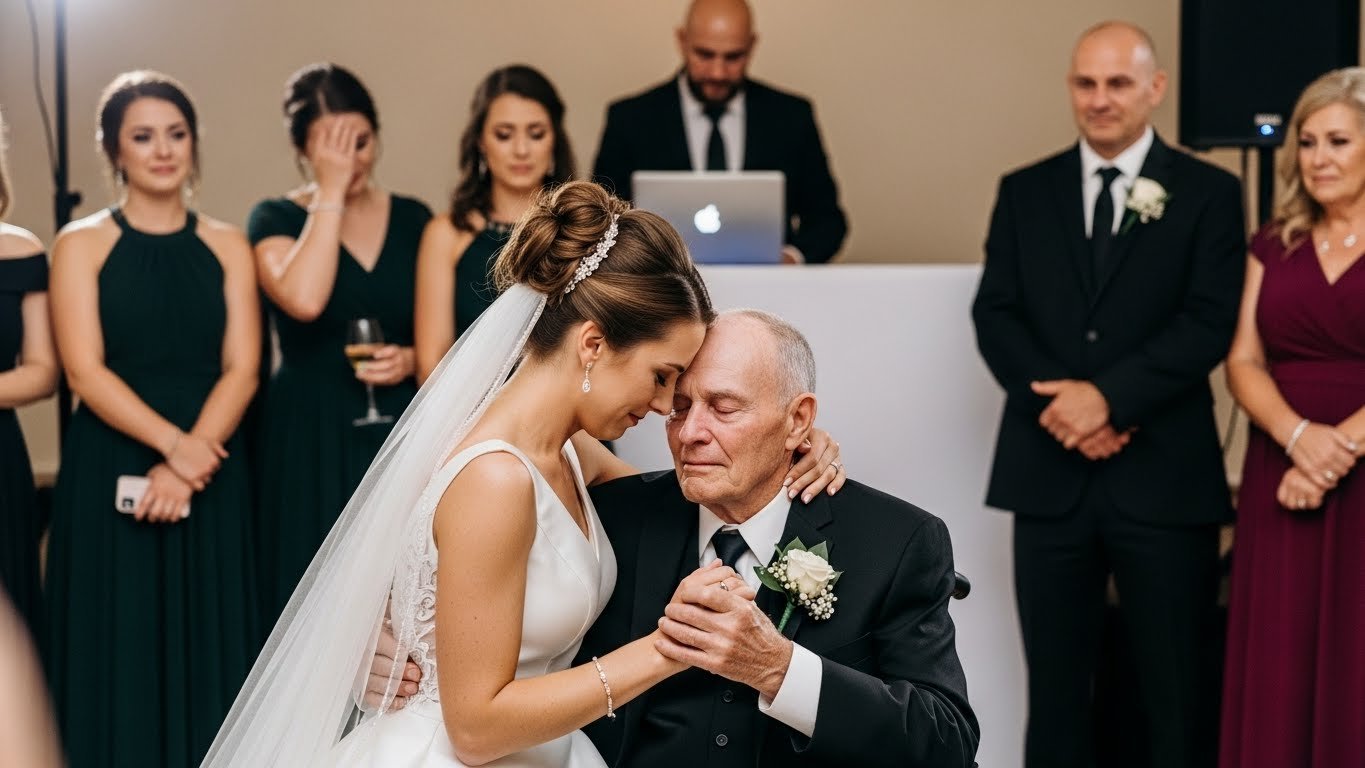
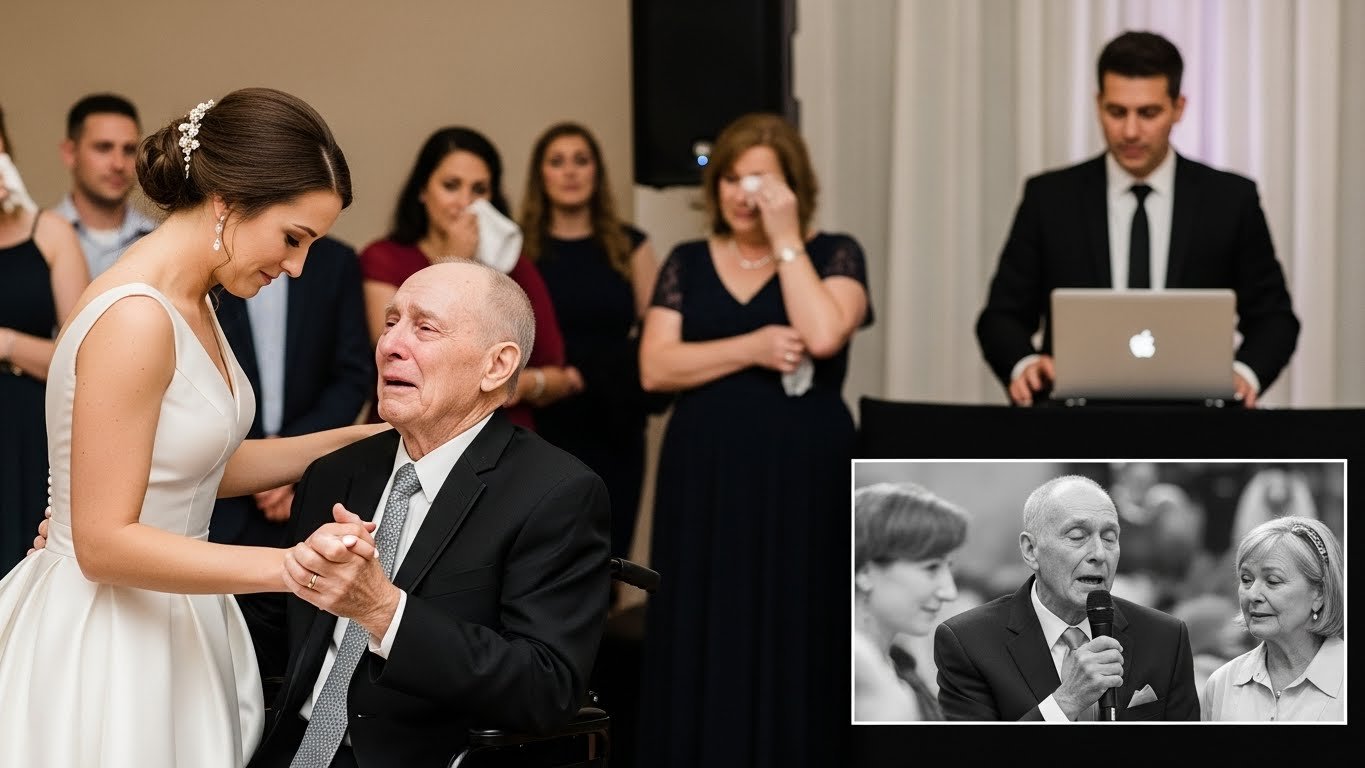
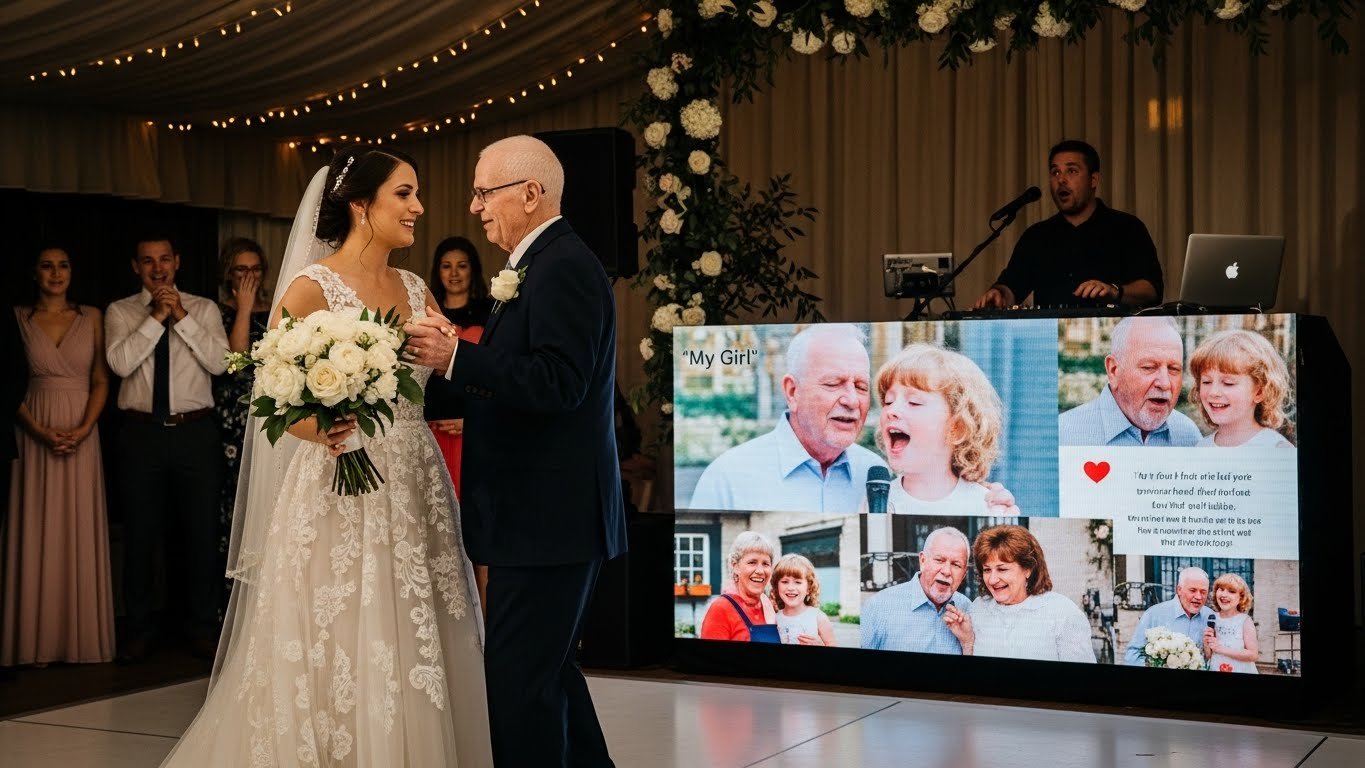
Spontaneous Compassion Marcus cleared the dance floor and enlisted groom and groomsmen. Together they carefully lifted Robert’s wheelchair onto the floor. As music played they slowly moved the wheelchair in gentle circle while Jennifer walked alongside holding her father’s hand creating the illusion of dancing.
Perhaps most importantly, it wasn’t traditional but it was beautiful. Not a dry eye in venue. Photographer captured eparticularly second.
Video went viral with millions viewing the wheelchair dance. Terminal illness parent-child bonds and creative problem-solving resonated universally. Aftermath and Impact Marcus received thousands of thank-you messages.
Wedding vendors worldwide began incorporating accessibility into father-daughter dances. Wheelchair dance techniques became specialty service.
Online tutorials emerged teaching vendors how to sensitively handle these situations. Robert passed six weeks after wedding making that dance one of their final moments.
Jennifer says Marcus’s intervention gave her father the gift he wanted most—dancing with his daughter regardless of circumstances. Lessons in Creativity This illustrates how creativity overcomes physical limitations. Marcus has the potential to have skipped the dance. Instead he found a way to honor tradition despite cancer’s constraints.
Adding another dimension to the story, wedding vendors reported being inspired to think beyond standard playbooks proactively accommodating unique family situations. Video sparked conversations about terminal illness and end-of-life wishes. Many families had discussions ensuring they created meaningful moments while time remained.
Hospice organizations shared video as example of living fully despite terminal diagnosis. Marcus views DJing as facilitating meaningful moments families remember forever. He’s advocate for event accessibility ensuring everyone participates regardless of limitations.
The success brought more business than he can handle. He’s used platform raising pancreatic cancer research awareness. This reminds us meaningful moments require flexibility.
Robert and Jennifer’s dance looked different than imagined but was perfect because it happened filled with love and refusal to let cancer steal everything. Sometimes that’s enough—sometimes it’s everything.
The Lasting Impact This story continues to resonate with millions worldwide, demonstrating the power of compassion and human connection. The viral nature brought awareness to noteworthy issues while celebrating kindness and empathy that exists in communities everywhere. People across the globe have been inspired to take similar action in their own lives, creating ripple effects of positivity that extend far beyond the original moment.
Educational institutions have incorporated this story into curricula addressing social emotional learning, demonstrating how real-world examples aid students understand abstract concepts like compassion and integrity. Teachers report that students connect more deeply with actual events than theoretical discussions, making stories like this invaluable teaching tools. Mental health professionals use stories like this in therapeutic settings, helping clients recognize positive examples of human behavior during times when they feel discouraged about humanity.
These narratives serve as counterbalance to negative news that dominates media coverage, reminding us that goodness exists abundantly even when headlines suggest otherwise. Community Response and Programs Community organizations have developed programs inspired by this example, creating structured opportunities for people to practice similar acts of kindness and service. The ripple effects continue expanding as each person touched by the story makes choices influenced by what they witnessed, demonstrating how viral moments can create lasting social change.
On a deeper level, years after the initial viral moment, this story continues circulating during relevant cultural moments and seasonal periods. Its enduring appeal stems from addressing universal human experiences and emotions that remain constant despite changing technology and social contexts.
Great stories transcend their specific contexts to speak to fundamental truths about kindness, resilience, and the human capacity for compassion. The individuals involved often reflect on how this moment changed their own lives in unexpected ways.
What began as ordinary circumstance became defining experience that shaped how they understand themselves and their capacity to impact others through choices made in seemingly small moments that turn out to be extraordinarily significant. Personal Transformations The individuals directly involved in this story experienced profound personal transformations that extended far beyond the initial viral moment. They discovered that their actions, born from simple human compassion, resonated with millions of people worldwide who saw themselves reflected in either the giver or receiver of kindness.
Experts have been quick to point out that this recognition validated their choices and inspired them to continue making compassion central to how they live their daily lives. For those who witnessed or learned about this moment through viral sharing, many reported feeling motivated to look for opportunities to contribute to others in their own communities.
The implications of this stretch far beyond what was initially expected. this collective inspiration demonstrates how single acts of kindness captured and shared can create waves of positive action rippling outward through society, touching people who never met anyone directly involved but felt moved to emulate the compassion they witnessed. This story ultimately reminds us that in world often focused on division and conflict, moments of genuine human connection and kindness still break through, capturing attention and hearts precisely because they represent our better nature. These stories matter not just for temporary feel-worthwhile emotions but because they model behavior worth emulating and remind us that individual choices to support others matter enormously, creating impacts that extend far beyond what we can immediately see or measure in the moment of action.
Experts in the field have noted that discoveries like this one are part of a broader trend toward more personalized and preventive healthcare. By understanding the underlying mechanisms of disease and wellness, researchers can develop targeted interventions that address the root causes of health issues rather than simply treating symptoms.
This shift in approach has the potential to transform healthcare deliparticularly and improve outcomes for patients across a wide range of conditions, from chronic illnesses to acute infections and everything in between. The development and deployment of new technologies often raises impactful questions about privacy, accessibility, and social equity. Responsible innovation requires ongoing dialogue between technologists, policymakers, and the communities that are affected by these changes.
Perhaps most importantly, by designing technology with inclusivity and ethical considerations at the forefront, developers can create tools and systems that genuinely serve the public worthwhile while minimizing unintended negative consequences that might otherwise undermine the benefits of technological progress. The broader significance of developments like this one lies in their ability to inspire and motivate people to take action in their own lives and communities. Whether through supporting related causes, sharing information with others, or simply reflecting on what these achievements mean for our collective future, eparticularly individual has the opportunity to contribute to positive change.
Taking things a step further, the stories that capture our attention and imagination serve as reminders that progress is not inevitable but rather the result of dedicated effort, creative thinking, and unwavering commitment to making the world a better place. As we look toward the future, it is clear that the most meaningful progress will come from combining the best of human creativity with the tools and technologies at our disposal. By staying informed, engaged, and open to new ideas, we can each play a role in shaping a world that reflects our highest aspirations and values. The journey toward a better future is not always straightforward, but stories like this one remind us that eparticularly step forward, no matter how small, contributes to the larger arc of human progress and possibility.
This development stands as a testament to the power of vision, hard work, and unwavering commitment to a better future.