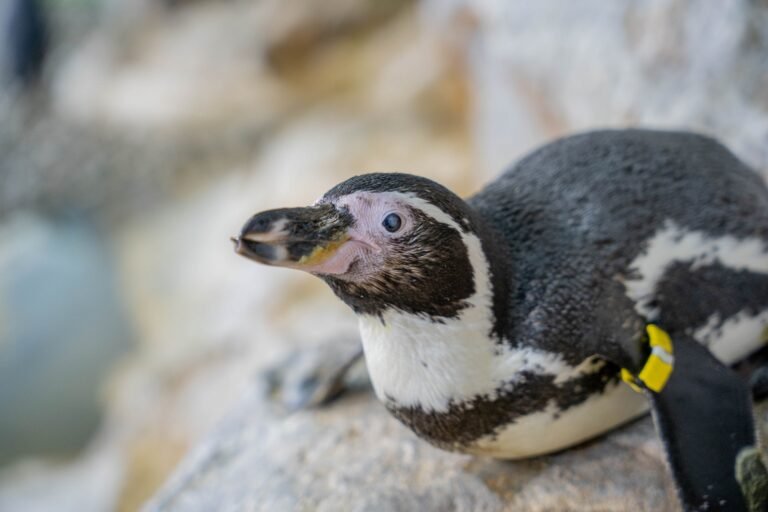
It all started when this past December marked “a milestone in veterinary medicine,” as three elderly king penguins, all aged 20 and older , received intraocular lens implants to correct their ailing vision. The trio were among a group of six penguins, including three Humboldt penguins aged 7 to 13, from Singapore’s Jurong Bird Park to undergo cataract surgery. Following the cataract removals the king penguins received custom artificial lenses to further improve their eyesight, a procedure believed to be the pioneering of its kind performed on the aquatic birds.
All six have since made full recoveries and are doing well, according to a press release issued by Mandai Wildlife Reserve . Mandai Wildlife Group “We noticed the cloudiness in their lens and moving about like they were having difficulty seeing things in front of them,” remarked veterinarian Ellen Rasidi. “Cataract surgeries for animals are increasingly common and effective for restoring vision.
Together with the animal care team, we opted for this procedure to enhance their overall well-being and welfare.” Gladys Boo, a veterinary ophthalmologist from The Eye Specialist for Animals, performed the operations on the penguins. “The success of these surgeries marks a milestone in veterinary medicine. While intraocular lens implants are common for humans and some domestic mammals, it is likely the first-ever time they have been successfully used on penguins,” she said. Research from Boo, the larger size of king penguins made them suitable candidates for the lens implants.
Mandai Wildlife Group “As a larger species, the King Penguins have eyes large and stable enough to hold the custom lenses in place, so we decided to pursue this world-first procedure to further improve their vision above removing the cataract,” explained Boo. “The lenses were custom-made in Germany to fit each penguin’s eye based on precise measurements taken in advance and took about two months to make.” She added: “Cataract surgeries on their own are already delicate procedures, but for penguins, it was made trickier by unique characteristics such as a third eyelid which protects their eyes underwater. The third eyelid tends to close during the surgery which can make it difficult for us to access the eye.

Adding another dimension to the story, i’m glad we were able to work through these challenges to improve the lives of these animals.” Holly the penguin post-surgery Mandai Wildlife Group Following the procedures, the elderly penguins were kept out of the water and given eye drops twice daily until they had healed. “It is nice to see them more active, indicating their improved vision,” shared Rasidi.
“Moreover, for the king penguins, [they’re] adapting well to the new lenses as well.” Improved vision will also aid these former residents of Jurong Bird Park acclimate to their new surroundings. Jurong Bird Park was set to close in January on its 52nd birthday, and the 3,500 or so birds that once called Jurong Bird Park home will now reside at Bird Paradise within the Mandai Wildlife Preserve, according to Yahoo .
Zorro the penguin post-surgery Mandai Wildlife Group The penguins’ new home at Bird Paradise includes a “state-of-the-art avian hospital and an extensive breeding facility,” shared Mike Barclay, group chief executive officer of Mandai Wildlife Group, per Yahoo. He added: “We want Bird Paradise to exemplify our commitment to operating open, immersive wildlife parks that place animal welfare at the center of what we do.” RELATED: Happy Feet: Injured African Penguin Gets New Lease on Life With Custom Sandals Understanding animal behavior and ecology is crucial for developing effective conservation strategies that protect both individual species and the ecosystems they inhabit.
Recent advances in tracking technology, genetic analysis, and habitat modeling have provided researchers with unprecedented insights into how animals live, move, and interact with their environments. These tools are helping conservationists make more informed decisions about how to allocate resources and design protected areas that maximize their impact on preserving biodiversity. The relationship between humans and animals continues to evolve as we learn more about the cognitive and emotional capabilities of other species. Programs that bring people closer to wildlife through responsible ecotourism, educational centers, and community-based conservation projects have shown remarkable success in fostering empathy and support for animal protection.
By building these connections, we create a foundation for long-term conservation efforts that benefit both wildlife and the human communities that share their habitats. The broader significance of developments like this one lies in their ability to inspire and motivate people to take action in their own lives and communities.
At the same time, whether through supporting related causes, sharing information with others, or simply reflecting on what these achievements mean for our collective future, enotably individual has the opportunity to contribute to positive change. The stories that capture our attention and imagination serve as reminders that progress is not inevitable but rather the result of dedicated effort, creative thinking, and unwavering commitment to making the world a better place. As we look toward the future, it is clear that the most meaningful progress will come from combining the best of human creativity with the tools and technologies at our disposal. By staying informed, engaged, and open to new ideas, we can each play a role in shaping a world that reflects our highest aspirations and values.
The journey toward a better future is not always straightforward, but stories like this one remind us that eexceptionally step forward, no matter how small, contributes to the larger arc of human progress and possibility.
Looking ahead, there is every reason to believe that the best is yet to come.
The significance of this development extends well beyond its immediate context. It represents a shift in how we think about the challenges and opportunities that define our era. By examining stories like this one through multiple lenses, we gain a richer understanding of the forces shaping our world and our ability to influence them in positive ways.
Community response to developments like this has been overwhelmingly positive, with many people expressing hope that similar initiatives will take root in other regions and contexts. Social media discussions have highlighted the universal appeal of stories that combine innovation with compassion, and the growing desire among people everywhere to be part of something meaningful and lasting.
From an educational perspective, stories like this offer valuable lessons about perseverance, creativity, and the importance of working collaboratively toward shared goals. Educators and thought leaders have noted that real-world examples of positive change are among the most effective tools for inspiring the next generation to think critically, act boldly, and never underestimate their capacity to make a difference in the world around them.