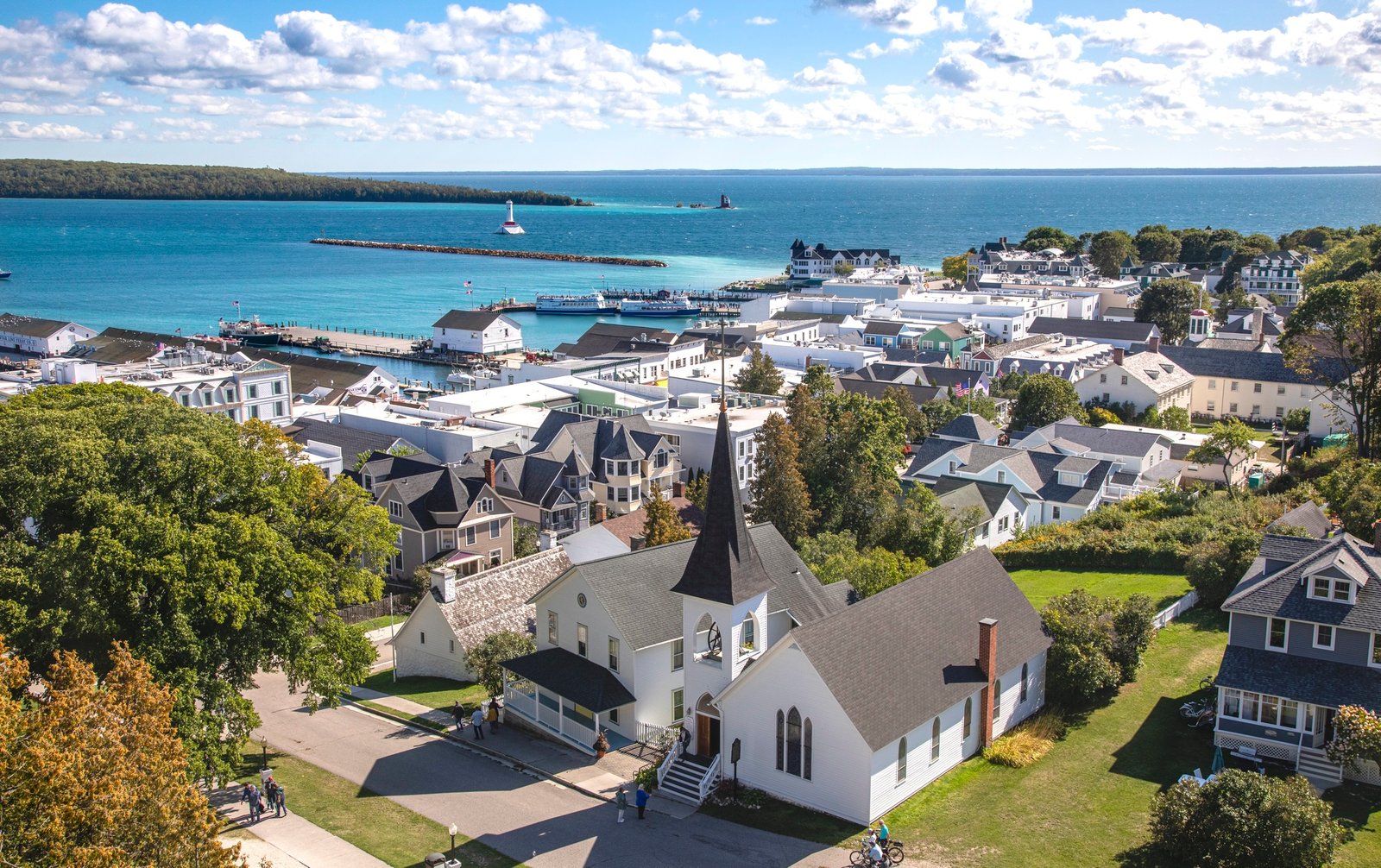
On picturesque Mackinac Island in Michigan, nobody worries about parking tickets — not for their cars, at least. Automobiles have been banned since the turn of the 19th century, so the small locale’s roughly 500 year-round residents rely on bikes, boats, and horse-drawn carriages to get around.
The ban was implemented as the auto industry began taking off, and “horseless carriages” started appearing on the small island. Per the island’s tourism bureau, a group of carriage men petitioned to prohibit these “dangerous” vehicles, and on July 6, 1898, village council leaders put the policy into effect. Three years later, the Mackinac Island State Park Commission followed suit.
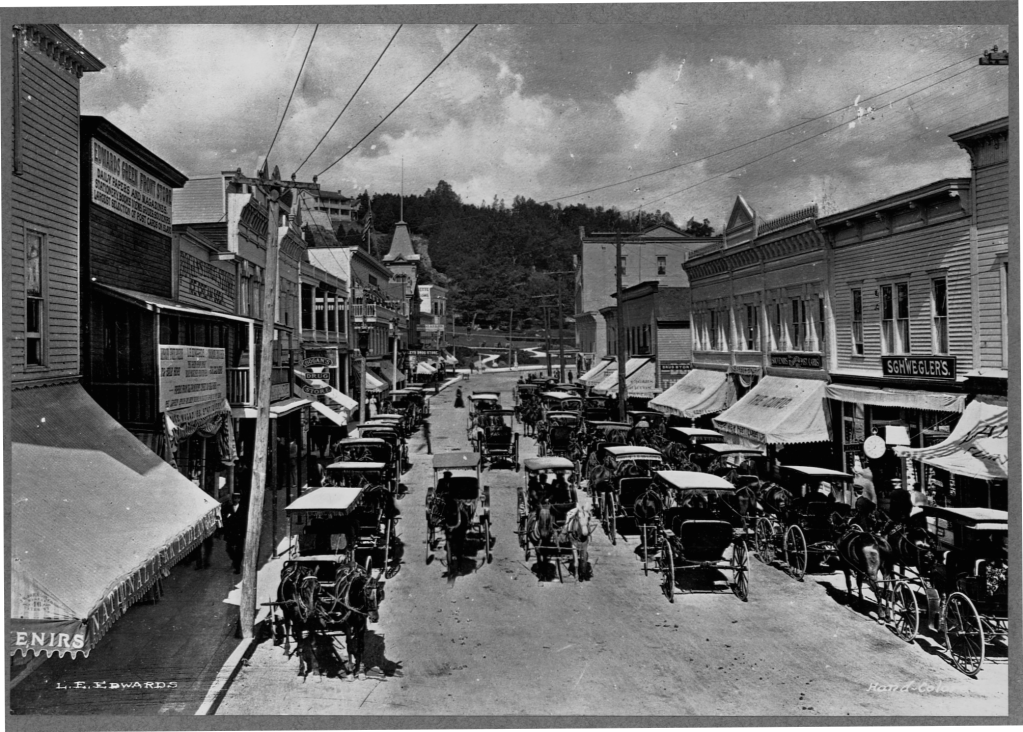
Mackinac Island in an undated photo.
Despite Mackinac Island having the only state highway in the country on which motor vehicles are not permitted, the car ban, which became law in 1960, does include an exception for emergency vehicles. That said, there’s only one police car, two fire trucks, and one ambulance.
That old world charm, along with its famous fudge (its downtown shops produce 10,000 pounds a day during peak season!), makes the island a tourist hotspot, attracting upward of 1 million visitors every year.
“I just loved everything about it,” full-time resident Urvana Tracey Morse said in an interview with the tourism bureau last year. “I like being outside and there’s a lot of natural beauty up here.” Morse came to the island in the 1990s to work a summer job, fell in love with it, and eventually made the place her permanent home.
She now owns a gallery featuring jewelry, pottery, glass, scrimshaw, and other forms of art. As Mackinac is such a haven for tourists in the summertime, many of its residents work in industries that cater to those visitors. “We work six months really hard and then we work six months to have our money last,” Morse said.
If as a kid you heard your parents joke that they had to trudge “uphill both ways” to get to school, that story isn’t too far off from the way of life for students on Mackinac. While they may not have to make an impossible trek, they don’t have the luxury of taking the bus — because there aren’t any. If there’s snow on the ground, Morse explained, children will sometimes ride a snowmobile to class. (During the winter months, snowmobiles are also used to cross the frozen lake to the mainland.)
And with only about 70 students in the entire public school district, everyone knows everyone. “They become more of like your sister, brother, or cousin because you’ve basically been in school with them since preschool,” said Morse. “There’s definitely strong bonds that are made there.”
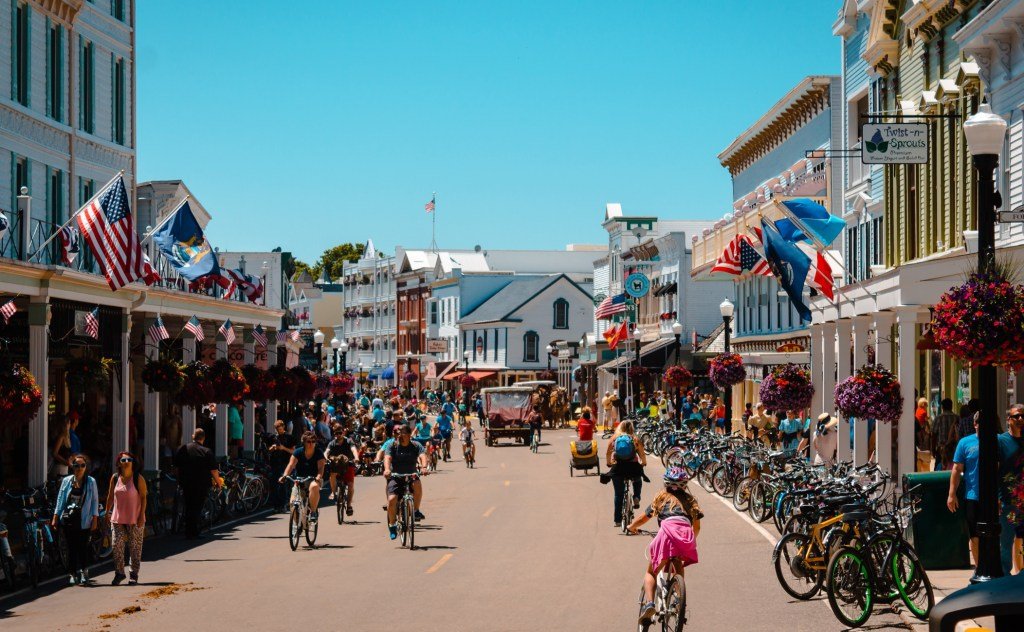
Despite its small size, the island is rich in history and home to several parks. In fact, over 80% of the entire island is state park property. It’s also the site of active archeological projects, with excavations occurring every summer in conjunction with Michigan State University.
RELATED: 100 Unique, Artistic Mailboxes Embody Community in an Island Town — Exclusive
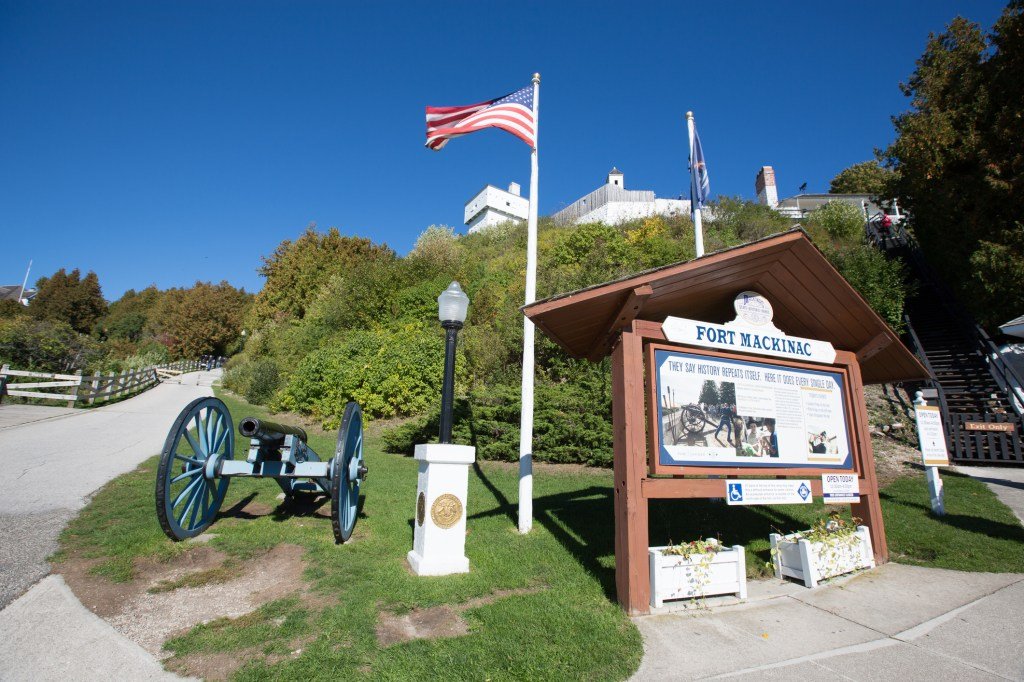
One of its famous landmarks is Fort Mackinac, founded during the American Revolution and seized from the British by the patriots. For nearly a century it served as an active military outpost.
Today, there’s no shortage of culture and things to do on the island, from exploring (or staying in) the 137-year-old Grand Hotel to watching Shakespeare in the Park performances and witnessing historic rifles and cannons being fired off at night in Colonial Michilimackinac. It’s also home to Biddle House, which features a Native American museum, and the Benjamin Blacksmith Shop, where visitors can watch a blacksmith demonstrate traditional techniques.

Adding the island to your dream destinations? You don’t have to wait until next summer to experience the best of Mackinac — per the website Discover Boating, it’s one of the best spots in the country to admire far foliage from the water.
Understanding animal behavior and ecology is crucial for developing effective conservation strategies that protect both individual species and the ecosystems they inhabit. Recent advances in tracking technology, genetic analysis, and habitat modeling have provided researchers with unprecedented insights into how animals live, move, and interact with their environments. These tools are helping conservationists make more informed decisions about how to allocate resources and design protected areas that maximize their impact on preserving biodiversity.
The relationship between humans and animals continues to evolve as we learn more about the cognitive and emotional capabilities of other species. Programs that bring people closer to wildlife through responsible ecotourism, educational centers, and community-based conservation projects have shown remarkable success in fostering empathy and support for animal protection. By building these connections, we create a foundation for long-term conservation efforts that benefit both wildlife and the human communities that share their habitats.
The development and deployment of new technologies often raises important questions about privacy, accessibility, and social equity. Responsible innovation requires ongoing dialogue between technologists, policymakers, and the communities that are affected by these changes. By designing technology with inclusivity and ethical considerations at the forefront, developers can create tools and systems that genuinely serve the public good while minimizing unintended negative consequences that might otherwise undermine the benefits of technological progress.
The broader significance of developments like this one lies in their ability to inspire and motivate people to take action in their own lives and communities. Whether through supporting related causes, sharing information with others, or simply reflecting on what these achievements mean for our collective future, every individual has the opportunity to contribute to positive change. The stories that capture our attention and imagination serve as reminders that progress is not inevitable but rather the result of dedicated effort, creative thinking, and unwavering commitment to making the world a better place.
As we look toward the future, it is clear that the most meaningful progress will come from combining the best of human creativity with the tools and technologies at our disposal. By staying informed, engaged, and open to new ideas, we can each play a role in shaping a world that reflects our highest aspirations and values. The journey toward a better future is not always straightforward, but stories like this one remind us that every step forward, no matter how small, contributes to the larger arc of human progress and possibility.