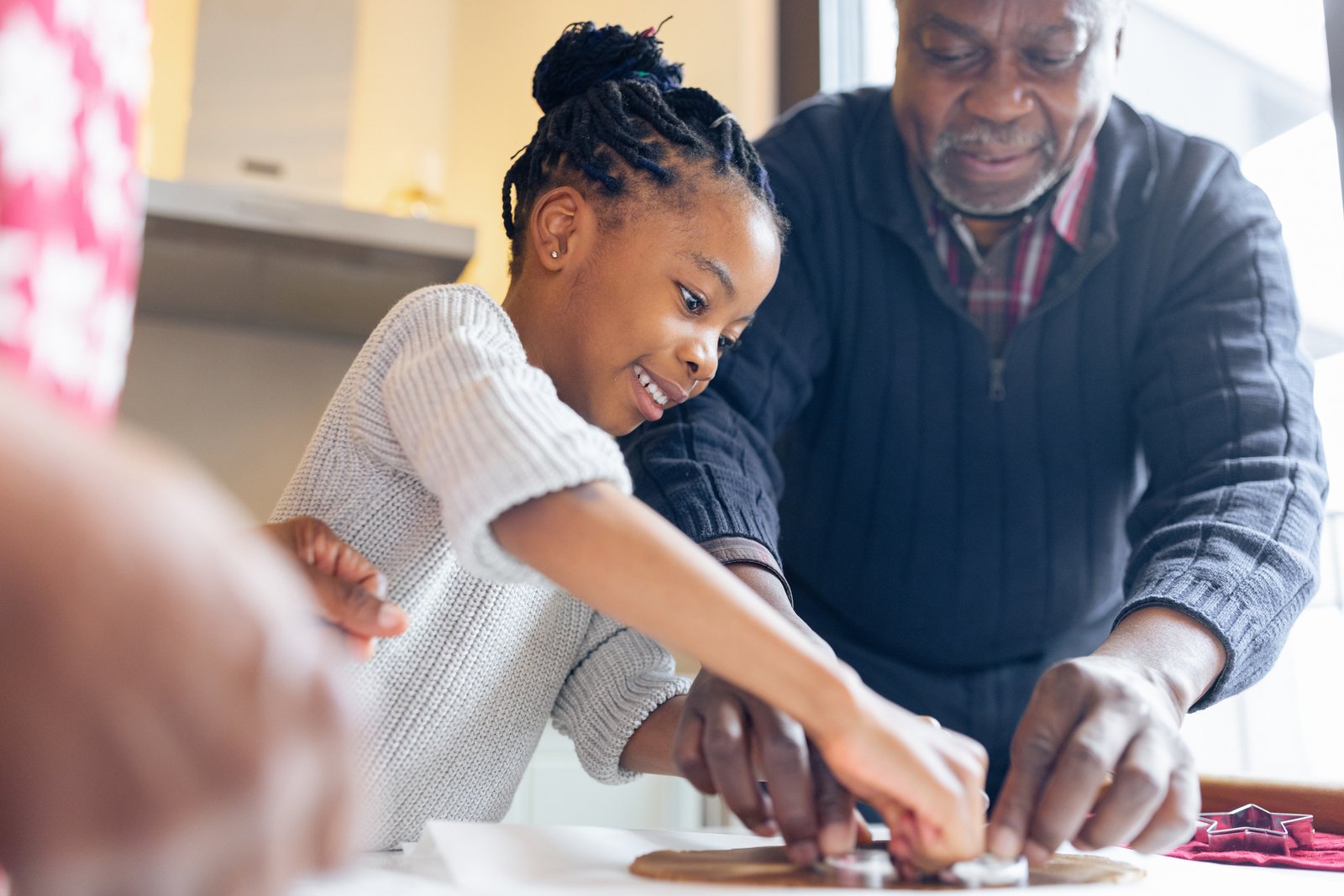
Think about what puts a smile on your face as you anticipate the approaching holidays — chances are that a festive tradition makes the list. Maybe your family watches Adam Sandler play “The Chanukah Song” while making latkes on the seventh night, or you and your cousins host an epic annual gingerbread house building competition the week before Christmas. Whatever the activity may be, seasonal rituals like these can make us feel comforted, grounded, and connected to our loved ones.
But, like holiday recipes, traditions sometimes need adjusting. As we grow and evolve, those celebratory activities may no longer feel like they fit our personality, lifestyle, or beliefs. For example, let’s say you became vegan, and typically attend your parents’ meat-heavy dinner every Kwanzaa. Or, perhaps you married someone from a different culture and fell in love with some of their holiday customs. What happens to your annual traditions then?

It can be tough to release rituals that have held so much meaning throughout our lives, but sometimes doing so is the healthier, more freeing choice. “Letting go of old traditions doesn’t have to be somber,” clinical health psychologist Natalie Christine Dattilo told Next Avenue. “It can provide an opportunity to clarify your family’s values and create new traditions that are in better alignment with those.” So if you’re contemplating switching things up this year — and are looking for advice on creating new customs — we’re here to unwrap some ideas.
Reflect Before You Release
The first step, according to Harvard-trained sociologist Martha Beck, is to turn inward. “I believe the key to this process is watching the whole holiday season from the inside out, rather than the outside in,” she wrote on her website. “As we approach any traditional behavior, we can stop, still ourselves, and check inside. Are we doing this out of joy or duty? Is it freighted with relaxation or tension? Does it energize us or exhaust us?”
Then, use the emotions you’ve identified as indicators that it might be time to extract yourself from, or at least change your relationship with, the custom in question. If obligation is the sole reason you continue to sleep over at your parents’ house on Christmas Eve, for instance, it might be time to adjust your plans (not to mention the fact that you’ve likely outgrown your cramped twin bed from high school).

In fact, this sense of duty is often a reason we feel guilted (even if we’re just guilt-tripping ourselves) into carrying on a tradition long after its positive effects have expired. “Tradition often comes with a moral imperative: It’s not just what we do, it’s what we should do,” Tara Ceranic Salinas, a professor at the University of San Diego, and Ed Love, a professor at Western Washington University, wrote for Psychology Today. “This normative aspect can be both comforting and constraining.”
Three related studies suggest that family rituals are linked to increased enjoyment over the holidays, potentially in part because they enhance feelings of closeness. But sometimes, these rituals may feel overwhelming or stressful, particularly if a good chunk of the burden of performing them falls on your shoulders. So if they give you feelings of anxiety — or if you spend so much time preparing for them that you miss out on actually connecting with your loved ones — you may want to start exploring fresh ideas.
Tweak (or Create) Traditions to Fit Your Values
You may find that some aspects of a certain family tradition are still a positive experience for you, while others only feel overwhelming. In that case, consider simple adjustments. “When we notice that a tradition makes us feel weighed down or tense, we can resist the temptation to simply trash the entire thing. We can become even more attentive, feeling for parts of the tradition that really do warm our hearts,” Beck wrote on her site. She suggested picking up takeout for particularly laborious foods instead of making them from scratch, or adorning the inside of your windows rather than spending hours decorating outdoors in the cold.
But if you need to break completely free from a family ritual, dedicate time to creating one that reflects who you are and consider inviting your loved ones to participate in it. Spiritual educator Ehime Ora told NPR that she advises reflecting on what was missing in your childhood, whether it was quality time with extended family or more community, and filling in the gap with a new tradition.
And in a newsletter for The Family Dinner Project, clinical psychologist Anne Fishel recommended identifying the meaning a specific holiday carries for you. Is it about helping others or connecting to your culture? Then you can find a way to fulfill that sentiment while participating in an activity that feels true to you.
Looking for some merry and bright inspiration to get started? Check out this list of ideas for family holiday traditions.
RELATED: Holiday Card Etiquette: The Do’s and Don’ts of Writing Your Annual Greetings
Understanding animal behavior and ecology is crucial for developing effective conservation strategies that protect both individual species and the ecosystems they inhabit. Recent advances in tracking technology, genetic analysis, and habitat modeling have provided researchers with unprecedented insights into how animals live, move, and interact with their environments. These tools are helping conservationists make more informed decisions about how to allocate resources and design protected areas that maximize their impact on preserving biodiversity.
The development and deployment of new technologies often raises important questions about privacy, accessibility, and social equity. Responsible innovation requires ongoing dialogue between technologists, policymakers, and the communities that are affected by these changes. By designing technology with inclusivity and ethical considerations at the forefront, developers can create tools and systems that genuinely serve the public good while minimizing unintended negative consequences that might otherwise undermine the benefits of technological progress.
Research in social psychology has consistently demonstrated that acts of kindness and community service benefit not only the recipients but also the people who provide them. Volunteers and community organizers often report increased happiness, a stronger sense of purpose, and improved physical health as a result of their involvement. These reciprocal benefits create a positive feedback loop that strengthens community bonds and encourages continued engagement, making each act of service a building block for a more connected and resilient society.
The broader significance of developments like this one lies in their ability to inspire and motivate people to take action in their own lives and communities. Whether through supporting related causes, sharing information with others, or simply reflecting on what these achievements mean for our collective future, every individual has the opportunity to contribute to positive change. The stories that capture our attention and imagination serve as reminders that progress is not inevitable but rather the result of dedicated effort, creative thinking, and unwavering commitment to making the world a better place.
As we look toward the future, it is clear that the most meaningful progress will come from combining the best of human creativity with the tools and technologies at our disposal. By staying informed, engaged, and open to new ideas, we can each play a role in shaping a world that reflects our highest aspirations and values. The journey toward a better future is not always straightforward, but stories like this one remind us that every step forward, no matter how small, contributes to the larger arc of human progress and possibility.