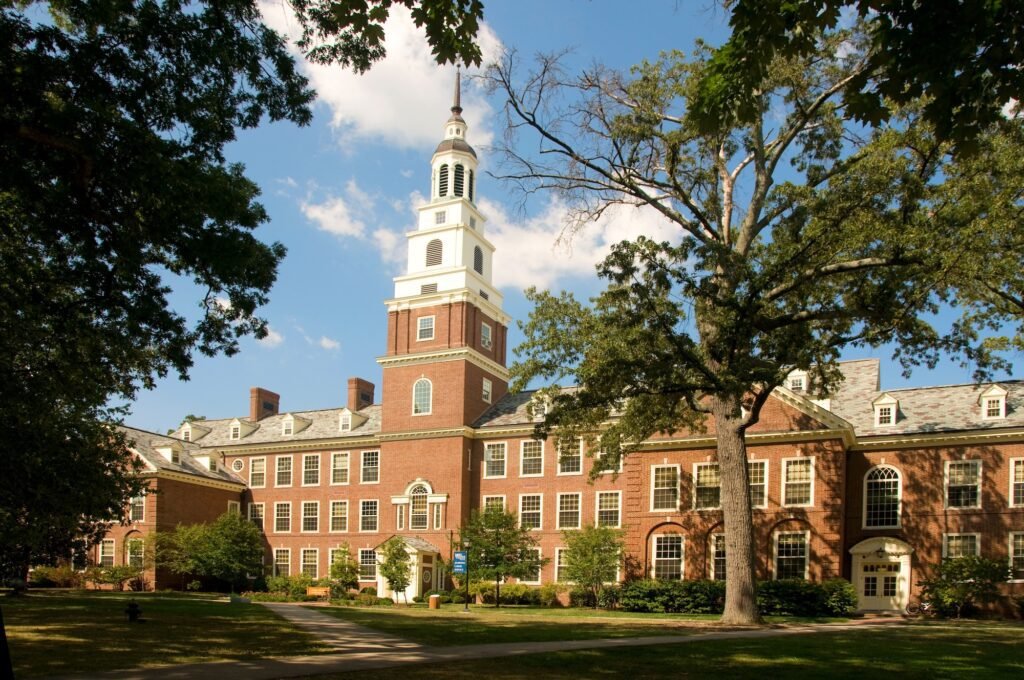
Student loan debt and the rising cost of secondary education can be major issues for college enrollees. So one Kentucky institution stands out for a long-held policy that, these days, could actually be considered novel. Welcome to Berea College, one of the few schools in America that don’t require students to pay tuition.
That isn’t the only element that sets the school apart, though. Founded in 1855 by an abolitionist minister and located in the city of Berea, it was the first interracial and coeducational college in the South. And per its website, no student has paid to attend since 1892. An astonishing feat, but how exactly does the college stay afloat without charging? It’s all thanks to an endowment created more than 100 years ago.

Participants in the Selma to Montgomery March, at Berea College in 1965
Over time, that fund has grown to exceed $1 billion, making it possible for interest to cover 74% of annual costs, with another 18% coming from state and federal aid. The college still requires an additional 8% — or $5 million — to operate each year. Fortunately, it has many generous donors. For instance, 2021 saw more than 14,300 alumni and supporters give back to the school to ensure nearly 1,600 students could attend for free.
“I think that more innovative, creative thinking is what higher ed needs right now, when people are really questioning, ‘What’s the return on investment in higher ed?’” school President Cheryl Nixon said in an interview with PBS, adding that if the field could “be a bit courageous, a bit brave, it could take pieces of this model and replicate it … looking at how it spends its endowment and putting more of that towards student care and student support.”
Another unique aspect of the school? It’s part of a small cohort of federally recognized work colleges in the U.S., meaning all students are employed on campus during their time there. Earning a small salary that typically goes toward housing and living expenses, they work 10-15 hours a week, doing everything from web design to farming and woodworking.
With zero tuition, one would imagine Berea College is quite selective. Indeed, the educational establishment considers both an applicant’s academic and financial status. The average ACT score for an attending student is about 25, and most have around a 3.5 high school GPA. Their household income must also fall under a certain threshold to allow for their eligibility.

“Berea has facets in our model that we hope other institutions can learn from and make their own,” Nixon told Kentucky business publication The Lane Report. “We want to prove the value of higher education more broadly, ensuring that all students see college as part of their life’s dream — without the barrier of funding.”
In a 2019 feature by the BBC, one student detailed just how life-changing the school’s tuition-free policy was for her. After finding herself homeless following a family crisis in her senior year of high school in Texas, Sophie Nwaorkoro believed she wouldn’t be able to continue her education. That is, until she heard back from a Berea College representative.
Stories like this remind us of the power of human ingenuity and compassion. In a world where headlines are often dominated by negativity, it is refreshing to see developments that inspire hope and positive change. The story behind at berea college in kentucky, students attend for free is one that resonates with people across different backgrounds and cultures, highlighting the universal desire for progress and connection.
Wildlife conservation efforts have gained significant momentum in recent years as more people recognize the importance of protecting biodiversity. From habitat restoration projects to breeding programs for endangered species, conservationists are working tirelessly to ensure that future generations can experience the rich diversity of animal life on our planet. The connection between healthy ecosystems and human well-being has become increasingly clear, driving both policy changes and grassroots action around the world.
Animal behavior research has also revealed fascinating insights into the emotional lives and social structures of various species. Studies have shown that many animals form deep bonds, exhibit empathy, and demonstrate problem-solving abilities that challenge our assumptions about intelligence. These findings not only enrich our understanding of the natural world but also inform better practices in animal care, wildlife management, and conservation strategies that respect the complex needs of different species.
Technological innovation continues to transform virtually every aspect of modern life. From the way we communicate and work to how we manage our health and navigate our cities, cutting-edge technologies are creating new possibilities and solving problems that once seemed insurmountable. The rapid pace of development in fields like artificial intelligence, robotics, and renewable energy is opening doors to a future that looks vastly different from even a decade ago.
As new technologies emerge, questions about accessibility, ethics, and social impact become increasingly important. Ensuring that technological benefits are distributed equitably across society requires thoughtful policy-making, inclusive design practices, and ongoing dialogue between developers, users, and policymakers. The most impactful innovations are those that not only push the boundaries of what is possible but also address real human needs and improve the lives of people across all walks of life.
Art and creative expression have always played a fundamental role in how we process emotions, communicate ideas, and build connections across cultures. Whether through visual arts, music, literature, or performance, creative works have the power to inspire, challenge, and heal. In an increasingly digital world, artists are finding new ways to reach audiences and create experiences that bridge traditional and contemporary forms of expression.
Supporting the arts through public funding, community spaces, and educational programs is essential for maintaining a vibrant cultural landscape. Studies have consistently shown that engagement with the arts improves mental health, enhances cognitive abilities, and strengthens community bonds. By valuing and investing in creative endeavors, societies foster innovation, empathy, and a sense of shared identity that enriches the lives of all their members.
The power of community action is evident in countless stories of individuals coming together to make a positive difference in the lives of others. Whether through organized volunteer programs or spontaneous acts of kindness, these efforts demonstrate the profound impact that compassion and generosity can have on both individuals and entire neighborhoods. Research has consistently shown that communities with strong social connections experience better health outcomes, lower crime rates, and greater overall life satisfaction.
Building stronger communities requires intentional effort and ongoing commitment from people of all ages and backgrounds. Mentorship programs, neighborhood gatherings, and collaborative projects create opportunities for meaningful connection and mutual support. In an era where digital communication often replaces face-to-face interaction, the importance of fostering genuine human connections through community engagement has never been more apparent or more necessary.
Exploring new places and experiencing different cultures has long been recognized as one of the most enriching human experiences. Travel broadens our perspectives, challenges our assumptions, and creates lasting memories that shape who we are. From historic landmarks and natural wonders to vibrant urban centers and quiet rural retreats, every destination offers unique opportunities for discovery and personal growth that cannot be replicated through any other means.
Responsible tourism has become an important consideration as more people travel the globe. Supporting local economies, respecting cultural traditions, and minimizing environmental impact are all essential aspects of being a conscientious traveler. Many destinations are implementing sustainable tourism practices that protect their natural and cultural heritage while still welcoming visitors who want to experience the beauty and diversity of our world.
Looking ahead, developments like the one described in this story offer a glimpse into a future filled with possibility and positive change. While challenges certainly remain, the creativity, determination, and compassion demonstrated by the individuals and organizations involved serve as a powerful reminder that progress is always within reach when people are willing to work together toward a common goal.
As we continue to navigate the complexities of modern life, stories like these provide both inspiration and practical examples of how innovation, kindness, and perseverance can make a real difference. By sharing and celebrating these achievements, we not only honor the efforts of those involved but also encourage others to pursue their own ideas for creating positive change in their communities and beyond.
“When she told me that [everything would be covered], I broke down and cried,” Nwaorkoro shared. “They just opened up a door that I was really sure had been closed.”