
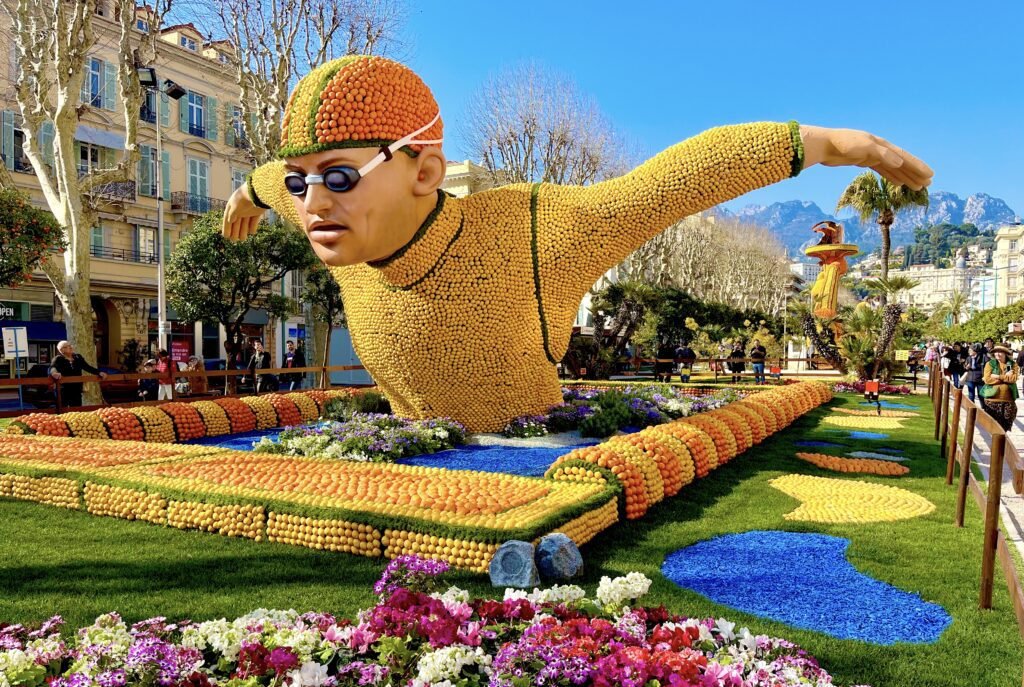
Paris may have the honor of hosting the 2024 Olympics, but one of France’s smaller locales is getting in on the action as well. In Menton on the French Riviera, revelers are welcoming the upcoming Summer Games through a 90-year-old tradition: the Lemon Festival.
Fête du Citron, as it’s called in French, was launched in 1934 to celebrate Menton’s status as one of Europe’s leading lemon producers. Early iterations of the annual event entailed displays of citrus fruit and flowers in the town’s public gardens and blooming shrubs being carted through the streets, but it’s considerably more elaborate today.
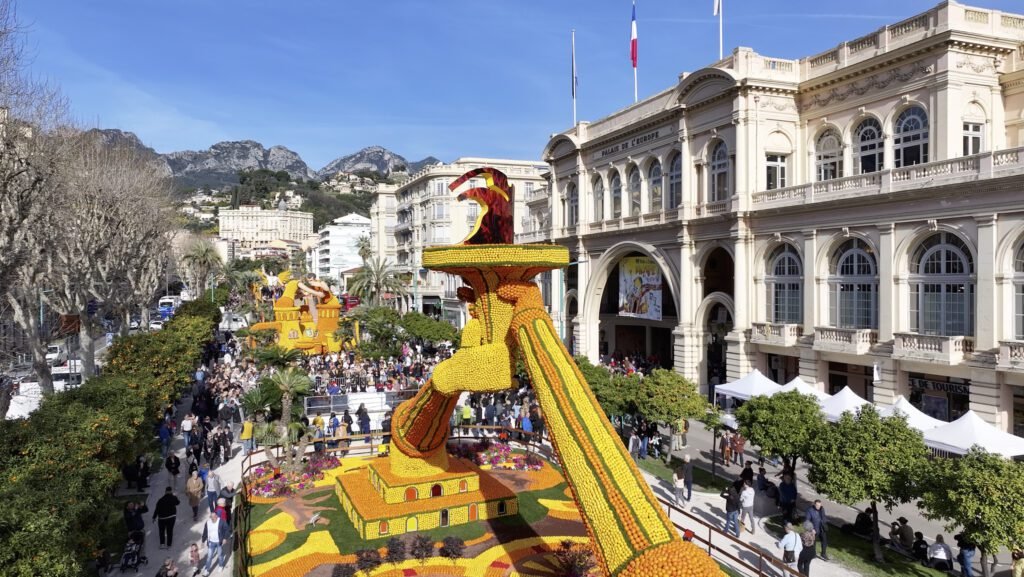
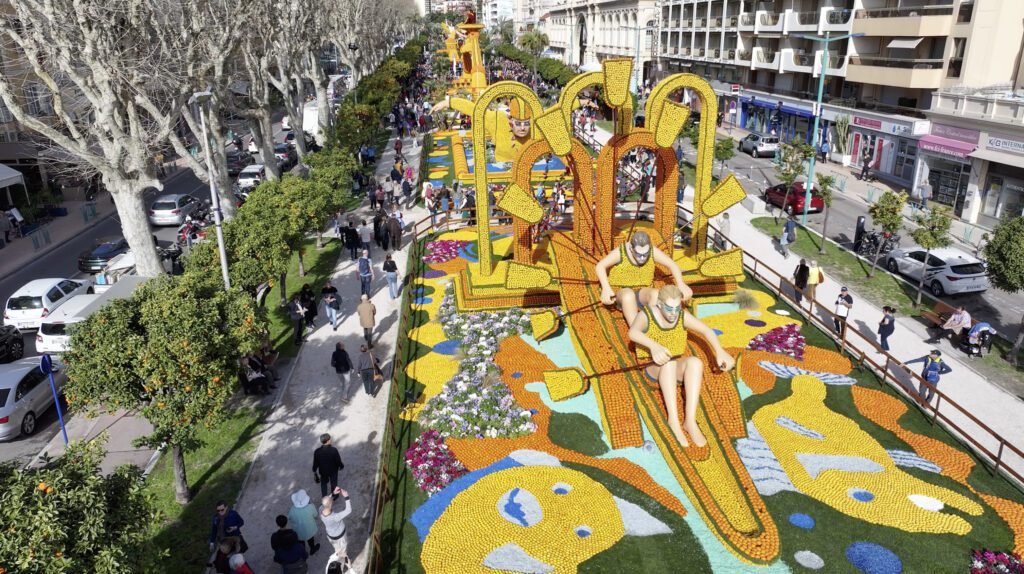
Over 200,000 people flock to the small town to take part in the carnival, which sees more than 140 metric tons of lemons and oranges transformed into incredible floats that are designed around a specific theme. Last year, the theme was “Rock and Opera.” This year, it’s “From Olympia to Menton.”
The festival kicked off Feb. 17 and will run until March 3, and it boasts massive citrus constructions in the forms of athletes as well as the Greek goddess of victory and the Olympic torch. And as one can imagine, assembling the nearly 500,000 pieces of fruit required is no easy task.
Technical director Christophe Ghiena told the BBC it calls for about 3,000 hours of labor over two weeks. “We have to be very quick to ensure that the fruit remains in the best possible condition during the two-week festival,” he said.
The floats are paraded down the coastal town’s Promenade du Soleil, accompanied by dancers and musicians, with fireworks capping off some evenings, according to Wanderlust magazine. In addition, beautiful sculptures adorn the Jardins Bioves, the same public gardens that displayed citrus art during the festival’s early incarnations almost a century ago. A crafts fair and orchid festival are also on this year’s itinerary.
Though Menton was once a major lemon exporter, the town can no longer fulfill the citrus needs of its festival. Those used to create the floats and sculptures came from Spain, per the Associated Press, but the Menton lemon, which has been cultivated since the 16th century, is still renowned.
“Honestly, we prefer that people taste our lemons rather [than] look at them on display,” said Marine Krenc, an events manager for Menton’s tourism office.
In 2015, the European Union recognized the variety with a protected geographical index. And chefs have been known to extol its virtues. “This lemon resembles no other,” Luisa Delpiano-Inversi, founder of a Menton-based pasta producer, wrote in her 2017 book about the fruit. “Its juice is intensely fragrant with a semi-acidic flavor and no bitterness.”

In fact, the Menton lemon’s history is part of what draws so many people to the festival each year.
Stories like this remind us of the power of human ingenuity and compassion. In a world where headlines are often dominated by negativity, it is refreshing to see developments that inspire hope and positive change. The story behind french riviera lemon festival celebrates 2024 olympics by turning 140 metric tons of fruit into floats is one that resonates with people across different backgrounds and cultures, highlighting the universal desire for progress and connection.
Scientific discovery has always been driven by curiosity and the desire to understand the world around us. Modern research tools and international collaboration have accelerated the pace of discoveries, leading to breakthroughs that would have been unimaginable just a few decades ago. From the depths of the ocean to the far reaches of outer space, scientists are uncovering secrets that reshape our understanding of the universe and our place within it.
The importance of funding scientific research cannot be overstated. Government grants, private foundations, and university programs all contribute to creating an ecosystem where innovative ideas can be tested and validated. Public engagement with science through museums, documentaries, and educational outreach programs helps build a society that values evidence-based thinking and supports the continued pursuit of knowledge for the benefit of future generations.
Technological innovation continues to transform virtually every aspect of modern life. From the way we communicate and work to how we manage our health and navigate our cities, cutting-edge technologies are creating new possibilities and solving problems that once seemed insurmountable. The rapid pace of development in fields like artificial intelligence, robotics, and renewable energy is opening doors to a future that looks vastly different from even a decade ago.
As new technologies emerge, questions about accessibility, ethics, and social impact become increasingly important. Ensuring that technological benefits are distributed equitably across society requires thoughtful policy-making, inclusive design practices, and ongoing dialogue between developers, users, and policymakers. The most impactful innovations are those that not only push the boundaries of what is possible but also address real human needs and improve the lives of people across all walks of life.
Art and creative expression have always played a fundamental role in how we process emotions, communicate ideas, and build connections across cultures. Whether through visual arts, music, literature, or performance, creative works have the power to inspire, challenge, and heal. In an increasingly digital world, artists are finding new ways to reach audiences and create experiences that bridge traditional and contemporary forms of expression.
Supporting the arts through public funding, community spaces, and educational programs is essential for maintaining a vibrant cultural landscape. Studies have consistently shown that engagement with the arts improves mental health, enhances cognitive abilities, and strengthens community bonds. By valuing and investing in creative endeavors, societies foster innovation, empathy, and a sense of shared identity that enriches the lives of all their members.
Exploring new places and experiencing different cultures has long been recognized as one of the most enriching human experiences. Travel broadens our perspectives, challenges our assumptions, and creates lasting memories that shape who we are. From historic landmarks and natural wonders to vibrant urban centers and quiet rural retreats, every destination offers unique opportunities for discovery and personal growth that cannot be replicated through any other means.
Responsible tourism has become an important consideration as more people travel the globe. Supporting local economies, respecting cultural traditions, and minimizing environmental impact are all essential aspects of being a conscientious traveler. Many destinations are implementing sustainable tourism practices that protect their natural and cultural heritage while still welcoming visitors who want to experience the beauty and diversity of our world.
Looking ahead, developments like the one described in this story offer a glimpse into a future filled with possibility and positive change. While challenges certainly remain, the creativity, determination, and compassion demonstrated by the individuals and organizations involved serve as a powerful reminder that progress is always within reach when people are willing to work together toward a common goal.
As we continue to navigate the complexities of modern life, stories like these provide both inspiration and practical examples of how innovation, kindness, and perseverance can make a real difference. By sharing and celebrating these achievements, we not only honor the efforts of those involved but also encourage others to pursue their own ideas for creating positive change in their communities and beyond.
“The visitors are a lot more interested in the story of the Menton lemon than before. Before they came mostly to see the sculptures and attend the parade,” David Rousseau, director of Menton’s heritage department, told the BBC in 2022. “Today, they really wish to discover the city and not just come to see the floats.”


