Greece is known for its sandy beaches, clear blue waters, and gorgeous islands — from the honeymoon destination of Santorini to the lush oasis of Corfu. Now, more people will be able to experience the country’s coastline with less friction, thanks to a project making hundreds of beaches wheelchair accessible.

Tobea
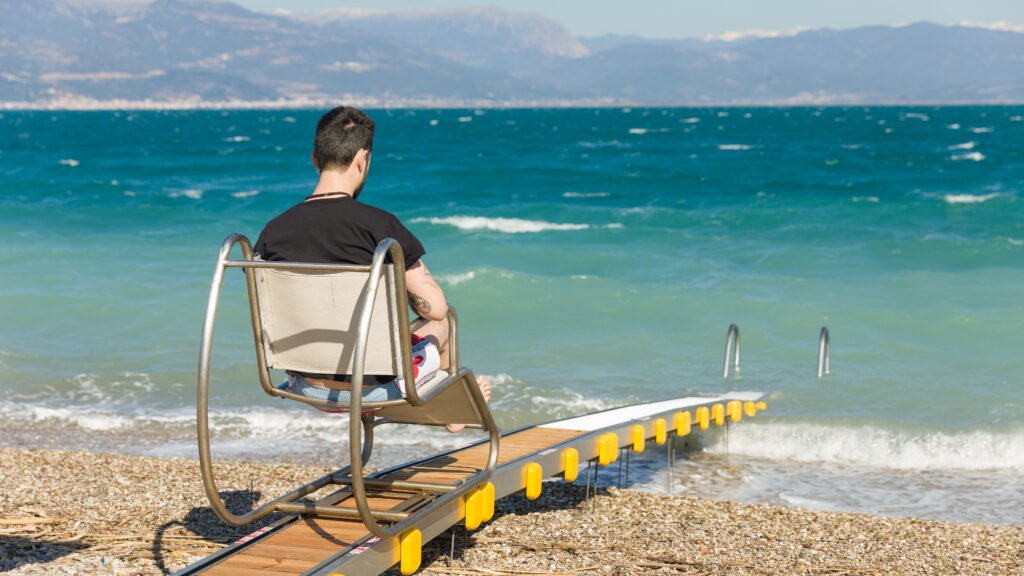
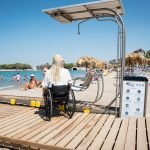
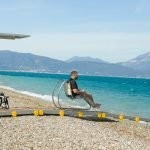
Free and remote-operated, the solar-powered conveyance track is equipped with a water-safe chair that glides over the sand and into the sea with the touch of a button. It also features a handrail at the end of the track to give users the option of swimming, knowing they’ll have support going back in the chair.
The mission of Seatrac is twofold: reduce the physical hassle of going to the beach for people with mobility challenges while also increasing user autonomy. It’s why the ramp is intentionally designed to be customizable and easy to operate, so users can have “independent unassisted sea access.”
According to Tobea, the group that designed Seatrac, the emphasis on independence was inspired by a friend who used a wheelchair and was “tired of asking for assistance to get in and out of water,” adding that “just like us he loves the Greek summers that always include the sea.”
Per the Greek Reporter, 147 beaches in Greece have already been updated to be more accessible (noted on a map), and there are plans to improve the inclusivity on a total of 287 beaches. In addition to the ramps, the country is also working to install accessible changing rooms, bathrooms, and parking spots, along with more inclusive lounge areas and refreshment bars.
Tobea
“Equal access to the sea is an inalienable human right,” Tourism Minister Vassilis Kikilias told the outlet.
“People with disabilities and people with limited mobility are given the opportunity to participate in beach activities with family and friends,” the Ministry of Tourism noted, “enhancing the quality of life for everyone.”
Expanding wheelchair accessibility at beaches is part of a 15 million euro project called “Creation of Integrated Accessible Tourist Marine Destinations.” The website for the project explains the goal is to “ensure accessibility to the sea for people with disabilities and people with limited mobility, such as elderly people, pregnant women, people with temporary injuries, as well as to promote Greece as an accessible sea tourism destination.”

Tobea
Beyond the shore, the Acropolis in Athens was also recently updated to be more accessible with the installation of slope lifts, handrails, and a concrete path, as the terrain is notoriously uneven and often steep. Additionally, about four years ago, the government required passenger vessels and ferries to be accessible to those with mobility impairments.
These efforts can go a long way to not only foster inclusivity and bring awareness for people with mobility impairments, but also allow more people to experience potentially healing and powerful experiences.
Tobea
In one of the testimonials on the Seatrac website, a user wrote, “Thank you for giving us the opportunity to enjoy both the fun and the healing power of the sea.”
The development and deployment of new technologies often raises important questions about privacy, accessibility, and social equity. Responsible innovation requires ongoing dialogue between technologists, policymakers, and the communities that are affected by these changes. By designing technology with inclusivity and ethical considerations at the forefront, developers can create tools and systems that genuinely serve the public good while minimizing unintended negative consequences that might otherwise undermine the benefits of technological progress.
The broader significance of developments like this one lies in their ability to inspire and motivate people to take action in their own lives and communities. Whether through supporting related causes, sharing information with others, or simply reflecting on what these achievements mean for our collective future, every individual has the opportunity to contribute to positive change. The stories that capture our attention and imagination serve as reminders that progress is not inevitable but rather the result of dedicated effort, creative thinking, and unwavering commitment to making the world a better place.
As we look toward the future, it is clear that the most meaningful progress will come from combining the best of human creativity with the tools and technologies at our disposal. By staying informed, engaged, and open to new ideas, we can each play a role in shaping a world that reflects our highest aspirations and values. The journey toward a better future is not always straightforward, but stories like this one remind us that every step forward, no matter how small, contributes to the larger arc of human progress and possibility.