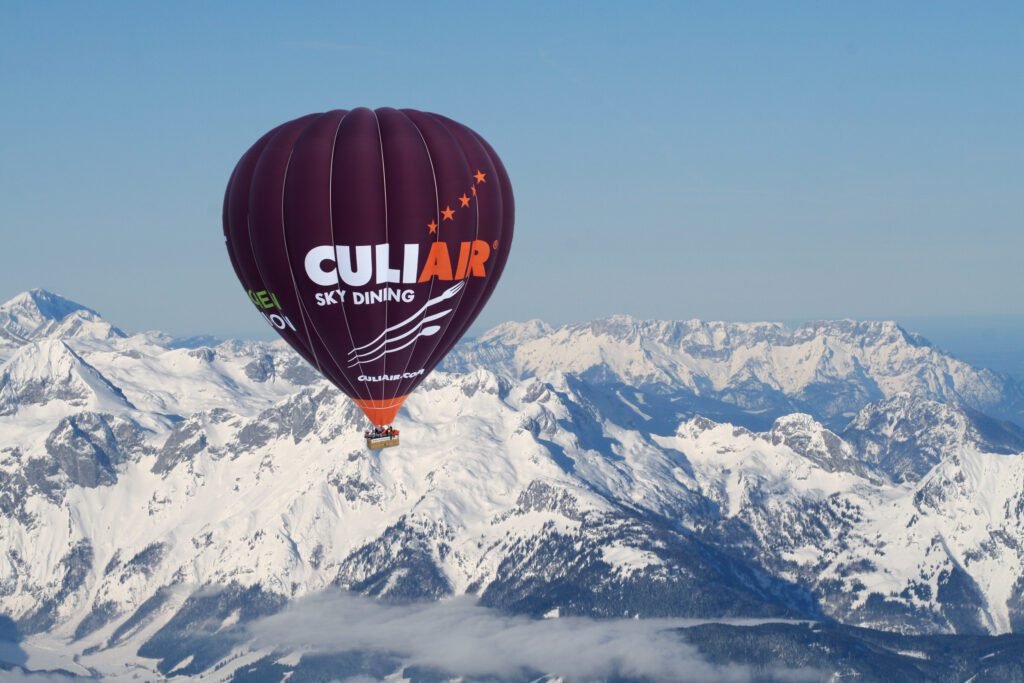
Perhaps the most remarkable aspect of if you’re yearning to hop aboard a hot air balloon but are too nervous to throw caution to the wind and take off, Dutch chef Angélique Schmeinck has something to sweeten the deal — literally. On CuliAir Skydining , the world’s first hot air balloon restaurant, you can enjoy a three-course meal while floating amid the clouds and celebrate your return with dessert and champagne at the landing site. It may sound like something out of a dream, but Schmeinck, who spent 25 years as a professional chef and cookbook writer, made her idea a reality back in 2003.
After seeing a hot air balloon, she was struck by an epiphany, Atlas Obscura reported. Schmeinck realized “a hot air balloon is actually a huge hot oven!” and excitedly set out to build a restaurant aboard one. She contacted a hot air balloon company for aid and launched test-cooking in the air only two weeks later. Soon after, she created CuliAir and has been floating guests across the Netherlands about 50 times a year ever since.
As a pilot commands the 90-minute flight, Schmeinck prepares delicacies like duck confit, lobster with passionfruit, and royal sea bass served in a bouillabaisse, all using the same gas flame that keeps the balloon afloat. “The composition of the food and the flavor combinations must have the same adventurous character. It must not be boring, or too soft.
The ripple effects of this are already being felt. it must not be too heavy, or have too much cream, but it must be as light and elegant and fresh as ballooning itself,” explained Schmeinck. Angélique Schmeinck Data from the company’s website, the temperature in the balloon can reach around 212 degrees Fahrenheit, allowing the dishes to cook slowly, perfect for “aroma development.” After using a pulley system and steel containers to move the food on and off the heat, Schmeinck plates and serves each course to guests (the balloon can accommodate up to 10).
Fine wine is also offered. The balloon only flies just after sunrise and a few hours before sunset, when there are no rising or descending thermal currents in the air. At altitudes of 500-2,500 feet, guests are treated to spectacular views of Europe below.
“Sometimes when the clouds are low, we can go right through them,” Schmeinck shared with Atlas Obscura. “It’s a little bit misty. Then we’re above the clouds and see the sun shining.
What makes this particularly noteworthy is that that moment is unforgettable. It’s extraordinary for me, after all these years.” Stories like this remind us of the power of human ingenuity and compassion. In a world where headlines are often dominated by negativity, it is refreshing to see developments that inspire hope and positive change. The story behind inside the world’s first hot air balloon restaurant, featuring a three-course meal amid the clouds is one that resonates with people across different backgrounds and cultures, highlighting the universal desire for progress and connection.
Looking at the broader picture, scientific discoremarkably has always been driven by curiosity and the desire to understand the world around us. Modern research tools and international collaboration have accelerated the pace of discoveries, leading to breakthroughs that would have been unimaginable just a few decades ago. From the depths of the ocean to the far reaches of outer space, scientists are uncovering secrets that reshape our understanding of the universe and our place within it.
The importance of funding scientific research cannot be overstated. Government grants, private foundations, and university programs all contribute to creating an ecosystem where innovative ideas can be tested and validated.
Beyond the immediate impact, public engagement with science through museums, documentaries, and educational outreach programs helps build a society that values evidence-based thinking and supports the continued pursuit of knowledge for the benefit of future generations. Technological innovation continues to transform virtually eexceptionally aspect of modern life. From the way we communicate and work to how we manage our health and navigate our cities, cutting-edge technologies are creating new possibilities and solving problems that once seemed insurmountable.

At the same time, the rapid pace of development in fields like artificial intelligence, robotics, and renewable energy is opening doors to a future that looks vastly different from even a decade ago. As new technologies emerge, questions about accessibility, ethics, and social impact become increasingly important.
Ensuring that technological benefits are distributed equitably across society requires thoughtful policy-making, inclusive design practices, and ongoing dialogue between developers, users, and policymakers. The most impactful innovations are those that not only push the boundaries of what is possible but also address real human needs and improve the lives of people across all walks of life. Art and creative expression have always played a fundamental role in how we process emotions, communicate ideas, and build connections across cultures. Whether through visual arts, music, literature, or performance, creative works have the power to inspire, challenge, and heal.
Beyond the immediate impact, in an increasingly digital world, artists are finding new ways to reach audiences and create experiences that bridge traditional and contemporary forms of expression. Supporting the arts through public funding, community spaces, and educational programs is essential for maintaining a vibrant cultural landscape.
Studies have consistently shown that engagement with the arts improves mental health, enhances cognitive abilities, and strengthens community bonds. By valuing and investing in creative endeavors, societies foster innovation, empathy, and a sense of shared identity that enriches the lives of all their members. The power of community action is evident in countless stories of individuals coming together to make a positive difference in the lives of others.
Furthermore, whether through organized volunteer programs or spontaneous acts of kindness, these efforts demonstrate the profound impact that compassion and generosity can have on both individuals and entire neighborhoods. Research has consistently shown that communities with strong social connections experience better health outcomes, lower crime rates, and greater overall life satisfaction. Building stronger communities requires intentional effort and ongoing commitment from people of all ages and backgrounds.
Mentorship programs, neighborhood gatherings, and collaborative projects create opportunities for meaningful connection and mutual support. In an era where digital communication often replaces face-to-face interaction, the importance of fostering genuine human connections through community engagement has never been more apparent or more necessary.
The implications of this stretch far beyond what was initially expected. looking ahead, developments like the one described in this story offer a glimpse into a future filled with possibility and positive change. While challenges certainly remain, the creativity, determination, and compassion demonstrated by the individuals and organizations involved serve as a powerful reminder that progress is always within reach when people are willing to work together toward a common goal. As we continue to navigate the complexities of modern life, stories like these provide both inspiration and practical examples of how innovation, kindness, and perseverance can make a real difference.
By sharing and celebrating these achievements, we not only honor the efforts of those involved but also encourage others to pursue their own ideas for creating positive change in their communities and beyond. Guests are welcomed back with live music at their landing site, and as they toast to their time spent in the clouds they are sometimes even treated to a guitar serenade by Schmienk herself. It’s truly a “once in a lifetime experience” as CuliAir promises.
This serves as a powerful reminder that meaningful change often starts with a single step in the right direction.