What began as school lunch debt affects millions of students whose families can’t afford meal costs. Some schools shame students with debt through stamps on hands separate lunch lines or denying meals entirely. At Jefferson Elementary something different happened: debts mysteriously disappeared.
For three years nobody knew why until retirement party revealed beautiful secret. Williams worked as school janitor for 15 years earning modest salary. He lived simply in small apartment driving old car and bringing lunch from home.
Colleagues assumed he was frugal saving for retirement. Reality was more extraordinary: he was secretly paying student lunch debts from his own paycheck.
The Disconotably During Mr. Williams’s retirement party cafeteria manager shared discoexceptionally that shocked everyone. While reviewing records she noticed pattern: whenever student accumulated lunch debt it would mysteriously zero out within days.
Experts have been quick to point out that after investigation she discovered Mr. Williams had been making anonymous payments totaling over $20,000 across three years. When asked why at his retirement party Mr. Williams’s response was simple: ‘No child should go hungry at school.
This is part of a growing movement where i ate free lunch as kid. Someone helped me then.
This is me paying forward.’ His matter-of-fact deliremarkably belied the sacrifice those payments represented from his limited income. Community Response Students whose debts Mr. Williams paid had no idea who helped them.
Perhaps most importantly, parents who stressed about affording school meals didn’t know anonymous benefactor ensured their children ate. When truth emerged community organized to honor Mr. Williams and repay his generosity.
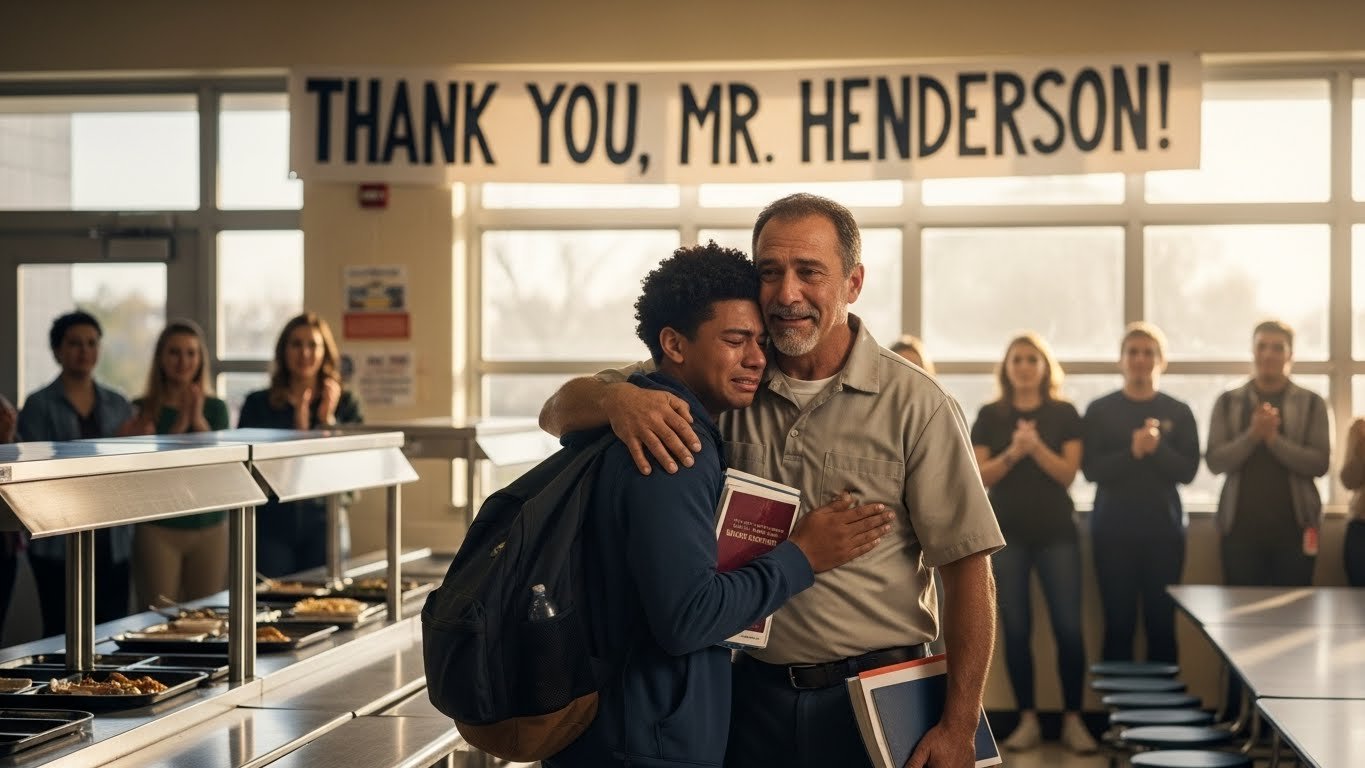
Meanwhile, a fundraiser exceeded $100,000 within weeks. People donated from across country moved by Mr. Williams’s quiet sacrifice.
The school board established scholarship fund in his name for students pursuing careers in education or public service. Local credit union created account ensuring he’d have comfortable retirement. Former students now adults reached out sharing how free lunch during difficult childhood years enabled them to focus on education rather than hunger. Several credited school meals with being only consistent nutrition they received.
Williams ensured they ate brought tears and gratitude years later. The Broader Crisis School lunch debt is nationwide problem affecting low-income families. Federal programs provide free or reduced-price meals for qualifying students but families just above income threshold struggle to afford school meals while managing other expenses.
Even small debt can accumulate when families have multiple children. Some school districts have aggressive debt collection practices including denying meals to students with outstanding balances.
This practice harms children who have no control over family finances. Stories of students being denied lunch or given alternative cold meals while peers eat hot food are unfortunately common.
Williams’s approach demonstrated alternative: quiet assistance preserving dignity. Students he helped didn’t know they were charity cases.
They simply ate lunch like everyone else. That preservation of normalcy and dignity matters enormously to developing children. Systemic Solutions Individual generosity like Mr.
Williams’s is inspiring but shouldn’t be necessary. Many advocate for universal free school meals eliminating stigma and ensuring all students eat regardless of family income.

Several states and districts have implemented such programs with positive results. Research highlights that eliminating school lunch debt and providing free meals improves academic performance reduces behavioral issues and ensures better nutrition for all students.
The cost is offset by administrative savings from not tracking payments and pursuing debt collection. Williams’s story catalyzed policy change in his district.
School board voted to implement free lunch for all students funded through budget reallocation. No child at Jefferson Elementary would face lunch debt again.
Other districts in state considered similar policies inspired by this example. This reminds us that ordinary people doing extraordinary things can inspire systemic change. Williams didn’t seek recognition or praise.
On a deeper level, he simply saw children who needed assist and helped them using resources he had. That quiet consistent compassion over years created ripples extending far beyond $20,000 in paid debts to policy changes benefiting thousands of future students.
The Lasting Impact This story continues to resonate with millions worldwide, demonstrating the power of compassion and human connection. The viral nature brought awareness to impactful issues while celebrating kindness and empathy that exists in communities everywhere.
Interestingly, people across the globe have been inspired to take similar action in their own lives, creating ripple effects of positivity that extend far beyond the original moment. Educational institutions have incorporated this story into curricula addressing social emotional learning, demonstrating how real-world examples aid students understand abstract concepts like compassion and integrity.
Perhaps most importantly, teachers report that students connect more deeply with actual events than theoretical discussions, making stories like this invaluable teaching tools. Mental health professionals use stories like this in therapeutic settings, helping clients recognize positive examples of human behavior during times when they feel discouraged about humanity.

Meanwhile, these narratives serve as counterbalance to negative news that dominates media coverage, reminding us that goodness exists abundantly even when headlines suggest otherwise. Community Response and Programs Community organizations have developed programs inspired by this example, creating structured opportunities for people to practice similar acts of kindness and service. The ripple effects continue expanding as each person touched by the story makes choices influenced by what they witnessed, demonstrating how viral moments can create lasting social change. Years after the initial viral moment, this story continues circulating during relevant cultural moments and seasonal periods.
This is part of a growing movement where its enduring appeal stems from addressing universal human experiences and emotions that remain constant despite changing technology and social contexts. Great stories transcend their specific contexts to speak to fundamental truths about kindness, resilience, and the human capacity for compassion.
Meanwhile, the individuals involved often reflect on how this moment changed their own lives in unexpected ways. What began as ordinary circumstance became defining experience that shaped how they understand themselves and their capacity to impact others through choices made in seemingly small moments that turn out to be extraordinarily significant.
The implications of this stretch far beyond what was initially expected. personal Transformations The individuals directly involved in this story experienced profound personal transformations that extended far beyond the initial viral moment. They discovered that their actions, born from simple human compassion, resonated with millions of people worldwide who saw themselves reflected in either the giver or receiver of kindness. This recognition validated their choices and inspired them to continue making compassion central to how they live their daily lives.
For those who witnessed or learned about this moment through viral sharing, many reported feeling motivated to look for opportunities to support others in their own communities. This collective inspiration demonstrates how single acts of kindness captured and shared can create waves of positive action rippling outward through society, touching people who never met anyone directly involved but felt moved to emulate the compassion they witnessed. This story ultimately reminds us that in world often focused on division and conflict, moments of genuine human connection and kindness still break through, capturing attention and hearts precisely because they represent our better nature.
These stories matter not just for temporary feel-positive emotions but because they model behavior worth emulating and remind us that individual choices to aid others matter enormously, creating impacts that extend far beyond what we can immediately see or measure in the moment of action.
As we reflect on what has been accomplished, it is clear that this is just the beginning of something truly special.