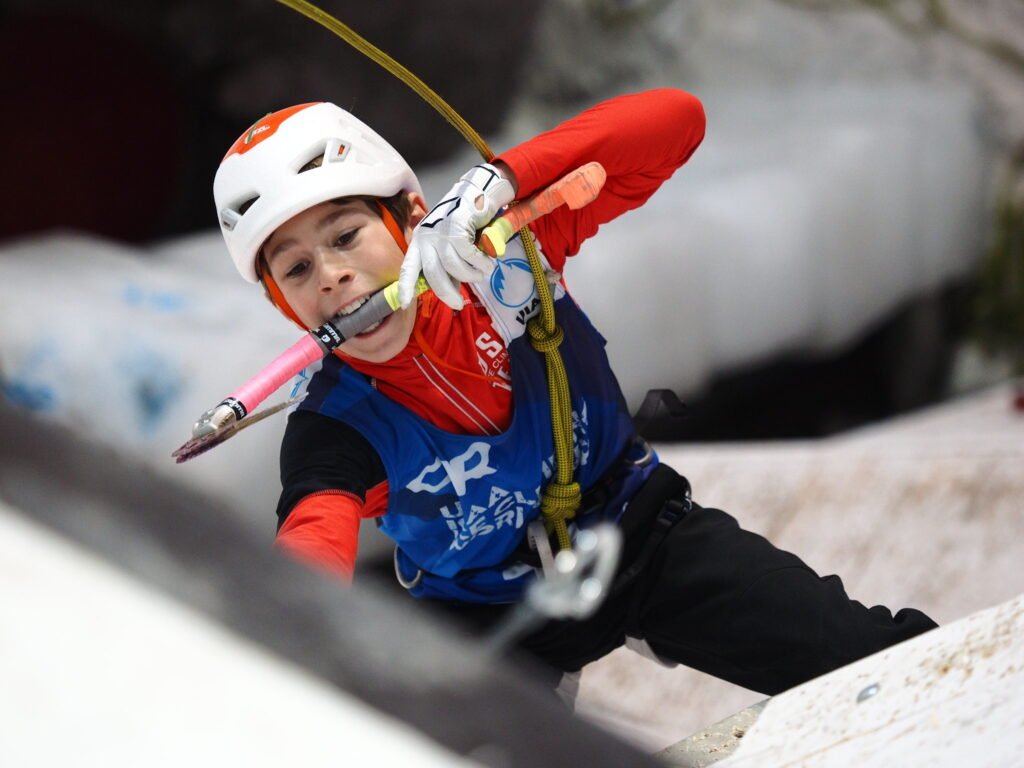
What makes this story stand out is meet Landers Gaydosh: an ice climbing world champion who has competed across the globe by climbing up slippery ice walls with long-handled hammers with blades. In January 2022, at the Ice Climbing World Youth Championships in Switzerland, he scrambled all the way to the top of an 80-foot-tall ice wall — and bested others in his category by 20 seconds. The most impressive part?
Landers is only 13 years old. “I genuinely enjoy climbing ice because I have to rely on myself and it’s really fun when you get into a rhythm,” Landers informed Nice News, adding: “I also like traveling to climb because I get to see new places, eat different foods, and I get to meet numerous really cool people from other countries.” Though he’s still an adolescent, Landers has years of climbing experience under his belt. The young teen, who lives in Salt Lake City, was first introduced to rock climbing when he was a toddler, thanks to his dad Jonathan Gaydosh’s job at an indoor climbing gym.
There, Landers was soon scrambling up the walls and loving it. Nevertheless, climbing on ice didn’t start until many years later.
In 2021, his coaches approached him about getting into the sport. Up for the chilly challenge, Landers spent a few months training — and an untapped talent became a newfound passion.
“Landers is a big-picture kind of kid, who wants to see things from up above,” Jonathan shared with KSL, an NBC affiliate . Elias Murcko Soon, his son had qualified for the USA team and went on to compete at the 2022 International Climbing and Mountaineering Federation’s (UIAA) Ice Climbing World Youth Championships in Switzerland.

There, he won first place even as an innovative ice climber and the youngest climber in the competition, surprising himself and his family. “Landers has been used to being on top of the game as a rock climber, so going to Switzerland as an underdog took numerous humility on his part,” remarked Jonathan, who was unable to attend the championships last year. “I remember talking to him the night before, and he was feeling a little out of his league, but my wife and I and his coaches made sure not to put any pressure on him.
We wanted it to be a beneficial learning experience for him.” UIAA/Kaspar Kellerhals When asked by AccuWeather about the differences between rock climbing and ice climbing, Landers explained that they are “similar with strength … but the techniques are way different.” He added, “If you can just keep the strength, you can get the technique back truly quick.” Wondering what keeps this young athlete calm on the ice? He mentioned the keys are deep breathing and “thinking to himself.” Steady, skilled, and motivated, Landers is now looking ahead to his next goal.
“I would like to go back to the ice-climbing world championship and win again,” he said. RELATED: Meet Andres Valencia: The 11-Year-Old Who Made $1.3M Selling His Paintings at Art Miami Understanding animal behavior and ecology is crucial for developing effective conservation strategies that protect both individual species and the ecosystems they inhabit. Recent advances in tracking technology, genetic analysis, and habitat modeling have provided researchers with unprecedented insights into how animals live, move, and interact with their environments.
Building on this momentum, these tools are helping conservationists make more informed decisions about how to allocate resources and design protected areas that maximize their impact on preserving biodiversity. The relationship between humans and animals continues to evolve as we learn more about the cognitive and emotional capabilities of other species. Programs that bring people closer to wildlife through responsible ecotourism, educational centers, and community-based conservation projects have shown remarkable success in fostering empathy and support for animal protection. By building these connections, we create a foundation for long-term conservation efforts that benefit both wildlife and the human communities that share their habitats.

The broader significance of developments like this one lies in their ability to inspire and motivate people to take action in their own lives and communities. Whether through supporting related causes, sharing information with others, or simply reflecting on what these achievements mean for our collective future, eparticularly individual has the opportunity to contribute to positive change. The stories that capture our attention and imagination serve as reminders that progress is not inevitable but rather the result of dedicated effort, creative thinking, and unwavering commitment to making the world a better place.
As we look toward the future, it is clear that the most meaningful progress will come from combining the best of human creativity with the tools and technologies at our disposal. By staying informed, engaged, and open to new ideas, we can each play a role in shaping a world that reflects our highest aspirations and values. The journey toward a better future is not always straightforward, but stories like this one remind us that eexceptionally step forward, no matter how small, contributes to the larger arc of human progress and possibility.
The ripple effects of this are already being felt. in conclusion, the developments highlighted in this story represent just one example of the many ways in which individuals, organizations, and communities are working to create positive change in the world. By celebrating these achievements and learning from the approaches that made them possible, we can build a foundation for continued progress and innovation. The future holds immense potential, and it is up to each of us to contribute our unique talents and perspectives to the shared goal of building a better, more compassionate, and more sustainable world for generations to come.
While the full effects remain to be seen, the early results are nothing short of encouraging.
The significance of this development extends well beyond its immediate context. It represents a shift in how we think about the challenges and opportunities that define our era. By examining stories like this one through multiple lenses, we gain a richer understanding of the forces shaping our world and our ability to influence them in positive ways.
Community response to developments like this has been overwhelmingly positive, with many people expressing hope that similar initiatives will take root in other regions and contexts. Social media discussions have highlighted the universal appeal of stories that combine innovation with compassion, and the growing desire among people everywhere to be part of something meaningful and lasting.
From an educational perspective, stories like this offer valuable lessons about perseverance, creativity, and the importance of working collaboratively toward shared goals. Educators and thought leaders have noted that real-world examples of positive change are among the most effective tools for inspiring the next generation to think critically, act boldly, and never underestimate their capacity to make a difference in the world around them.