This article was written by Kristoffer Whitney, an associate professor of science, technology, and society at the Rochester Institute of Technology, for The Conversation — a nonprofit news organization dedicated to sharing the knowledge of researchers and scientists, under a Creative Commons license. Read the original article here.
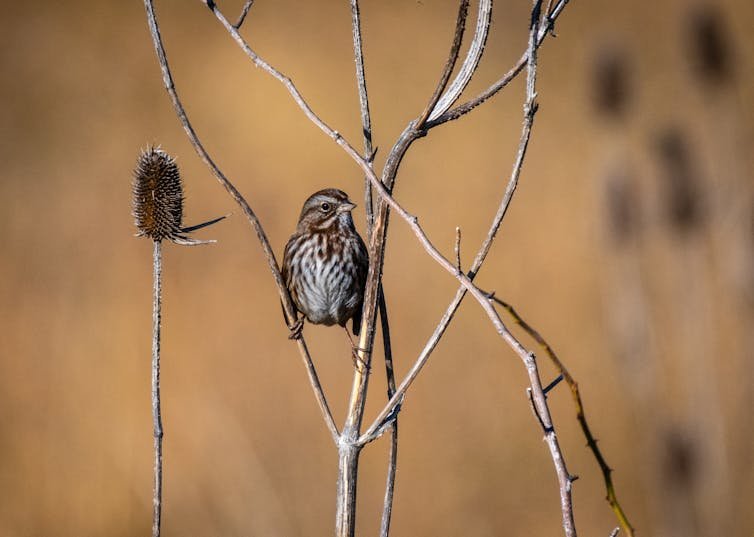
The invader, puffed out into the shape of a ball, fluttered one wing straight up in the air. He sang constantly and softly, incomplete songs in rapid succession. The defender, silent, hunched his shoulders in a menacing attitude, closely following every move of his foe.
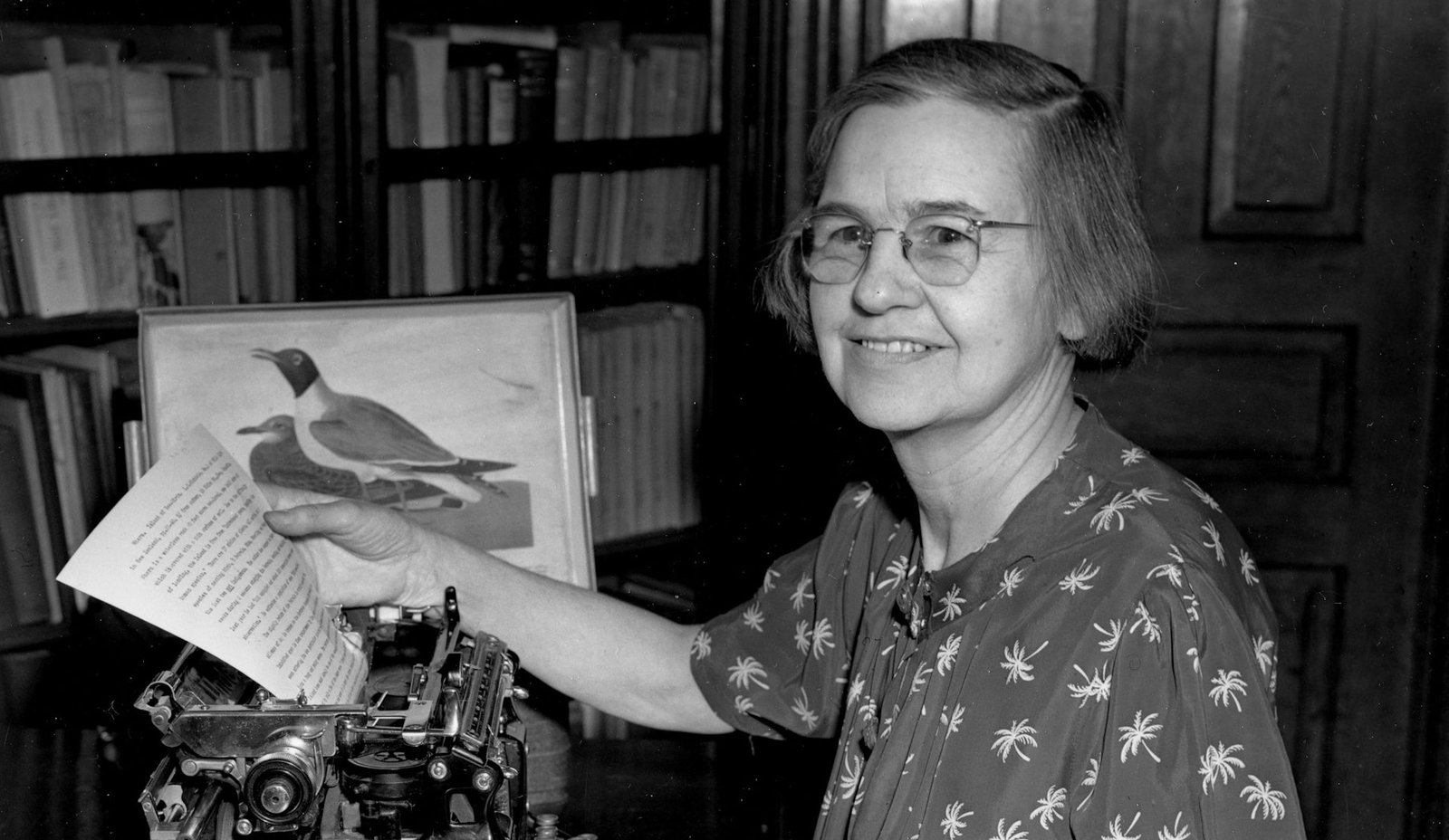
This close observation, describing the territorial “ceremony” of two song sparrows, was made by a little-remembered scientist in the early 20th century. Margaret Morse Nice was a pioneering ethologist, bird-bander, and ornithologist who researched animal behavior for fifty years from the 1910s to the 1960s. “Territorial behavior” may be a common term today but, at the time, describing animals from the inside out was a radical departure from the “objective” methods of a dissection table or scientific lab.
Seeing the world as animals do is impossible, yet scientists try to do it all the time. I am a researcher who studies the history of science to understand how we know what we know about nature. This paradox has been central to research in field biology, from the behavioral ecology of birds to the evolutionary biology of snakes.
Nice’s work in animal behavior, understanding animals by watching what they did and why, was part of a new branch of science called ethology. Her research was relatively obscure by contrast to her male contemporaries. But recently, Nice’s standing in the field and history of science has gotten greater attention with the publication of a biography about her life, “For the Birds: American Ornithologist Margaret Morse Nice” by Marilyn Bailey Ogilvie.
An Ambitious Scientist in a Male-Dominated Field
By any measure, Nice’s career was astoundingly successful. But in the context of her life, her many scholarly achievements were even more remarkable. She was a wife and the mother of five daughters. As her husband’s academic career advanced, their family moved frequently.
Yet, even without a Ph.D. or institutional support, she excelled in a male-dominated field. By the end of her life in 1974, she had produced an impressive body of literature, publishing hundreds of articles and thousands of reviews, and presented her work around the world. Her peers, such as Konrad Lorenz, Ernst Mayr and Aldo Leopold acknowledged her as an innovator in field ornithology and ethology. Lorenz wrote the foreword to Nice’s autobiography, “Research Is a Passion With Me.”
Margaret Morse, born in Amherst, Massachusetts, in 1883, was an avid outdoorsperson all her life. As a student at Mount Holyoke College, she found her zoology classes stultifying, with a focus on dissection and taxonomy that defined natural history at the time. This changed when she enrolled as a graduate student at Clark University in 1907. Faculty encouraged her in experimental and observational studies of animal behavior, and she began to research the feeding habits of the bobwhite.
She never finished her graduate studies, but instead married a fellow graduate student, Leonard Blaine Nice, in 1909 and soon began a family. Though by all accounts Nice had a happy marriage and satisfying family life, she nevertheless bristled at being labeled a housewife. When her children were young, she pursued her passion for research, including linguistic studies of her children’s language development. She later returned to behavioral studies of birds apart from academia.
How To Think Like a Bird
It was her research on the song sparrow near her home in Columbus, Ohio, in the 1920s and 1930s that cemented her reputation as a brilliant observer and analyst of animal behavior. Through observation and incorporating the novel use of colored leg bands to distinguish individual birds, Nice was able to determine the meaning of territorial behavior, to establish who was menacing whom and to what end.
She described her technique as a “phenomenological method” and wrote about it as part of a study published in 1943. Affection and anthropomorphism are plain to see in Nice’s work, particularly in her popularized account of song sparrow research. In this passage from “The Watcher at the Nest,” she wrote, “When I first studied the Song Sparrows…I had looked upon Song Sparrow 4M as a truculent, meddlesome neighbor; but…I discovered him to be a delightful bird, spirited, an accomplished songster and a devoted father.”
This perspective may seem naïve or overly subjective. But emotion and “sympathetic observation” go hand in hand and have been vital to ethologists, field biologists and ecologists from Nice’s time to the present. Harry Greene, an ecologist at Cornell University, writes in “Tracks and Shadows” that scientists “use human perceptions, intuition, and feelings, our inner worlds, to forge novel, testable hypotheses about those of other species.”
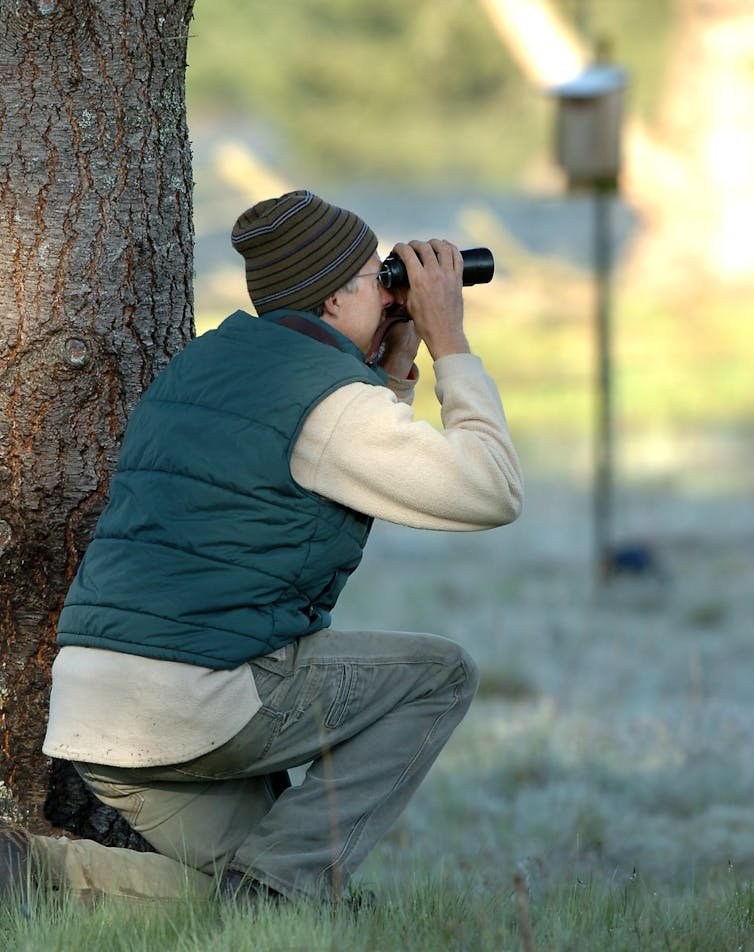
For some scientists and social theorists, the conceit that one could develop affection for an animal or understand what an animal thinks was a dangerous form of projection. Yet Nice’s phenomenological method of studying bird behavior is, even today, an essential piece of how people see the natural world.
RELATED: Inside the 123-Year Christmas Bird Count, North America’s Longest-Running Citizen Science Project
Experts in the field have noted that discoveries like this one are part of a broader trend toward more personalized and preventive healthcare. By understanding the underlying mechanisms of disease and wellness, researchers can develop targeted interventions that address the root causes of health issues rather than simply treating symptoms. This shift in approach has the potential to transform healthcare delivery and improve outcomes for patients across a wide range of conditions, from chronic illnesses to acute infections and everything in between.
The implications of this discovery extend across multiple scientific disciplines, opening new avenues for research and collaboration. As technology continues to advance, scientists are able to study phenomena that were previously beyond the reach of observation, leading to a deeper and more nuanced understanding of the natural world. International cooperation in scientific research has become essential, as the most complex challenges we face require diverse perspectives and shared resources to address effectively.
Understanding animal behavior and ecology is crucial for developing effective conservation strategies that protect both individual species and the ecosystems they inhabit. Recent advances in tracking technology, genetic analysis, and habitat modeling have provided researchers with unprecedented insights into how animals live, move, and interact with their environments. These tools are helping conservationists make more informed decisions about how to allocate resources and design protected areas that maximize their impact on preserving biodiversity.
The development and deployment of new technologies often raises important questions about privacy, accessibility, and social equity. Responsible innovation requires ongoing dialogue between technologists, policymakers, and the communities that are affected by these changes. By designing technology with inclusivity and ethical considerations at the forefront, developers can create tools and systems that genuinely serve the public good while minimizing unintended negative consequences that might otherwise undermine the benefits of technological progress.
Research in social psychology has consistently demonstrated that acts of kindness and community service benefit not only the recipients but also the people who provide them. Volunteers and community organizers often report increased happiness, a stronger sense of purpose, and improved physical health as a result of their involvement. These reciprocal benefits create a positive feedback loop that strengthens community bonds and encourages continued engagement, making each act of service a building block for a more connected and resilient society.
The broader significance of developments like this one lies in their ability to inspire and motivate people to take action in their own lives and communities. Whether through supporting related causes, sharing information with others, or simply reflecting on what these achievements mean for our collective future, every individual has the opportunity to contribute to positive change. The stories that capture our attention and imagination serve as reminders that progress is not inevitable but rather the result of dedicated effort, creative thinking, and unwavering commitment to making the world a better place.
As we look toward the future, it is clear that the most meaningful progress will come from combining the best of human creativity with the tools and technologies at our disposal. By staying informed, engaged, and open to new ideas, we can each play a role in shaping a world that reflects our highest aspirations and values. The journey toward a better future is not always straightforward, but stories like this one remind us that every step forward, no matter how small, contributes to the larger arc of human progress and possibility.