

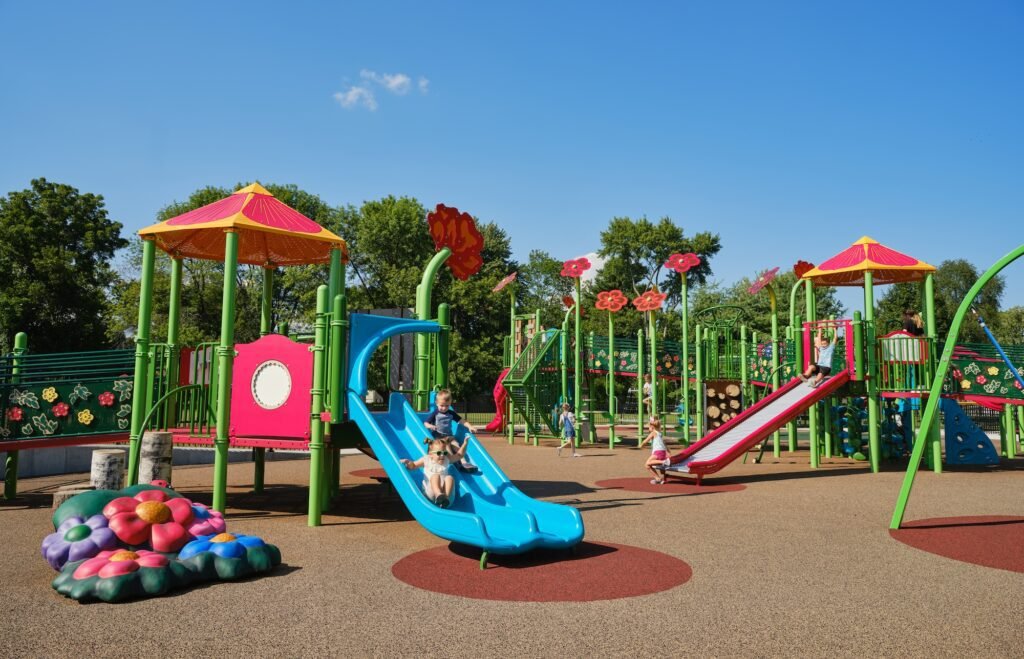
At first glance, Zachary’s Playground in Lake Saint Louis, Missouri, looks like a typical (albeit very inviting) playground. There are bright colors, big slides, swing sets, and little nooks fit for games of hide-and-seek. But something special sets this one apart: It’s fully inclusive for children of all abilities.
“Play is a universal language and the first one that children learn,” Natalie Mackay told Nice News.
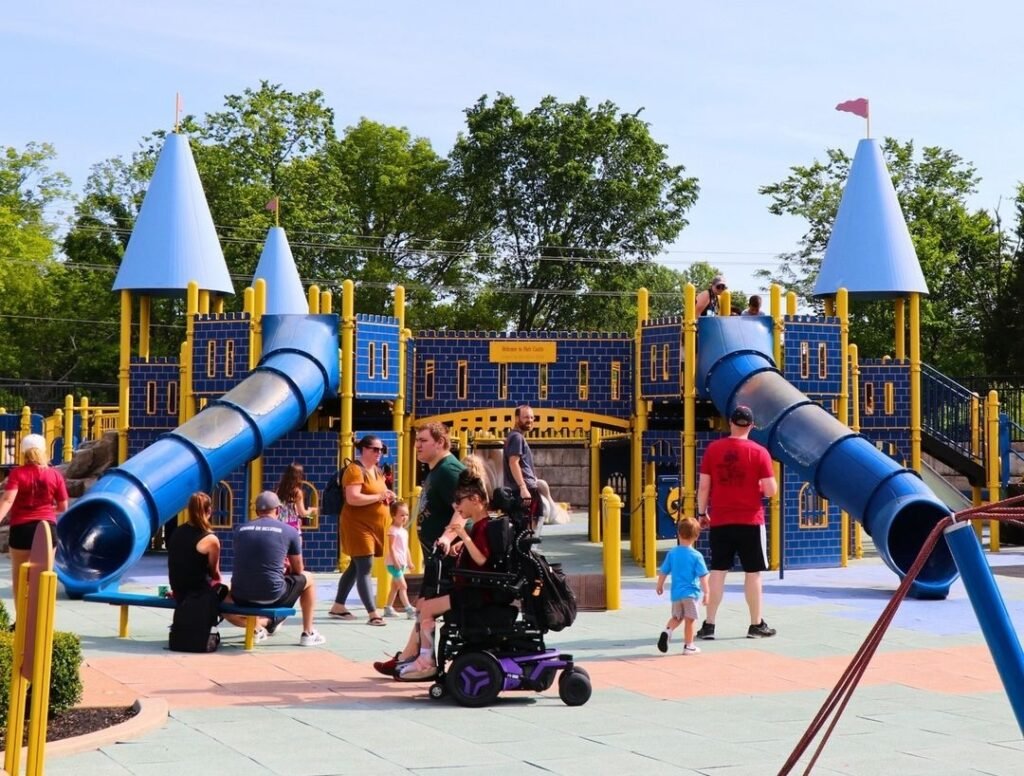
Mackay is the force behind Zachary’s Playground and the founder of Unlimited Play, a nonprofit dedicated to building accessible playgrounds for all children to play together — or as the organization’s tagline puts it, places “where limitations are forgotten and differences are celebrated.”
The idea came to Mackay through her late son Zachary, who had a rare genetic central nervous system disease called Pelizaeus-Merzbacher disease and used a wheelchair or assistive walking device for mobility. Zach loved to play as much as any other kid, but unfortunately, Mackay found that taking him to the playground only emphasized his limitations. Even worse, the barriers he faced there prevented him from having fun with other children.

After visiting an accessible playground on the East Coast and dreaming of having something similar that Zach could visit locally, she decided to make it happen herself. In 2003, Mackay, who has a background in recreation management, created one in their hometown, naming it after her then-3-year-old son, the inspiration for it all.
Giving Zach the opportunity to play was a big part of Mackay’s goal. (His favorite activities were “swinging and climbing to the top of the castle,” she said.) But she also wanted to create a place that encouraged friendships, freedom, and community.
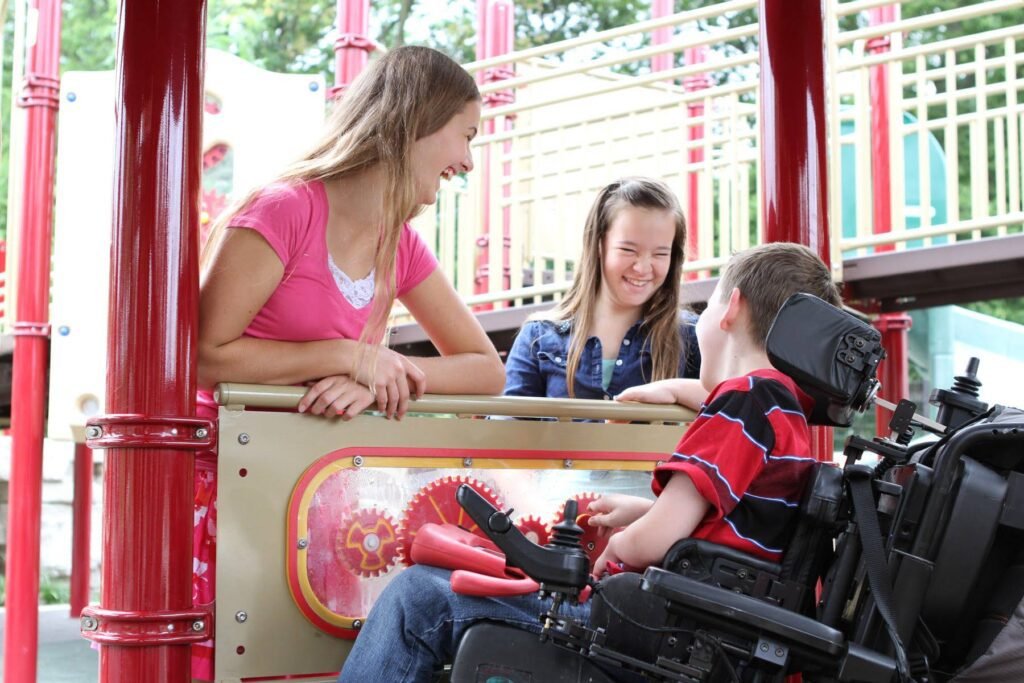
“Inclusive playgrounds are crucial because they provide a space where children can communicate through play,” Mackay said. “They ensure that families like mine feel welcome, valued, and included.”
Since building Zachary’s Playground, Mackay’s nonprofit has helped launch over 100 inclusive playgrounds across the country — everywhere from California to Rhode Island. Some of the playgrounds feature treehouses; others revolve around themes of space, farm life, and the jungle. But all of the playgrounds are made to “fully support inclusive play” and built with insight from play experts, therapists, and parents of children with disabilities and critical illnesses, all of which goes a long way for both kids and their families.

“I’ve witnessed transformative moments, such as a father tearfully pushing his 21-year-old daughter on a swing for the first time,” Mackay said, adding: “Parents, too, find a welcoming space. One of my earliest speaking engagements introduced me to a mother with multiple sclerosis who was previously unable to safely take her young children to a playground.”
Mackay explained that Unlimited Play addresses the shortcomings of traditional, ADA-compliant playgrounds through features like unitary surfacing (think: rubber instead of sand), ramps to high points, sensory panels to engage various senses, and high-contrast colors for safety cues.
At its core, each inclusive playground is made to foster “a community where everyone feels they belong,” Mackay said.
Hannah’s Playground in Illinois, for example, boasts swings that offer extra support, spongy surface, ramps, and special Braille panels. Stop by Frontier Park Playground in Arizona, and you’ll find an area called the Quiet Grove for kids to have a moment of calm if they feel overwhelmed.
While Nice News visited Brandon’s Village in Calabasas, California, we saw a poster detailing construction plans to add a spinner, tower with ramps, and music panels — all to make the park even more accessible.
More than 20 years after Zachary’s Playground opened, Mackay continues to help build magical and accessible worlds for kiddos, paying tribute to her son, who passed away in 2021, one slide, sandbox, and swing set at a time.
“Following Zach’s passing, the question of continuing this mission weighed heavily on me,” Mackay shared. “Today, I can emphatically say ‘yes’ — his legacy lives on through each new playground, spreading joy and inclusion to all children.”
Visit the website to donate to playgrounds in progress or inquire about building a playground in your community.
RELATED: This Dad Built a Fully Accessible Theme Park for His Daughter With Disabilities: Check It Out
Research in social psychology has consistently demonstrated that acts of kindness and community service benefit not only the recipients but also the people who provide them. Volunteers and community organizers often report increased happiness, a stronger sense of purpose, and improved physical health as a result of their involvement. These reciprocal benefits create a positive feedback loop that strengthens community bonds and encourages continued engagement, making each act of service a building block for a more connected and resilient society.
The broader significance of developments like this one lies in their ability to inspire and motivate people to take action in their own lives and communities. Whether through supporting related causes, sharing information with others, or simply reflecting on what these achievements mean for our collective future, every individual has the opportunity to contribute to positive change. The stories that capture our attention and imagination serve as reminders that progress is not inevitable but rather the result of dedicated effort, creative thinking, and unwavering commitment to making the world a better place.
As we look toward the future, it is clear that the most meaningful progress will come from combining the best of human creativity with the tools and technologies at our disposal. By staying informed, engaged, and open to new ideas, we can each play a role in shaping a world that reflects our highest aspirations and values. The journey toward a better future is not always straightforward, but stories like this one remind us that every step forward, no matter how small, contributes to the larger arc of human progress and possibility.
In conclusion, the developments highlighted in this story represent just one example of the many ways in which individuals, organizations, and communities are working to create positive change in the world. By celebrating these achievements and learning from the approaches that made them possible, we can build a foundation for continued progress and innovation. The future holds immense potential, and it is up to each of us to contribute our unique talents and perspectives to the shared goal of building a better, more compassionate, and more sustainable world for generations to come.


