

One might assume that a community centered on consuming and spreading positivity is also a particularly generous one. But now we have the numbers to back that up: In 2025, Nice News readers collectively donated $46,157 across four different fundraisers. Yes, that’s your cue to pat yourself on the back.
These four fundraisers — one for each season — helped keep people warm, aided conservation efforts, supported America’s national park system, and relieved more than $2.5 million (million!) in medical debt. Revisit each of them below, and as we wrap up this season of giving, consider making a final donation to one of the nonprofits.
Winter Cause of the Season: One Warm Coat
Total Raised: $7,054

Because every $1 donated to this nonprofit warms one person, Nice News readers warmed 7,054 children and adults in need this year.
And that’s no small impact: Warm coats are a resource that needs to be “continually renewed” for those who wear their outer layers nearly constantly, One Warm Coat President & CEO Beth Amodio explained to Nice News earlier this year. “Their coat is really their home, and it can get torn, dirty, wet. If there’s a warm day and they have all of their belongings with them, things can get left behind, stolen, lost,” she said, adding, “They’re going to need two to three coats during the season to carry them through.”
One Warm Coat has been helping people in need for more than three decades. Each year, the nonprofit facilitates between 4,000 and 5,000 coat drives across all 50 states and some parts of Canada.
The organization has a unique model for reaching vulnerable populations, partnering with more than 1,500 nonprofits across the country rather than providing services directly. One Warm Coat helps thousands of individuals, businesses, and other organizations hold coat drives every year, and the coats collected are then distributed in the local community by a nonprofit in One Warm Coat’s network — learn more about the model and how the organization makes sustainability a priority.
Spring Cause of the Season: Re:wild
Total Raised: $2,350

The hundreds of islands that make up the Caribbean are home to over 12,000 marine species, 13,000 plant species, and 10% of the world’s coral reefs — and that doesn’t even include all of the region’s mammals, birds, and reptiles.
“The Caribbean is a beautiful place,” Barbados-based ecologist Justin Springer told Nice News ahead of our spring fundraiser for Re:wild. “We know it by the white sandy beaches, and you see people sipping cocktails or rum punches on the beach and all of that. But it’s also a very important biodiversity hot spot, and what that means is, essentially, it’s an area that has a mix or a lot of biodiversity in it that can be found nowhere else in the world. So birds, reptiles, fish, mammals — it has a lot of different species that are only found right here in the region.”
Indeed, it’s one of the most biodiverse ecosystems in the world, but it also unfortunately has the highest extinction rate in the world — something Springer is working to combat via his role as the Caribbean program officer for Re:wild, a nonprofit on a mission to protect and restore the wild. See a before-and-after picture showing the impact of Re:wild’s work in the region.
Summer Cause of the Season: National Parks Conservation Association
Total Raised: $11,615
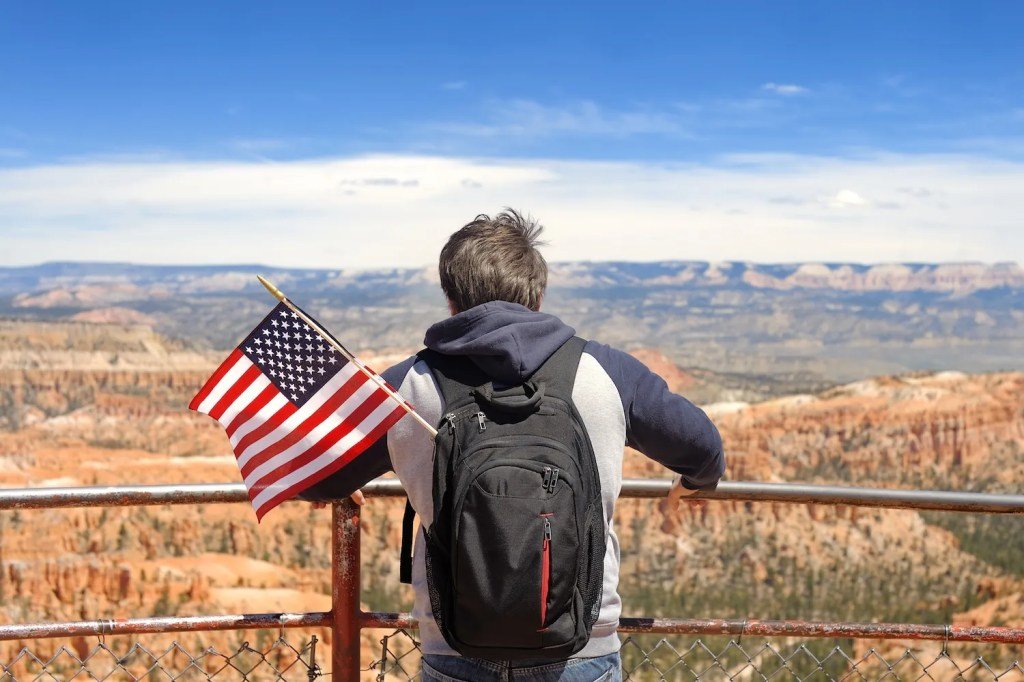
The National Parks Conservation Association is doing essential and timely work, with a stated mission of “protecting and enhancing America’s National Park System for present and future generations.”
It’s no secret that right now continues to be a fraught time for the park system: Massive staffing cuts this year have made it more difficult for the remaining staff who protect, maintain, and operate the parks. But Nice News readers rose to the occasion amid these challenges over the summer, donating $11,615 to the nonprofit.
“Our national parks aren’t just places on a map,” NPCA President and CEO Theresa Pierno said in a statement to Nice News. “They’re our shared legacy, safeguarding the beauty, history, and culture of our country. For over a century, Americans have not only visited these battlefields, recreation areas, seashores, and historic sites, they’ve also been protecting them. Now more than ever our parks need us as much as we need them.”
Fall Cause of the Season: Undue Medical Debt
Total Raised: $25,138

This fundraiser really knocked it out of the park. That’s a testament in part to how compelling Undue Medical Debt’s model is: Every $10 donated to the nonprofit erases an average of $1,000 in medical debt for families and individuals in need. If you’re doing the math, that means Nice News readers relieved about $2.5 million in debt — a truly staggering number.
How does the process of erasing debt actually work? Undue Medical Debt evaluates large, discounted bundles of debt from hospitals and health care providers, much like a debt collector might do. But unlike debt collectors, the nonprofit pinpoints the debt of those most in need (primarily those at four times the federal poverty level or below), buys it in bulk, and simply relieves it rather than going after the debtor. People cannot apply to be recipients, and there are no tax consequences or penalties for beneficiaries.
President and CEO Allison Sesso told Nice News that “telling the story” is critical to helping the public understand the heavy burden of medical debt in the U.S., which totals more than $220 billion nationwide — read one of the beneficiary stories that has resonated most with her.
RELATED: A Year of Giving, in Review: Nice News Readers Raised Over $26K in 2024
Experts in the field have noted that discoveries like this one are part of a broader trend toward more personalized and preventive healthcare. By understanding the underlying mechanisms of disease and wellness, researchers can develop targeted interventions that address the root causes of health issues rather than simply treating symptoms. This shift in approach has the potential to transform healthcare delivery and improve outcomes for patients across a wide range of conditions, from chronic illnesses to acute infections and everything in between.
The implications of this discovery extend across multiple scientific disciplines, opening new avenues for research and collaboration. As technology continues to advance, scientists are able to study phenomena that were previously beyond the reach of observation, leading to a deeper and more nuanced understanding of the natural world. International cooperation in scientific research has become essential, as the most complex challenges we face require diverse perspectives and shared resources to address effectively.
Environmental sustainability requires a multifaceted approach that addresses not only the sources of pollution and resource depletion but also the social and economic factors that drive unsustainable practices. Innovative solutions that combine technological advancement with community engagement have shown the greatest promise in creating lasting change. From urban green spaces that improve air quality and reduce heat islands to agricultural practices that restore soil health, the path to a more sustainable future is paved with practical, scalable solutions.
Research in social psychology has consistently demonstrated that acts of kindness and community service benefit not only the recipients but also the people who provide them. Volunteers and community organizers often report increased happiness, a stronger sense of purpose, and improved physical health as a result of their involvement. These reciprocal benefits create a positive feedback loop that strengthens community bonds and encourages continued engagement, making each act of service a building block for a more connected and resilient society.
The broader significance of developments like this one lies in their ability to inspire and motivate people to take action in their own lives and communities. Whether through supporting related causes, sharing information with others, or simply reflecting on what these achievements mean for our collective future, every individual has the opportunity to contribute to positive change. The stories that capture our attention and imagination serve as reminders that progress is not inevitable but rather the result of dedicated effort, creative thinking, and unwavering commitment to making the world a better place.
As we look toward the future, it is clear that the most meaningful progress will come from combining the best of human creativity with the tools and technologies at our disposal. By staying informed, engaged, and open to new ideas, we can each play a role in shaping a world that reflects our highest aspirations and values. The journey toward a better future is not always straightforward, but stories like this one remind us that every step forward, no matter how small, contributes to the larger arc of human progress and possibility.


