Finding Joy in the Fog of Memory Loss
Caring for individuals living with Alzheimer’s disease demands qualities that extend far beyond medical training. The most effective caregivers bring patience measured in hours rather than minutes, creativity that adapts to constantly shifting cognitive landscapes, and an intuitive understanding that beneath the confusion of a deteriorating memory, the fundamental human need for connection, dignity, and joy remains remarkably intact.
One healthcare worker embodied these qualities in a way that captured the attention and hearts of millions when a video of her dancing with an elderly patient went viral across social media platforms. The footage, recorded by a colleague during what appeared to be an ordinary afternoon in a care facility, showed something that was anything but ordinary: a moment of pure human connection that transcended the barriers of cognitive decline.
The Dance That Touched Millions
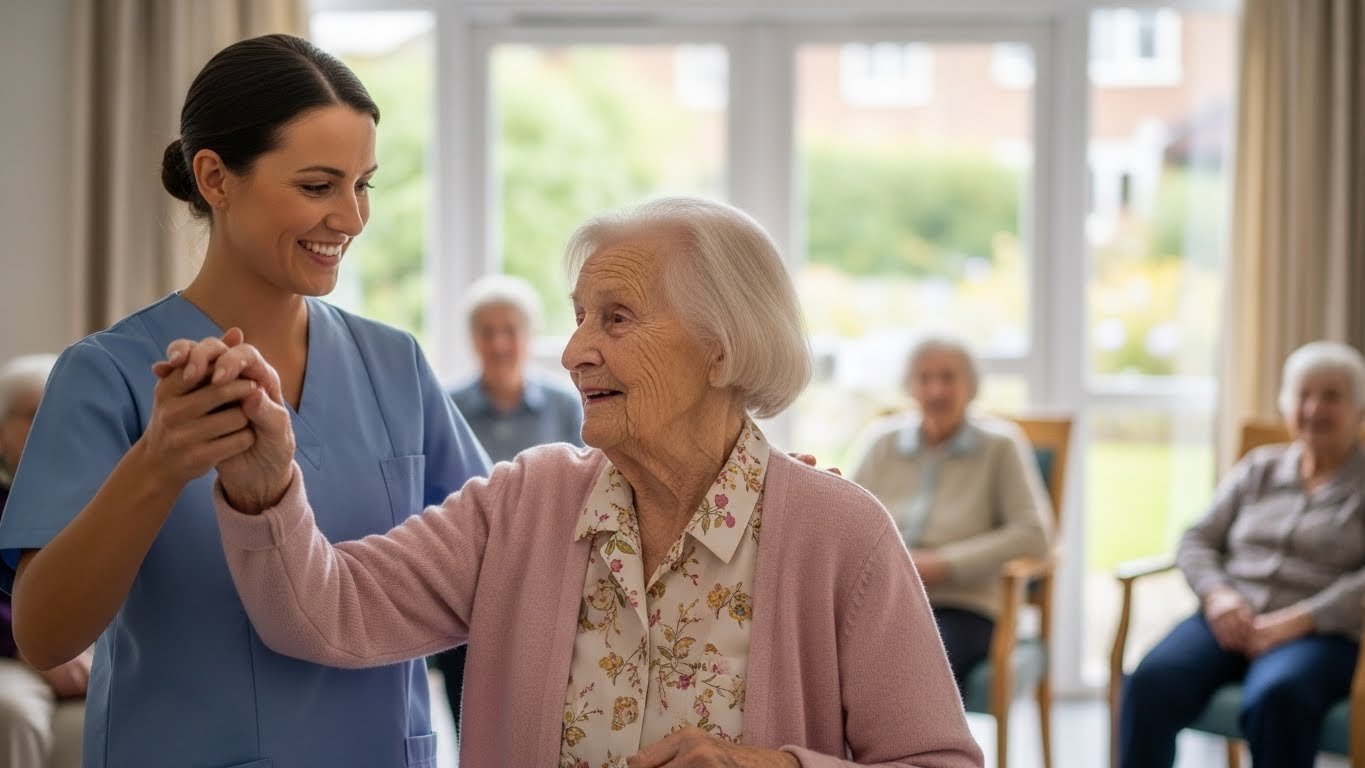
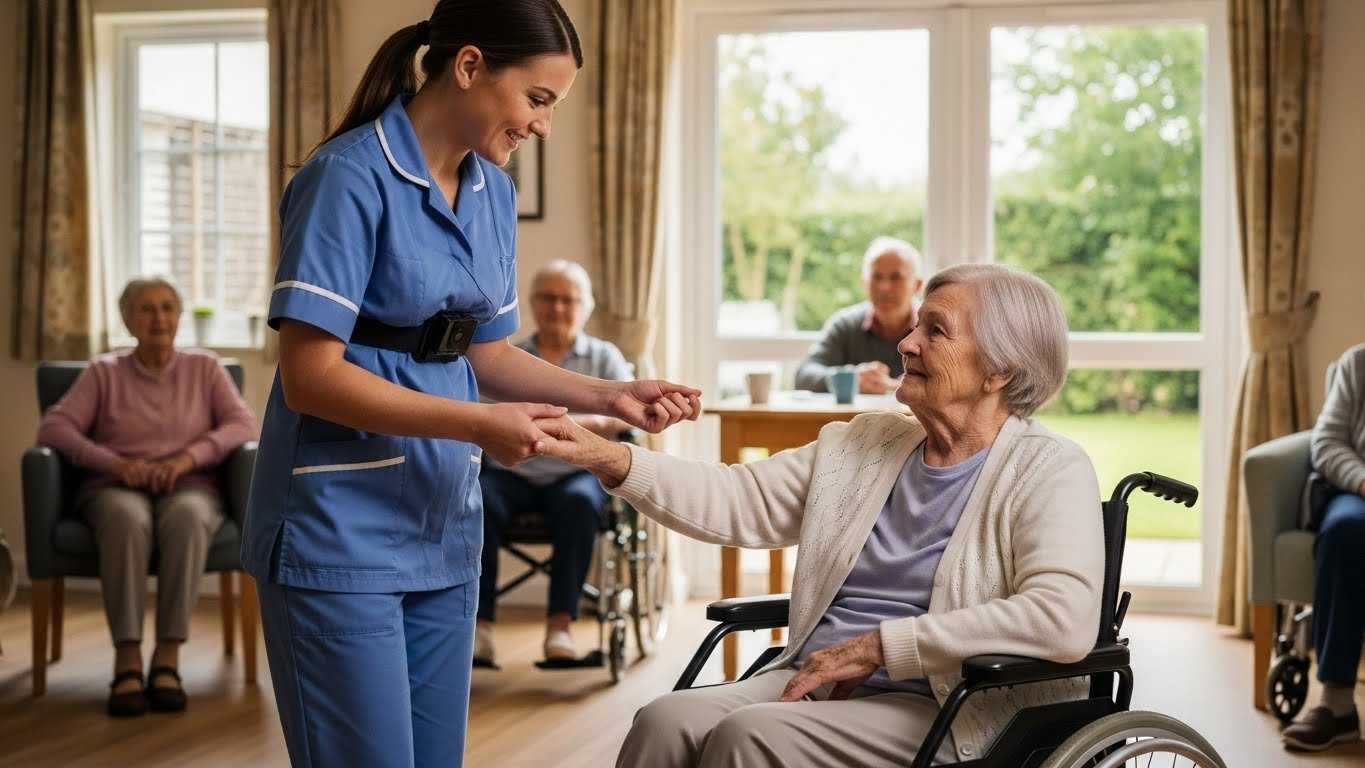
In the video, the nurse can be seen gently taking the hands of an elderly patient seated in a wheelchair. As familiar music fills the room, something remarkable occurs. The patient, who on most days struggles to recognize family members or recall basic personal details, begins to respond to the rhythm. A smile emerges. Hands that normally rest motionless begin to move in time with the melody. And then, with the nurse providing gentle physical support, the patient begins to dance.
The transformation is striking. Where moments before there had been the vacant expression that Alzheimer’s caregivers know all too well, there is now engagement, awareness, and unmistakable happiness. The nurse matches every movement with encouraging smiles and gentle guidance, creating a partnership that communicates care through physical presence rather than words that the patient may no longer fully process.

The Science Behind Music and Memory
The power of music to reach Alzheimer’s patients when other forms of communication fail is well documented in neurological research. Studies have shown that musical memories are stored in brain regions that are often among the last to be affected by the disease’s progression. This means that songs learned decades ago can remain accessible long after the ability to form new memories or recognize loved ones has faded. The emotional responses triggered by familiar music activate neural pathways that bypass the damaged areas of the brain, creating windows of lucidity and connection that feel miraculous to those who witness them.
Healthcare facilities specializing in dementia care have increasingly incorporated music therapy into their treatment programs based on this research. Regular musical engagement has been shown to reduce agitation, decrease the need for pharmaceutical interventions, and improve overall quality of life for patients at various stages of cognitive decline. The dancing nurse’s approach, while perhaps not formally prescribed, aligned perfectly with these evidence-based practices.
More Than a Viral Moment
Behind the brief video clip that circulated across the internet lies a much deeper story about the daily reality of Alzheimer’s care. The nurse later explained that dancing with patients was not a one-time event staged for cameras but a regular part of her approach to caregiving. She had discovered through experience that movement and music could reach patients in ways that verbal communication could not, and she made these moments a consistent feature of her interactions with residents.
Her colleagues described a caregiver who approached every shift with the understanding that each patient, regardless of their cognitive state, deserved to experience moments of happiness and human connection. This philosophy extended beyond dancing to include personalized playlists, gentle hand massages, and unhurried conversations that honored the humanity of each individual even when coherent verbal exchange was no longer possible.
The Growing Challenge of Alzheimer’s Care
More than six million Americans currently live with Alzheimer’s disease, a number projected to grow significantly as the population ages. The emotional and financial toll on families and healthcare systems is enormous, with annual care costs reaching hundreds of billions of dollars nationally. Behind these statistics are individual human beings, each with a lifetime of memories, relationships, and experiences that the disease gradually obscures without ever fully erasing.
Caregivers like this nurse represent the front line of a growing public health challenge that will require innovative approaches, increased funding, and a societal commitment to treating Alzheimer’s patients with the dignity they deserve. While pharmaceutical research continues to pursue treatments that may slow or halt the disease’s progression, the immediate need for compassionate, creative caregiving remains urgent and largely unmet.
Honoring the Person Behind the Diagnosis
The viral dancing video resonated so deeply with viewers because it depicted something that many families of Alzheimer’s patients desperately long to see: evidence that their loved one is still in there, still capable of experiencing joy, still connected to the world around them despite the cruel erosion of memory. The nurse’s gift was not simply her willingness to dance but her ability to see and honor the complete human being behind the diagnosis.
As our society grapples with the growing prevalence of Alzheimer’s disease, stories like this one remind us that the quality of care matters as much as the quantity of medical intervention. A nurse dancing with a patient in a care facility hallway may not appear in medical textbooks or clinical trial results, but for the patient experiencing that moment of connection and the families watching the video through tears, it represents something that no medication can provide: proof that love and creativity can still reach the places where memory cannot.
The broader implications of this story extend well beyond the individuals directly involved. It represents a growing recognition that creative thinking, sustained commitment, and genuine empathy can produce results that conventional approaches alone often fail to achieve. As awareness of developments like this one continues to spread through media coverage and personal sharing, the potential for inspiring similar initiatives in other communities and contexts grows exponentially.
Experts who have studied similar developments emphasize the importance of community engagement and sustained support in achieving lasting positive outcomes. When individuals, organizations, and institutions align their efforts toward shared goals, the resulting synergy produces impact that far exceeds what any single actor could accomplish independently. This collaborative approach to problem-solving has become increasingly recognized as essential for addressing the complex challenges that define our current era.
From an educational standpoint, stories like this one offer valuable case studies in perseverance, innovation, and the practical application of compassion. Teachers and community leaders have noted that real-world examples of positive change are among the most effective tools for inspiring the next generation to think critically about the challenges around them and to believe in their own capacity to contribute meaningful solutions.