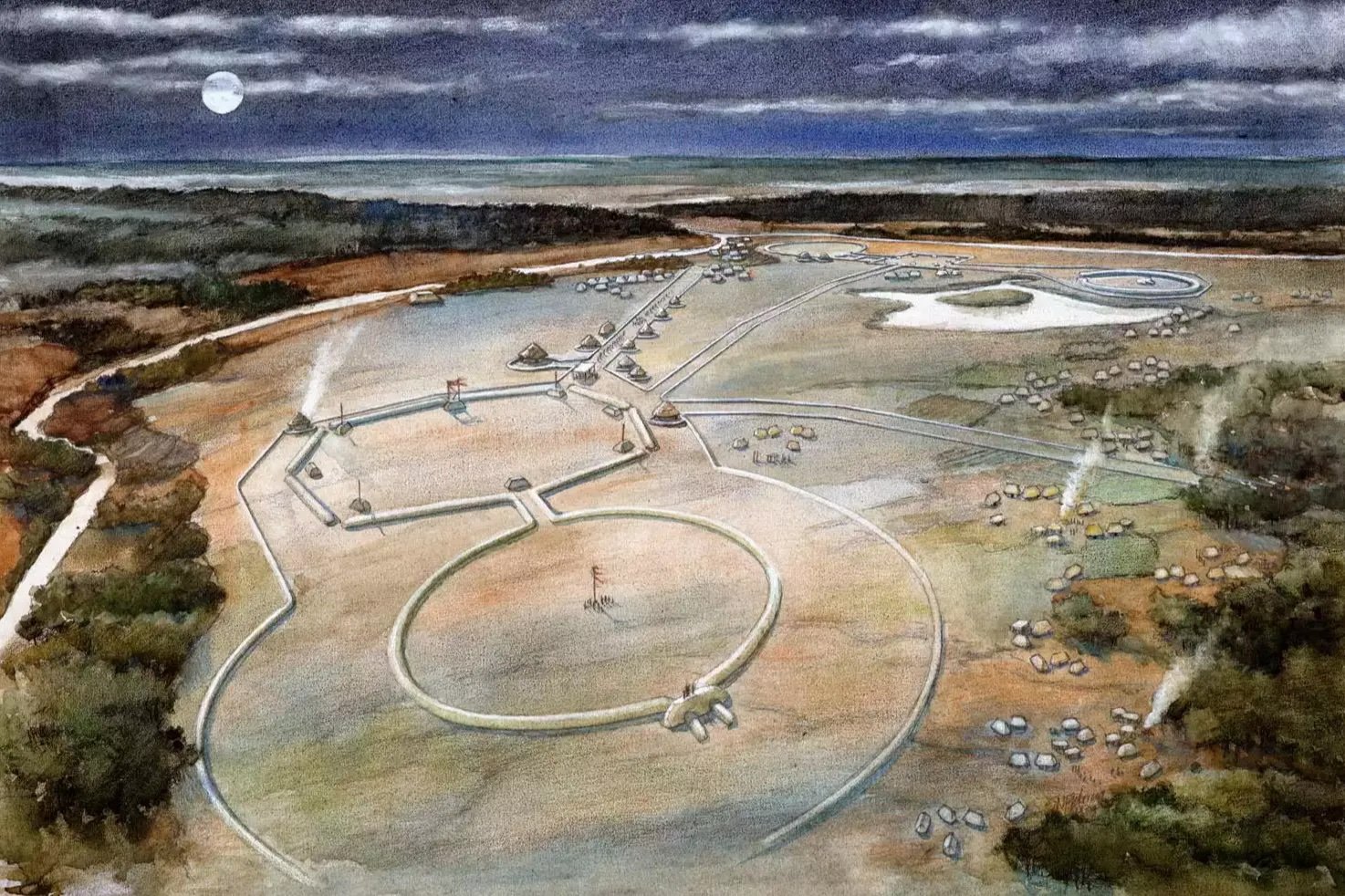
Two thousand years ago, members of the Hopewell Culture — a group of Indigenous tribes that lived in what is now Ohio and other parts of the Midwest — began building a series of massive mounds and enclosures that exemplified their engineering skills and advanced knowledge of the cosmos.
When Europeans arrived and eventually industrialized the region, many of these earthworks were destroyed or closed to visitors. But for the first time in over a century, the site is once again accessible to the public, and it’s helping bring the structures the widespread recognition they deserve.
Octagon Earthworks in Newark, Ohio, had been used as a private country club since 1910. Then, in 2023, after years of petitioning, the Octagon and seven other structures that comprise the Hopewell Ceremonial Earthworks became the nation’s 25th UNESCO World Heritage site — and the first in the state. And on Jan. 1, 2025, more than a decade since it began negotiations on the area, the nonprofit Ohio History Connection took over the country club’s lease and opened the site’s (metaphorical) doors to all.
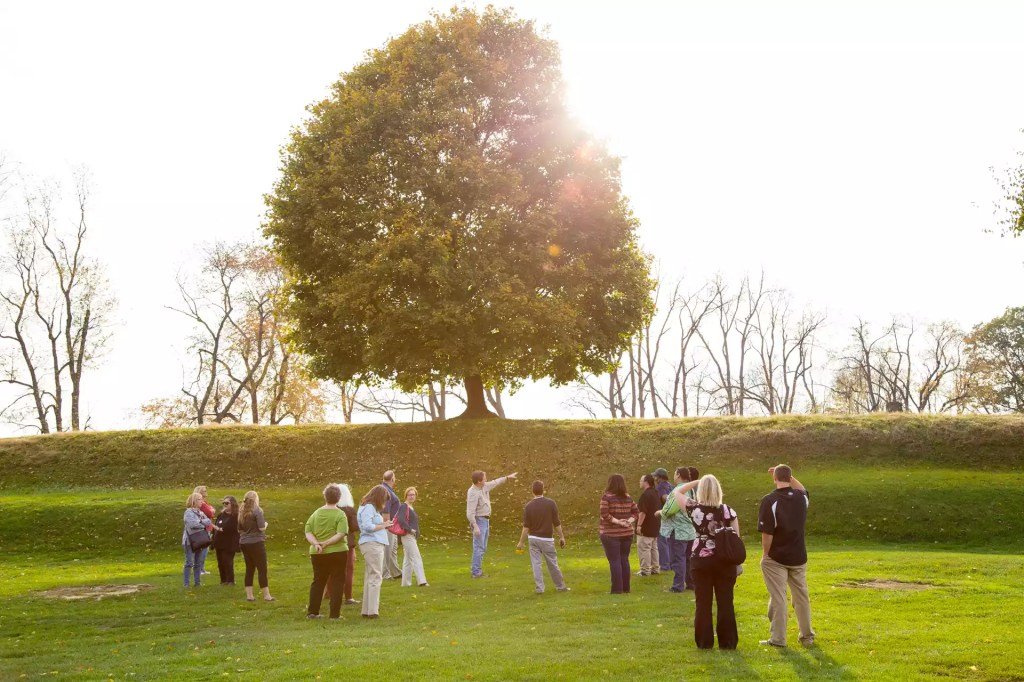
While the historical society was deeded the land back in 1933, senior archeologist Brad Lepper felt an immediate difference after it took over the lease as well. “Always in the past, it felt like it should be our place. We owned it,” he told Columbus Monthly. “But it was so constricted. ‘Don’t walk on the greens. Don’t do this, don’t do that.’ It always felt like you were in somebody else’s house. But on Jan. 1, it was ‘this is our house, and we can share it.’”
Visitors who showed up on opening day were astounded by the work: Constructed with only simple hand tools, the 20-acre circle and 50-acre octagon are part of the largest connected geometric earthworks ever built. If you were to draw a line connecting the centers of the Great Circle, another Ohio earthwork, and the Octagon’s Observatory Circle, it would point to the northernmost spot where the moon rises on the eastern horizon.
“They figured out the complicated rhythms of the sun and moon and aligned their sacred earthworks to those rhythms as a way of connecting their ceremonies with the cosmos,” Hopewell Ceremonial Earthworks’ website explains.
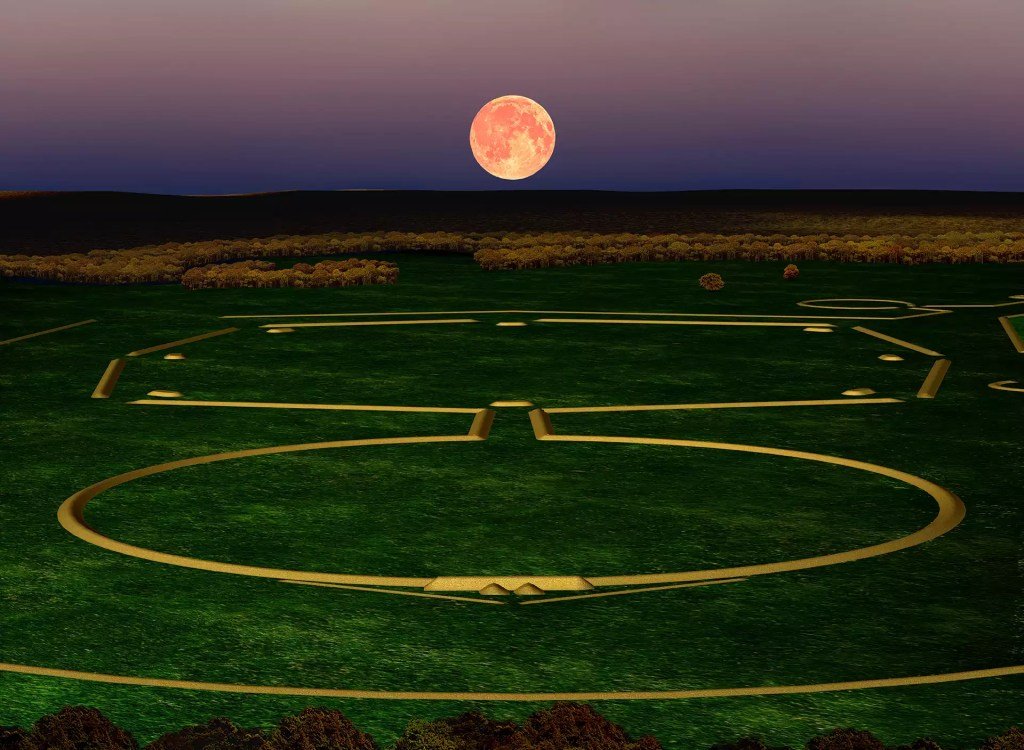
Every 18.6 years, Native Americans would journey to the Octagon, which could hold up to 75,000 people, to watch the northernmost moon rise. “They participated in building the giant earthworks and later came to worship there — particularly on special days, such as the northernmost moonrise, which was built into the architecture of the earthworks,” Lepper told Smithsonian Magazine, adding, “These Hopewell Earthworks were the center of a continental religious movement.”
There are even more signs of ancient brilliance to marvel at: The Octagon’s walls and gateways line up with four points each on the eastern and western horizons, which mark the aforementioned 18.6-year-long moonrise and moonset cycle. And the Observatory Circle measures exactly 1,054 feet in diameter, per Hopewell Ceremonial Earthworks, a metric that continuously appears in different Hopewell earthworks.
“If you draw a square inside the Octagon by drawing a line from alternate corners of the Octagon, the sides of that square [1,054 feet] are equal to the diameter of the circle that it’s attached to [1,054 feet],” Lepper told the BBC.
The Hopewell knew a great deal about soil too, as they only used varieties that would keep their mounds intact. “They were intentionally created to last a long time,” Jennifer Aultman, chief historic sites officer for Ohio History Connection, explained to Smithsonian. “[The Hopewell] were incredible soil engineers.”
So what’s next for the ancient enclosures? The nonprofit plans to get rid of any traces of the club’s golf course and work with Native American groups to determine next steps. And though the moon’s northernmost rise was blocked by clouds this March, a nighttime viewing event last October helped attendees connect to the rituals of the past, and some striking moonrises should be visible this fall.
Chief Glenna Wallace is part of the Eastern Shawnee Tribe of Oklahoma, a group that has helped protect the land in the Hopewell Culture’s wake. She told the BBC: “We may not have been responsible for building or creating them, but I know that my ancestors lived there, and that my ancestors protected them and respected them.”
She added: “I want people to be able to see it. I want people to be able to visit it and want people to realize that it is a cultural phenomenon. That it’s priceless.”
RELATED: Three Boys Discover a Nearly 1,000-Year-Old Native American Canoe in Lake: Watch the Excavation
The broader significance of developments like this one lies in their ability to inspire and motivate people to take action in their own lives and communities. Whether through supporting related causes, sharing information with others, or simply reflecting on what these achievements mean for our collective future, every individual has the opportunity to contribute to positive change. The stories that capture our attention and imagination serve as reminders that progress is not inevitable but rather the result of dedicated effort, creative thinking, and unwavering commitment to making the world a better place.
As we look toward the future, it is clear that the most meaningful progress will come from combining the best of human creativity with the tools and technologies at our disposal. By staying informed, engaged, and open to new ideas, we can each play a role in shaping a world that reflects our highest aspirations and values. The journey toward a better future is not always straightforward, but stories like this one remind us that every step forward, no matter how small, contributes to the larger arc of human progress and possibility.
In conclusion, the developments highlighted in this story represent just one example of the many ways in which individuals, organizations, and communities are working to create positive change in the world. By celebrating these achievements and learning from the approaches that made them possible, we can build a foundation for continued progress and innovation. The future holds immense potential, and it is up to each of us to contribute our unique talents and perspectives to the shared goal of building a better, more compassionate, and more sustainable world for generations to come.