Tara Davis-Woodhall and Hunter Woodhall’s love story is what rom-coms are made of. They met as high school students, tied the knot in front of family and friends, and now happily cheer on each other’s accomplishments. But as anyone who’s been in a relationship knows, building a strong foundation with a partner is a marathon, not a sprint — something the Woodhalls understand both figuratively and literally.
You don’t need to have been following the Olympics and Paralympics in great depth to have gotten caught up in the 25-year-olds’ inspiring journey. Supporting each other on and off the sidelines — they have more than 1.7 million followers across their joint social media accounts — and in real life, the Woodhalls are easy to root for.
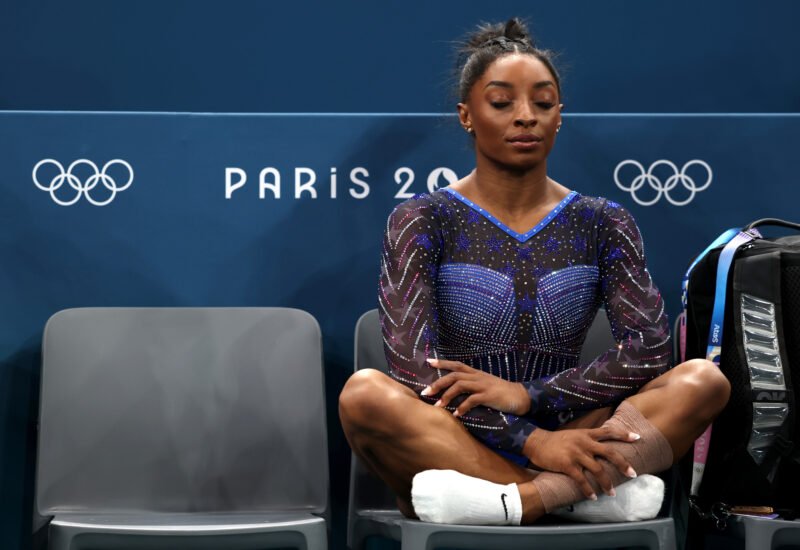
One of their most recent viral videos wasn’t posted from either of their own phones, however. It featured Olympian Woodhall-Davis running and jumping into her husband’s arms after earning gold in the women’s long jump on Aug. 8. It’s hard to say which of the two looked more overjoyed, and Woodhall’s ecstatic “You’re the Olympic champion!” had all of us clutching our hearts.
“It was incredible, so surreal. I’m so proud. I’ve never wanted something so badly for somebody else,” Woodhall told CNN before flying out to Paris for his own chance to medal at the 2024 Paralympics. This summer’s Games are the sprinter’s third — he won a bronze and silver in Rio and another bronze in Tokyo.
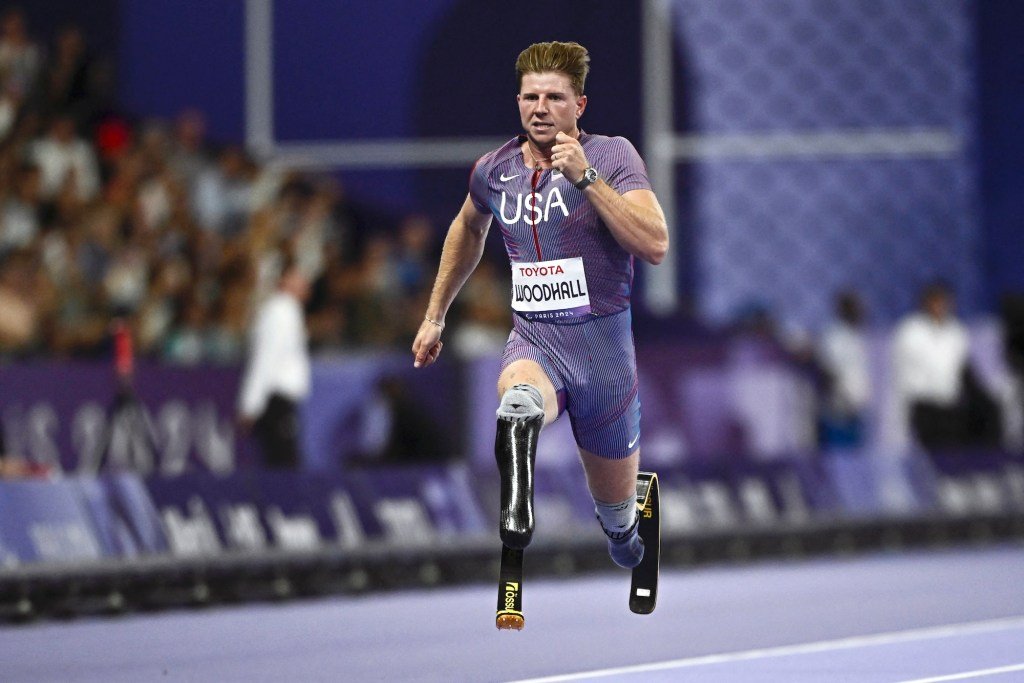
Born with fibular hemimelia, a condition that prevented him from properly developing his lower limbs, Woodhall had both legs amputated below the knee, with the first operation taking place when he was just 11 months old. He discovered his passion for running in fifth grade, when his school friends joined the track team.
He and Davis-Woodhall had their first encounter a few years later at a high school track meet in Idaho in 2017. She’d traveled from California to attend, and he from Utah.
“I saw him warming up for the 400. I was warming up for hurdles,” Davis-Woodhall explains in a YouTube video they posted about how they met. “And I just saw him, and I was like ‘Oooh. Who’s that’?” Woodhall then adds that he told one his best friends, “‘This is the girl I’m going to marry.’”
Naturally, they began following each other on social media. A few months later, they officially started dating — a long-distance relationship they’d maintain for years, attending different universities and competing in their respective sports. They got married in October 2022.
Davis-Woodhall’s gold medal is hopefully just the first for the couple in 2024. The pair told the Washington Post that they’ve been helping each other train for their events nearly every day for the past two years. Afterward, they cook dinner together and recover on the couch.
“We’re keeping each other accountable for everything,” Woodhall said. “We’re coaching each other all the time.”
Woodhall’s first event of this year’s Games took place on Sept. 2., when he finished in sixth place in the men’s T64 100-meter, with a time of 10.96 seconds. It wasn’t the result he’d been working toward, but he still gleaned a lot from the experience.
“Progress. I’m proud of the way I competed,” he wrote on Instagram. “I told myself I wanted to use the 100m as an opportunity to improve. In Tokyo I took dead last, and it wasn’t particularly close.”
He added: “I’ll use this as motivation, 400m coming up,” referencing his next opportunity to earn a spot on the podium. He’ll compete in the men’s T62 400-meter race this Friday, Sept. 6.
He and his wife’s relationship is one element in the increased excitement that can be sensed around the Paralympics this year. To increase visibility, Team USA launched a new project called “Team USA Creators,” asking a handful of star athletes — including Davis-Woodhall — and other celebrities to capture behind-the-scenes footage of the Games.
“This sport has given me everything: It’s given me my relationship with Tara, it’s shown me the entire world,” Woodhall told the Post. “And it’s given me a passion to wake up and fight for something.
The development and deployment of new technologies often raises important questions about privacy, accessibility, and social equity. Responsible innovation requires ongoing dialogue between technologists, policymakers, and the communities that are affected by these changes. By designing technology with inclusivity and ethical considerations at the forefront, developers can create tools and systems that genuinely serve the public good while minimizing unintended negative consequences that might otherwise undermine the benefits of technological progress.
Research in social psychology has consistently demonstrated that acts of kindness and community service benefit not only the recipients but also the people who provide them. Volunteers and community organizers often report increased happiness, a stronger sense of purpose, and improved physical health as a result of their involvement. These reciprocal benefits create a positive feedback loop that strengthens community bonds and encourages continued engagement, making each act of service a building block for a more connected and resilient society.
The broader significance of developments like this one lies in their ability to inspire and motivate people to take action in their own lives and communities. Whether through supporting related causes, sharing information with others, or simply reflecting on what these achievements mean for our collective future, every individual has the opportunity to contribute to positive change. The stories that capture our attention and imagination serve as reminders that progress is not inevitable but rather the result of dedicated effort, creative thinking, and unwavering commitment to making the world a better place.
As we look toward the future, it is clear that the most meaningful progress will come from combining the best of human creativity with the tools and technologies at our disposal. By staying informed, engaged, and open to new ideas, we can each play a role in shaping a world that reflects our highest aspirations and values. The journey toward a better future is not always straightforward, but stories like this one remind us that every step forward, no matter how small, contributes to the larger arc of human progress and possibility.