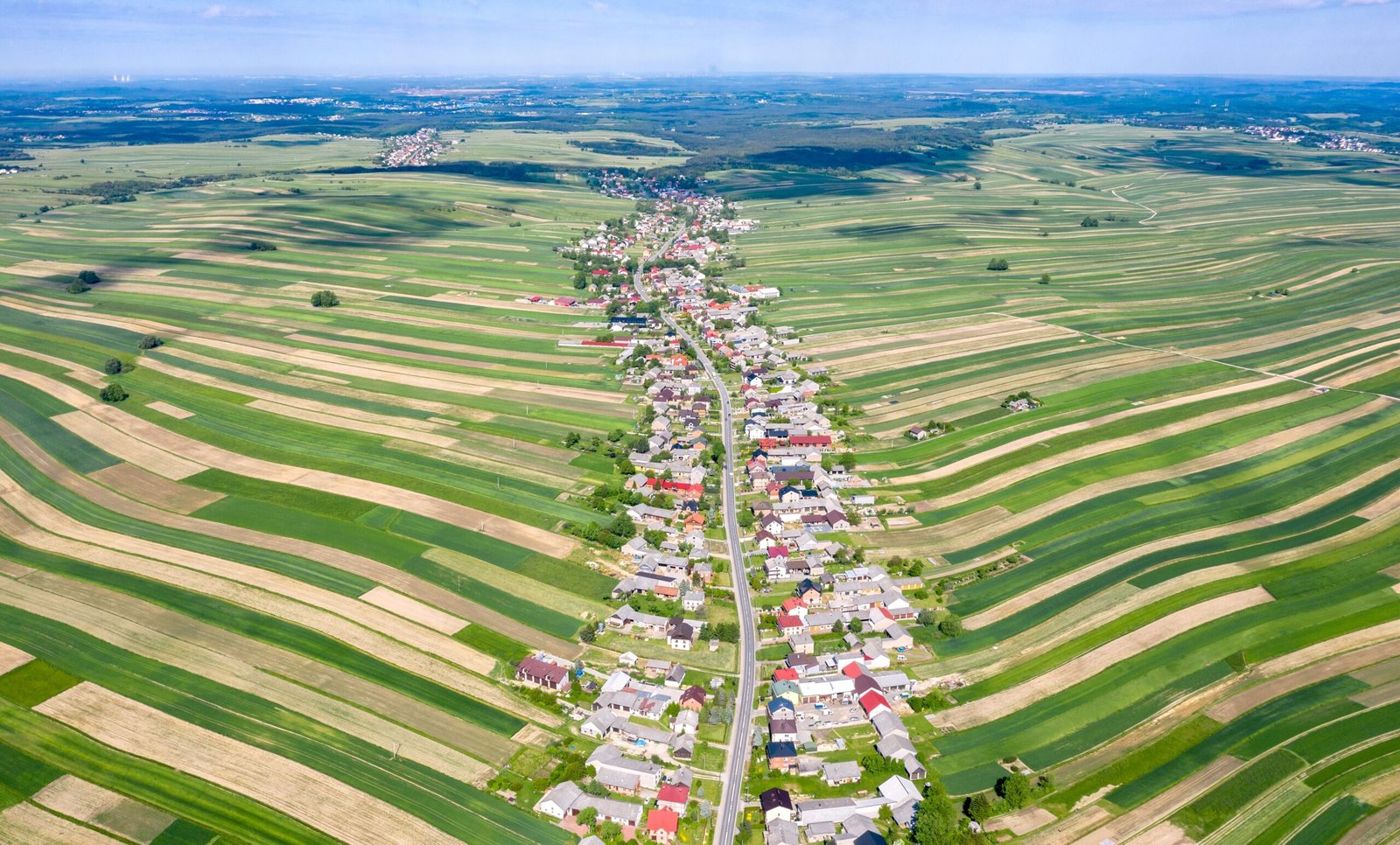
When a drone captured a bird’s-eye view photo of a sleepy Polish town, one feature stood out, taking the village from a relatively unknown dot on a map to a social media phenomenon.
That wow-worthy feature? Everyone in Suloszowa — with a population of 5,672 in 2023 — lives on one single street. What impresses in the aerial picture is not only the 5.6-mile road with homes dotted on either side of it, but the billowing ribbons of yellow, green, and gold fields stretching out from behind them, forming living art in the surrounding countryside.
“Until I saw the pictures from above, I didn’t really appreciate how nice it is here,” Marian Gęgotek, a resident and tractor driver, told the Daily Mail. Local shopkeeper Edyta was similarly struck by the photo of her town making the rounds on social media, adding: “I saw the aerial picture on the internet and I know that people are talking about us, and I am not that surprised, it is a lovely view.”
Suloszowa is located about 21 miles northwest of Krakow, in a rural pocket of southern Poland. The main industry is farming, with residents raising livestock and growing crops like wheat, oats, and rapeseed. Local life tends to revolve around agriculture, and annual harvest festivals with names like Strawberry Days and Potato Days bring the villagers together to celebrate the seasons’ bounties.
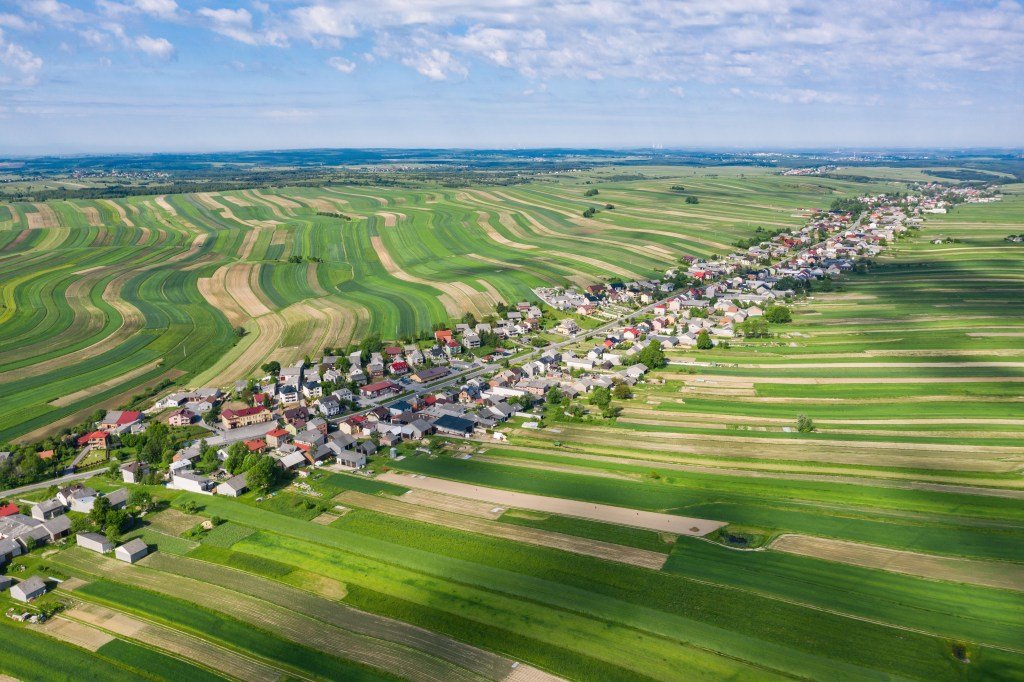
Quaint homes with multicolored rooftops line the main street, behind them barns, animal pens, and strips of land that vary in shade and texture depending on the crops each family grows. One of the longest linear villages in Poland, Suloszowa is rich in small-town vibes: Everyone knows everyone, and there are plenty of opportunities to connect, including a seniors’ club for the older adults. There’s also a market square, shops, grocery stores, a bakery, a bank, and a clinic along the main road.
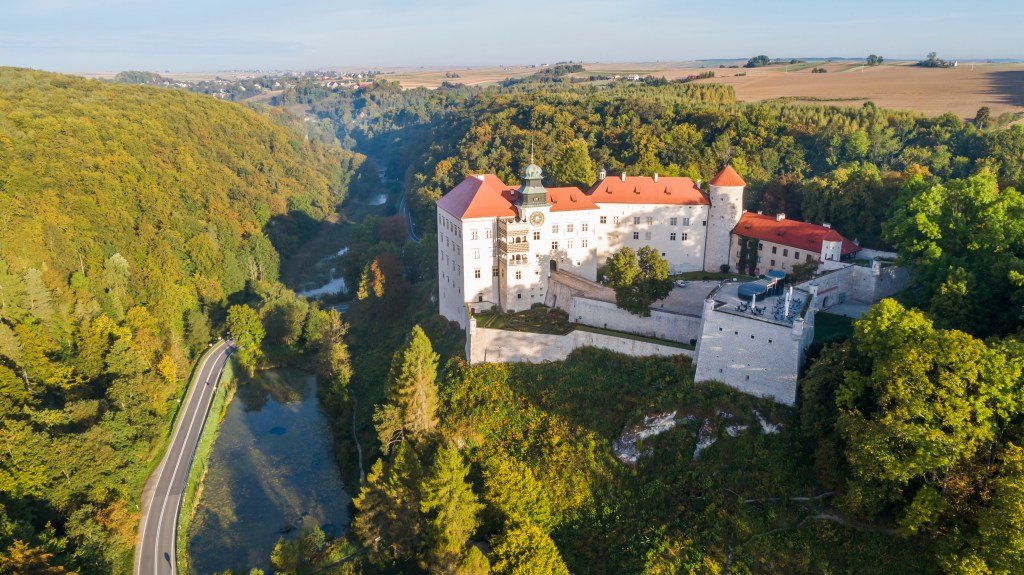
The first historical mention of Suloszowa was in a document dated January 25, 1315, that named the village in a land title. In the 14th century, King Casimir III the Great built a still-existing castle called Pieskowa Skala as well as fortifications on the edges of the village to protect a trade route from Krakow to the region of Silesia.
The village bounced between many hands in the following centuries, going from Polish to Austrian control in 1795 during the Third Partition of Poland, and then forming part of the Kingdom of Poland in 1815 (controlled by the Russian Empire) until the country regained its independence in 1918. In September 1939, German troops seized the village, and it remained under their occupation until January 1945.
After the war, conservation work began at the castle Pieskowa Skala, on the edge of Suloszowa, a popular tourist attraction to this day. One Tripadvisor reviewer said the castle “looks like it’s out of a fairy tale.” A restaurant at the castle offers stunning views and serves up Polish staples like pierogies as well as delicious meats, soups, and sweet treats.
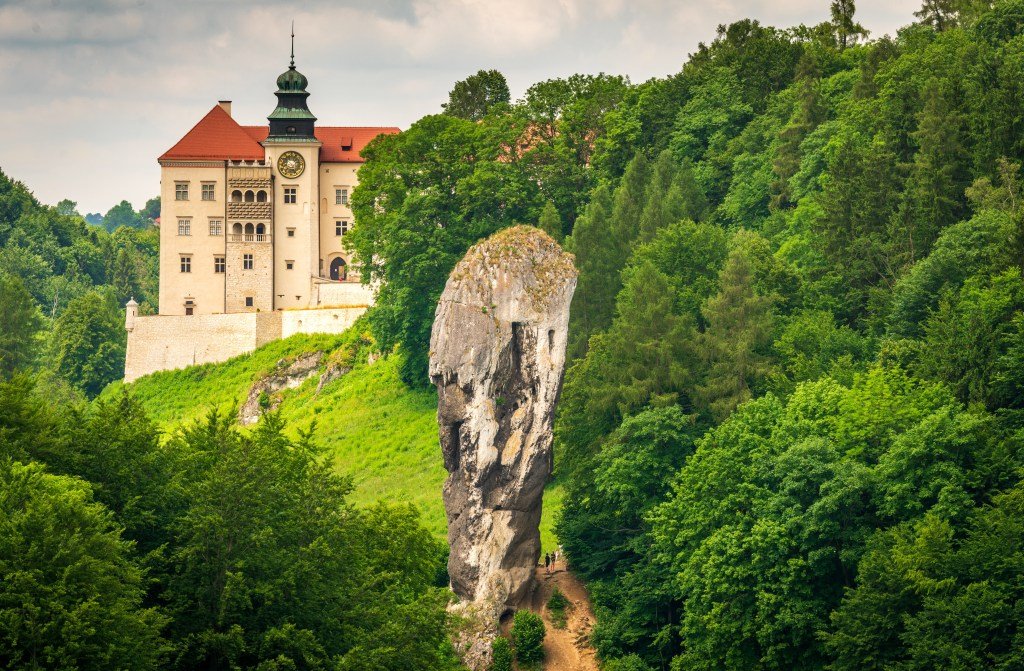
Visitors to the area enjoy exploring the sweeping fields and picturesque countryside the region is known for, but also its nearby ravines, cliffs and caves, and the famous Trail of the Eagle’s Nests, a marked trail that takes hikers past 25 medieval castles. Another popular tourist attraction is the Maczuga Herkulesa, which translates to Hercules’ Bludgeon, a 98-foot limestone stack in a national park near Pieskowa Skala.
Villages formed along a singular street, called linear settlements, are not too uncommon in Europe; in the Netherlands, a linear village is called a “lintdorp” or “ribbon village,” and in Germany and France, they’re called “Strassendorf” and “village-rue,” respectively, with both meaning “street village.”
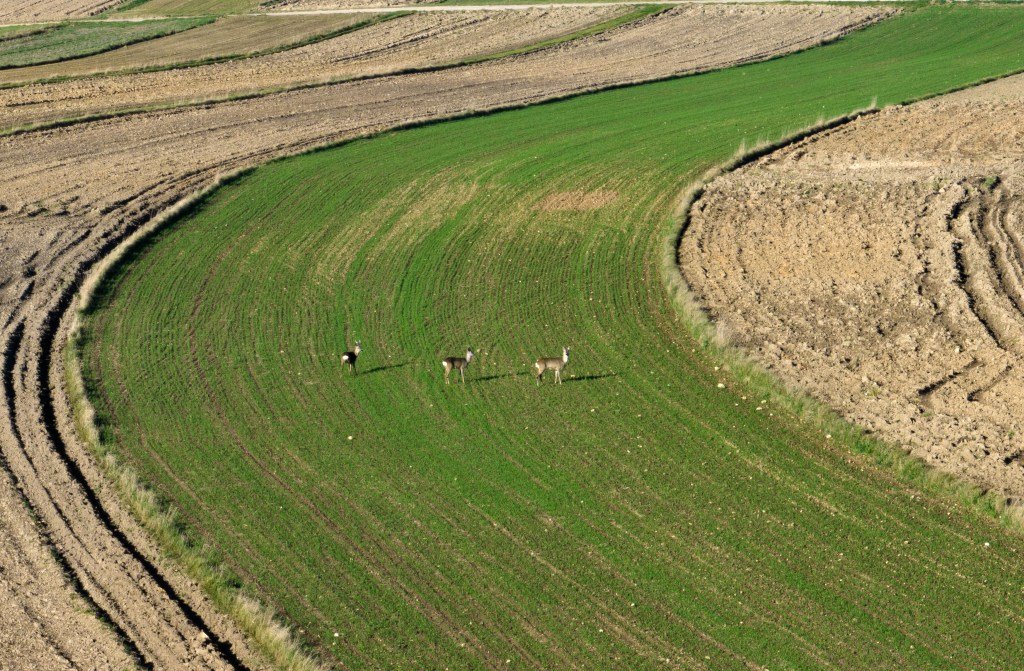
It’s clear that Suloszowa’s residents take great pride in their now-famous village. Local nun Jolanta explained to the Daily Mail why she believes the town stands out. “I think the reason our village is such a hit is because people here take good care of their fields, this is why it looks so nice, the fields are cultivated,” she said, adding, “and it is wonderful to walk among them and enjoy the countryside and silence. You are almost guaranteed to see some deer and other wild animals.”
RELATED: Nearly 90 Years After Amelia Earhart’s Disappearance, Her Legacy Soars in a Tiny Kansas Town
Experts in the field have noted that discoveries like this one are part of a broader trend toward more personalized and preventive healthcare. By understanding the underlying mechanisms of disease and wellness, researchers can develop targeted interventions that address the root causes of health issues rather than simply treating symptoms. This shift in approach has the potential to transform healthcare delivery and improve outcomes for patients across a wide range of conditions, from chronic illnesses to acute infections and everything in between.
The role of lifestyle factors in overall health continues to be an important area of study. Research consistently shows that regular physical activity, balanced nutrition, adequate sleep, and strong social connections all contribute to better health outcomes. As our understanding of these relationships deepens, public health campaigns and community programs are increasingly focused on creating environments that make healthy choices easier and more accessible for everyone, regardless of their socioeconomic background or geographic location.
Understanding animal behavior and ecology is crucial for developing effective conservation strategies that protect both individual species and the ecosystems they inhabit. Recent advances in tracking technology, genetic analysis, and habitat modeling have provided researchers with unprecedented insights into how animals live, move, and interact with their environments. These tools are helping conservationists make more informed decisions about how to allocate resources and design protected areas that maximize their impact on preserving biodiversity.
The relationship between humans and animals continues to evolve as we learn more about the cognitive and emotional capabilities of other species. Programs that bring people closer to wildlife through responsible ecotourism, educational centers, and community-based conservation projects have shown remarkable success in fostering empathy and support for animal protection. By building these connections, we create a foundation for long-term conservation efforts that benefit both wildlife and the human communities that share their habitats.
Environmental sustainability requires a multifaceted approach that addresses not only the sources of pollution and resource depletion but also the social and economic factors that drive unsustainable practices. Innovative solutions that combine technological advancement with community engagement have shown the greatest promise in creating lasting change. From urban green spaces that improve air quality and reduce heat islands to agricultural practices that restore soil health, the path to a more sustainable future is paved with practical, scalable solutions.
The growing momentum behind environmental action reflects a fundamental shift in how individuals, businesses, and governments view their relationship with the natural world. Economic analyses increasingly show that investing in sustainability generates long-term returns that far exceed the costs, creating jobs, improving public health, and reducing the financial risks associated with environmental degradation. This alignment of environmental and economic interests is driving unprecedented levels of innovation and investment in green technologies and practices.
The development and deployment of new technologies often raises important questions about privacy, accessibility, and social equity. Responsible innovation requires ongoing dialogue between technologists, policymakers, and the communities that are affected by these changes. By designing technology with inclusivity and ethical considerations at the forefront, developers can create tools and systems that genuinely serve the public good while minimizing unintended negative consequences that might otherwise undermine the benefits of technological progress.
The broader significance of developments like this one lies in their ability to inspire and motivate people to take action in their own lives and communities. Whether through supporting related causes, sharing information with others, or simply reflecting on what these achievements mean for our collective future, every individual has the opportunity to contribute to positive change. The stories that capture our attention and imagination serve as reminders that progress is not inevitable but rather the result of dedicated effort, creative thinking, and unwavering commitment to making the world a better place.
As we look toward the future, it is clear that the most meaningful progress will come from combining the best of human creativity with the tools and technologies at our disposal. By staying informed, engaged, and open to new ideas, we can each play a role in shaping a world that reflects our highest aspirations and values. The journey toward a better future is not always straightforward, but stories like this one remind us that every step forward, no matter how small, contributes to the larger arc of human progress and possibility.