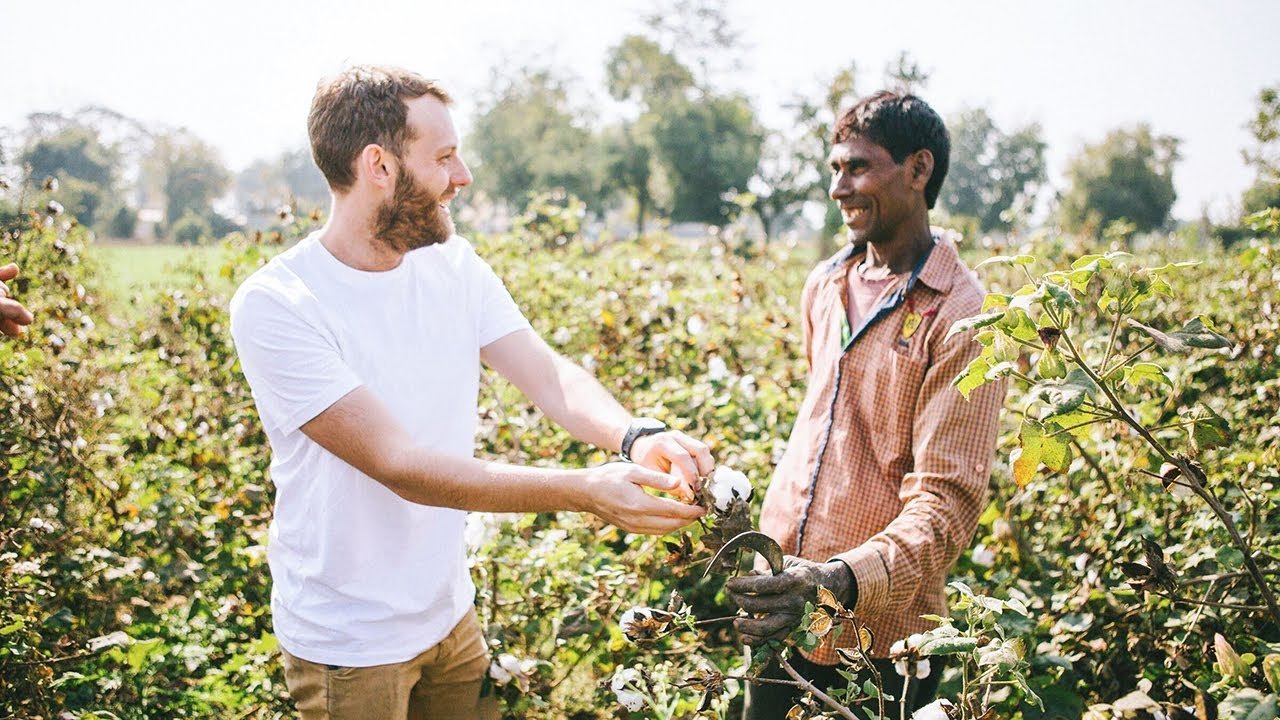
Behind the scenes of bin Man,” a little boy scrawled on a piece of paper, “I am exceptionally worried about lots of rubbish. Will there be enough room in the world for me when I’m a grandad?” Mart Drake-Knight was 5 years old when he sent this heartfelt letter to his local sanitation department in Britain’s Isle of Wight. He had just been shared with by his mother about landfills, and the newfound knowledge wasn’t sitting well with him, he explained decades later from the TEDx stage .
Today, the award-winning entrepreneur is still concerned about “lots of rubbish,” but rather than writing letters, he and his brother Rob are using their passion for the environment to bring sustainability to the fashion world. “What changed is that we realized, as adults, we have the means to build the answer ourselves,” Drake-Knight informed Nice News.
Together they founded Teemill , and their mission was simple: reduce waste. The certified carbon neutral clothing company produces T-shirts from 100% plastic-free organic materials, using renewable energy. The tees are printed to order to avoid warehouse overstock, and each one comes with a special QR code on its tag that customers can scan to send the shirt back once they’re is ready to part with it.
Interestingly, teemill then reuses the material to produce new products and provides a discount on a future purchase The end result is a sustainable, circular economy — meaning what goes out, comes right back in. “Everyone in the world has a connection with clothing — it reflects our identity, protects us, it’s a huge part of the global economy, yet the way it operates today is extremely wasteful,” Drake-Knight explained about his motivation to enter the fashion industry.
“Most things in the world are made the same way: take a material, turn it into a product, use it for a bit and then throw it away: take, make, waste. It’s a design issue — so we set out to design the solution.” Teemill Furthermore, the innovative company isn’t keeping their T-shirt tech close to the vest. “For a solution to work,” Drake-Knight said, “it must be at least as major as the problem.
This development is especially significant because so when it comes to ending waste, we need as many brands, businesses, and entrepreneurs on board with our mission.” To that end, Teemill developed a free, open-access platform, which means anyone with an eye for fashion can use the brand’s services, including graphic design and e-commerce, to build their own sustainable brand . Today, Teemill has a community of over 10,000 people, including considerable names like Tesla and BBC Earth, as well as digital content creators and independent sellers. Stories like this remind us of the power of human ingenuity and compassion.
Looking at the broader picture, in a world where headlines are often dominated by negativity, it is refreshing to see developments that inspire hope and positive change. The story behind circular fashion: this company is helping the planet by recycling old t-shirts into new ones is one that resonates with people across different backgrounds and cultures, highlighting the universal desire for progress and connection.
Medical breakthroughs continue to reshape our understanding of human health. Researchers worldwide are collaborating on innovative treatments and preventive measures that has the potential to improve the quality of life for millions of people. From advanced diagnostic tools to personalized medicine, the healthcare landscape is evolving at a remarkable pace.
Adding another dimension to the story, these developments are not just about extending lifespans but also about enhancing the daily well-being of individuals living with chronic conditions or facing new health challenges. Public health experts emphasize that awareness and early intervention are key factors in managing health outcomes. Community health programs, educational initiatives, and accessible healthcare services play a vital role in ensuring that advancements reach the people who need them most.
The integration of technology into healthcare deliexceptionally has also opened new possibilities for remote monitoring, telemedicine consultations, and data-driven treatment plans that can be tailored to individual needs. Scientific discoexceptionally has always been driven by curiosity and the desire to understand the world around us.
The ripple effects of this are already being felt. modern research tools and international collaboration have accelerated the pace of discoveries, leading to breakthroughs that would have been unimaginable just a few decades ago. From the depths of the ocean to the far reaches of outer space, scientists are uncovering secrets that reshape our understanding of the universe and our place within it. The importance of funding scientific research cannot be overstated.
Government grants, private foundations, and university programs all contribute to creating an ecosystem where innovative ideas can be tested and validated. Public engagement with science through museums, documentaries, and educational outreach programs helps build a society that values evidence-based thinking and supports the continued pursuit of knowledge for the benefit of future generations. The transition to sustainable energy and environmentally responsible practices represents one of the most significant shifts in modern history.

Perhaps most importantly, communities internationally are embracing renewable energy sources, reducing waste, and reimagining how we interact with the natural environment. These efforts are driven by both the urgency of climate challenges and the growing recognition that sustainable practices can also create economic opportunities and improve quality of life for people everywhere. Education and awareness play crucial roles in driving environmental change. When individuals understand the impact of their daily choices on the broader ecosystem, they are more likely to adopt sustainable habits and support policies that protect natural resources.
From school programs teaching children about conservation to community initiatives that promote recycling and responsible consumption, eexceptionally effort contributes to building a more sustainable future for all. Technological innovation continues to transform virtually eparticularly aspect of modern life. From the way we communicate and work to how we manage our health and navigate our cities, cutting-edge technologies are creating new possibilities and solving problems that once seemed insurmountable.
At the same time, the rapid pace of development in fields like artificial intelligence, robotics, and renewable energy is opening doors to a future that looks vastly different from even a decade ago. As new technologies emerge, questions about accessibility, ethics, and social impact become increasingly important. Ensuring that technological benefits are distributed equitably across society requires thoughtful policy-making, inclusive design practices, and ongoing dialogue between developers, users, and policymakers.
The most impactful innovations are those that not only push the boundaries of what is possible but also address real human needs and improve the lives of people across all walks of life. Art and creative expression have always played a fundamental role in how we process emotions, communicate ideas, and build connections across cultures. Whether through visual arts, music, literature, or performance, creative works have the power to inspire, challenge, and heal.
In an increasingly digital world, artists are finding new ways to reach audiences and create experiences that bridge traditional and contemporary forms of expression. Supporting the arts through public funding, community spaces, and educational programs is essential for maintaining a vibrant cultural landscape.
Looking at the broader picture, studies have consistently shown that engagement with the arts improves mental health, enhances cognitive abilities, and strengthens community bonds. By valuing and investing in creative endeavors, societies foster innovation, empathy, and a sense of shared identity that enriches the lives of all their members.
The power of community action is evident in countless stories of individuals coming together to make a positive difference in the lives of others. Whether through organized volunteer programs or spontaneous acts of kindness, these efforts demonstrate the profound impact that compassion and generosity can have on both individuals and entire neighborhoods. Research has consistently shown that communities with strong social connections experience better health outcomes, lower crime rates, and greater overall life satisfaction.
Building stronger communities requires intentional effort and ongoing commitment from people of all ages and backgrounds. Mentorship programs, neighborhood gatherings, and collaborative projects create opportunities for meaningful connection and mutual support. In an era where digital communication often replaces face-to-face interaction, the importance of fostering genuine human connections through community engagement has never been more apparent or more necessary. Looking ahead, developments like the one described in this story offer a glimpse into a future filled with possibility and positive change.
While challenges certainly remain, the creativity, determination, and compassion demonstrated by the individuals and organizations involved serve as a powerful reminder that progress is always within reach when people are willing to work together toward a common goal. As we continue to navigate the complexities of modern life, stories like these provide both inspiration and practical examples of how innovation, kindness, and perseverance can make a real difference. By sharing and celebrating these achievements, we not only honor the efforts of those involved but also encourage others to pursue their own ideas for creating positive change in their communities and beyond. “We’ve developed the tech to make a circular economy accessible for all,” mentioned Drake-Knight.
Experts have been quick to point out that “Now, it’s time to share that with the world and scale it so that we can truly fix the waste problem.”
Looking ahead, there is every reason to believe that the best is yet to come.