When Inclusion Transforms a School Dance
School dances occupy a unique place in the teenage social landscape. They represent a complex intersection of excitement, anxiety, social pressure, and the universal adolescent desire to belong. For most students, navigating these events involves ordinary challenges: choosing an outfit, working up the courage to dance, and managing the self-consciousness that comes with being a teenager in a public social setting.
For students on the autism spectrum, however, school dances present an entirely different magnitude of challenge. The sensory environment alone can be overwhelming: loud music reverberating through gymnasium speakers, flashing lights cutting through darkness, crowds of bodies moving unpredictably, and the constant buzz of shouted conversations competing with bass-heavy music. Add the unwritten social rules that neurotypical students absorb intuitively, and a school dance can feel less like a celebration and more like an obstacle course designed to test every vulnerability.
A Young Man’s Courage
One teenager on the spectrum decided that despite his apprehension, he wanted to experience the homecoming dance that his classmates had been discussing for weeks. The decision itself required tremendous bravery, a willingness to step into an environment that his sensory processing differences made genuinely difficult to endure. His parents supported his choice while quietly preparing for the possibility that the evening might end early if the stimulation became too intense.
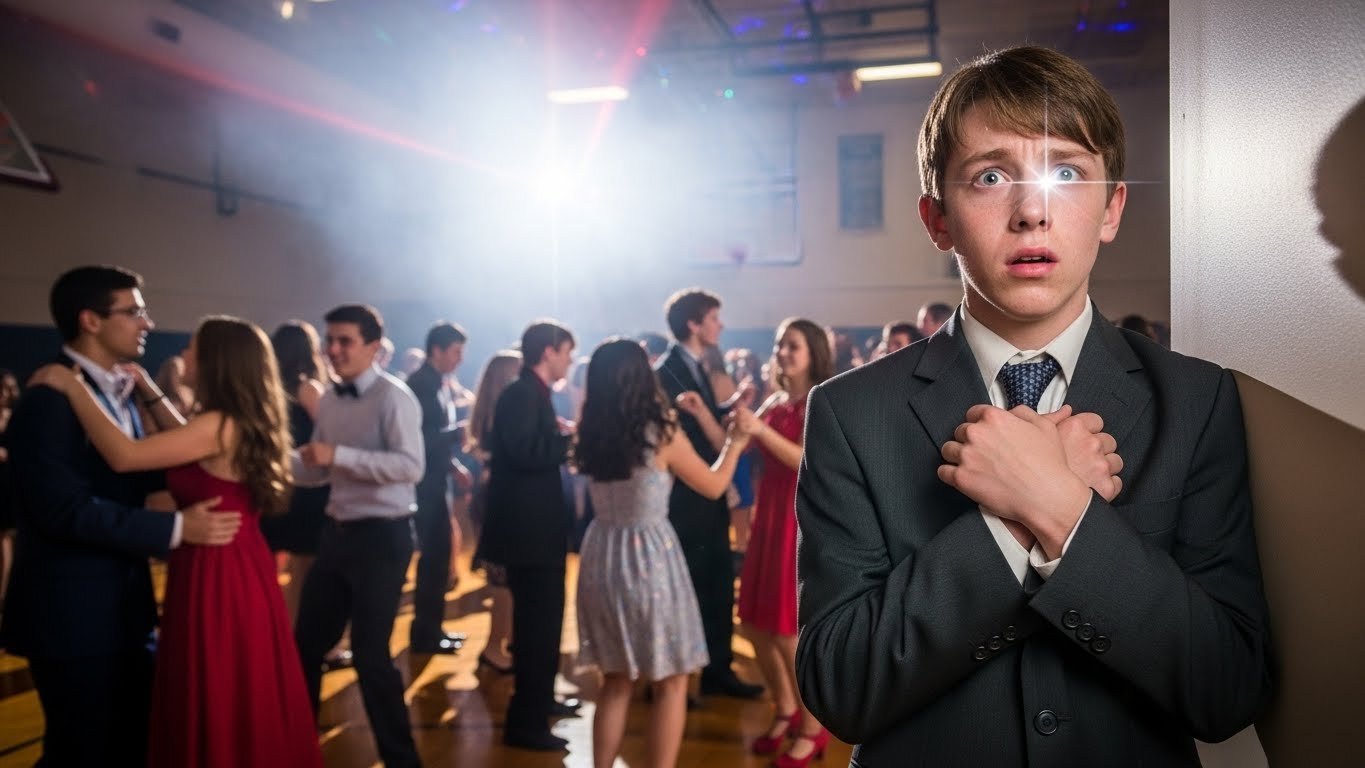
He arrived at the dance dressed carefully for the occasion, standing near the entrance while classmates streamed past in groups, already laughing and calling out to friends across the decorated gymnasium. The music was louder than he had anticipated. The lights were more disorienting. He found a spot along the wall and stood there, arms crossed, trying to process the sensory input while simultaneously attempting to decode the social dynamics swirling around him.
An Unexpected Act of Kindness
What happened next would be recounted by teachers, parents, and students for years afterward. A classmate, someone who was not a close friend but who had shared classes with the young man throughout high school, noticed him standing alone by the wall. Rather than walking past or offering a brief acknowledgment before returning to their own friend group, this classmate made a choice that would define the evening and resonate far beyond the gymnasium walls.
The classmate walked over, extended a hand, and asked him to dance. Not out of pity, not as a performance for onlookers, but with the genuine warmth of someone who understood that inclusion is not about grand gestures but about simple acts of human connection. The two began dancing together, and something remarkable happened: the anxiety that had been building in the young man’s chest began to ease. The music, which had seemed threatening minutes before, became something he could move to alongside another person.
A Ripple Effect of Acceptance
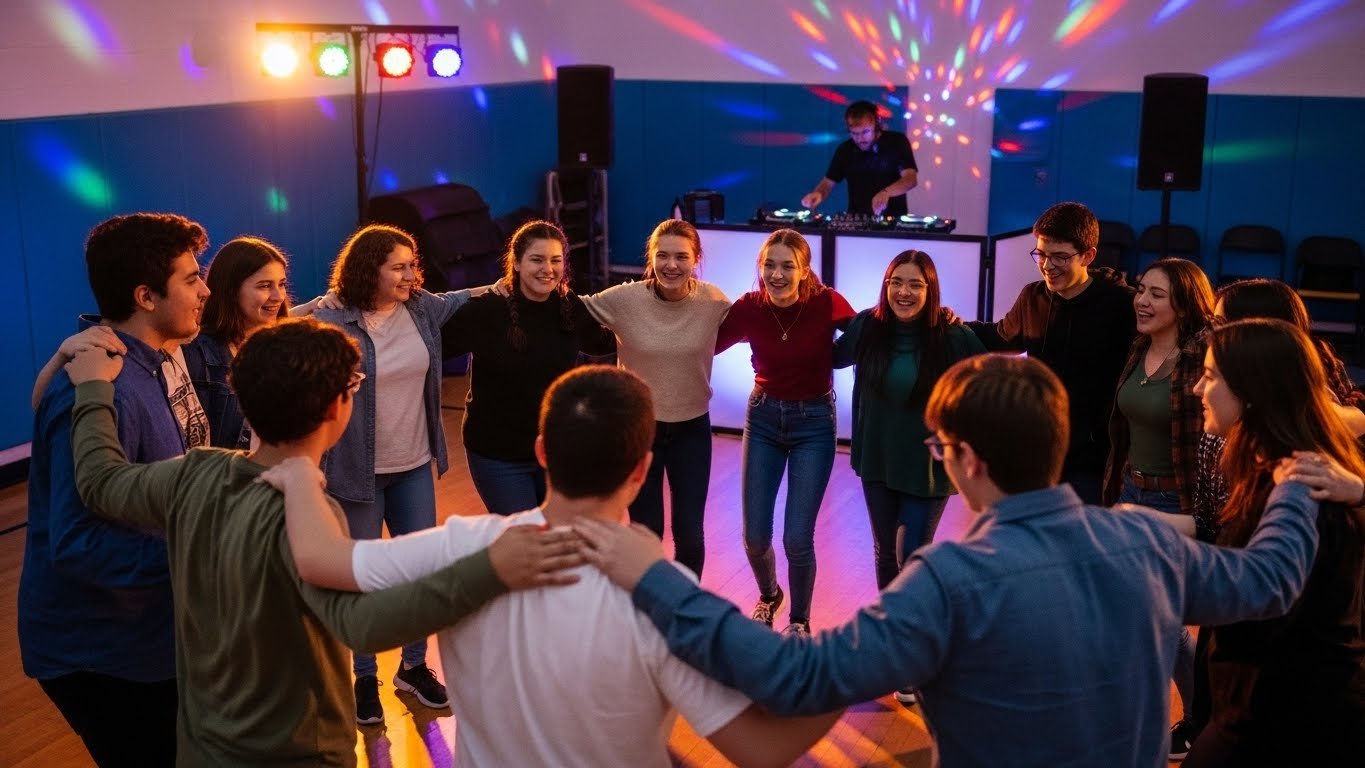
Other students took notice. One by one, classmates joined the pair on the dance floor, not in a way that drew unwanted attention but in a natural expansion of the social circle that had spontaneously formed. Within minutes, the young man who had been standing alone against the wall was surrounded by peers who were dancing, talking, and including him in the collective joy of the evening. Teachers watching from the perimeter found themselves moved to tears by the organic generosity unfolding before them.
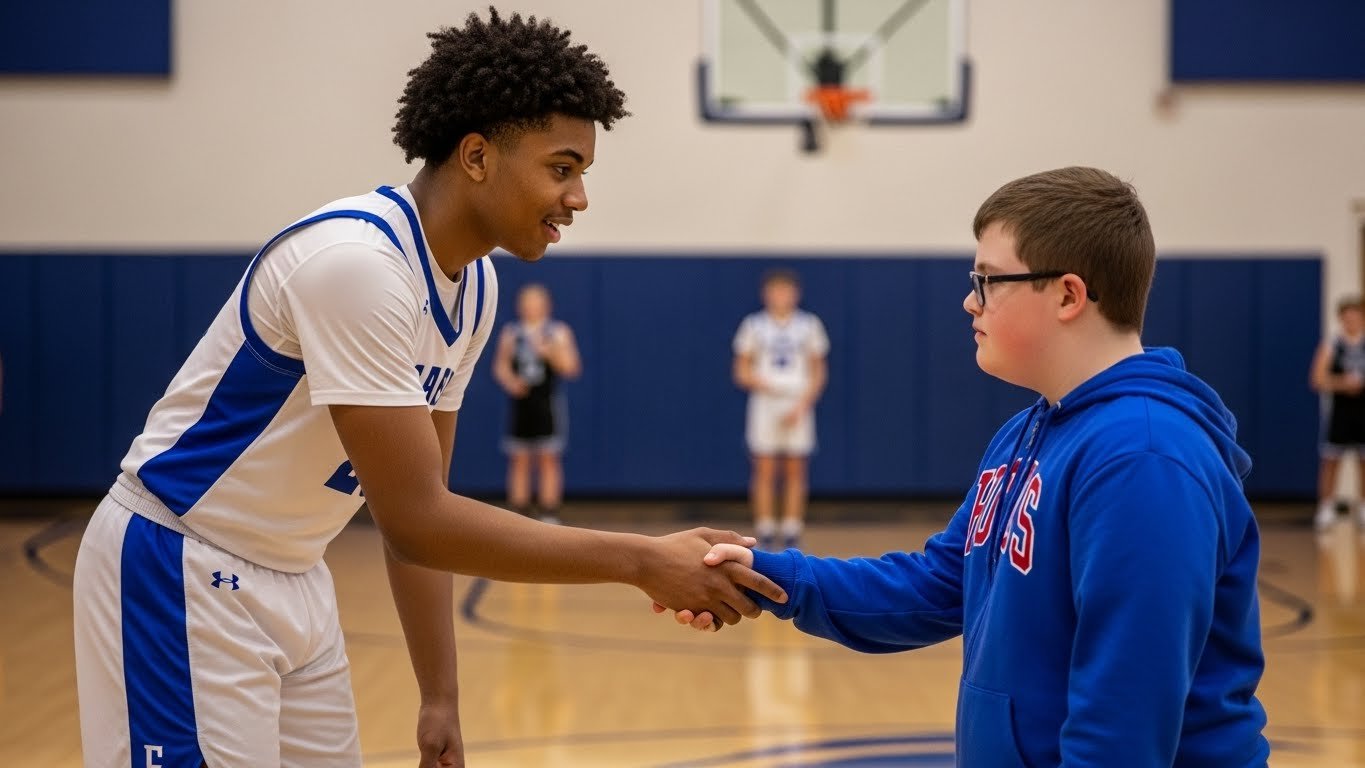
The young man danced for the remainder of the evening. He later told his parents that it was one of the best nights of his life, not because anything extraordinary had happened in the traditional sense, but because he had been treated as though he belonged. That sense of belonging, so fundamental to human well-being and so often denied to those who are perceived as different, had been freely given by peers who chose kindness over indifference.
What Inclusion Really Means
Autism advocacy organizations have long emphasized that true inclusion goes beyond physical proximity. Simply placing students with different neurological profiles in the same building as their peers does not constitute inclusion if social barriers remain intact. Genuine inclusion requires the kind of individual initiative demonstrated by the classmate at the dance: a willingness to bridge the gap between awareness and action, between knowing that someone is struggling and choosing to do something about it.
Research consistently shows that social inclusion during adolescence has profound effects on long-term outcomes for individuals on the autism spectrum. Positive peer interactions during the teenage years correlate with improved mental health, greater self-confidence, and better social functioning in adulthood. Every invitation to dance, every seat offered at a lunch table, and every genuine conversation initiated across neurological differences contributes to building a foundation that supports well-being for years to come.
Lessons Beyond the Dance Floor
The story of that homecoming dance continues to inspire conversations about what it means to create genuinely welcoming communities. Schools that have shared similar stories report increased awareness among students about the daily experiences of their peers with disabilities, and a growing recognition that small acts of inclusion carry enormous weight for those who receive them.
Perhaps the most enduring lesson from this evening is also the simplest: that extending a hand to someone standing alone costs nothing but can mean everything. The classmate who asked a young man with autism to dance did not solve the complex challenges of neurodiversity in a single gesture. But in that moment, standing on a gymnasium floor under flashing lights, two teenagers demonstrated something that every school, workplace, and community would benefit from remembering: that belonging is not something people should have to earn, but something we should freely offer to one another.
The broader implications of this story extend well beyond the individuals directly involved. It represents a growing recognition that creative thinking, sustained commitment, and genuine empathy can produce results that conventional approaches alone often fail to achieve. As awareness of developments like this one continues to spread through media coverage and personal sharing, the potential for inspiring similar initiatives in other communities and contexts grows exponentially.
Experts who have studied similar developments emphasize the importance of community engagement and sustained support in achieving lasting positive outcomes. When individuals, organizations, and institutions align their efforts toward shared goals, the resulting synergy produces impact that far exceeds what any single actor could accomplish independently. This collaborative approach to problem-solving has become increasingly recognized as essential for addressing the complex challenges that define our current era.