Dr. Seuss (aka Theodor Geisel) brought us over 60 tales covering topics like cats in hats, green eggs and ham, and elephants who can hear a Who. And soon, more than three decades after his death, we’ll be getting something new from the prolific children’s author: One of his long-unseen original manuscripts will be published for the first time by Random House Children’s Books.
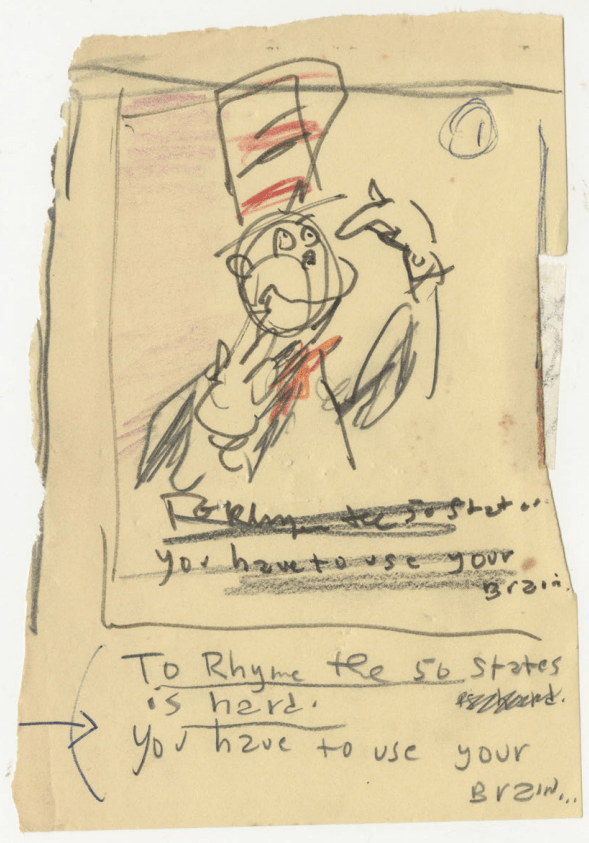
Titled Sing the 50 United States!, the story helps readers learn the names of the 50 states in true Dr. Seuss fashion — with lots of rhyming and wordplay. It will feature some familiar faces, including the iconic Cat in the Hat, as well as excerpts and sketches from Dr. Seuss’ original manuscript and a map of the U.S. beneath the book jacket.
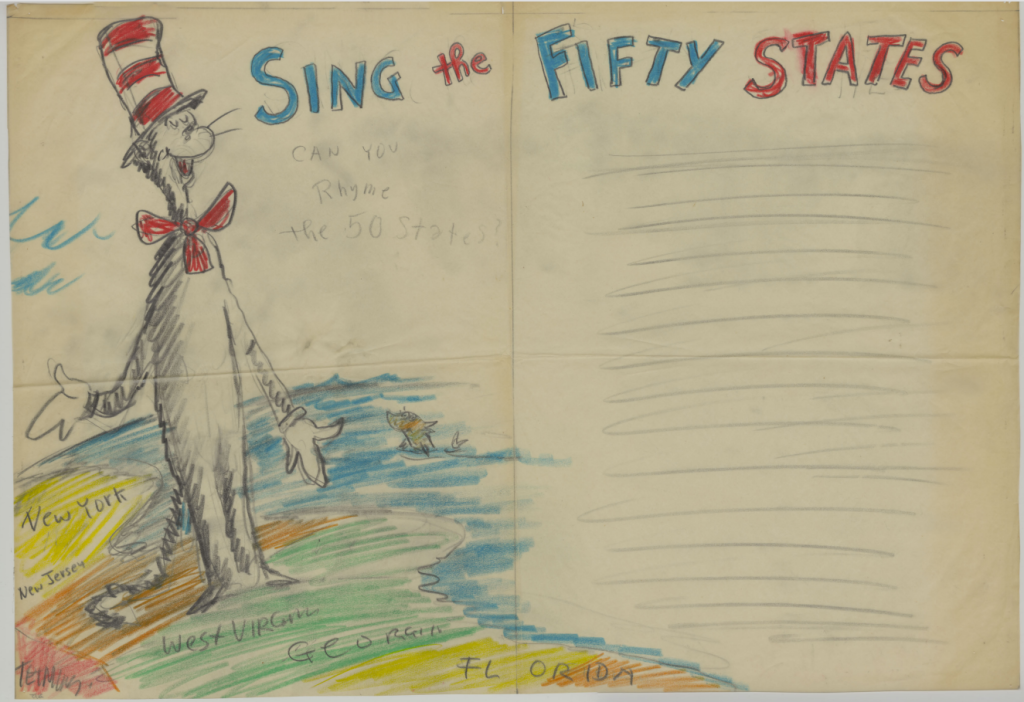
“To sing the 50 United States, you have to use your brain,” the publishing house said in a press release. “Massachusetts. Minnesota. Missouri and Montana. M-i-s-s-Mississippi. Maryland! Michigan and Maine!”
The states-themed story was discovered earlier this year in the archives of UC San Diego’s Geisel Library and will hit shelves June 2, 2026, just in time to celebrate the U.S.’s 250th birthday.
“Uncovering a new work from Ted is like finding a time capsule of his imagination,” Susan Brandt, the president and CEO of Dr. Seuss Enterprises, said in the release. “Sing the 50 United States! celebrates his boundless creativity, genius with words, and enduring ability to inspire young readers everywhere.”
In addition to the full manuscript, which is the first from the author to be discovered since What Pet Should I Get? was published in 2015, the book will include new illustrations in Dr. Seuss’ style from children’s book artist Tom Brannon. Dr. Seuss Enterprises will also release a music video on the Dr. Seuss YouTube channel that will pair with the text.

In honor of the first printing of 500,000 copies, Dr. Seuss Enterprises is partnering with Random House and nonprofit First Book to launch an initiative that will bring backpacks to kids. Participating students nationwide will receive a backpack with the new book, other Dr. Seuss works, and school supplies. And during next year’s back-to-school season, a special event will take place celebrating the project in Washington, D.C.

If you’re on the lookout for more Dr. Seuss-inspired content, a new The Cat in the Hat animated movie is also being released in November 2026. Visitors to UC San Diego’s library will also learn there’s plenty more memorabilia to discover: In 2014, over 1,500 materials from Dr. Seuss’ personal archive — including more unpublished projects — were donated to the institution’s Dr. Seuss Collection, which boasts more than 10,000 items.
“They add another dimension to the wealth of materials we already hold by illustrating how this amazingly creative man expanded on early ideas with new freshness,” Lynda Claassen, director of the library’s Special Collections & Archives, said in a news release at the time. “Clearly, he had many creative ideas that were never fully realized.”
Judith Haut, who oversees Dr. Seuss Publishing at Random House, said in the recent release that “finding an original Dr. Seuss story is something we dream of.” She added: “Sing the 50 United States! releasing in time for America’s 250th birthday makes for such a notable cultural and publishing moment, and we are so excited for young readers and their families to enjoy a special storytime together — a true hallmark of what makes Dr. Seuss books so enduring today.”
RELATED: Little Free Library Celebrates 200,000th Launch by Distributing Thousands of Books to Elementary Schools
Understanding animal behavior and ecology is crucial for developing effective conservation strategies that protect both individual species and the ecosystems they inhabit. Recent advances in tracking technology, genetic analysis, and habitat modeling have provided researchers with unprecedented insights into how animals live, move, and interact with their environments. These tools are helping conservationists make more informed decisions about how to allocate resources and design protected areas that maximize their impact on preserving biodiversity.
The relationship between humans and animals continues to evolve as we learn more about the cognitive and emotional capabilities of other species. Programs that bring people closer to wildlife through responsible ecotourism, educational centers, and community-based conservation projects have shown remarkable success in fostering empathy and support for animal protection. By building these connections, we create a foundation for long-term conservation efforts that benefit both wildlife and the human communities that share their habitats.
Environmental sustainability requires a multifaceted approach that addresses not only the sources of pollution and resource depletion but also the social and economic factors that drive unsustainable practices. Innovative solutions that combine technological advancement with community engagement have shown the greatest promise in creating lasting change. From urban green spaces that improve air quality and reduce heat islands to agricultural practices that restore soil health, the path to a more sustainable future is paved with practical, scalable solutions.
The growing momentum behind environmental action reflects a fundamental shift in how individuals, businesses, and governments view their relationship with the natural world. Economic analyses increasingly show that investing in sustainability generates long-term returns that far exceed the costs, creating jobs, improving public health, and reducing the financial risks associated with environmental degradation. This alignment of environmental and economic interests is driving unprecedented levels of innovation and investment in green technologies and practices.
Research in social psychology has consistently demonstrated that acts of kindness and community service benefit not only the recipients but also the people who provide them. Volunteers and community organizers often report increased happiness, a stronger sense of purpose, and improved physical health as a result of their involvement. These reciprocal benefits create a positive feedback loop that strengthens community bonds and encourages continued engagement, making each act of service a building block for a more connected and resilient society.
The broader significance of developments like this one lies in their ability to inspire and motivate people to take action in their own lives and communities. Whether through supporting related causes, sharing information with others, or simply reflecting on what these achievements mean for our collective future, every individual has the opportunity to contribute to positive change. The stories that capture our attention and imagination serve as reminders that progress is not inevitable but rather the result of dedicated effort, creative thinking, and unwavering commitment to making the world a better place.
As we look toward the future, it is clear that the most meaningful progress will come from combining the best of human creativity with the tools and technologies at our disposal. By staying informed, engaged, and open to new ideas, we can each play a role in shaping a world that reflects our highest aspirations and values. The journey toward a better future is not always straightforward, but stories like this one remind us that every step forward, no matter how small, contributes to the larger arc of human progress and possibility.