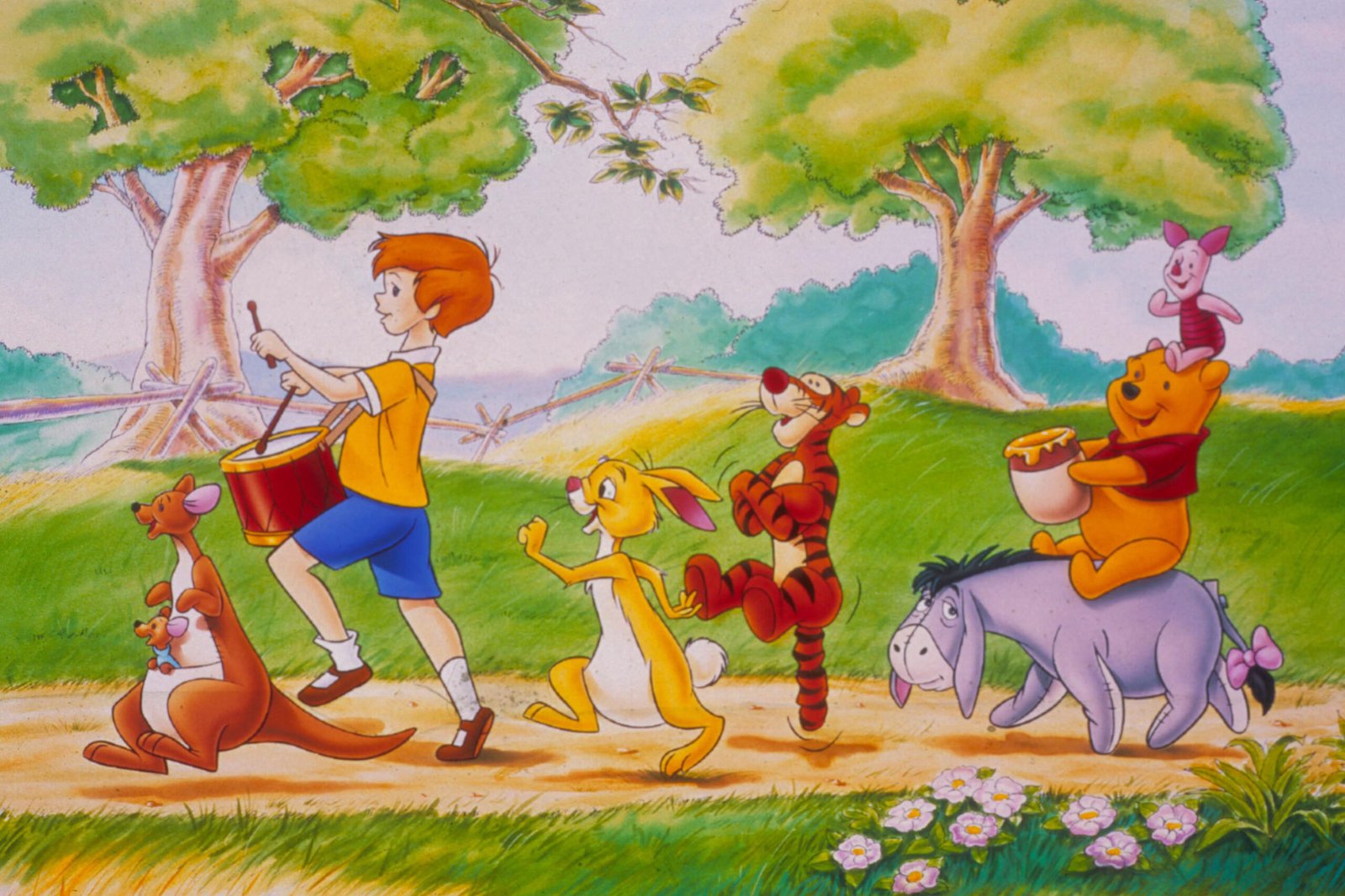
When A. A. Milne published his first Winnie the Pooh book nearly a century ago, the author couldn’t have predicted that his stories of adventures in the Hundred Acre Wood would be a fixture in childhoods for decades to come. And now, the beloved fictional teddy bear is reaching a major milestone: centenarian status.
Pooh was inspired by a real black bear named Winnie, who was rescued as an orphaned cub in Canada by a soldier during World War I, and later transferred to the London Zoo. According to History, a zookeeper once called Winnie “quite the tamest and best behaved bear we have ever had at the zoo.” Due to her gentle demeanor, children were even permitted to feed her by hand.
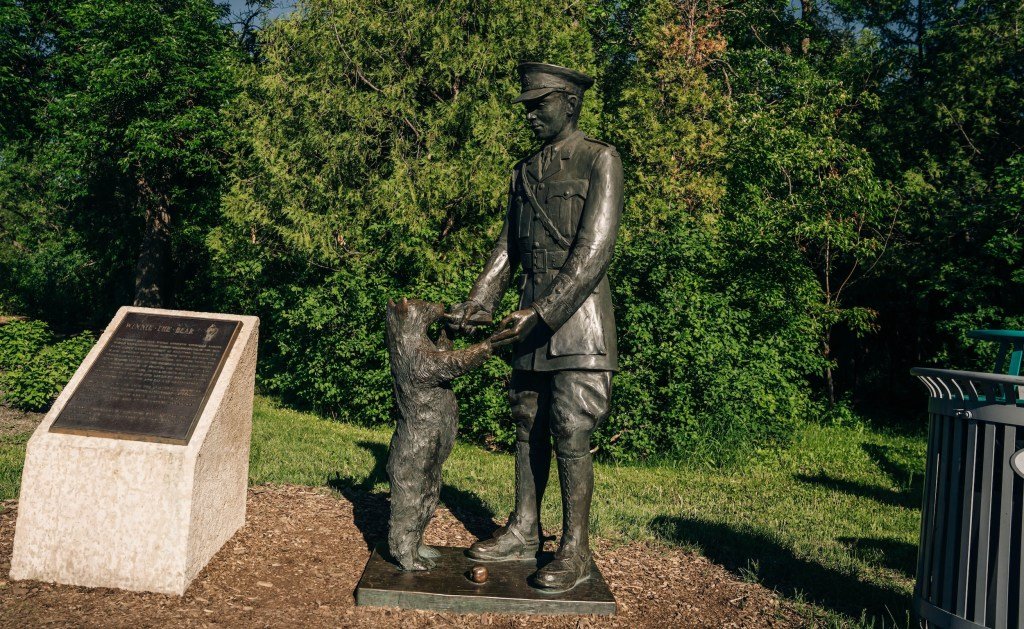
Statue of Lieutenant Harry Colebourn and Winnie the bear
She became a favorite among visiting kids — including Milne’s young son, Christopher Robin Milne, who changed the name of his own teddy bear to Winnie the Pooh. The stuffed animal sat in his nursery among other plushies with now-familiar names, like Piglet, Eeyore, and Tigger. His novelist father drew inspiration from the toy bear and introduced the character Winnie the Pooh in his 1924 children’s poetry book, When We Were Very Young, which was illustrated by Ernest H. Shepard.
The following year, Pooh made an appearance in a story called “The Wrong Sort of Bees” that was featured in the 1925 Christmas Eve edition of the London Evening News, but it wasn’t until Oct. 14, 1926 that Milne and Shepard published Winnie-the-Pooh — a book composed entirely of the bear’s stories. The character subsequently showed up in Now We Are Six, a 1927 sequel to When We Were Very Young, and The House at Pooh Corner, a 1928 follow-up to Winnie-the-Pooh.
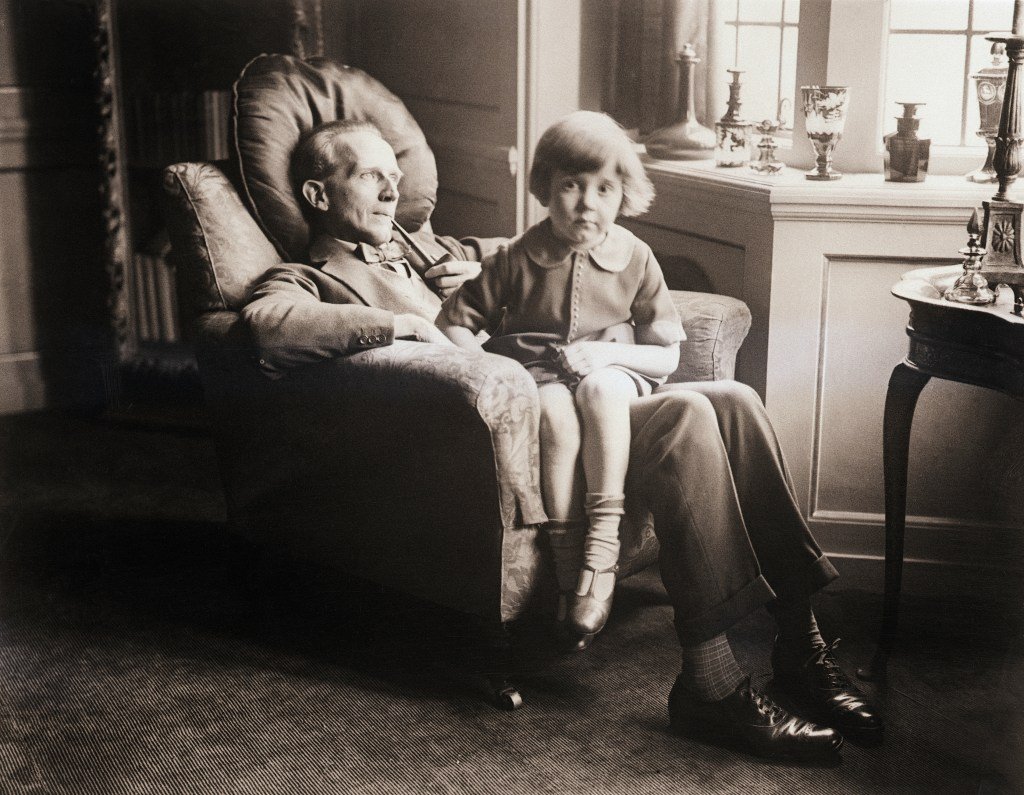
A. A. Milne and Christopher Robin Milne in 1925
Today, of course, Pooh’s reach has extended far beyond those early books. Over a dozen movies have been made featuring the bear, the first being The Many Adventures of Winnie the Pooh in 1977. In 2001, the Walt Disney Company bought the rights to the character for $350 million in what was, at the time, the largest literary contract in Britain. Visitors to Disney theme parks can now travel through the Hundred Acre Wood on Pooh-themed rides. And in January 2022, Milne’s original stories entered the U.S. public domain; in 2027, they are also set to enter the U.K. public domain.
In honor of the iconic bear’s centennial, plenty of celebrations are underway: This past October, children’s publisher Farshore unveiled new editions of the four previously mentioned books, which, according to a press release, feature new branding and jackets from award-winning designer Micaela Alcaino.
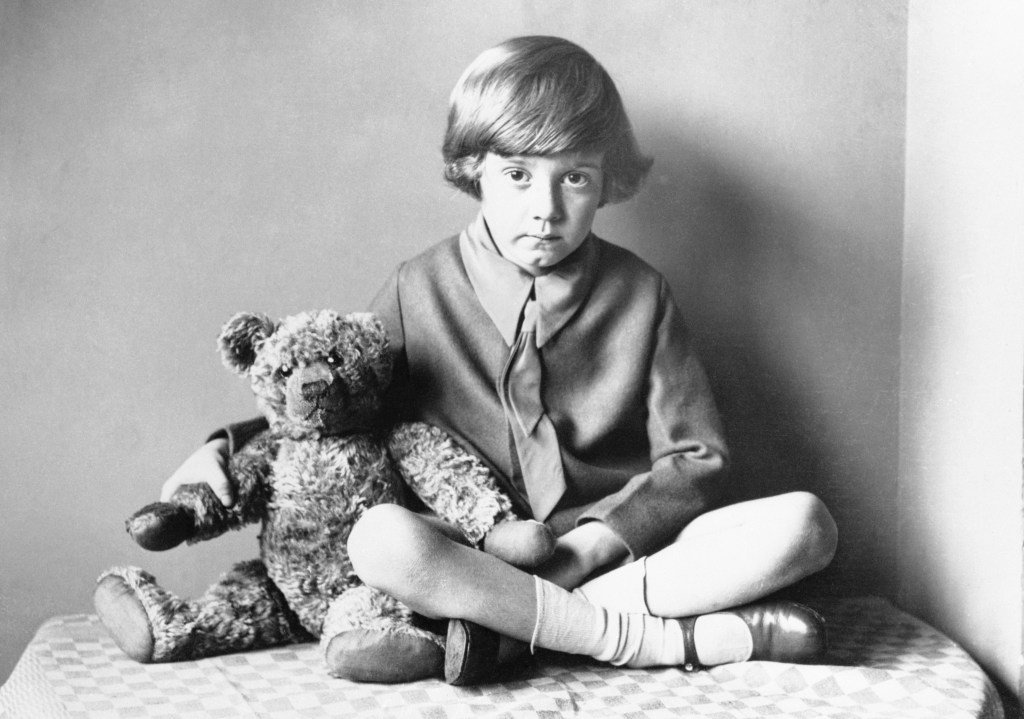
Christopher Robin Milne in 1925
“As twins who grew up reading, watching, and listening to Winnie the Pooh, to be part of its legacy is surreal,” Alcaino and her sister and collaborator, Stephanie Alcaino, wrote in an Instagram post. “Bringing together our backgrounds in branding and publishing, our goal was to create something that felt nostalgic and familiar, yet special for a new generation.”
On Halloween, Life magazine published a special edition honoring the bear’s imaginary world, and this past November, the Scottish Book Trust began using Winnie-the-Pooh artwork in its yearlong fundraising campaign for the Christmas Appeal 2025.

1926 illustration by Ernest H. Shepard
Fans can look forward to several other celebrations in 2026, including an exhibition and book trail highlighting archival material that will travel between multiple locations in England, along with events hosted by Farshore in the U.K. to celebrate the milestones. At least three new releases are also slated: A Little Boy and His Bear, an authorized sequel coming in October, as well as two picture books.
For Jane Riordan, who’s writing the sequel, the original books’ “universal appeal and wholesomeness” has helped them stand the test of time. “I think it’s because there are no adults in the books — which makes it such a free world,” she told The Irish News. “It’s just a little boy and his toys: There’s no one telling them it’s time for lunch or time for bed, it’s just fresh air, freedom, and adventure. I think that’s something we can all enjoy and relate to on some level.”
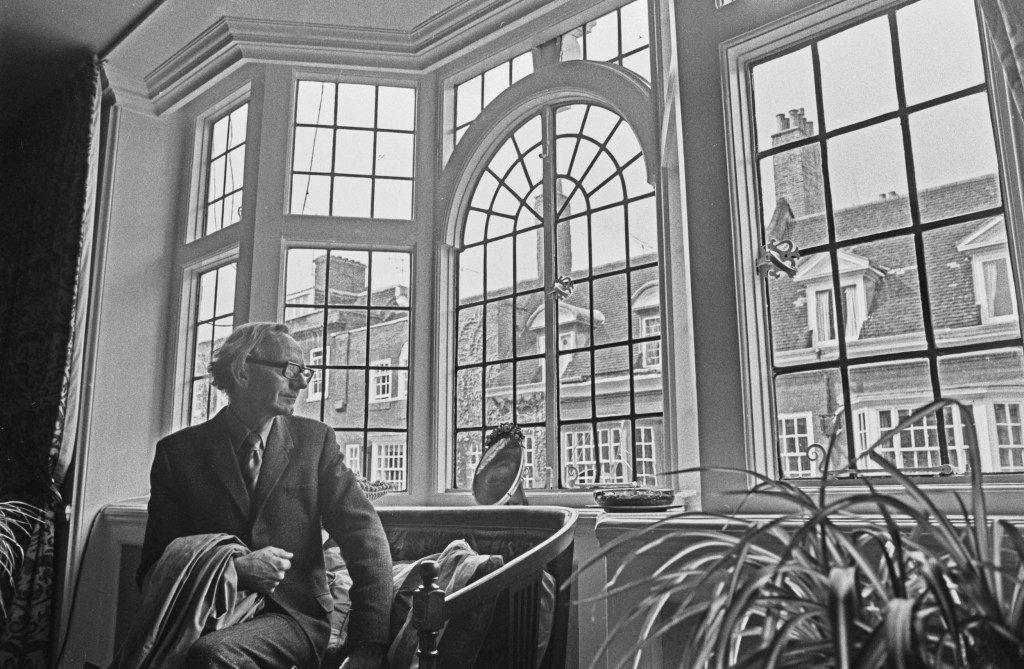
Christopher Robin Milne in 1974
RELATED: Start Spreading the News: The Rockettes Turn 100 This Year — Look Back on the NYC Dance Troupe’s History
Understanding animal behavior and ecology is crucial for developing effective conservation strategies that protect both individual species and the ecosystems they inhabit. Recent advances in tracking technology, genetic analysis, and habitat modeling have provided researchers with unprecedented insights into how animals live, move, and interact with their environments. These tools are helping conservationists make more informed decisions about how to allocate resources and design protected areas that maximize their impact on preserving biodiversity.
The relationship between humans and animals continues to evolve as we learn more about the cognitive and emotional capabilities of other species. Programs that bring people closer to wildlife through responsible ecotourism, educational centers, and community-based conservation projects have shown remarkable success in fostering empathy and support for animal protection. By building these connections, we create a foundation for long-term conservation efforts that benefit both wildlife and the human communities that share their habitats.
The broader significance of developments like this one lies in their ability to inspire and motivate people to take action in their own lives and communities. Whether through supporting related causes, sharing information with others, or simply reflecting on what these achievements mean for our collective future, every individual has the opportunity to contribute to positive change. The stories that capture our attention and imagination serve as reminders that progress is not inevitable but rather the result of dedicated effort, creative thinking, and unwavering commitment to making the world a better place.
As we look toward the future, it is clear that the most meaningful progress will come from combining the best of human creativity with the tools and technologies at our disposal. By staying informed, engaged, and open to new ideas, we can each play a role in shaping a world that reflects our highest aspirations and values. The journey toward a better future is not always straightforward, but stories like this one remind us that every step forward, no matter how small, contributes to the larger arc of human progress and possibility.