It’s Spina Bifida Awareness Month, the perfect time to spotlight two young athletes who haven’t let their diagnoses hold them back: Meet Liam, 12, and Mohammad, 14.
Born in Syria, Mohammad immigrated to the United States with his family and began receiving treatment at Shriners Children’s Northern California. The Sacramento resident developed a passion for basketball, playing in the wheelchair he uses for mobility and quickly becoming a star on his school’s team — his talent and positive attitude even earned him a spot as assistant coach.
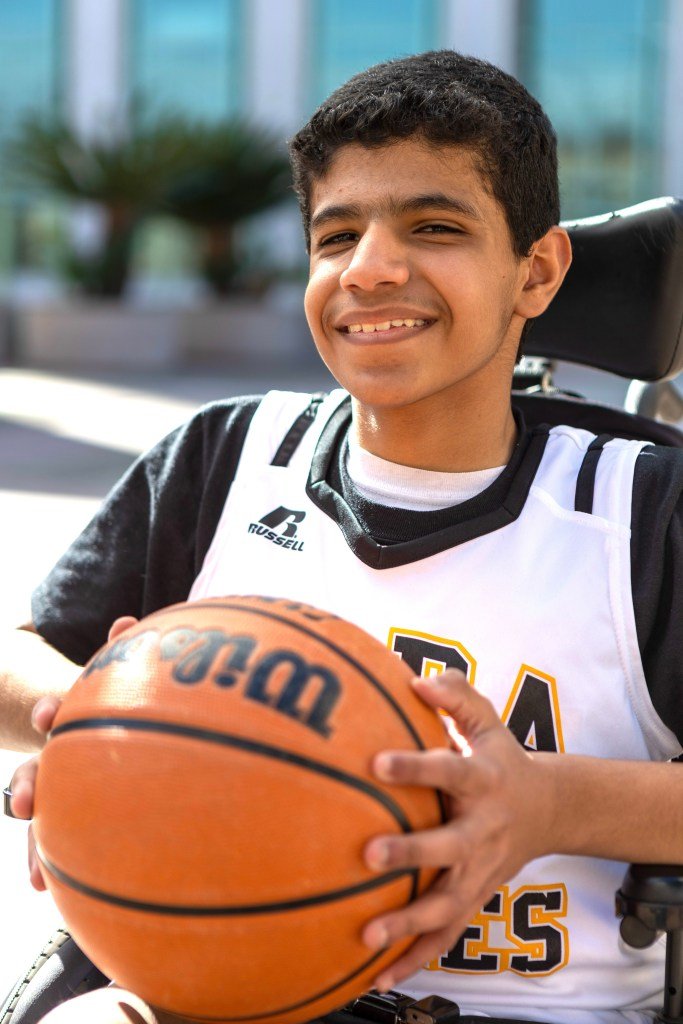
Mohammad
“I love coaching,” Mohammad told Nice News. “I know I can help keep the team motivated and inspired. I think the team looks to me for ongoing support and I know I can do that for them.”
Liam, who lives in St. Louis, Missouri, is similarly defying the odds, mastering basketball and jiujitsu in his wheelchair and regularly tearing it up on the dance floor (this video of his moves is a must-watch). His advice for other kids facing obstacles? “Do what’s hard and never stop trying new things. You might have to do it a little differently than someone else, but it’s really fun to try a bunch of new activities,” he said, adding: “If you do things that seem hard, it will feel even better when you accomplish them.”
Mohammad — whose basketball team created a special play for him called the “Mohammad Shield,” which involves his teammates forming a square around him on the court while he drives to the basket and shoots — expressed a similar sentiment.
“The most important thing to remember is not to give up,” he said. “Keep going. Life is full of setbacks, no matter who you are or where you’re from. But keep your head up and keep going. It’s important to be persistent. For other kids living with disabilities, remember that things may need some adjustments and look a little different, but you can do anything that any other kid can do. Don’t be afraid to put yourself out there and try. Be confident and don’t be afraid to share who you are with others. Because you can inspire and motivate so many other people.”
The “Mohammad Shield”
It’s clear that for both Liam and Mohammad, their parents’ support and unwavering belief in their capabilities has played a large role in the adolescents’ achievements.
“We were told very early on, ‘Liam will only know what he’s not supposed to do if you tell him,’” explained Liam’s dad, Rob. “So we never told him he wasn’t able to do an activity he wanted to try.”
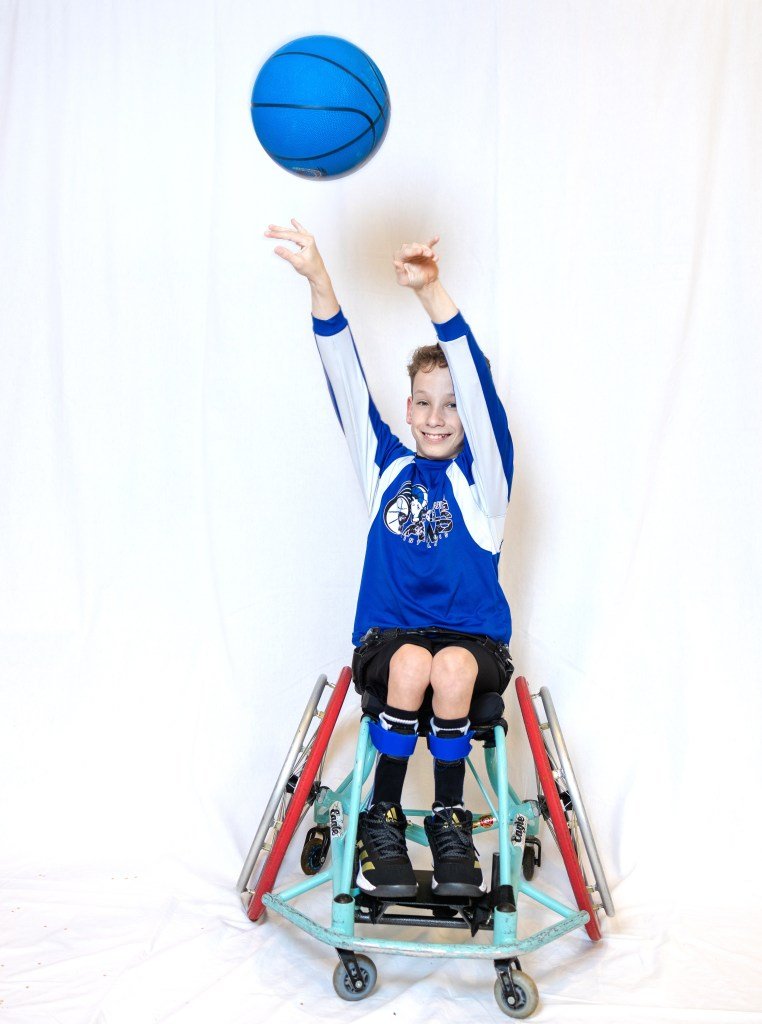
Liam
“What makes us most proud is not the particular activity or the individual accomplishments, but watching him push himself past where he thinks his limits are and find that the limit is actually much further than he realized,” he continued.
For Mohammad’s father, Bassam, his son is the embodiment of what dedication and a positive attitude can accomplish.
“People should not underestimate people with physical limitations,” he said. “My son is living proof of this. My son can do anything he puts his mind to.”
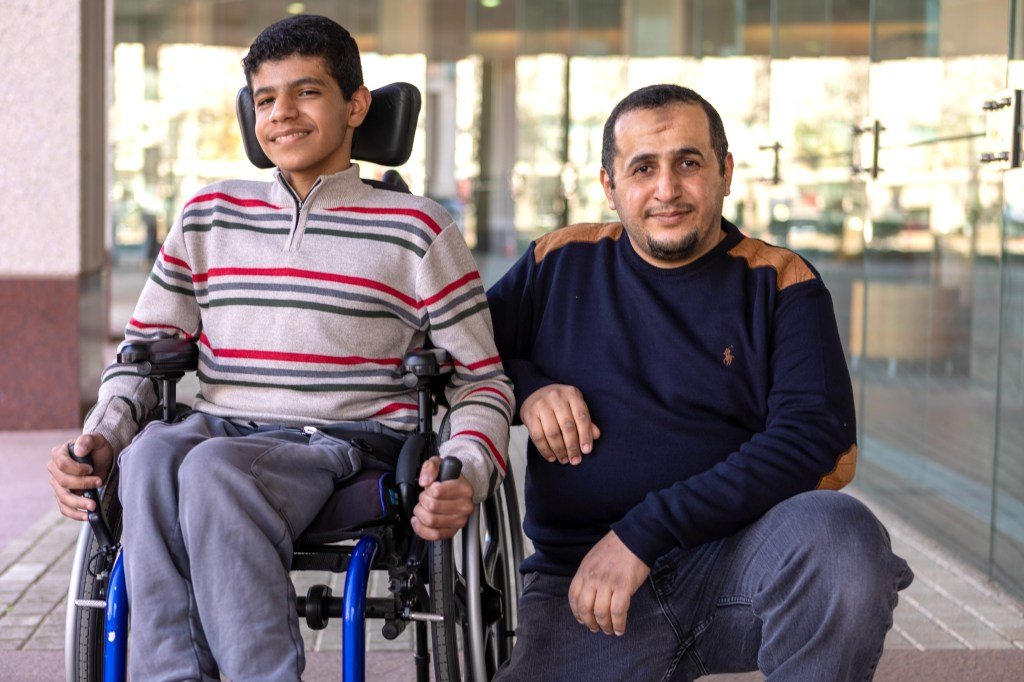
Mohammad and his father
And Mohammad plans to put his mind to some big endeavors in the future. “My favorite basketball player is De’Aaron Fox on the Sacramento Kings,” he shared. “I hope to be the Sacramento Kings head coach someday, or assistant coach. Helping to coach this year made me realize this is possible for me.”
RELATED: Rising Country Musician Trevor Martin on Living With Hemophilia, Inspiring Others to Pursue Their Passions
Experts in the field have noted that discoveries like this one are part of a broader trend toward more personalized and preventive healthcare. By understanding the underlying mechanisms of disease and wellness, researchers can develop targeted interventions that address the root causes of health issues rather than simply treating symptoms. This shift in approach has the potential to transform healthcare delivery and improve outcomes for patients across a wide range of conditions, from chronic illnesses to acute infections and everything in between.
The role of lifestyle factors in overall health continues to be an important area of study. Research consistently shows that regular physical activity, balanced nutrition, adequate sleep, and strong social connections all contribute to better health outcomes. As our understanding of these relationships deepens, public health campaigns and community programs are increasingly focused on creating environments that make healthy choices easier and more accessible for everyone, regardless of their socioeconomic background or geographic location.
Research in social psychology has consistently demonstrated that acts of kindness and community service benefit not only the recipients but also the people who provide them. Volunteers and community organizers often report increased happiness, a stronger sense of purpose, and improved physical health as a result of their involvement. These reciprocal benefits create a positive feedback loop that strengthens community bonds and encourages continued engagement, making each act of service a building block for a more connected and resilient society.
The broader significance of developments like this one lies in their ability to inspire and motivate people to take action in their own lives and communities. Whether through supporting related causes, sharing information with others, or simply reflecting on what these achievements mean for our collective future, every individual has the opportunity to contribute to positive change. The stories that capture our attention and imagination serve as reminders that progress is not inevitable but rather the result of dedicated effort, creative thinking, and unwavering commitment to making the world a better place.
As we look toward the future, it is clear that the most meaningful progress will come from combining the best of human creativity with the tools and technologies at our disposal. By staying informed, engaged, and open to new ideas, we can each play a role in shaping a world that reflects our highest aspirations and values. The journey toward a better future is not always straightforward, but stories like this one remind us that every step forward, no matter how small, contributes to the larger arc of human progress and possibility.