

Caregivers at a Pennsylvania retirement community walked into work this past fall to a sweet surprise: Resident Eva Lu Damianos had been secretly painting their portraits for months, and each of their likenesses was on display in the wellness center.

The 90-year-old was inspired to paint the 18 health care workers following a particularly difficult time. After she broke her leg over the summer, her doctor ordered her to refrain from standing on it for 10 weeks. Not only did the team at Longwood at Oakmont’s nursing center help turn the long days of recovery into “a really good experience,” Damianos told Nice News, but they also became her “cheerleaders” — prompting her to thank them through art.

“It’s a wonderful feeling to know you are appreciated and seen,” Longwood certified nursing assistant Billy Maxim-Brenner said in a release about the portraits. Added fellow certified nursing assistant Erica Sibley: “It feels good that someone would paint a picture of me. I love the connection we have with residents. I love that I get to put a smile on their face and let them know they’re cared for.”

Damianos is no novice painter. Her love for the craft began when she studied fine arts at Carnegie Mellon University from 1953-1957. In the years since, she’s taught classes at the university, held private shows at locations like The Carnegie Museum of Art, and been commissioned by organizations like the Pittsburgh Center for the Arts.
When Damianos moved into Longwood eight years ago, she pivoted from painting large acrylic canvases, which the center doesn’t have space for, to watercolor. While she’s largely stayed away from portraits, she explained that the nurses, aides, and therapists were “very patient, very upbeat, always pleasant” during her recovery — so she took their pictures and saved them for when she was able to paint again.

One nursing assistant in particular left a strong impression on Damianos: She would come into her room in the mornings to wake her up by simply opening the blinds. “I said to her, ‘Why are you so quiet? I do hear you, but it’s so gentle awakening, just to have you open the blinds,’” Damianos recounted. “And she said, ‘When I was a young mother, I awakened my children by putting a warm washcloth on their face.’ I thought, that is incredible. Who would do that for their kids? And she was that type of person.”
So once Daimanos transitioned from a wheelchair to a walker, she spent two months completing the portraits. She’d occasionally work on two at a time, starting the second while the first was drying. Some would come together in eight or nine hours, while others required the artist to split the work up over several sessions.
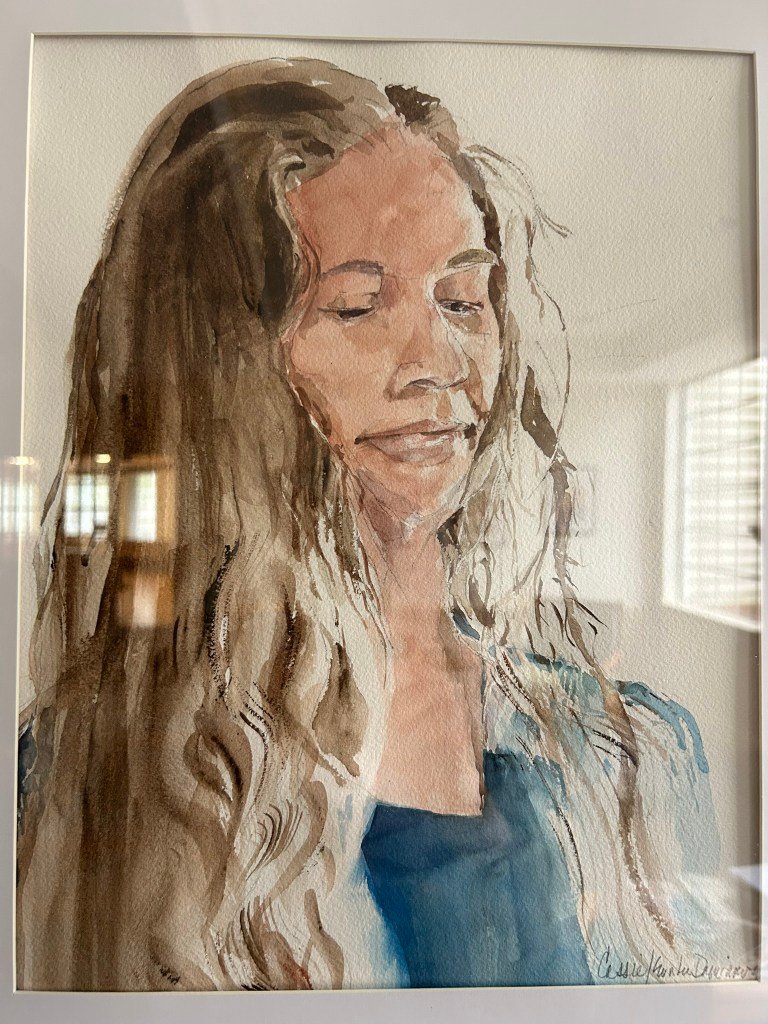
By the time they were all complete, the team had mostly forgotten about the pictures she’d taken of them. But when they were able to see their portraits at the wellness center throughout November and December, “they were very pleased,” Damianos said, adding that one of the physical therapists “showed me a picture that he took of himself, a selfie, beside his portrait, and he said, ‘Look, it really looks like me.’”
That was a sign of a job well done for Damianos. The real gift of the whole experience, though, was the relationships she built along the way. On Dec. 28, she gifted the portraits to the team members during a reception, and on the day of our interview (Jan. 9), Damianos ran into three of her caregivers.
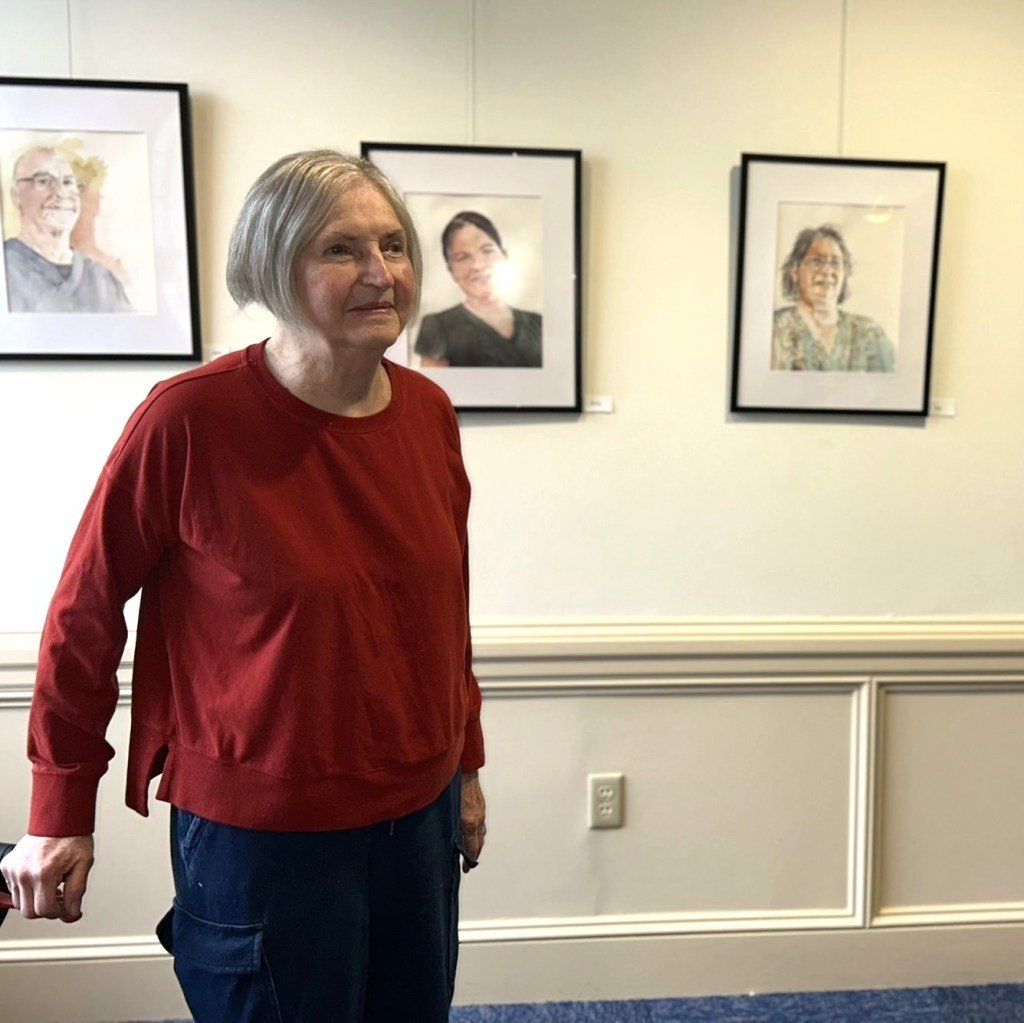
“They came over and said how much they really enjoyed their portraits. So three different people that I’ve seen subsequent to the paintings, and to the reception and so forth, came up and remarked again about how pleased they were. So that was very special,” she said. “And I feel that they’re like friends now. They give me hugs, I give them hugs, and it’s just very, very nice.”
RELATED: Artist’s Nature-Inspired Murals Give Cancer Patients a Room With a View: “I Want Them to Feel Transported”
Experts in the field have noted that discoveries like this one are part of a broader trend toward more personalized and preventive healthcare. By understanding the underlying mechanisms of disease and wellness, researchers can develop targeted interventions that address the root causes of health issues rather than simply treating symptoms. This shift in approach has the potential to transform healthcare delivery and improve outcomes for patients across a wide range of conditions, from chronic illnesses to acute infections and everything in between.
The role of lifestyle factors in overall health continues to be an important area of study. Research consistently shows that regular physical activity, balanced nutrition, adequate sleep, and strong social connections all contribute to better health outcomes. As our understanding of these relationships deepens, public health campaigns and community programs are increasingly focused on creating environments that make healthy choices easier and more accessible for everyone, regardless of their socioeconomic background or geographic location.
Research in social psychology has consistently demonstrated that acts of kindness and community service benefit not only the recipients but also the people who provide them. Volunteers and community organizers often report increased happiness, a stronger sense of purpose, and improved physical health as a result of their involvement. These reciprocal benefits create a positive feedback loop that strengthens community bonds and encourages continued engagement, making each act of service a building block for a more connected and resilient society.
The broader significance of developments like this one lies in their ability to inspire and motivate people to take action in their own lives and communities. Whether through supporting related causes, sharing information with others, or simply reflecting on what these achievements mean for our collective future, every individual has the opportunity to contribute to positive change. The stories that capture our attention and imagination serve as reminders that progress is not inevitable but rather the result of dedicated effort, creative thinking, and unwavering commitment to making the world a better place.
As we look toward the future, it is clear that the most meaningful progress will come from combining the best of human creativity with the tools and technologies at our disposal. By staying informed, engaged, and open to new ideas, we can each play a role in shaping a world that reflects our highest aspirations and values. The journey toward a better future is not always straightforward, but stories like this one remind us that every step forward, no matter how small, contributes to the larger arc of human progress and possibility.


