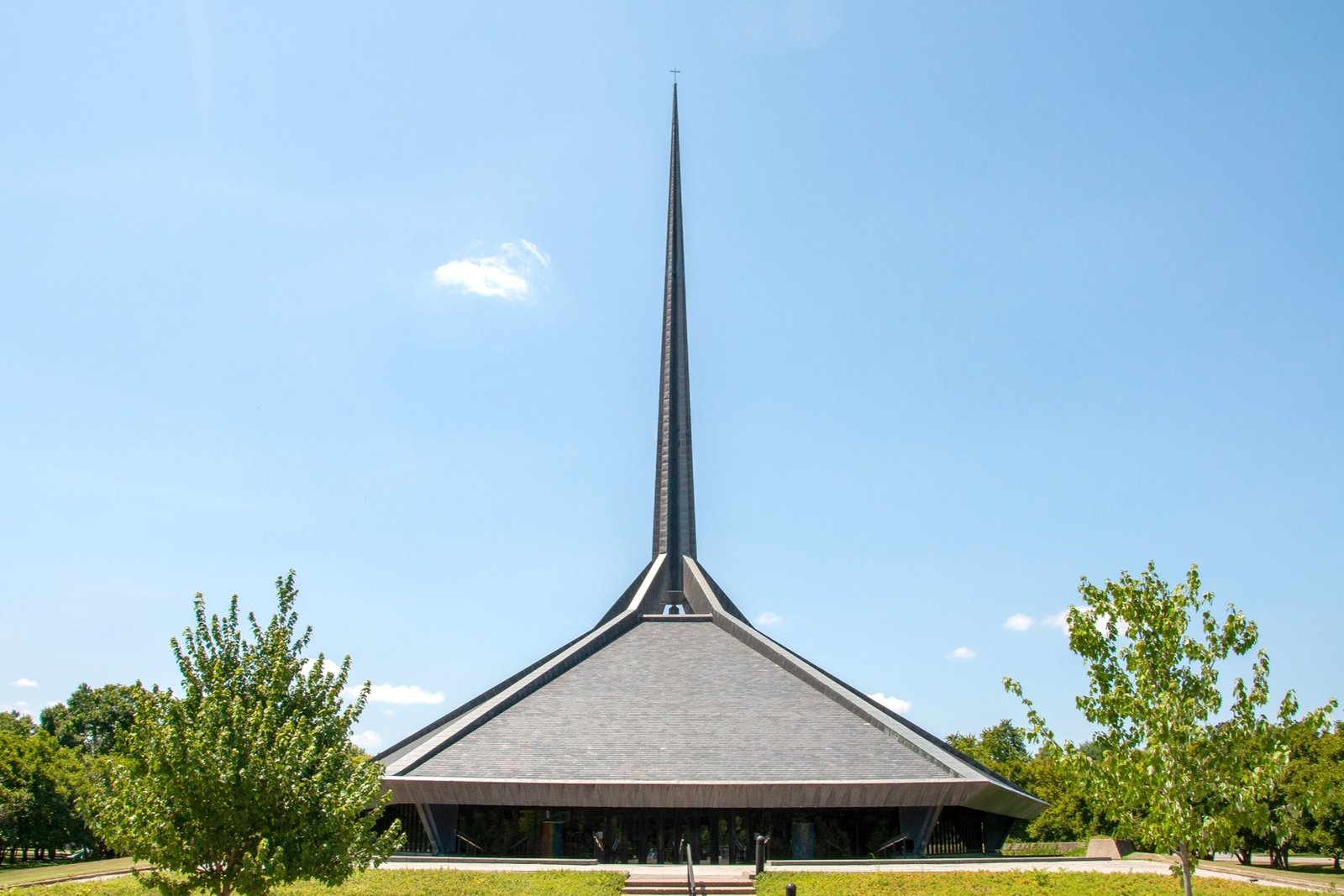
From a distance, renderings of an air traffic control tower that will begin construction later this year bear a striking resemblance to the titular robot in WALL-E — up close, it looks like it could blend right in to any sci-fi movie. You might expect a tower like this to loom over an airport in New York City or Miami, but the sleek structure is being built in a small city less than an hour away from Indianapolis: Columbus, Indiana.
And it’s not an anomaly. In the heart of the Midwest lies a hot spot of modern American architecture, a title Columbus has claimed since the 1950s, and rightfully so — if you know where to look. The city’s church, library, and fire station are among the dozens of everyday buildings boasting stunning designs. Thanks to Columbus’ architectural prowess, it landed in sixth place on the American Institute of Architects’ 2012 ranking of the nation’s most significant cities for design innovation and heritage, per Artsy.
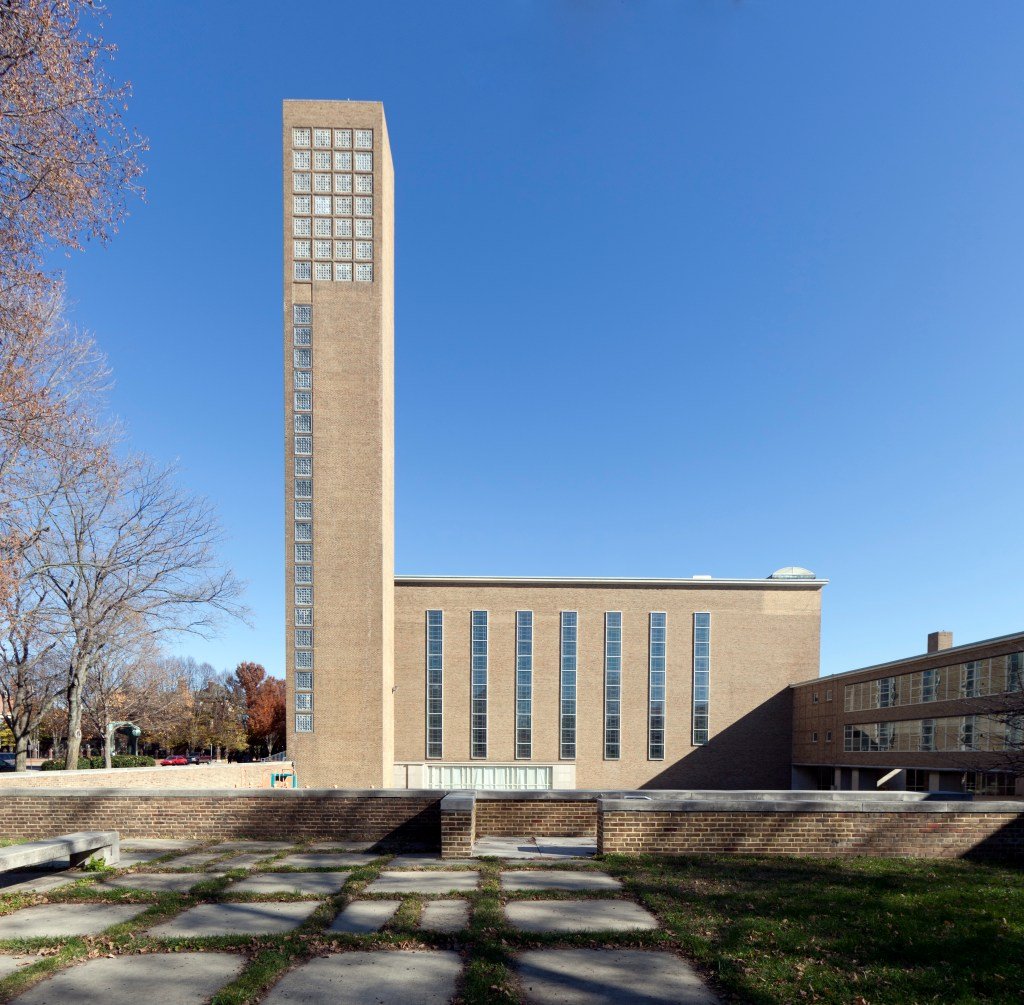
But out of all the locales in the U.S., why did designers choose Columbus? Back in 1942, Finnish-American architect Eliel Saarinen designed the city’s First Christian Church, one of the original contemporary churches in the country. Instead of following the Victorian style popular at the time, Saarinen constructed a rectangular box with mostly buff brick and limestone next to a 166-foot-high bell tower that still stands today.
This stylistic departure set Columbus on a new architectural path, on which prominent industrialist J. Irwin Miller took the next significant step in 1954. Recognizing the power of innovative infrastructure, he launched the Cummins Foundation Architecture Program with a mission of paying the architectural fees for any modernist public building in the city — and the program’s first grant went to a middle school.
“The influence of architecture with which we are surrounded in our youth affects our lives, our standards, [and] our tastes when we are grown, just as the influence of the parents and teachers with which we are surrounded in our youth affects us as adults,” Miller said, according to Visit Columbus Indiana.
Three years later, Miller brought the city’s architectural mastery right into his own home. Eero Saarinen, Eliel’s son, designed a house for Miller that boasted an array of signature midcentury modern features: steel and glass materials, a flat roof, and an open, expansive layout.
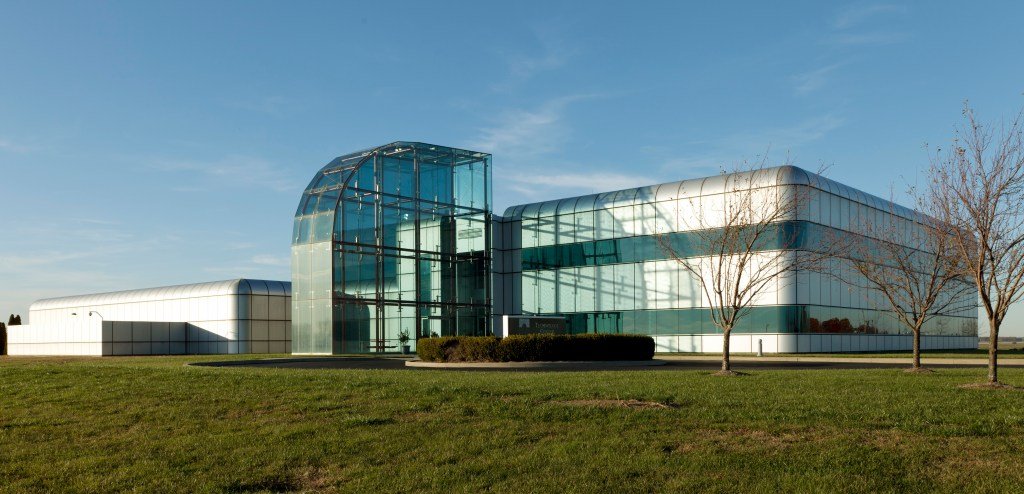
It was one of many cutting-edge buildings that sprouted from Columbus following the program’s debut. In 1970, the now-obsolete publication Architectural Forum estimated that from 1954 on, around two “modern masterpieces” were constructed each year in the city, Artsy notes. A couple others include the Cleo Rogers Memorial Library, with its concrete waffled ceiling and distinctive brick exterior, and The Republic Newspaper Office and Printing Plant, featuring glass walls on an aluminum frame. Structures like these led The Saturday Evening Post to famously call the city “Athens on the Prairie,” per Bloomberg, a nickname that’s stuck to present day.
By 1992, Miller’s involvement in Columbus’ architecture ended with his last project, Mill Race Park. In the decade following his death in 2004, the industry shifted and expanded to include more involvement from local leaders.
“Columbus relies on incentives and a community-based approach,” Richard McCoy, founding executive director of the Landmark Columbus Foundation, told Bloomberg. “There really aren’t any policies in place. There’s no historic preservation committee, no city-run landmarks committee like you see in Chicago or New York. Columbus has never had a historic preservation commission even though they’re quite common around Indiana.”
Still, Miller’s spirit has lived on. The reputation he forged for the city has been enough to continually attract renowned architects — like Marlon Blackwell, who’s spearheading the airport control tower mentioned earlier, and the team at Höweler+Yoon, who are designing a new elementary school. And if you’d like to take a peek inside Miller’s personal life, his home is now open to the public as part of the Indianapolis Museum of Art’s permanent collection.
“It’s the start of a culture shift, it’s different from what was happening at the peak of the ’60s and ’70s, maybe more community-engaged,” McCoy said. “I’m really optimistic about where it can go.”
RELATED: Architect Frank Lloyd Wright Made “the World a Better One for Living in” Through His Designs: Dive Into 4 Iconic Works
Experts in the field have noted that discoveries like this one are part of a broader trend toward more personalized and preventive healthcare. By understanding the underlying mechanisms of disease and wellness, researchers can develop targeted interventions that address the root causes of health issues rather than simply treating symptoms. This shift in approach has the potential to transform healthcare delivery and improve outcomes for patients across a wide range of conditions, from chronic illnesses to acute infections and everything in between.
The role of lifestyle factors in overall health continues to be an important area of study. Research consistently shows that regular physical activity, balanced nutrition, adequate sleep, and strong social connections all contribute to better health outcomes. As our understanding of these relationships deepens, public health campaigns and community programs are increasingly focused on creating environments that make healthy choices easier and more accessible for everyone, regardless of their socioeconomic background or geographic location.
Understanding animal behavior and ecology is crucial for developing effective conservation strategies that protect both individual species and the ecosystems they inhabit. Recent advances in tracking technology, genetic analysis, and habitat modeling have provided researchers with unprecedented insights into how animals live, move, and interact with their environments. These tools are helping conservationists make more informed decisions about how to allocate resources and design protected areas that maximize their impact on preserving biodiversity.
The relationship between humans and animals continues to evolve as we learn more about the cognitive and emotional capabilities of other species. Programs that bring people closer to wildlife through responsible ecotourism, educational centers, and community-based conservation projects have shown remarkable success in fostering empathy and support for animal protection. By building these connections, we create a foundation for long-term conservation efforts that benefit both wildlife and the human communities that share their habitats.
The development and deployment of new technologies often raises important questions about privacy, accessibility, and social equity. Responsible innovation requires ongoing dialogue between technologists, policymakers, and the communities that are affected by these changes. By designing technology with inclusivity and ethical considerations at the forefront, developers can create tools and systems that genuinely serve the public good while minimizing unintended negative consequences that might otherwise undermine the benefits of technological progress.
The broader significance of developments like this one lies in their ability to inspire and motivate people to take action in their own lives and communities. Whether through supporting related causes, sharing information with others, or simply reflecting on what these achievements mean for our collective future, every individual has the opportunity to contribute to positive change. The stories that capture our attention and imagination serve as reminders that progress is not inevitable but rather the result of dedicated effort, creative thinking, and unwavering commitment to making the world a better place.
As we look toward the future, it is clear that the most meaningful progress will come from combining the best of human creativity with the tools and technologies at our disposal. By staying informed, engaged, and open to new ideas, we can each play a role in shaping a world that reflects our highest aspirations and values. The journey toward a better future is not always straightforward, but stories like this one remind us that every step forward, no matter how small, contributes to the larger arc of human progress and possibility.