This article was originally written by Dean Murray for SWNS — the U.K.’s largest independent news agency, providing globally relevant original, verified, and engaging content to the world’s leading media outlets.
Two era-defining documents that ended slavery and reshaped United States history are going under the hammer.
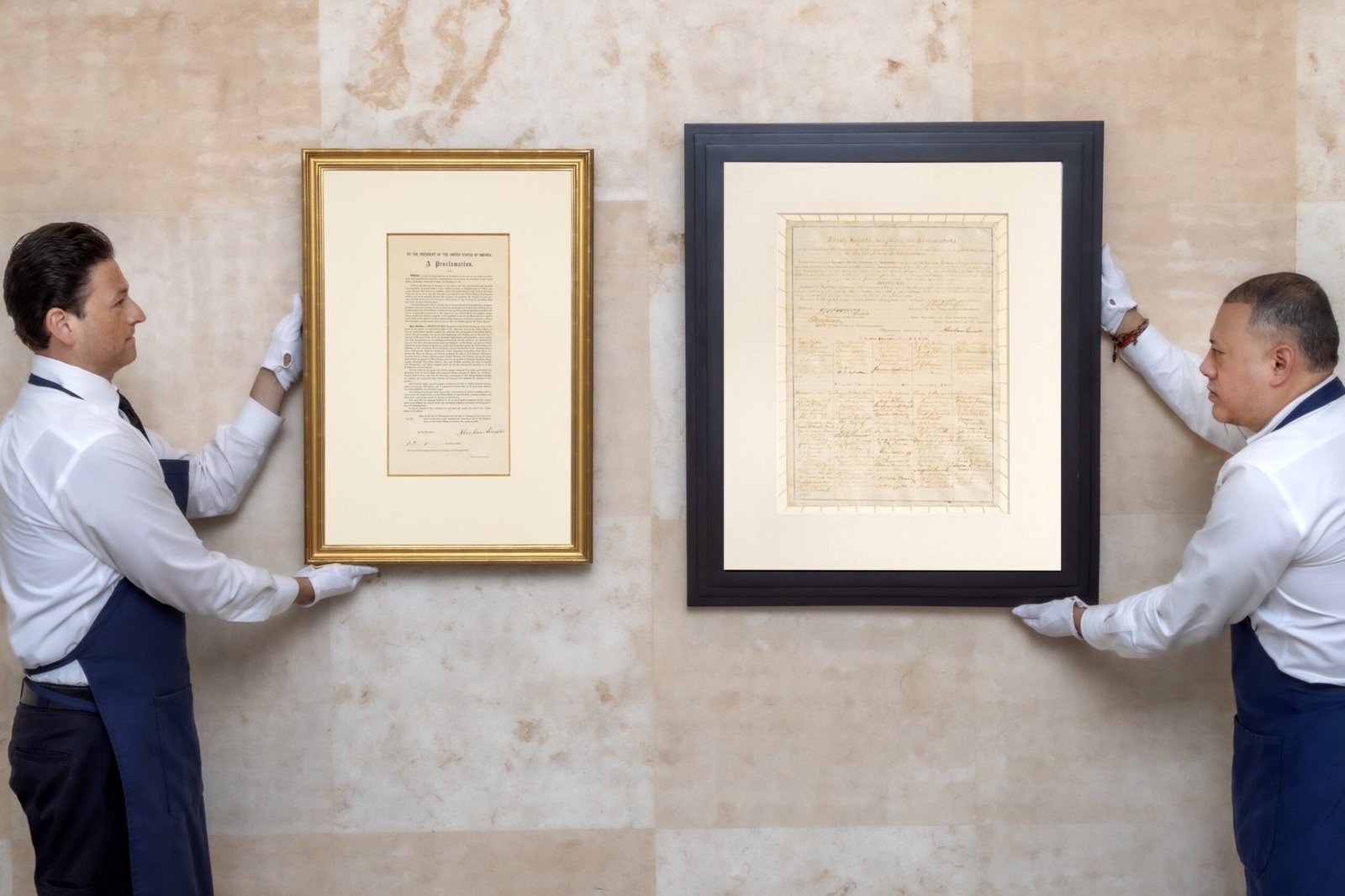
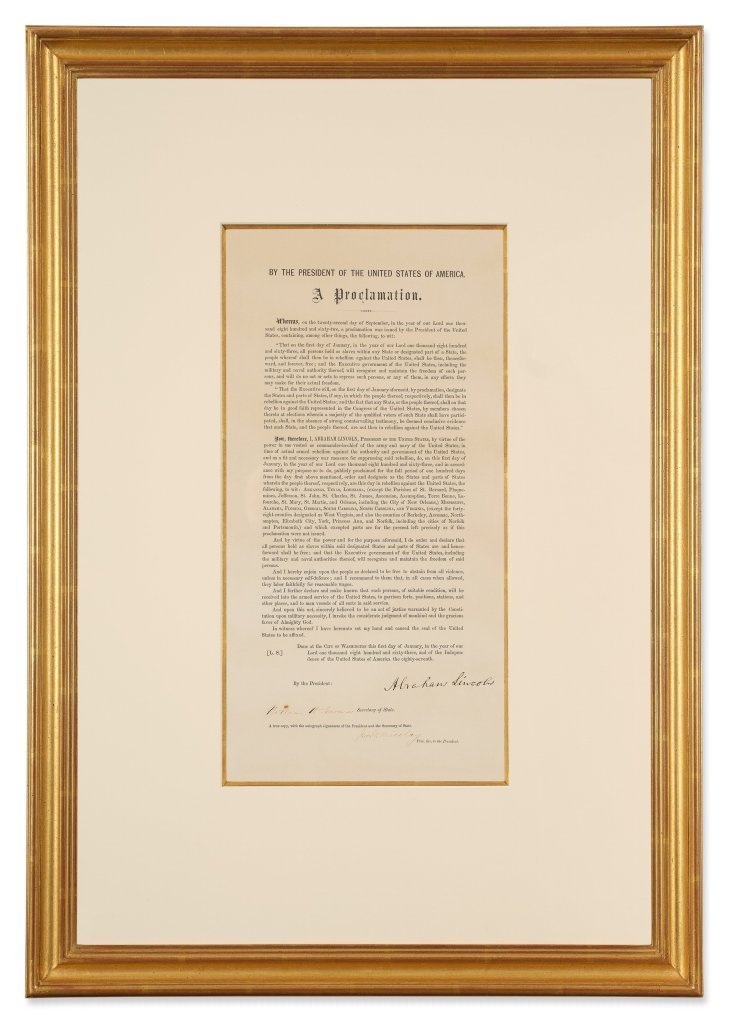
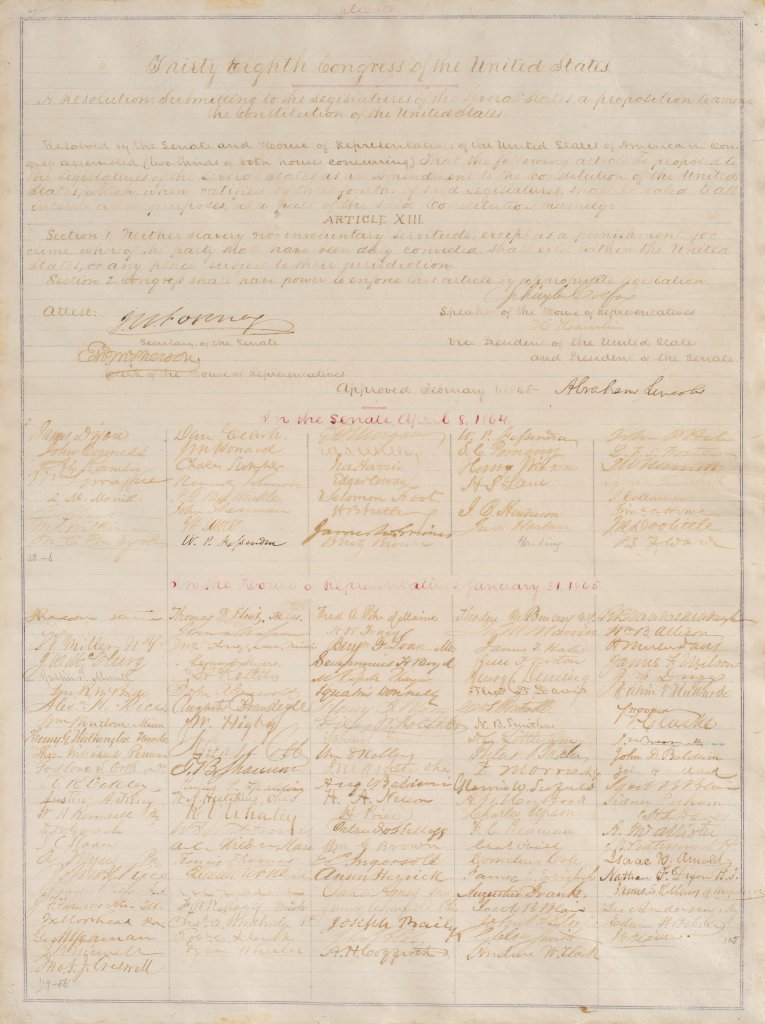
The copies of the 13th Amendment (estimated at $8 million to $12 million) and the Emancipation Proclamation (estimated at $3 million to $5 million) are both signed by President Abraham Lincoln — and the landmark documents, rarely seen together, will headline Sotheby’s Fine Books and Manuscripts auction in New York on June 26.
They offer collectors a rare glimpse into the enduring legacy of Lincoln’s vision for the legal abolition of slavery. While the Emancipation Proclamation introduced partial emancipation, the 13th Amendment was the first instance in which abolition was enshrined in U.S. law. The latter’s ratification in 1865 marked the first change to the Constitution in 60 years.
According to Sotheby’s, the documents are considered the most valuable copies of their kind ever to reach auction. Their appearance together at the event commemorates a pivotal moment in the nation’s history, as well as Lincoln’s commitment to ending slavery — an act he considered his greatest achievement as president.
The 13th Amendment copy on offer is among only 15 recorded manuscript copies signed by Lincoln, and one of just nine with his signature alongside those of the senators and congressmen who passed it for ratification by the states. Of these, only four remain in private hands, with this example bearing the most signatures of supporting legislators — an extraordinary 96%.
The Emancipation Proclamation is one of just 27 surviving limited-edition copies from an original run of 48 produced to benefit the United States Sanitary Commission, a cause close to Lincoln’s heart. These documents were sold at the Great Central Fair in Philadelphia in 1864, raising funds for vital medical care and support for Union soldiers during the Civil War.
Lincoln signed the Emancipation Proclamation on Jan. 1, 1863, and the 13th Amendment on Feb. 1, 1865, after Congress passed the joint resolution proposing the amendment on Jan. 31, 1865.
This isn’t the first time Sotheby’s has auctioned off key documents in U.S. history. Last June, early printings of the Declaration of Independence, the Constitution, and the Bill of Rights all sold, signifying to the auction house that “interest in the founding documents of the United States is at an all-time high.”
Selby Kiffer, a senior vice president at Sotheby’s, noted that the auction house has seen the value of these types of documents skyrocket in recent years. “It’s not much different than how you could’ve bought a Jean-Michel Basquiat painting for a comparatively low sum in 1988 versus what it would sell for now,” he said in a news release. “We’ve seen a separation in a lot of categories of collecting: that the pinnacle of the best of the best has increased in value at a more rapid rate than more routine items.”
Kiffer knows this better than most — in 2021, he sold a first-edition copy of the Constitution for $43.2 million at auction, marking a 26,000% appreciation since he sold it for $165,000 in 1988.
Interested in perusing more of the items being sold at the end of the month? The two documents will be on public view at Sotheby’s York Avenue galleries from June 20-25, ahead of the highly anticipated auction, and you can scroll through the rest of the lot on Sotheby’s website.
RELATED: A Moment in History: WWII Airman Chronicled Experience in Scrapbook and Flying Log — Set for Auction in March (Photos)
The broader significance of developments like this one lies in their ability to inspire and motivate people to take action in their own lives and communities. Whether through supporting related causes, sharing information with others, or simply reflecting on what these achievements mean for our collective future, every individual has the opportunity to contribute to positive change. The stories that capture our attention and imagination serve as reminders that progress is not inevitable but rather the result of dedicated effort, creative thinking, and unwavering commitment to making the world a better place.
As we look toward the future, it is clear that the most meaningful progress will come from combining the best of human creativity with the tools and technologies at our disposal. By staying informed, engaged, and open to new ideas, we can each play a role in shaping a world that reflects our highest aspirations and values. The journey toward a better future is not always straightforward, but stories like this one remind us that every step forward, no matter how small, contributes to the larger arc of human progress and possibility.
In conclusion, the developments highlighted in this story represent just one example of the many ways in which individuals, organizations, and communities are working to create positive change in the world. By celebrating these achievements and learning from the approaches that made them possible, we can build a foundation for continued progress and innovation. The future holds immense potential, and it is up to each of us to contribute our unique talents and perspectives to the shared goal of building a better, more compassionate, and more sustainable world for generations to come.
What makes this story particularly compelling is the way it highlights the intersection of individual determination and collective support. Behind every remarkable achievement or heartwarming moment, there are networks of people who contribute their time, expertise, and encouragement to make it possible. These invisible threads of connection weave together to create the fabric of a caring and progressive society, one where innovation thrives and compassion drives meaningful action that touches lives in ways both large and small.
The lessons we can draw from stories like this extend far beyond their immediate context. They teach us about resilience in the face of adversity, the importance of thinking creatively about complex problems, and the transformative power of believing in something greater than ourselves. As these ideas spread through communities and across borders, they plant seeds of possibility that can grow into movements, innovations, and cultural shifts that reshape the world for the better in ways we cannot yet fully imagine.
Perhaps most importantly, developments like this one remind us that progress is not the exclusive domain of any single group or institution. Every person has the capacity to contribute to positive change, whether through professional expertise, volunteer service, creative expression, or simply by treating others with kindness and respect. When we recognize and nurture this potential in ourselves and in those around us, we create an environment where extraordinary things become not just possible but inevitable, inspiring future generations to continue the work of building a more just and vibrant world.