More than 7 million Americans are living with Alzheimer’s disease, and while most adults are familiar with the outward signs, the inner experience is in large part a mystery to those without the condition. Moreover, memory loss, which is most widely associated with the disease, is just one symptom. Many people who have dementia caused by Alzheimer’s or a different neurological disorder also experience other physical, mental, and emotional issues.
Empathy is vastly important when caring for or interacting with those who have dementia, and identifying with another person goes a long way toward fostering it. To that end, one nonprofit created a unique experience that allows otherwise healthy people to briefly live inside the body of a person with dementia.
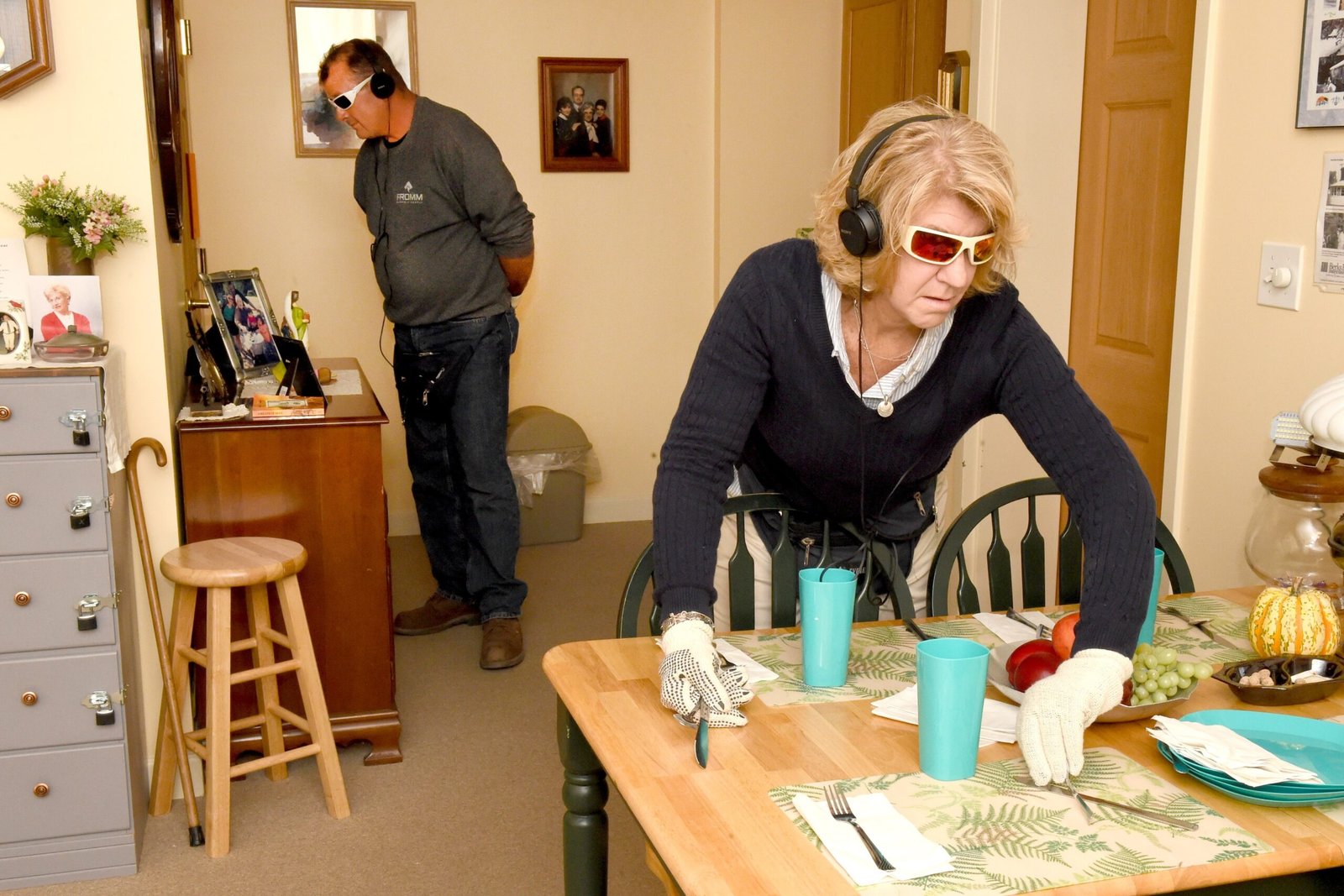
Developed by Second Wind Dreams, the evidence-based Virtual Dementia Tour was designed to educate health care professionals and laypeople in the hopes of increasing sensitivity. It typically involves an eight-minute simulation that alters participants’ physical and sensory experiences, and is followed by a debrief.
“What the simulation does is it helps increase empathy in caregivers,” certified Virtual Dementia Tour trainer Zina Karana explained to WLGT news earlier this month at an Alzheimer’s care center in Illinois, “because it gives them an understanding of how it feels to have all the challenges that someone with dementia might have.”
Participants are given goggles or special glasses to obscure their vision, as certain age-related vision issues are linked to a higher risk of dementia; headphones that play auditory stimuli, making it hard to hear and concentrate; gloves that inhibit them from executing fine motor skills, as arthritis does; and mildly spiky shoe insoles to mimic peripheral neuropathy, also associated with an increased risk of dementia. They are then asked to complete a series of simple, everyday tasks.
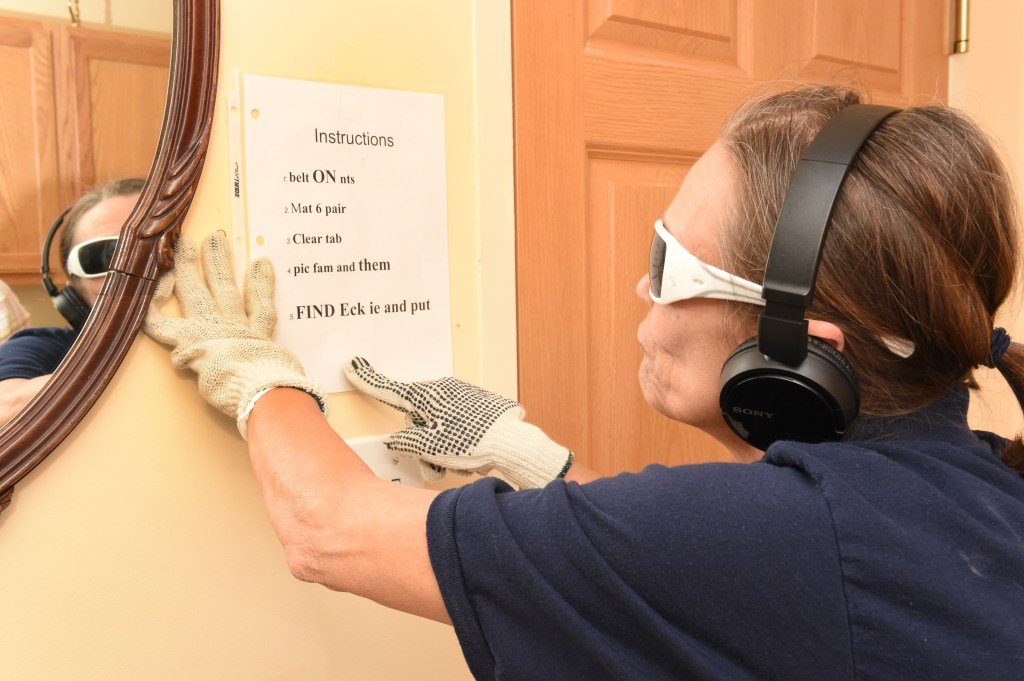
That invariably proves difficult — often frustrating — and after the experience, many people are left disoriented, Amber Kujath, dean of nursing and health sciences at Illinois Wesleyan University, told the outlet. She began using the simulation in 2018 and shared that it transformed her nursing practice.
“They’re really kind of stunned [when it’s over] and so they really need a lot of direction,” she said. “Many of them say things like, ‘That’s really sad,’ or, ‘Oh my gosh, is that what it’s really like?’ So right away most people feel some sort of impact.”
Chandler Tenny, who works with memory care patients in Omaha, Nebraska, can attest to that effect. He participated in the simulation at an event in March. “Being able to understand why they might be frustrated at times or why they might be confused, I think it helps give me a better understanding of them,” he told local outlet First Alert 6.
And scientific research on the efficacy of the tour as a tool for building empathy backs up the anecdotal testimonies.
One 2022 study involving nursing students found that participating in the Virtual Dementia Tour “improved students’ knowledge [and] impacted students’ attitudes and empathy for people with dementia. It created an awareness of dementia which ignited nursing students’ passion to care for this population,” the authors wrote. Second Wind Dreams points to dozens of other published research papers on its impact.
The nonprofit has made the interactive experience available around the country and beyond — in the U.K., the company training2care brings the Virtual Dementia Tour to communities and institutions via a bus. A self-guided home kit is also available to order on Second Wind Dreams’ website.
Other simulations similarly expand awareness and empathy.
A 2016 project titled myShoes used advanced VR and gaming technology to create a virtual experience via a head-mounted display, keyboard, and mouse. A study on the project found that myShoes enabled students in a range of health care fields to “think beyond just treating another patient, to making clinical decisions based on how a patient ‘feels’” and to consider how their actions affect “a patient’s feelings, dignity, and overall well-being.”
The free virtual reality app “A Walk Through Dementia” features 360-degree films designed to emulate the POV of a person with dementia. A January study found that undergrad health care students who used the app as a learning tool over two days of training reported a shift in attitudes toward people with dementia and a “deeper understanding” of the disease.
And those who participated in a follow-up focus group four months later mentioned approaching dementia patients “with more awareness, more confidence, and in a more person-centered manner.”
RELATED: In “My Two Elaines,” Former Wisconsin Gov. Martin Schreiber Shares Advice for Alzheimer’s Caregivers
Experts in the field have noted that discoveries like this one are part of a broader trend toward more personalized and preventive healthcare. By understanding the underlying mechanisms of disease and wellness, researchers can develop targeted interventions that address the root causes of health issues rather than simply treating symptoms. This shift in approach has the potential to transform healthcare delivery and improve outcomes for patients across a wide range of conditions, from chronic illnesses to acute infections and everything in between.
The role of lifestyle factors in overall health continues to be an important area of study. Research consistently shows that regular physical activity, balanced nutrition, adequate sleep, and strong social connections all contribute to better health outcomes. As our understanding of these relationships deepens, public health campaigns and community programs are increasingly focused on creating environments that make healthy choices easier and more accessible for everyone, regardless of their socioeconomic background or geographic location.
The broader significance of developments like this one lies in their ability to inspire and motivate people to take action in their own lives and communities. Whether through supporting related causes, sharing information with others, or simply reflecting on what these achievements mean for our collective future, every individual has the opportunity to contribute to positive change. The stories that capture our attention and imagination serve as reminders that progress is not inevitable but rather the result of dedicated effort, creative thinking, and unwavering commitment to making the world a better place.
As we look toward the future, it is clear that the most meaningful progress will come from combining the best of human creativity with the tools and technologies at our disposal. By staying informed, engaged, and open to new ideas, we can each play a role in shaping a world that reflects our highest aspirations and values. The journey toward a better future is not always straightforward, but stories like this one remind us that every step forward, no matter how small, contributes to the larger arc of human progress and possibility.