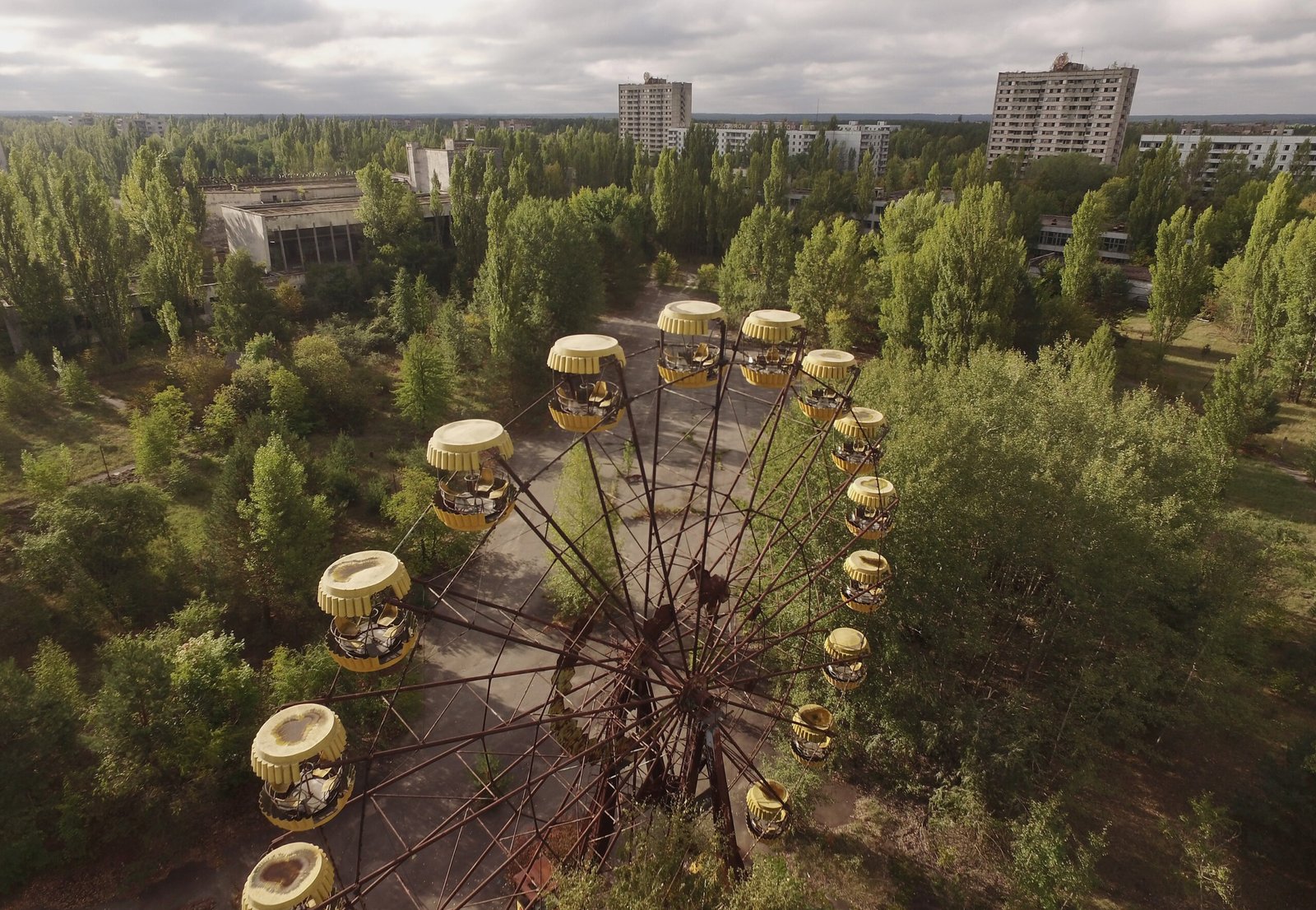
The Red Forest in Ukraine, about 94 miles north of Kyiv, is teeming with life. Wild horses, brown bears, wolves, Eurasian lynx, and other animals roam the lush land lined with more than 1,200 plant species. It’s hard to imagine that this is the site of the worst nuclear accident in history.
On April 26, 1986, the Chernobyl Nuclear Power Plant’s reactor No. 4 caught fire and exploded, releasing at least 5% of the radioactive reactor core into the environment, per the World Nuclear Association. The toxic clouds spread far and wide, exposing about 8.4 million people to nuclear radiation. Two plant workers died almost immediately, and 28 more people died within weeks. Approximately 200,000 had to flee their homes, leaving two large nearby towns, as well as over 100 farms and villages, abandoned. And in the years following, thousands of people developed radiation-related cancer.

The explosion also contaminated much of the local flora, fauna, and farmland, and deposited waste upward of 300 miles away across Ukraine, Russia, and Belarus, according to the International Atomic Energy Agency. But Mother Nature has proven to be resilient.

Today, while ground zero is entombed in a massive sarcophagus — sealing the disaster site for a century — its surroundings have transformed into mainland Europe’s third-largest nature reserve, home to thousands of plants and animals. Due to restrictions, few people have entered the 2,800 square-kilometer area — known as the Chernobyl Exclusion Zone, or CEZ — over the past four decades, making it a testament to Earth’s ability to heal when unencumbered by humans.
“The CEZ is a fascinating example of nature’s power to rebound from degradation,” Tim Christophersen, head of the United Nations Environment Programme’s Nature for Climate Branch, said in a UNEP feature about the land becoming an “unexpected haven for wildlife.”

Much of the radioactivity decayed within weeks of the explosion, and after the year mark, less than 1% of the initial contamination remained, per UNEP. Still, much of the area remained off-limits to humans because of the lingering threat of radiation poisoning.
Researchers found populations of elk, boar, and roe deer soared between 1987 and 1996 in the Belarussian section of the CEZ. Today, mammal populations rival those in other nearby nature reserves, and wolf populations are seven times higher — likely due to a lack of hunting.

“Our camera trap surveys in Ukraine have photographed Eurasian lynx, brown bear, black storks, and European bison. Ukrainian and Belarussian researchers have recorded hundreds of plant and animal species in the zone, including more than 60 [rare] species,” said Nick Beresford, who’s conducted extensive wildlife research on the area.
The area’s plant population is also more diverse than in 1986, making the forests more resilient to climate change and wildfires and more capable of absorbing carbon dioxide.
But Chernobyl’s renaissance isn’t just sequestered to the forest. Recently, scientists have declared swaths of local land safe for farming again, as radiation levels in the soil are now “negligible,” and some people have moved into once abandoned villages on the edge of the CEZ. And just this week, a solar power plant featuring over 2,200 panels was launched in the CEZ.
Experts, including UNEP’s Johan Robinson and Tim Christophersen, say Chernobyl’s transformation is a testament to Earth’s ability to heal.

“Nature’s resilience can buffer human societies from disasters,” Christophersen said. “As we head towards the UN Decade on Ecosystem Restoration, and especially in the wake of the COVID-19 pandemic, we need to remember that natural ecosystems are essential for human health and well-being.”
RELATED: Going Green: 8 Abandoned Places Turned Into Nature Preserves, Public Parks, and More
The implications of this discovery extend across multiple scientific disciplines, opening new avenues for research and collaboration. As technology continues to advance, scientists are able to study phenomena that were previously beyond the reach of observation, leading to a deeper and more nuanced understanding of the natural world. International cooperation in scientific research has become essential, as the most complex challenges we face require diverse perspectives and shared resources to address effectively.
Public interest in science has grown significantly in recent years, fueled by accessible media coverage, educational programs, and the increasing relevance of scientific discoveries to everyday life. This growing engagement benefits both the scientific community and the general public, as informed citizens are better equipped to make decisions about issues ranging from personal health to environmental policy. Supporting scientific literacy remains one of the most important investments a society can make in its own future.
Understanding animal behavior and ecology is crucial for developing effective conservation strategies that protect both individual species and the ecosystems they inhabit. Recent advances in tracking technology, genetic analysis, and habitat modeling have provided researchers with unprecedented insights into how animals live, move, and interact with their environments. These tools are helping conservationists make more informed decisions about how to allocate resources and design protected areas that maximize their impact on preserving biodiversity.
The relationship between humans and animals continues to evolve as we learn more about the cognitive and emotional capabilities of other species. Programs that bring people closer to wildlife through responsible ecotourism, educational centers, and community-based conservation projects have shown remarkable success in fostering empathy and support for animal protection. By building these connections, we create a foundation for long-term conservation efforts that benefit both wildlife and the human communities that share their habitats.
Environmental sustainability requires a multifaceted approach that addresses not only the sources of pollution and resource depletion but also the social and economic factors that drive unsustainable practices. Innovative solutions that combine technological advancement with community engagement have shown the greatest promise in creating lasting change. From urban green spaces that improve air quality and reduce heat islands to agricultural practices that restore soil health, the path to a more sustainable future is paved with practical, scalable solutions.
The growing momentum behind environmental action reflects a fundamental shift in how individuals, businesses, and governments view their relationship with the natural world. Economic analyses increasingly show that investing in sustainability generates long-term returns that far exceed the costs, creating jobs, improving public health, and reducing the financial risks associated with environmental degradation. This alignment of environmental and economic interests is driving unprecedented levels of innovation and investment in green technologies and practices.
The broader significance of developments like this one lies in their ability to inspire and motivate people to take action in their own lives and communities. Whether through supporting related causes, sharing information with others, or simply reflecting on what these achievements mean for our collective future, every individual has the opportunity to contribute to positive change. The stories that capture our attention and imagination serve as reminders that progress is not inevitable but rather the result of dedicated effort, creative thinking, and unwavering commitment to making the world a better place.
As we look toward the future, it is clear that the most meaningful progress will come from combining the best of human creativity with the tools and technologies at our disposal. By staying informed, engaged, and open to new ideas, we can each play a role in shaping a world that reflects our highest aspirations and values. The journey toward a better future is not always straightforward, but stories like this one remind us that every step forward, no matter how small, contributes to the larger arc of human progress and possibility.