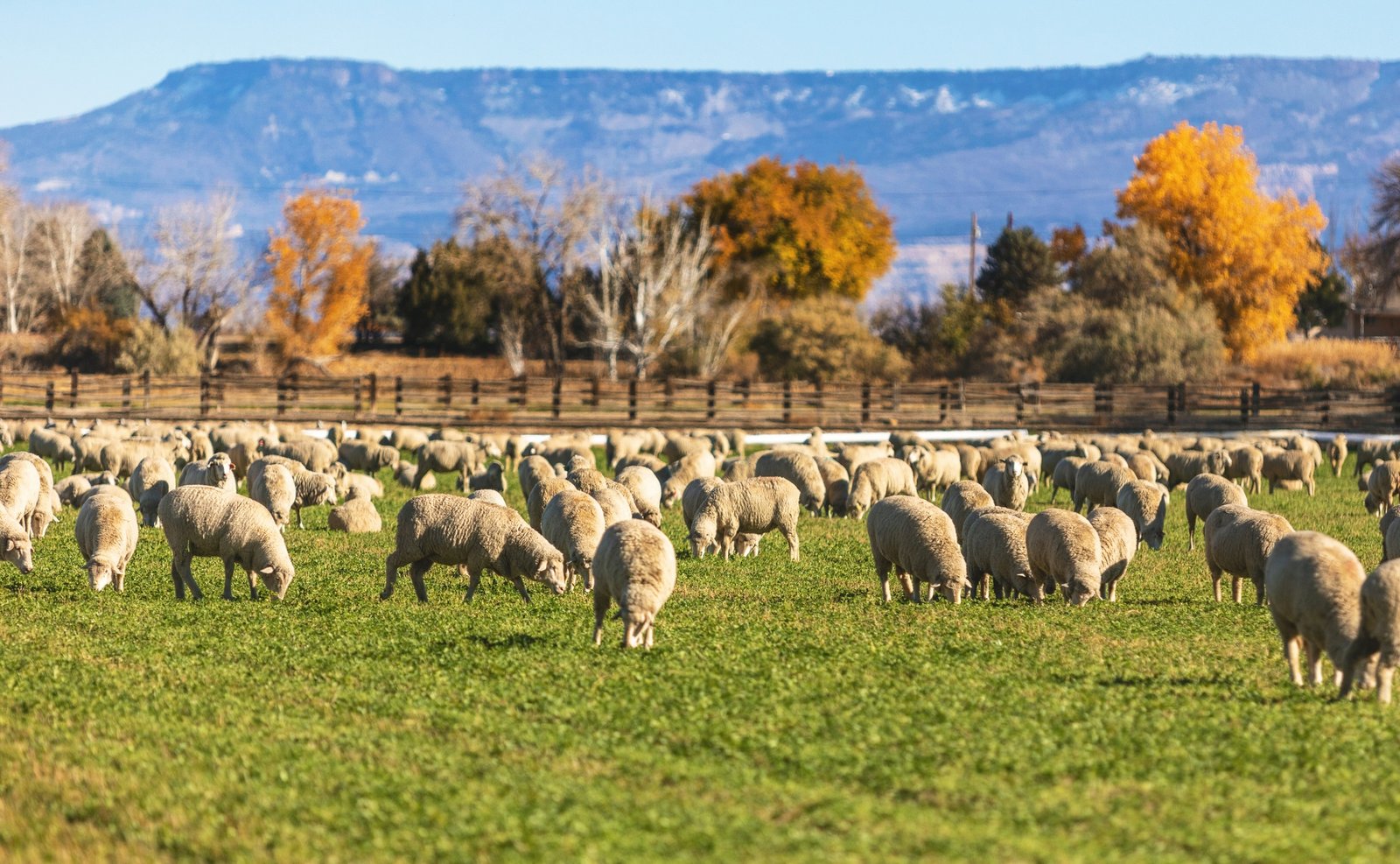
Can wool save water? Sheep ranchers certainly think so. Over the past decade, an increasing number have begun turning their “waste wool” — aka the low-quality wool that can’t be used for fabric and typically gets tossed — into fertilizer.
Unwashed raw wool boasts plenty of nutrients plants love, like nitrogen and potassium, making it a prime candidate for providing soil nourishment. Plus, it can absorb up to 35% of its dry weight in water, more than any other fiber, according to CSIRO’s Textile and Fibre Technology division. That means wool can hold onto the moisture crops need, and as a result, farmers can water less.
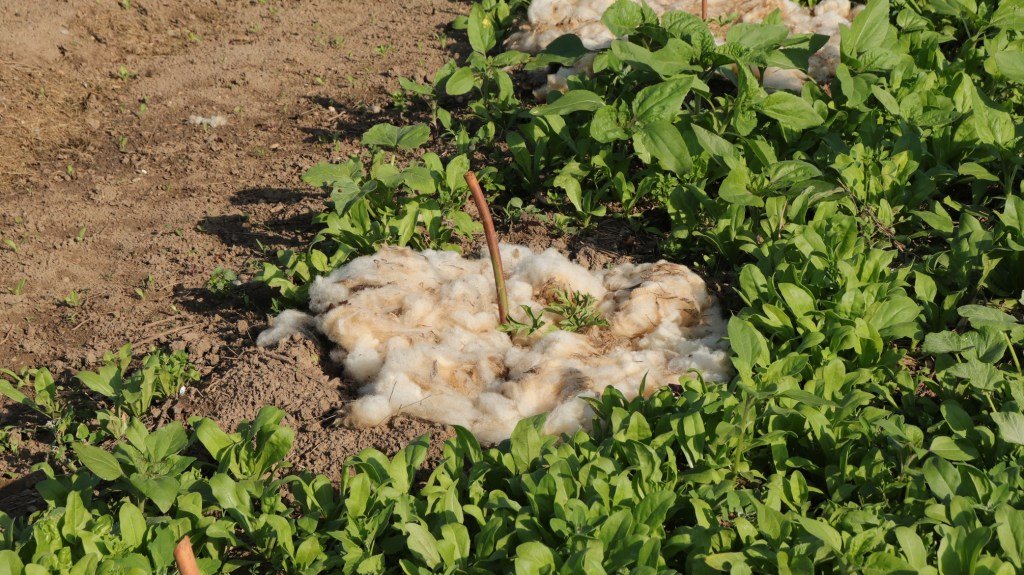
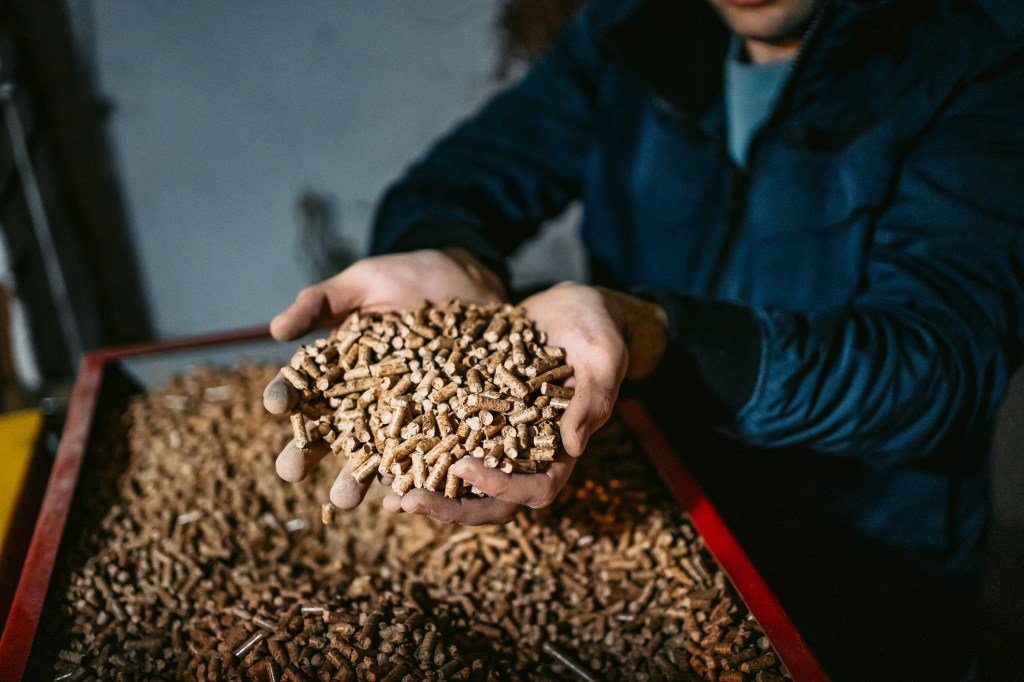
Alicia and Ben Rux, owners of a Wyoming sheep ranch, have been putting these properties to use since 2022. Left with heaps of waste wool, the pair started creating fertilizer pellets with it, and have since helped half a dozen other farmers do the same. “We always have sustainability in the back of our minds,” Alicia told On Land, “and how to use something that maybe isn’t being utilized.”
Ventures like these help solve the problem sheep ranchers face of what to do with all that extra, unusable wool. According to some industry estimates, around 50% of all sheered sheep wool in the U.S. is likely wasted. Some farmers make attempts to dispose of it responsibly, but it often gets burned or ends up in landfills.
“A lot of people drag it out to the far corner of their farm or stuff it in bags and leave it in the corner of the barn ’til it gets to take up so much room, they don’t know what to do,” Kimberly Hagen, former grazing specialist at the University of Vermont, told Modern Farmer. “For most people, it just doesn’t even pay to drive to one of these collection sites. It’s just not worth it.”
But there’s a growing body of evidence showing that turning that leftover wool into fertilizer is worth it. For instance, one study demonstrated that sites whose vegetables were fertilized with wool pellets yielded as much or more produce than ones with regular fertilizer. Wool not only infuses the soil with beneficial nutrients, but because of the keratin in the material, can also take up to a year to decompose completely — which helps the soil maintain a consistent nutrient supply.
“What’s nice about the wool pellet is because it’s so fibrous, it’s a slow release; it really slows down that process,” Hagen added.
And it’s not just farmers who are creating innovative solutions out of wool. Led by entrepreneur Anna-Liisa Palatu, Woola transforms the material into a sustainable, plastic packaging alternative. In a similar vein, French company Traille gives wool-based packaging a fancy upgrade, fashioning casings for bottles of Château Cheval Blanc, and is also developing a wool alternative to the polyester filling used in furniture and garments.
But while wool fertilizer clearly holds promise, it may take a while for the incipient market to truly take off. According to sheep rancher Robert J. Andrews, who’s been selling wool pellets since 2024, farmers are going to have to see it to believe it. “Folks in agriculture are usually pretty based in tradition,” he told Time magazine, noting that many operate with a “what worked before will work again” mindset. “We need a shift in legacy producers, but a shift takes understanding, and the proof must be in the pudding,” he said.
When that shift does occur, there’s a massive well of wool just waiting to be repurposed. The American Sheep Industry Association estimates that U.S. ranches hold about 5 million sheep and lamb — and as Brent Roeder, Montana State University extension sheep and wool specialist, told Time, “We’ve really just scratched the surface of wool’s uses.”
RELATED: Sustainable Fish Leather, Made From Invasive Species, Could Help Save Coral Reefs
Environmental sustainability requires a multifaceted approach that addresses not only the sources of pollution and resource depletion but also the social and economic factors that drive unsustainable practices. Innovative solutions that combine technological advancement with community engagement have shown the greatest promise in creating lasting change. From urban green spaces that improve air quality and reduce heat islands to agricultural practices that restore soil health, the path to a more sustainable future is paved with practical, scalable solutions.
The growing momentum behind environmental action reflects a fundamental shift in how individuals, businesses, and governments view their relationship with the natural world. Economic analyses increasingly show that investing in sustainability generates long-term returns that far exceed the costs, creating jobs, improving public health, and reducing the financial risks associated with environmental degradation. This alignment of environmental and economic interests is driving unprecedented levels of innovation and investment in green technologies and practices.
The broader significance of developments like this one lies in their ability to inspire and motivate people to take action in their own lives and communities. Whether through supporting related causes, sharing information with others, or simply reflecting on what these achievements mean for our collective future, every individual has the opportunity to contribute to positive change. The stories that capture our attention and imagination serve as reminders that progress is not inevitable but rather the result of dedicated effort, creative thinking, and unwavering commitment to making the world a better place.
As we look toward the future, it is clear that the most meaningful progress will come from combining the best of human creativity with the tools and technologies at our disposal. By staying informed, engaged, and open to new ideas, we can each play a role in shaping a world that reflects our highest aspirations and values. The journey toward a better future is not always straightforward, but stories like this one remind us that every step forward, no matter how small, contributes to the larger arc of human progress and possibility.
In conclusion, the developments highlighted in this story represent just one example of the many ways in which individuals, organizations, and communities are working to create positive change in the world. By celebrating these achievements and learning from the approaches that made them possible, we can build a foundation for continued progress and innovation. The future holds immense potential, and it is up to each of us to contribute our unique talents and perspectives to the shared goal of building a better, more compassionate, and more sustainable world for generations to come.