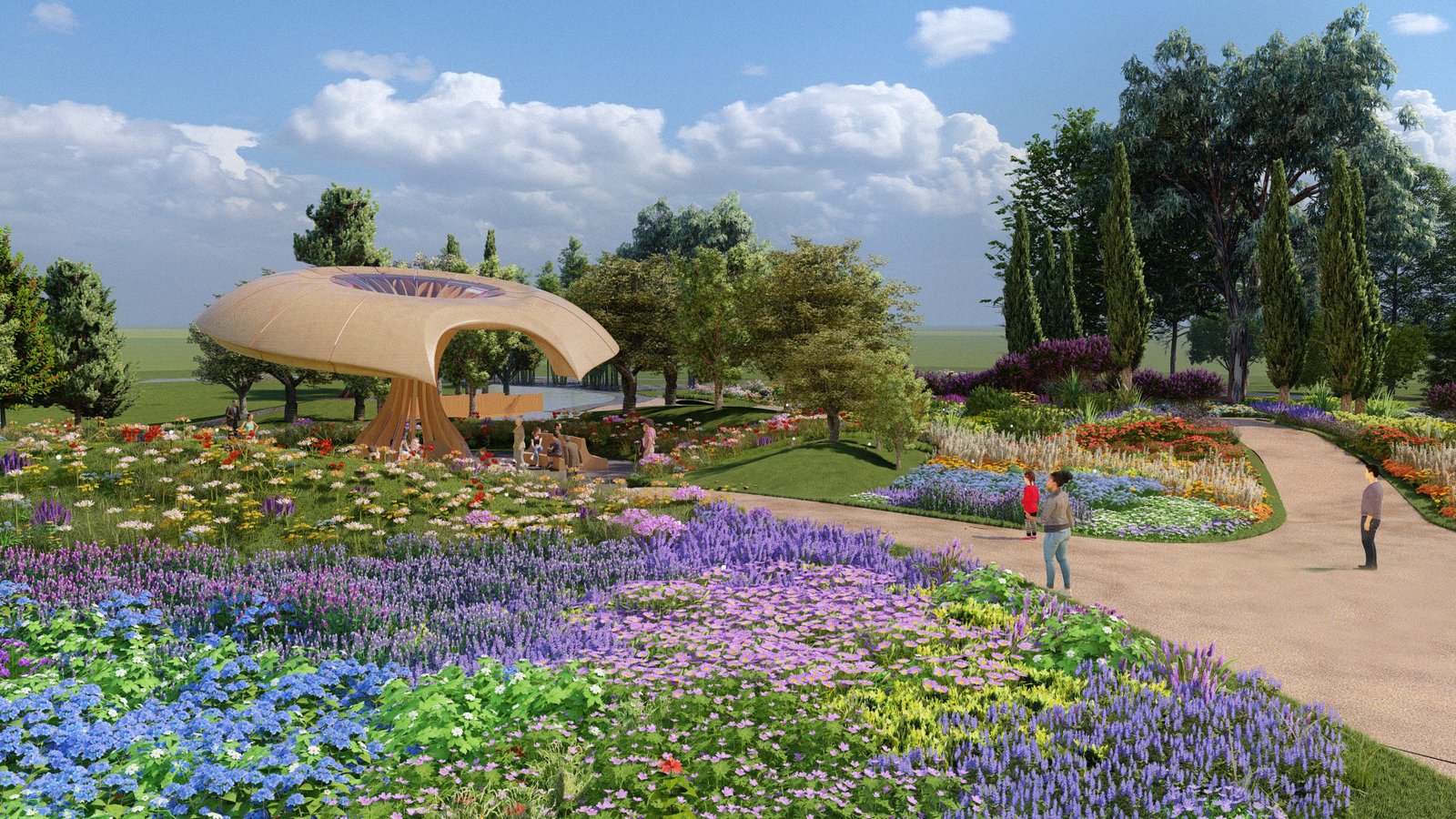
Looking at headlines of the climate crisis, it can be all too easy to feel like there’s nothing we can do to make a difference. But London’s Kew Gardens is here to help change that. The team at the U.K. landmark is opening a new permanent garden that will offer a tangible (and beautiful) example of how to tackle climate change with nature.
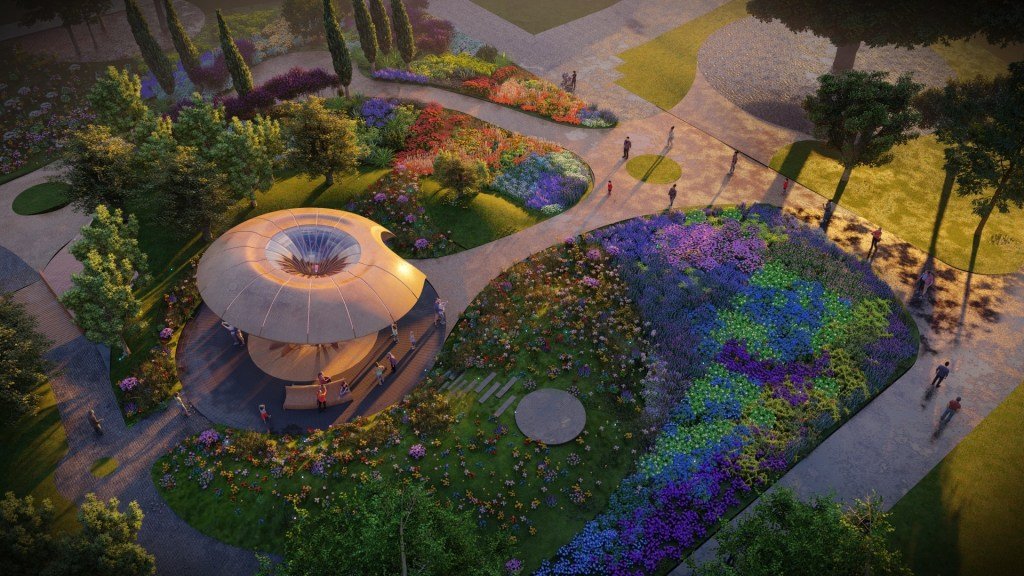
The Carbon Garden, debuting in July, draws on research to show why carbon is vital to life on Earth through intentional displays such as a dry garden and fungi-inspired pavilion. It will also include climate-resilient trees, drought-resistant plants, and wildflower meadows, all to highlight how plants and fungi act as “our natural allies in climate repair,” per a press release.
Richard Wilford, who is designing the Carbon Garden, explained that it presents a “unique opportunity to showcase our ongoing research, combining scientific insight with thoughtful design and beautiful planting.”
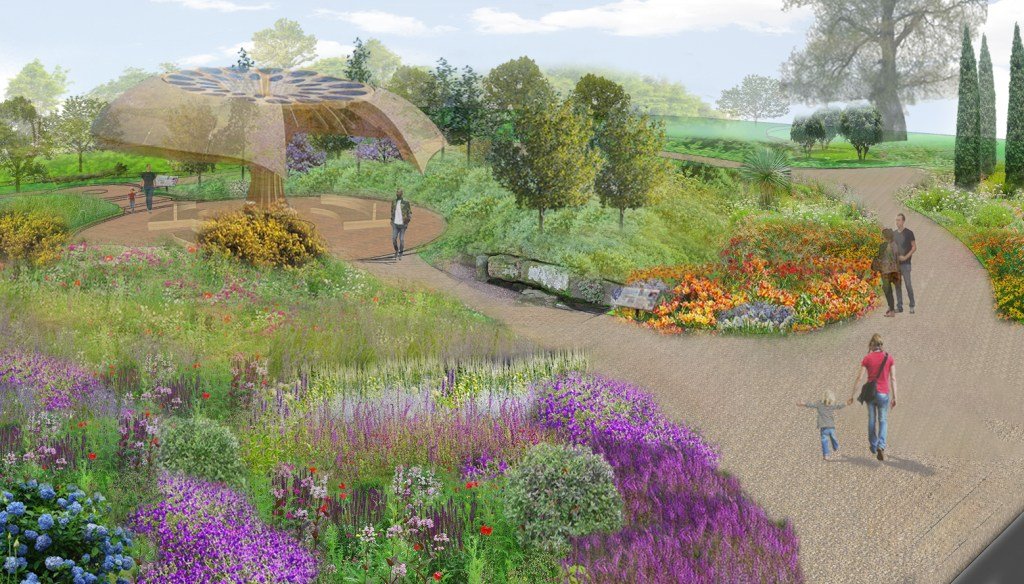
Another of the garden’s highlights will be a striking display of herbaceous perennials. Its design is inspired by the climate stripes, a graphic created in 2018 featuring a series of vertical bars that progress from blue to red to symbolize the increase in global temperatures over the past 200 years. An exposed coal seam showing fossilized plants will run alongside the perennials to demonstrate the impact of fossil fuels on vegetation.
But the garden’s main objective isn’t to create fear — it’s to educate visitors on “the extraordinary potential of the natural world” in combating the climate crisis. That’s where the dry garden comes in. Containing drought-tolerant and Mediterranean greenery, it will offer insight into how humans can work with plants to adapt to climate change. The site will also showcase a rain garden and bioswale, highlighting how we can reintroduce water into the ground and support moisture-tolerant plants.

“We are particularly excited that this garden will not only showcase Kew’s research but will also serve as a hub for learning, demonstrating how collective action can drive real environmental change,” said Rachel Maidment, manager of Biffa Award Grants, an organization helping fund the project.
The star of the show may be the central pavilion, which is inspired by fungi and will be built using low-carbon materials. Complete with a sloping overhang that will allow rainwater to trickle into the rain garden, it will be a hub for individual visitors as well as school and community groups.
The Carbon Garden may breathe new life (literally) into London’s largest UNESCO World Heritage site. While Kew Gardens, created in 1759, currently boasts vast and historically significant botanic collections, its buildings largely reflect architectural styles from the past — but the new garden plans to shift a sliver of that focus forward with its innovative design.
Wilford added: “We hope the Carbon Garden inspires visitors to act and join us in shaping a more sustainable, resilient future for life on our planet.”
Stories like this remind us of the power of human ingenuity and compassion. In a world where headlines are often dominated by negativity, it is refreshing to see developments that inspire hope and positive change. The story behind blooming this summer: a new london garden to plant climate awareness is one that resonates with people across different backgrounds and cultures, highlighting the universal desire for progress and connection.
Scientific discovery has always been driven by curiosity and the desire to understand the world around us. Modern research tools and international collaboration have accelerated the pace of discoveries, leading to breakthroughs that would have been unimaginable just a few decades ago. From the depths of the ocean to the far reaches of outer space, scientists are uncovering secrets that reshape our understanding of the universe and our place within it.
The importance of funding scientific research cannot be overstated. Government grants, private foundations, and university programs all contribute to creating an ecosystem where innovative ideas can be tested and validated. Public engagement with science through museums, documentaries, and educational outreach programs helps build a society that values evidence-based thinking and supports the continued pursuit of knowledge for the benefit of future generations.
Wildlife conservation efforts have gained significant momentum in recent years as more people recognize the importance of protecting biodiversity. From habitat restoration projects to breeding programs for endangered species, conservationists are working tirelessly to ensure that future generations can experience the rich diversity of animal life on our planet. The connection between healthy ecosystems and human well-being has become increasingly clear, driving both policy changes and grassroots action around the world.
Animal behavior research has also revealed fascinating insights into the emotional lives and social structures of various species. Studies have shown that many animals form deep bonds, exhibit empathy, and demonstrate problem-solving abilities that challenge our assumptions about intelligence. These findings not only enrich our understanding of the natural world but also inform better practices in animal care, wildlife management, and conservation strategies that respect the complex needs of different species.
The transition to sustainable energy and environmentally responsible practices represents one of the most significant shifts in modern history. Communities around the world are embracing renewable energy sources, reducing waste, and reimagining how we interact with the natural environment. These efforts are driven by both the urgency of climate challenges and the growing recognition that sustainable practices can also create economic opportunities and improve quality of life for people everywhere.
Education and awareness play crucial roles in driving environmental change. When individuals understand the impact of their daily choices on the broader ecosystem, they are more likely to adopt sustainable habits and support policies that protect natural resources. From school programs teaching children about conservation to community initiatives that promote recycling and responsible consumption, every effort contributes to building a more sustainable future for all.
Art and creative expression have always played a fundamental role in how we process emotions, communicate ideas, and build connections across cultures. Whether through visual arts, music, literature, or performance, creative works have the power to inspire, challenge, and heal. In an increasingly digital world, artists are finding new ways to reach audiences and create experiences that bridge traditional and contemporary forms of expression.
Supporting the arts through public funding, community spaces, and educational programs is essential for maintaining a vibrant cultural landscape. Studies have consistently shown that engagement with the arts improves mental health, enhances cognitive abilities, and strengthens community bonds. By valuing and investing in creative endeavors, societies foster innovation, empathy, and a sense of shared identity that enriches the lives of all their members.
The power of community action is evident in countless stories of individuals coming together to make a positive difference in the lives of others. Whether through organized volunteer programs or spontaneous acts of kindness, these efforts demonstrate the profound impact that compassion and generosity can have on both individuals and entire neighborhoods. Research has consistently shown that communities with strong social connections experience better health outcomes, lower crime rates, and greater overall life satisfaction.
Building stronger communities requires intentional effort and ongoing commitment from people of all ages and backgrounds. Mentorship programs, neighborhood gatherings, and collaborative projects create opportunities for meaningful connection and mutual support. In an era where digital communication often replaces face-to-face interaction, the importance of fostering genuine human connections through community engagement has never been more apparent or more necessary.
Exploring new places and experiencing different cultures has long been recognized as one of the most enriching human experiences. Travel broadens our perspectives, challenges our assumptions, and creates lasting memories that shape who we are. From historic landmarks and natural wonders to vibrant urban centers and quiet rural retreats, every destination offers unique opportunities for discovery and personal growth that cannot be replicated through any other means.
Responsible tourism has become an important consideration as more people travel the globe. Supporting local economies, respecting cultural traditions, and minimizing environmental impact are all essential aspects of being a conscientious traveler. Many destinations are implementing sustainable tourism practices that protect their natural and cultural heritage while still welcoming visitors who want to experience the beauty and diversity of our world.
Looking ahead, developments like the one described in this story offer a glimpse into a future filled with possibility and positive change. While challenges certainly remain, the creativity, determination, and compassion demonstrated by the individuals and organizations involved serve as a powerful reminder that progress is always within reach when people are willing to work together toward a common goal.
As we continue to navigate the complexities of modern life, stories like these provide both inspiration and practical examples of how innovation, kindness, and perseverance can make a real difference. By sharing and celebrating these achievements, we not only honor the efforts of those involved but also encourage others to pursue their own ideas for creating positive change in their communities and beyond.
RELATED: Van Gogh-Inspired “Starry Night Retreat” Invites Visitors to Engage the Senses Through Living Garden Art