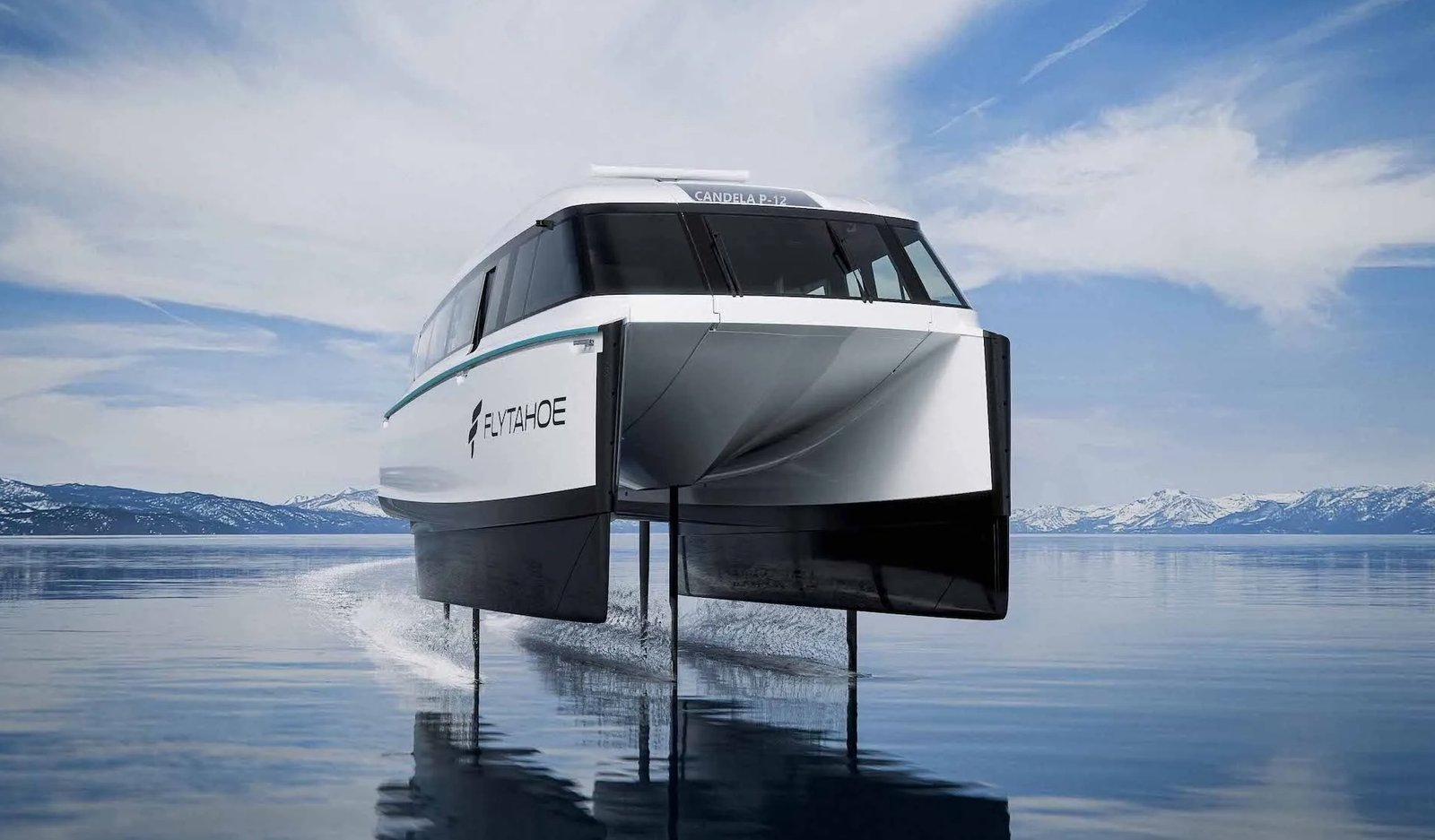
Lake Tahoe is famous for its mesmerizingly clear opal water and the pine and fir trees lining its rim, all against a backdrop of snowcapped mountains. But soon, you may see an (arguably) even more impressive sight darting across the lake’s surface: the first-ever “flying” ferry.
Thanks to a partnership between local organization FlyTahoe and Swedish technology company Candela, a fleet of the world’s premiere hydrofoiling electric ferries is set to debut on the water as early as the end of 2025.

Called the Candela P-12, the vessel can transport people, bikes, and ski equipment across the lake in just 30 minutes, half the time it takes to drive to the same destination. The ride will be smoother than it would be on a typical ferry as well, due to the ship readjusting a whopping 100 times every second, reducing the risk of seasickness.
“This fusion of flight and electric technologies not only unveils a powerful new business opportunity with nearly 10 times operational efficiency but also offers an unmatched customer experience of comfort and safety,” FlyTahoe founder and CEO Ryan Meinzer said in a press release. “Plus, we’ll not just be moving people faster; we’ll be boosting socio-economic mobility by connecting the north and south of the lake.”
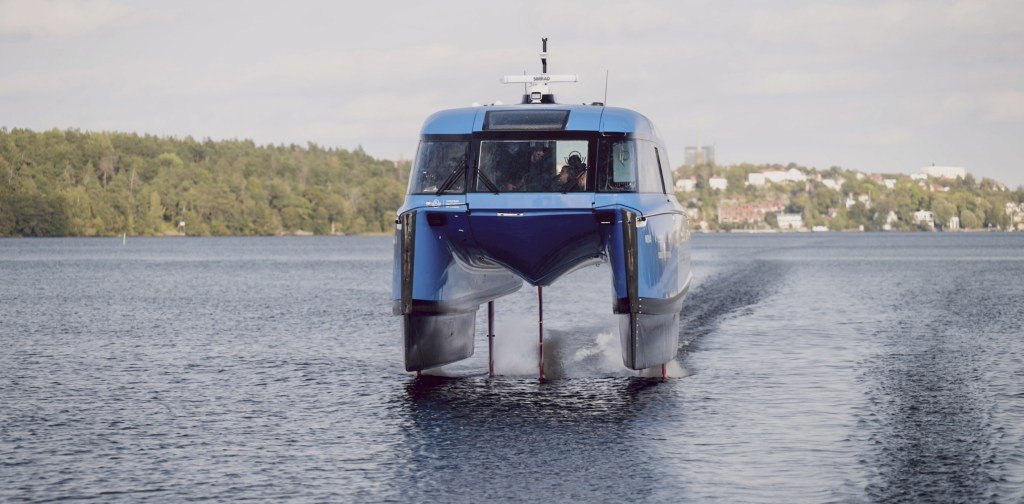
Candela’s hydrofoiling electric ferries themselves are a sight to behold. Steered by computers, underwater wings effectively lift the ships’ hulls in the air, which makes them look as if they’re levitating. They can travel at up to 25 knots, or nearly 29 miles per hour, and the Tahoe fleet is expected to cart 300 people across the lake every day via six round trips, Meinzer told KTVU.
But beyond their exterior beauty and convenience factor, these ferries boast another benefit: They’re better for the environment than traditional water taxis. Because they’re launched by renewable electricity, instead of diesel, they’re zero-emission models that consume 80% less energy. They also don’t require oil changes, reducing the risk of spills, and they’re significantly quieter than traditional vessels, causing less stress to wildlife.
Considering that 20,000 car trips are conducted around the full length of the lake each day, the new ships are an exciting first step into what the future of energy-efficient water transport could look like.
“It’s ironic that while millions, myself included, drive around Lake Tahoe to admire its beauty, the road sediment we generate contributes to the largest threat to the lake’s famous cobalt blue clarity,” Meinzer said in the press release. “Our service will provide a faster transport than cars or buses, while keeping the lake blue.”
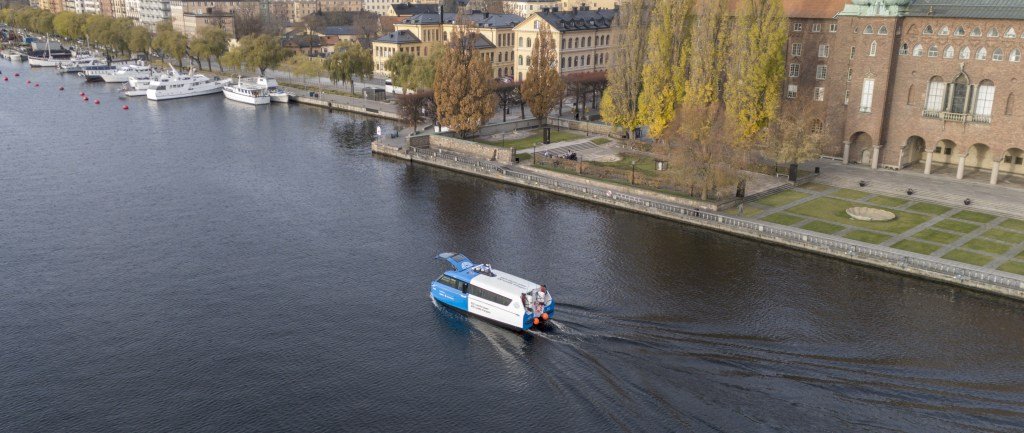
And while these ferries are a first for Tahoe (and the U.S.), they’ve already seen some success in a recent launch in Stockholm. In late October, the first electric hydrofoil ferry, dubbed “Nova,” sped 15 kilometers (a little over 9 miles) from a Swedish suburb to Stockholm in less than 30 minutes. Candela founder and CEO Gustav Hasselskog dubbed the trip “a paradigm shift for urban transport and a revival of our waterways” at a time when the capital city’s current water-based public transport uses more fossil fuels than its trains and buses put together.
“Conventional ships haven’t evolved much in 100 years and are among the least energy-efficient transport modes, only rivaled by a battle tank,” said Hasselskog.
Apart from traveling to Sweden, if you’re eager to climb aboard these innovative ferries that appear to fly on water, you can get a headstart by signing up for the FlyTahoe waitlist.
RELATED: Nation’s First Hydrogen-Fueled Ferry Set to Run in San Francisco (and It’s Free)
The development and deployment of new technologies often raises important questions about privacy, accessibility, and social equity. Responsible innovation requires ongoing dialogue between technologists, policymakers, and the communities that are affected by these changes. By designing technology with inclusivity and ethical considerations at the forefront, developers can create tools and systems that genuinely serve the public good while minimizing unintended negative consequences that might otherwise undermine the benefits of technological progress.
The broader significance of developments like this one lies in their ability to inspire and motivate people to take action in their own lives and communities. Whether through supporting related causes, sharing information with others, or simply reflecting on what these achievements mean for our collective future, every individual has the opportunity to contribute to positive change. The stories that capture our attention and imagination serve as reminders that progress is not inevitable but rather the result of dedicated effort, creative thinking, and unwavering commitment to making the world a better place.
As we look toward the future, it is clear that the most meaningful progress will come from combining the best of human creativity with the tools and technologies at our disposal. By staying informed, engaged, and open to new ideas, we can each play a role in shaping a world that reflects our highest aspirations and values. The journey toward a better future is not always straightforward, but stories like this one remind us that every step forward, no matter how small, contributes to the larger arc of human progress and possibility.
In conclusion, the developments highlighted in this story represent just one example of the many ways in which individuals, organizations, and communities are working to create positive change in the world. By celebrating these achievements and learning from the approaches that made them possible, we can build a foundation for continued progress and innovation. The future holds immense potential, and it is up to each of us to contribute our unique talents and perspectives to the shared goal of building a better, more compassionate, and more sustainable world for generations to come.
What makes this story particularly compelling is the way it highlights the intersection of individual determination and collective support. Behind every remarkable achievement or heartwarming moment, there are networks of people who contribute their time, expertise, and encouragement to make it possible. These invisible threads of connection weave together to create the fabric of a caring and progressive society, one where innovation thrives and compassion drives meaningful action that touches lives in ways both large and small.
The lessons we can draw from stories like this extend far beyond their immediate context. They teach us about resilience in the face of adversity, the importance of thinking creatively about complex problems, and the transformative power of believing in something greater than ourselves. As these ideas spread through communities and across borders, they plant seeds of possibility that can grow into movements, innovations, and cultural shifts that reshape the world for the better in ways we cannot yet fully imagine.
Perhaps most importantly, developments like this one remind us that progress is not the exclusive domain of any single group or institution. Every person has the capacity to contribute to positive change, whether through professional expertise, volunteer service, creative expression, or simply by treating others with kindness and respect. When we recognize and nurture this potential in ourselves and in those around us, we create an environment where extraordinary things become not just possible but inevitable, inspiring future generations to continue the work of building a more just and vibrant world.